


Best Options: How to Stop Cluster Headaches
Updated: Aug 26

A cluster headache can hit fast, stay on one side, and bring tearing, a blocked nose and restless pacing. It can feel frightening, but the right diagnosis opens up treatment choices. Here are the main options, from rapid oxygen and sumatriptan to prevention, neuromodulation and supportive care in Melbourne.
Table of Contents
Subcutaneous Sumatriptan 6 mg, Rapid Prescription Abortive Treatment
Non-Invasive Vagus Nerve Stimulation, A Non-Drug Neuromodulation Option
Greater Occipital Nerve Block, Specialist Short-Term Support
Sphenopalatine Ganglion Stimulation for Carefully Selected Refractory Cases
CGRP Antibodies, Melatonin and Personalised Specialist Strategies
1. Unleashed Health Chiropractic
Unleashed Health Chiropractic is an Ascot Vale clinic providing non-surgical care for headaches, neck pain and related muscle tension. It is best for people who want a hands-on assessment alongside medical care, especially when neck stiffness or jaw tension may add to their head pain.

We take the time to assess how your neck, posture and daily habits affect your symptoms. Our care may include manual techniques, soft-tissue work, breathing advice, rehab exercises and, where appropriate, gentle neck exercises . That approach can suit tension-type headaches or cervicogenic headaches, which begin in the neck, but cluster headache needs a medical diagnosis first.
Cluster headache has a distinct pattern: severe one-sided pain near the eye, attacks lasting 15 to 180 minutes, and same-side signs such as tearing or nasal congestion. Acute treatments include oxygen and triptans, while verapamil is used as a preventive option.
We won’t suggest that a chiropractic adjustment can stop an active cluster attack. But we can help you assess neck and movement factors that may be contributing to other headache types. Read our advice on migraines, headaches and chiropractic care in Ascot Vale for that broader picture.
If your pain is new, severe or paired with weakness, confusion or vision loss, seek urgent medical care before booking hands-on treatment.
2. High-Flow 100% Oxygen, Fast, Clinician-Guided Acute Relief
High-flow oxygen is often the best first option for stopping a cluster attack quickly. It is best for people with a confirmed diagnosis who can access prescribed oxygen at home or through an arranged medical supply service.
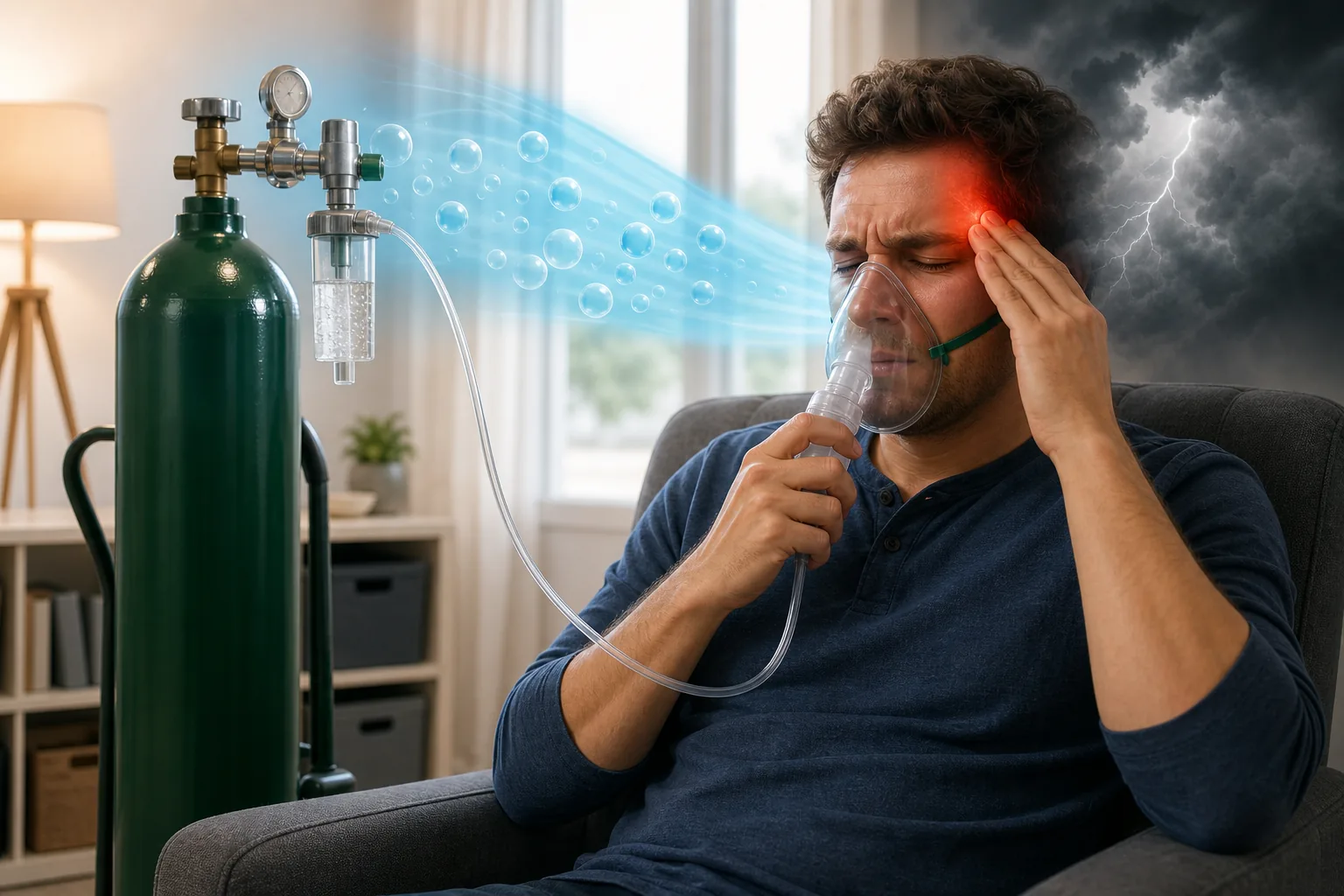
The usual clinical method uses 100% oxygen through a well-fitting non-rebreather mask at at least 12 litres per minute for 15 minutes. The mask matters because it limits the amount of room air mixed with the oxygen.
Oxygen does not treat the underlying cluster cycle. It aims to stop the attack in front of you. You’ll need a clinician to confirm the setup, explain fire safety, and arrange the right equipment. The delivery method matters, so use the equipment as directed by your clinician.
Key Takeaway:Ask a doctor or neurologist about prescribed oxygen before your next cluster period, rather than trying to source equipment without guidance.
3. Subcutaneous Sumatriptan 6 mg, Rapid Prescription Abortive Treatment
Subcutaneous sumatriptan is a prescription injection used at the start of an attack. It is best for people who need a rapid medicine and have been checked for triptan safety.

Research on the 6 mg dose found that many patients had mild or no pain within 15 minutes. The medicine acts on serotonin receptors involved in trigeminal pain signalling. Because cluster attacks rise quickly, an injection can act sooner than an oral tablet.
This option is not suitable for everyone. A doctor must review heart and blood-vessel history, past stroke or transient ischaemic attack, and other medicines. Some patients also report nausea, tiredness, tingling or a reaction at the injection site.
Never increase the dose or repeat injections outside your prescription. If you need frequent injections, tell your doctor. That pattern may mean your preventive plan needs review.
4. Intranasal Sumatriptan, A Non-Injection Triptan Option
Intranasal sumatriptan is a nasal spray used as an alternative to an injection. It is best for people who need a fast triptan but don’t want, or can’t manage, subcutaneous medicine.
The spray may be slower or less effective than an injection for some attacks, yet it remains useful when speed and ease matter. Oral triptans are usually too slow for a cluster attack that may reach full force within minutes.
Intranasal triptans have a role in acute treatment, while oxygen and subcutaneous sumatriptan are also used as acute options. Further information is available here.
Ask your prescriber how to use the spray at the first sign of an attack. Keep a record of how fast it works and whether the pain returns.
5. Verapamil, A Monitored Long-Term Preventive
Verapamil is a calcium-channel blocker used to prevent cluster attacks. It is best for people with repeated attacks who need a plan that works across a cluster period.
Doctors usually start with a low dose and increase it over time. An ECG checks the heart’s electrical rhythm before treatment and during dose changes. That monitoring is essential because verapamil can affect heart rate and conduction.
Verapamil may be considered as an oral preventive medicine, with the dose adjusted and monitored by a prescriber. More information about verapamil may help you discuss whether it is suitable for your pattern of cluster headaches.
Verapamil won’t usually stop the attack already under way. It is part of the longer plan, often alongside oxygen or a triptan for breakthrough pain.
We understand that daily medicine can feel like a big step. Keep your prescriber updated about faintness, a slow pulse, ankle swelling or other new symptoms.
6. Corticosteroids, Short-Term Bridge During a Cluster Cycle
Corticosteroids are short-term medicines that can calm a cluster cycle while a preventive such as verapamil takes effect. They are best for a brief bridge, not long-term daily control.
A neurologist may prescribe a short course of oral prednisolone or use a targeted procedure around a nerve involved in pain signalling. The aim is to reduce attacks during the gap before the main preventive reaches a useful dose.
Longer use brings more risk. Blood sugar, blood pressure, sleep, mood and infection risk may all need attention. Never stop a prescribed steroid course suddenly without medical advice.
Bridging treatment also gives you time to arrange oxygen, review triptan use and start a headache diary. The plan should have a clear start point, end point and follow-up.
7. Non-Invasive Vagus Nerve Stimulation, A Non-Drug Neuromodulation Option
Non-invasive vagus nerve stimulation uses electrical signals at the neck to change pain signalling. It is best for selected patients who want a non-drug option or who have trouble with medicines.
A clinician needs to confirm the device and treatment plan. Research summaries describe possible benefit for acute attacks and prevention, but access and eligibility can vary. It should not replace oxygen or prescribed triptan treatment when those options are needed.
This option sits between home care and specialist treatment. It has no injection, but it still requires correct placement and instruction. Ask what evidence applies to your form of cluster headache, especially if attacks are chronic rather than episodic.
Track the time of stimulation, the pain score and whether the attack stops. That record helps your specialist decide if the treatment earns a place in your plan.
8. Greater Occipital Nerve Block, Specialist Short-Term Support
A greater occipital nerve block is an injection near a nerve at the back of the head. It is best for people who need short-term support during a cluster cycle and have access to a headache specialist.
The injection may reduce pain signalling from the occipital nerve. It is often used as transitional treatment while a daily preventive is being adjusted. Relief varies, and the effect may last only for a limited period.
Possible issues include soreness, bleeding, infection, skin changes or a temporary change in sensation. Your clinician should explain the medicine used, the expected time frame and what symptoms need review.
For neck-related headache symptoms outside a confirmed cluster diagnosis, we tailor assessment at Unleashed Health Chiropractic to the person in front of us. That is a different goal from a nerve block and should not be confused with emergency attack treatment.
9. Sphenopalatine Ganglion Stimulation for Carefully Selected Refractory Cases
Sphenopalatine ganglion stimulation uses an implanted stimulation device for carefully selected refractory cases of cluster headache.
The device provides neuromodulation through stimulation of the sphenopalatine ganglion. It is a targeted option rather than a general headache treatment.
A suitable healthcare professional can assess whether this option is appropriate for the individual and their cluster headache pattern.
This option is considered in appropriate settings when an implanted stimulation device is being assessed as part of cluster headache care.
10. CGRP Antibodies, Melatonin and Personalised Specialist Strategies
Several less common choices can support an individualised approach. They are best discussed with a neurologist who can match the treatment to episodic or chronic cluster headache.
Option | Where it may fit | Key caution |
CGRP antibodies | May help selected episodic cluster headache cases | Long-term effects and eligibility need specialist review |
Melatonin | May suit a plan focused on nighttime attacks and sleep rhythm | Evidence is modest and product choice needs care |
Lithium | Selected refractory cases, often chronic disease | Needs careful monitoring of blood levels and organ function |
Octreotide 100 mcg subcutaneous | 100 mcg subcutaneous injection for refractory cases | For refractory cases |
Keep sleep and wake times steady during an active period. Alcohol can trigger an attack, and nicotine exposure is linked with cluster headache risk. Strong smells, nitrate-rich foods and sudden changes in sleep may also matter for some people.
Use a simple diary. Record the start time, duration, side, eye or nose symptoms, suspected trigger, treatment used and pain score. A 1-to-3 scale can show whether attacks are becoming more frequent or severe.
Pro Tip:Don’t use opioids as your main answer to cluster attacks. They act too slowly for many attacks and can create dependence or medication-overuse problems.
Breathing slowly may reduce panic while you wait for treatment. It won’t replace oxygen or prescribed medicine, but it can help you stay steady during a frightening episode.
Frequently Asked Questions
What is the fastest way to stop a cluster headache?
High-flow 100% oxygen and prescribed subcutaneous sumatriptan are the main fast treatments for a cluster attack. Oxygen is usually given through a non-rebreather mask, while sumatriptan is injected at onset. Oral pain tablets often act too slowly. A doctor should confirm the diagnosis and give you a safe written plan.
How do I know if it is a cluster headache or migraine?
Cluster headache usually causes severe pain around one eye on one side, with tearing, a blocked or runny nose, a drooping eyelid or marked restlessness. Migraine more often causes a person to seek darkness and quiet. Because symptoms can overlap, new or severe attacks need a medical assessment.
Can chiropractic care stop cluster headaches?
Chiropractic care should not be used as a replacement for medical treatment during a cluster attack. At Unleashed Health Chiropractic, we can assess neck and muscle factors linked with other headache types, such as tension or cervicogenic headache. We recommend medical review first when the pattern suggests cluster headache.
What triggers cluster headaches?
Alcohol is a well-known trigger during an active cluster period. Sleep-pattern changes, nicotine, strong smells and some nitrate-rich foods may also set off attacks in some people. Keep a diary rather than guessing. Avoiding a clear trigger can help, but it does not replace preventive treatment.
When should I seek urgent help for a headache?
Seek urgent help for a sudden thunderclap headache, new weakness, confusion, fainting, fever with a stiff neck, major vision change or a headache after head injury. Also seek immediate support if the pain brings thoughts of suicide. Cluster headache can affect mood deeply, so tell your doctor plainly how you are coping.
Our clear recommendation is to arrange a medical diagnosis and a rapid attack plan first, then add prevention and supportive care based on your pattern. If neck tension or another headache type is also part of the picture, Unleashed Health Chiropractic can take the time to assess it with you in Ascot Vale. We look forward to helping.


Comments