


How to Relieve Knee Pain: Safe Home Steps
Knee pain can make stairs, walks and even a trip across the room feel harder than they should. We’ll show you safe steps to calm the pain, restore movement and build support at home, while making clear when self-care is no longer enough.
Table of Contents
Step 1: Identify the Pain Pattern and Check for Warning Signs
Before you work out how to relieve knee pain, look at where it hurts and what brings it on. Pain around or behind the kneecap often relates to the patellofemoral joint, which is the joint between the kneecap and thigh bone. Inner or outer knee pain after a twist may involve a meniscus, the knee’s shock-absorbing pad.
Arthritis, overuse, tight muscles and weak muscles can all cause knee symptoms. Pain at the base of the kneecap may follow repeated jumping. Pain at the top can relate to the quadriceps tendon. A sore outer knee may also involve tight tissues along the outside of the thigh.
Write down three things for a day or two:
Where the pain sits.
Which movement brings it on.
Whether the knee swells, clicks, catches or gives way.
Mild pain with a stable knee may allow gentle movement. Sharp pain with buckling, locking or a sense that the knee will give out needs assessment. Sudden swelling, a major twist, a fall, marked redness or an inability to bear weight also warrant prompt medical care. Do not push through sharp pain or an unstable joint.
If symptoms stay the same after several weeks of careful self-care, arrange an assessment. At Unleashed Health Chiropractic , we take the time to understand how your knee problem affects work, sport and daily life. Our assessment may include movement checks and orthopaedic tests, which are simple tests that help identify how the joint and nearby muscles respond.
By now, you should know whether your knee feels stable enough for gentle care. If it does not, skip the exercise plan and seek help first.
Step 2: Calm an Irritated Knee with Immediate Relief Measures
To work out how to relieve knee pain during a flare, first reduce the load. Stop the activity that caused the spike. Sit or lie down with the leg supported, then use a cold pack wrapped in a thin towel for short periods. Never place ice straight on your skin.
Elevation can help when swelling is present. Raise the lower leg so the knee sits above the level of your heart while you rest. Keep the position comfortable. If your toes become numb or the skin changes colour, lower the leg and remove the pack.
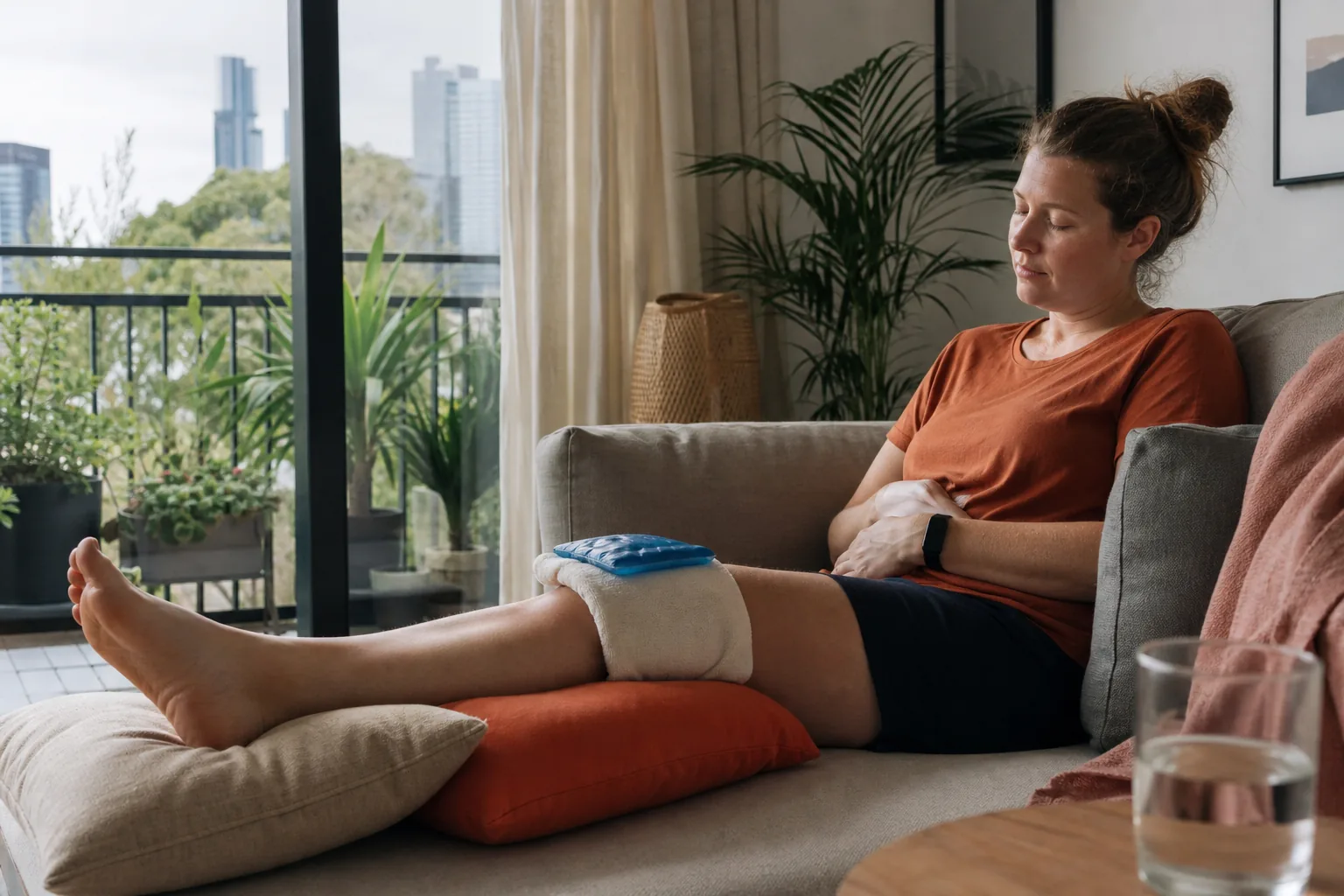
Use pacing for the next day or two. Break a long walk into shorter trips. Sit for tasks that do not need standing. Then return to light movement before the knee becomes stiff. Complete rest often makes the first few steps harder, so aim for calm, easy motion.
Heat may feel better when the knee is stiff without new swelling. Cold often feels more useful after a fresh strain or an activity-related flare. A swollen knee can have many causes, so do not use home care as a substitute for assessment when swelling is sudden or severe.
Some people try taping as an add-on. Research has looked at both Kinesio taping and non-specific taping applied around the knee over four weeks. Taping may help some people move with less discomfort, but it should not hide worsening pain or replace strength work. Ask a trained clinician to show you the method if you have fragile skin, poor sensation or a skin condition.
We can help you choose between rest, movement and hands-on care at Unleashed Health Chiropractic. Our approach is non-surgical and focused on a plan that fits your symptoms. For now, your target is simple: settle the flare enough to move without guarding.
Step 3: Restore Movement with Gentle Stretching and Mobilisation
Gentle stretching can help when tight calves, hamstrings or quadriceps make the knee feel stiff. Move slowly and stop before pain becomes sharp. A stretch should feel mild, not like a test of will.
Try a short back-of-leg stretch
Sit near the edge of a chair with one leg straight and your heel on the floor. Keep your back tall. Hinge forward from your hips until you feel a light pull behind the thigh. Hold for about 20 seconds, then relax. Repeat up to three times if the knee stays calm.
Stretch the front of the thigh
Stand beside a bench or wall for support. Bend one knee and bring your heel towards your seat, using your hand only if that feels easy. Keep your knees close together. Hold a gentle stretch across the front of the thigh. Do not force the heel higher.
Mobilise without forcing the kneecap
With the leg straight and the thigh relaxed, place your fingers around the kneecap. You may gently explore small up, down, inward and outward movements. Use light pressure. Stop if you feel pain, heat or a sharp catch. If the kneecap feels stuck, leave this technique to a trained professional.
Knee mobilisation is a manual technique that uses small movements at the knee joints. For more information about patellofemoral pain rehabilitation, you can read this resource .
That distinction matters. Hands-on care may help a stiff joint move more comfortably, but your home work still needs to build strength and control. We tailor this part at Unleashed Health Chiropractic after checking how your hip, foot and knee move together.
Do not use forceful stretching for a suspected meniscus injury, a fresh ligament injury or a swollen knee. If a movement causes catching or sharp pain, stop and record it for your clinician. By now, you should have a small range of motion routine that leaves the knee no worse afterwards.
Step 4: Build Knee Support with Strength, Alignment and Gradual Progression
Strength work is the long game when you want to relieve recurring knee pain. Stronger quadriceps, hip muscles and calf muscles can help the leg manage load with less strain. Start with movements that feel controlled, then add challenge slowly.
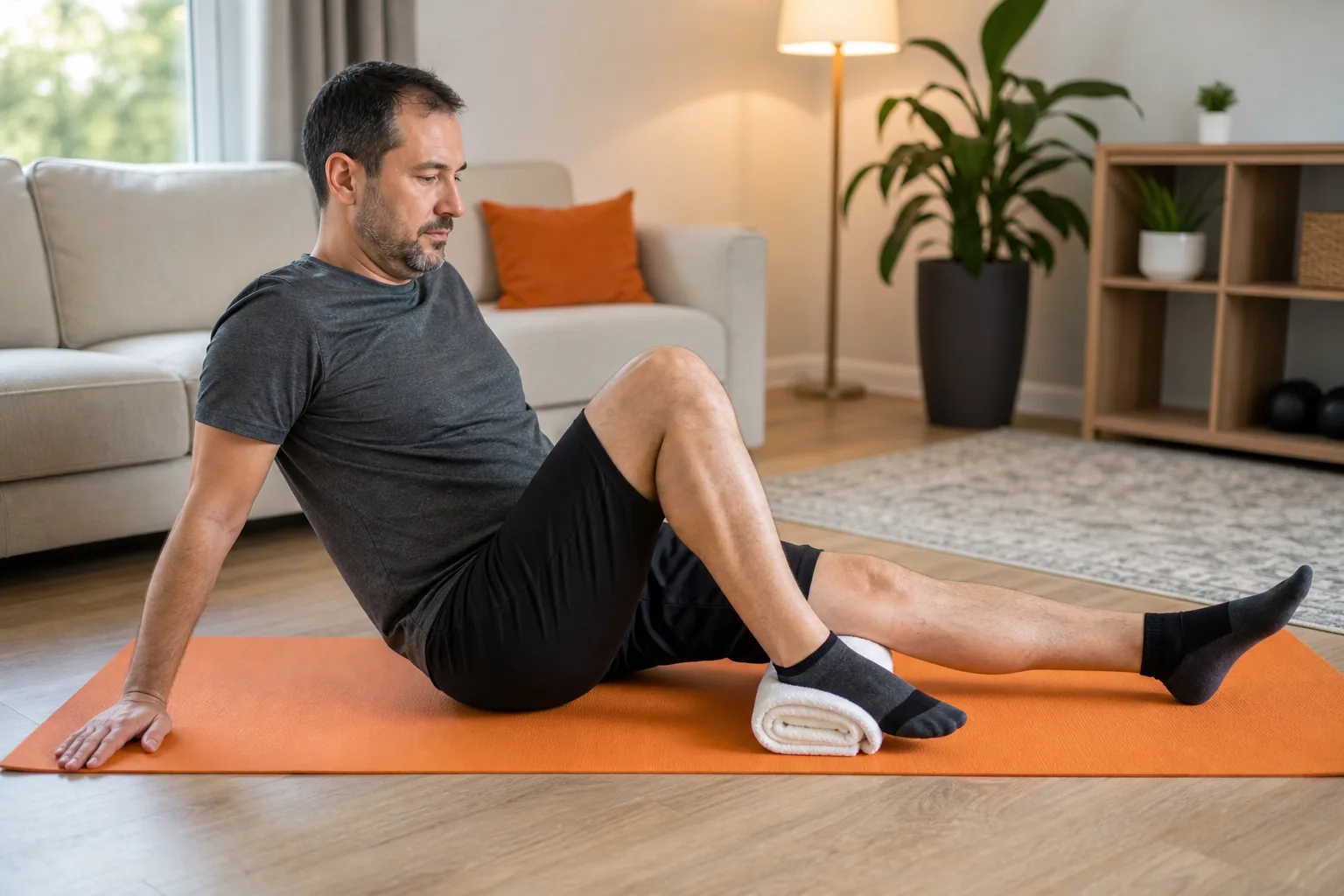
Begin with low-load exercises
Quad set:Lie with the leg straight. Tighten the front thigh by pressing the knee gently down. Hold for five seconds, then relax.
Short-arc quad:Place a rolled towel under the knee. Lift the heel until the leg is straighter, then lower it slowly.
Hip abduction:Lie on your side with the sore leg on top. Keep the hips stacked as you lift the top leg a small distance.
Supported sit-to-stand:Rise from a firm chair while keeping the knee lined up with the middle toes. Use your hands if needed.
Begin with a small number of smooth repetitions. A common research-based approach uses strengthening more than three times each week for up to eight weeks, but the right amount depends on your symptoms and starting level. Do not copy a set number if your knee swells or hurts more afterwards.
Low-impact aerobic work can support fitness too. Walking on a flat surface, cycling with a comfortable seat height or exercising in water may suit some people. Severe arthritis can make weight-bearing activity hard, so water-based exercise may feel easier. Choose the option that lets you move with steady form.
Watch your alignment
As you bend the knee, aim the kneecap towards the second or third toe. Try not to let the knee collapse inward. Your foot also affects the chain above it. If your arch rolls in heavily or one shoe wears far more than the other, an assessment may help decide whether footwear or an orthotic could support your movement.
Balance work needs care. Single-leg standing and similar drills may help control, yet they can aggravate symptoms for some people with arthritis. Hold a bench or kitchen counter. Stop if the knee becomes painful or unsteady.
Increase only one thing at a time. First add a few repetitions. Later, add light resistance or a longer walk. If pain lasts into the next day, return to the last level that felt settled. If your knee pain is linked with running, our runner’s knee treatment guide explains practical ways to manage symptoms, rebuild strength and return to activity safely. Our knee pain rehabilitation information explains how exercise may fit with an assessment and a tailored plan.
Food and body-weight changes may also reduce the load on a sore knee when they are appropriate for you. Aim for steady habits rather than a harsh diet. A GP or dietitian can help if weight management is part of your health plan.
Frequently Asked Questions
How can I relieve knee pain quickly at home?
You can often calm a mild flare by stopping the aggravating task, using a wrapped cold pack and raising the leg while you rest. Then try gentle movement rather than staying still for hours. Sharp pain, sudden swelling, locking or buckling needs professional assessment instead of repeated home treatment.
Is it better to use ice or heat for knee pain?
Ice may feel better after a new flare or when swelling is present, while heat may help stiffness without new swelling. Use either for comfort and protect your skin. If swelling is sudden, severe or linked with an injury, seek advice rather than relying on heat or cold alone.
What exercises help knee pain?
Gentle quadriceps work, hip abduction and low-impact aerobic exercise can help many people manage knee pain. Start with controlled movements that do not increase symptoms. Water exercise may suit people who find weight-bearing painful. A clinician should adjust the plan for a suspected tear, major injury or unstable knee.
Should I stretch a painful knee?
You can try gentle stretching when tight muscles add to a mild, stable knee problem. Stretch the quadriceps, hamstrings and calf without forcing the joint. Hold a mild stretch and stop before sharp pain. Avoid stretching into a catch, strong swelling or pain after a recent twist.
When should I see someone about knee pain?
You should seek care when the knee gives way, locks, swells suddenly or cannot take weight. Arrange an assessment if symptoms do not settle after several weeks of sensible self-care. Unleashed Health Chiropractic in Ascot Vale can assess musculoskeletal knee problems and discuss whether chiropractic care and rehabilitation are suitable for you.
Conclusion
Start with a stable-knee check, settle the flare, restore gentle movement, then build strength in small steps. If your knee keeps swelling, catches or limits your daily life, book an assessment with Unleashed Health Chiropractic in Ascot Vale so we can tailor a safe plan with you.


Comments