


Morning Stretches for Stiffness: 10-Minute Routine
Waking up stiff can make your first few steps feel harder than they should. Gentle movement gives your joints and muscles time to wake up before the day gets busy. We’ll take you through a calm sequence for your spine, hips, legs, chest and neck. Keep the range easy, breathe slowly, and stop if a move causes pain.
Table of Contents
Step 1: Warm Up With Gentle Movement
Start these morning stretches for stiffness with movement, not deep holds. Your body has been still for hours, so the first aim is to raise comfort and motion without forcing a stretch.
Stand beside your bed or sit on its edge if your balance feels unsteady. Take five slow breaths. Let each exhale soften your shoulders.
March gently:Lift one knee, then the other. Keep your feet low and your pace easy for 30 to 60 seconds.
Roll your shoulders:Make five slow circles backwards. Then make five forwards.
Wake your ankles:Lift your toes towards your shins. Then point them away. Repeat five times on each side.
Turn your upper body:Sit or stand tall. Turn your chest a little to the left, then to the right. Keep your hips facing forward.
Move with your breath. Breathe in as you return to the middle. Breathe out as you turn or reach. A gentle warm-up is especially useful before longer static holds. Guidance from Mayo Clinic on safe stretching also advises warming up first, moving slowly, and avoiding bouncing.
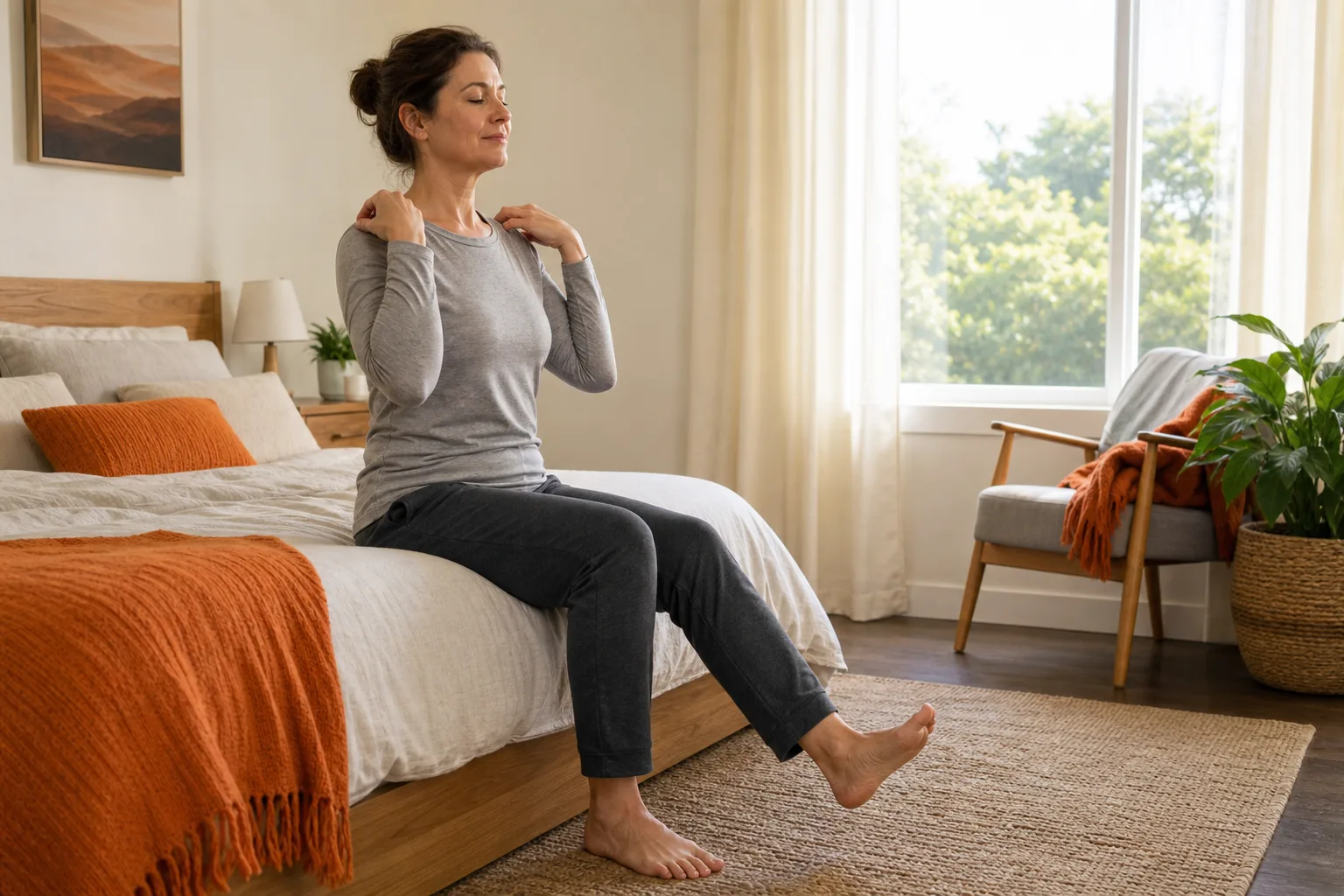
Key Takeaway:Your first few minutes should feel like a wake-up call for your joints, not a test of flexibility.
By now, you should feel a little warmer and more aware of how your body moves. If you already feel sharp pain, marked weakness or unusual dizziness, skip the routine and seek health advice.
Step 2: Mobilise Your Spine, Lower Back and Core
These morning stretches for stiffness focus on the lower back, hips and trunk. Use smooth motion first, then add light muscle work to help you feel steadier.
Pelvic tilts
Lie on your back with your knees bent and feet flat. Gently flatten your lower back towards the floor by tilting your pelvis. Hold for two seconds, then release into a small arch. Repeat for 30 to 60 seconds.
Keep the movement small. You should feel motion through your pelvis rather than strain in your back. Breathe out as you flatten your back. Breathe in as you release.
Cat-cow
Move onto your hands and knees. Place your hands below your shoulders and your knees below your hips. As you breathe out, round your back and let your head follow. As you breathe in, lower your chest slightly and lift your gaze without pushing into your neck.
Flow slowly for five to ten cycles. This move gives your spine motion through flexion and extension. It can also help you notice which part of your back feels restricted. Keep the range small if your lower back is sore.
Glute bridge
Stay on your back with your knees bent. Press your feet into the floor and tighten your buttocks. Lift your hips a short way, pause for two seconds, then lower with control. Try five to eight repetitions.
You should feel this mainly through your buttocks. If you feel it in your lower back, lift less and reduce the effort. For more lower-back guidance, our advice on gentle stretches for lower back pain explains how to adjust your position.
Finish with a gentle knee rocker. Keep both knees bent and let them move a little from side to side. Your shoulders stay relaxed on the floor. Five slow movements each way are enough.
By now, you should have some easy movement through your spine and a light sense of core support. Do not chase a strong stretch first thing in the morning. Control matters more than distance.
Step 3: Stretch Your Hips, Hamstrings, Quads and Calves
Once your body is warm, add longer holds for the legs. Morning stretches for stiffness work best when you feel mild tension, not a sharp pull or joint pain.
Half-kneeling hip flexor stretch
Kneel with your right knee down and your left foot in front. Tuck your pelvis slightly, then shift your weight forward until you feel a stretch at the front of your right hip. Keep your chest tall. Hold for 20 to 30 seconds, then change sides.
If kneeling bothers your knee, place a folded towel beneath it. You can also do the move standing with one foot behind you. Avoid arching your lower back to gain more range.
Supported hamstring stretch
Lie on your back with one knee bent. Lift the other leg and hold behind the thigh. Slowly straighten the raised leg only as far as feels easy. A towel can help if your hands cannot reach comfortably. Hold for 20 to 30 seconds, then switch sides.
Side-lying quad stretch
Lie on one side and bend the top knee. Reach back to hold your ankle, or use a strap if reaching is difficult. Draw the heel towards your buttock until you feel the front of your thigh lengthen. Keep your knees close. Hold for 20 seconds, then change sides.
Calf stretch
Face a wall and place both hands on it. Step one foot back. Keep the back heel down and bend the front knee. Hold for 20 to 30 seconds, then swap legs. Keep the back foot pointing forward rather than turning it out.
Stretching can support flexibility and joint range of motion, but the effect depends on regular, gentle practice. Mayo Clinic’s stretching guidance recommends slow movement, relaxed breathing and stopping when pain appears. If you have osteoporosis, recent surgery or an unstable joint, ask a qualified health professional which positions suit you.
By now, you should feel more space through your hips and legs. You do not need to reach your toes. A smaller, repeatable stretch is often the better choice.
Step 4: Open Your Chest, Shoulders and Neck
These morning stretches for stiffness target areas that can tighten after side sleeping or long hours at a desk. Keep your neck relaxed and avoid pulling your head into position.
Chest opener
Stand in a doorway with your forearms resting against the frame. Step one foot forward until you feel a mild stretch across your chest. Keep your ribs down and your chin level. Hold for 15 to 20 seconds.
If the doorway position feels too strong, stand upright and clasp your hands behind your back. Let your hands move slightly away from your body while you draw your shoulder blades down. Do not force your elbows straight.
Shoulder rolls and reach
Roll both shoulders up, back and down five times. Then reach both arms towards the ceiling without shrugging. Lower them as you breathe out. Repeat three times.
Gentle neck side bend
Sit tall. Let your right ear move towards your right shoulder until you feel a mild stretch on the left side of your neck. Keep your left shoulder heavy. Hold for 10 seconds, then change sides.
Do not pull on your head. Also avoid large neck circles if they make you dizzy or bring on pain. If neck tightness is a daily issue, our guide to relieving tight neck muscles at home includes extra posture and self-care tips.
Finish with five slow breaths. Breathe in through your nose if comfortable. Let the exhale last a little longer than the inhale. This gives you a calm pause before you stand and start the day.
Pro Tip:If you work at a desk, repeat the shoulder rolls later in the day rather than making your morning stretch harder.
By now, you should have movement through your chest, shoulders and neck without forcing any joint. If a headache, arm symptom or neck pain worsens, stop the exercise.
Step 5: Build a Safe 4-Minute or 10-Minute Morning Routine
The best morning stretches for stiffness are the ones you can repeat. Choose the shorter plan on rushed mornings. Use the full routine when your body needs more time to warm up.
Your 4-minute option
Minute 1:March gently, roll your shoulders, and move your ankles.
Minute 2:Do pelvic tilts for 30 seconds, followed by five cat-cow cycles.
Minute 3:Stretch one hip flexor, then the other. Use about 20 seconds per side.
Minute 4:Do a calf stretch on each side, then take five slow breaths.
Your 10-minute option
Spend two minutes on gentle movement. Use two minutes for pelvic tilts, cat-cow and glute bridges. Give three minutes to the hips, hamstrings, quads and calves. Use the final two minutes for your chest, shoulders and neck. Keep one minute for calm breathing and a slow return to standing.
Use a chair, wall or bed for balance when needed. People over 50 may prefer to begin seated and move to standing once their ankles and hips feel ready. If kneeling is uncomfortable, choose the standing version of the hip stretch and place a cushion under your knees for floor work.
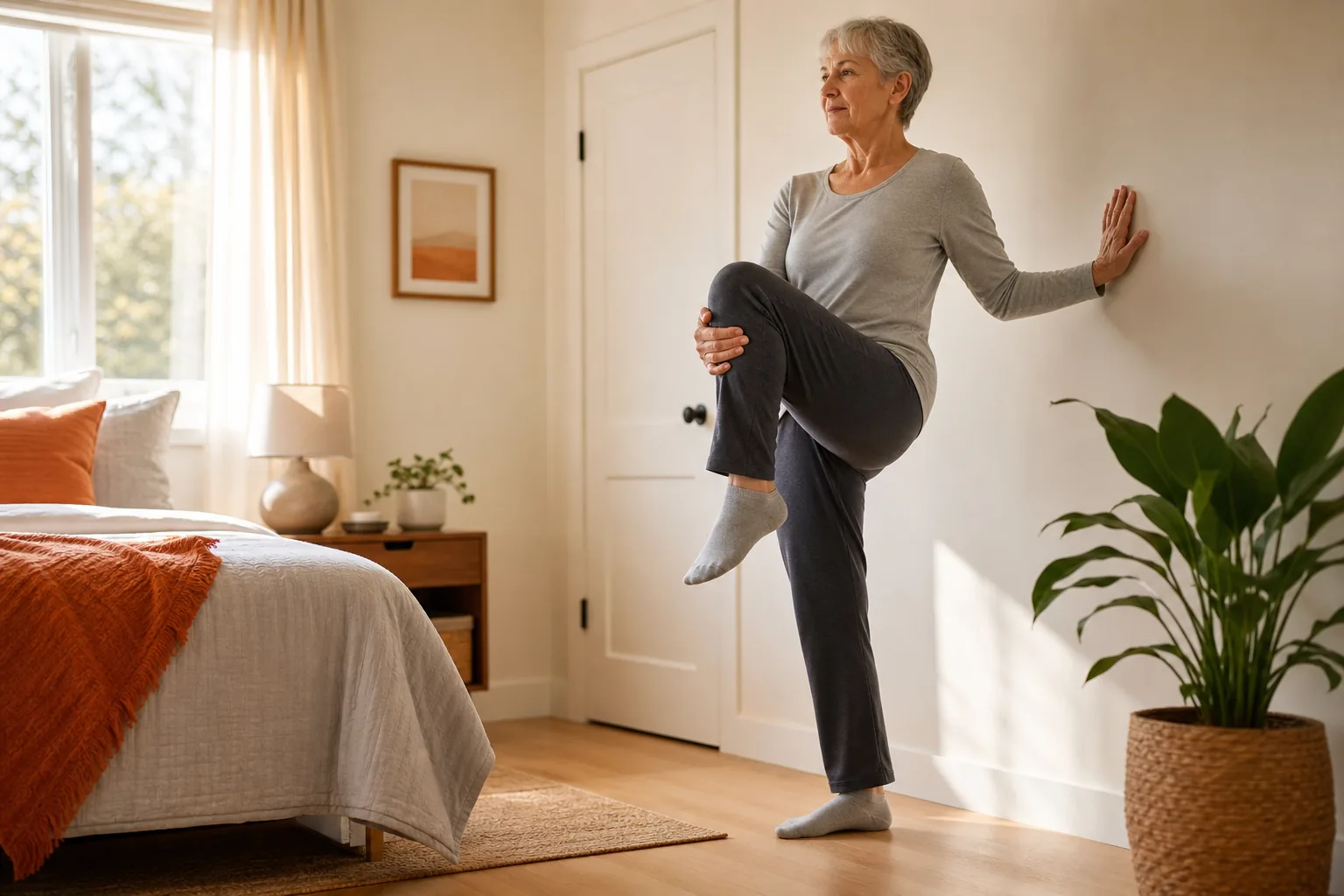
Keep the first round easy. Static holds of around 20 to 30 seconds can suit many people, but you can start with 10 seconds if you feel very stiff. Never bounce. Mild tension is acceptable. Sharp pain, tingling, numbness or increasing symptoms are reasons to stop.
Consistency matters more than pushing deeper. Try the short routine on most mornings, then review how your body responds over the next few days. If stiffness is severe, lasts well into the day or comes with weakness, loss of balance or unexplained weight loss, arrange an assessment.
At Unleashed Health Chiropractic , we take the time to understand how back, neck or hip symptoms affect your daily life. We tailor advice to your movement, health history and goals rather than handing you the same routine as everyone else.
Morning Stretches for Stiffness FAQ
Are morning stretches good for stiffness?
Yes, gentle morning stretches can help you move more freely when stiffness follows a night of limited movement. Start with joint motion and light muscle work before longer holds. Keep each movement comfortable. Stretching should not cause sharp pain, worsening symptoms or a feeling of instability.
How long should I hold a morning stretch?
Hold most gentle stretches for about 10 to 30 seconds when you first wake up. Start at the shorter end if you feel cold or sore. Keep breathing and avoid bouncing. You do not need a deep stretch to gain useful movement.
Should I stretch before or after getting out of bed?
You can do gentle movements in bed or while sitting on its edge, but get up slowly if you feel stiff or unsteady. Begin with ankle pumps, shoulder rolls and easy marching. Save deeper hip or hamstring holds until your body feels warmer.
Can I do these stretches if I have lower back pain?
You may be able to use gentle pelvic tilts, cat-cow and supported hip movements, but lower back pain has many possible causes. Stop if symptoms become sharp or travel down a leg. Recent injury, weakness, numbness or bowel and bladder changes need prompt medical assessment.
When should I see a chiropractor about morning stiffness?
Consider an assessment when morning stiffness keeps returning, limits work or sleep, or does not settle with gentle movement. Unleashed Health Chiropractic can assess your movement and discuss suitable care. We understand that the right plan depends on your symptoms, history and goals.
Start with the 4-minute routine tomorrow morning and keep every movement easy. If stiffness keeps returning or affects your normal day, Unleashed Health Chiropractic can help you work out the next sensible step.


Comments