


Posture Correction Exercises: A Simple Guide
Good posture isn't about holding yourself stiff all day. It's about having enough movement and strength to change position with ease. Research-backed posture correction exercises often use props such as a cushion or Swiss ball, while popular home drills need no gear. We'll start with simple checks, then build towards safe strength work.
Table of Contents
Step 1: Check Your Starting Position and Move Comfortably
Start posture correction exercises by checking how you stand, sit and move before you try to change anything. Your usual position gives us useful clues, but it isn't a diagnosis.
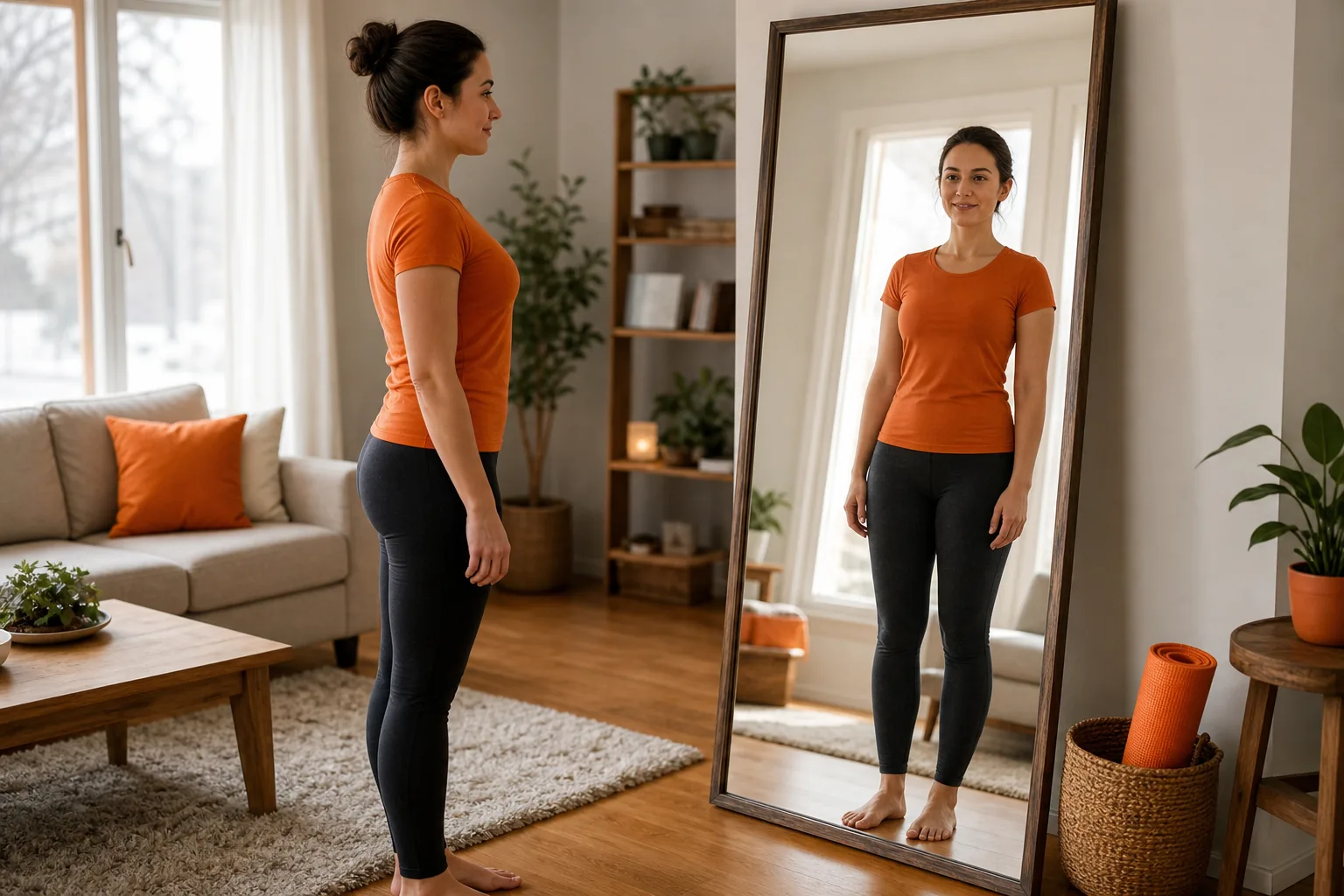
Stand side-on to a mirror with your feet relaxed. Let your arms hang. Notice whether your head sits far in front of your chest, whether your shoulders round forward, or whether your lower back feels tightly arched. Then turn to face the mirror. Look for a marked shift in your shoulders, pelvis or knees.
Small differences between the two sides are common. A posture assessment should look from the front, side and back because one view can miss a change in another part of the body. Posture assessment can be one part of understanding how you move.
Now take three slow breaths. On each breath, let your ribs expand without lifting your shoulders. Walk for a minute. Your aim is to find a position that feels easy, not to force your chin back or squeeze your shoulder blades.
Keep your gaze level.
Let your knees stay soft.
Shift your weight between both feet.
Stop if you feel sharp pain, dizziness, pins and needles or new weakness.
Take one photo from the side if you want a simple record. Don't judge the photo as good or bad. Use it to notice change over time.
Posture | unleashedhealth explains why your sitting, sleep and work habits can affect how your neck and back feel. We take the time to look at the whole pattern rather than chase one body part.
By now you should have a comfortable starting position and one clear area to work on. Keep the first session gentle.
Step 2: Mobilise Your Upper Back, Shoulders and Neck
Upper-back mobility gives your neck and shoulders more room to move during posture correction exercises. The goal is smooth motion, not a hard stretch.
Upper-back extension
Sit on a firm chair. Place your hands across your chest. Keep your feet on the floor and gently lift your breastbone as you lean your upper back over the chair back. Don't throw your head back. Return to the start and repeat slowly.
Try five comfortable repetitions. If the chair edge presses into your spine, place a folded towel over it. You should feel movement through the middle of your back, not a pinch in your lower back.
Shoulder extension with a band
Anchor an elastic band at chest height. Hold it with both hands. Keep your elbows straight as you draw your hands down and slightly behind your body. Pause when your shoulders stay relaxed, then return with control.
This band exercise is described by an exercise resource as a shoulder-extension exercise that can support upper-back posture. Use light tension. If your shoulder rolls forward or your ribs flare, the band is too strong or your range is too large.
For the neck, sit tall and glide your head back as if making a small double chin. Keep your eyes level. Hold for a few seconds, then relax. Don't push your head into your hands or crane your neck upwards.
People who spend long periods at a screen may also need more frequent position changes. Set the screen near eye level, keep the keyboard close, then stand or walk before stiffness builds. If your main issue is a forward head position, our guide to How to Fix Forward Head Posture gives extra detail.
Make the movement smaller if you have a sensitive neck. A mild stretch can be fine. Tingling, arm pain or a headache that worsens means you should stop and seek advice.
Step 3: Build Core, Hip and Spinal Stability
Strength work helps you keep a comfortable position while you sit, walk or lift. These posture correction exercises should feel steady rather than exhausting.
Bridge
Lie on your back with your knees bent and feet flat. Let your arms rest beside you. Gently tighten your lower tummy, then lift your pelvis until your body forms a comfortable slope from your shoulders to your knees.
Pause briefly. Lower slowly. Keep your ribs relaxed and avoid pushing into a big lower-back arch. Begin with a few controlled repetitions and stop before your hamstrings cramp.
Bird-dog
Start on your hands and knees. Place your hands below your shoulders and your knees below your hips. Brace lightly, then slide one leg back without twisting your pelvis. Once that feels easy, add the opposite arm.
Hold the position only while you can keep your back steady. Return to the start before changing sides. Think of length, not height. A lower leg and arm position is still useful.
Research on scoliosis-focused exercise includes spinal stabilisation work, balance drills and Swiss-ball exercises. One peer-reviewed paper describes these methods as ways to support core control and balance, but it doesn't provide a universal difficulty level or safety screen for every person. That matters because a drill that suits one back may irritate another.
For hip control, stand near a bench and move one leg out to the side without leaning your trunk. Keep the movement small. This is similar to a hip-abduction exercise, which targets the muscles around the outer hip and can support posture.
If you have back pain, a disc problem, recent injury or pain that travels into your leg, get individual advice before adding harder variations. Unleashed Health Chiropractic can assess how your back, hips and daily tasks work together, then tailor a plan to your needs.
By now you should have one upper-body drill and one lower-body drill that you can perform without holding your breath or bracing hard.
Key Takeaway:Choose the version that lets you keep your breathing calm and your spine controlled. Better form beats more repetitions.
Step 4: Add Breathing and Daily Posture Practice
Breathing turns posture correction exercises into a skill you can use during normal tasks. You don't need to hold a perfect pose all day.
Sit or lie in a comfortable position. Place one hand on your lower ribs. Breathe in through your nose if that feels easy. Let the ribs widen under your hand. Breathe out slowly while your shoulders stay down.
Repeat for several calm breaths. Keep your jaw loose. If you feel light-headed, return to normal breathing. The aim is quiet, easy breathing, not the biggest breath you can take.
Then practise posture during one daily task. At your desk, move the screen closer to eye level and place both feet on the floor. When standing at the kitchen bench, shift your weight instead of locking your knees. While carrying a bag, change sides before one shoulder takes all the load.
Use a movement reminder rather than a demand to sit straight. Each time it appears, ask three questions:
Can I soften my shoulders?
Can I let my ribs move?
Can I change position now?
Record whether the exercise felt easy, moderate or too much. A simple log can help you spot patterns. If you already track workouts, a workout log can help you record reps, sets, rest and effort , which may help you keep strength work gradual.
Posture is a moving task. A good work setup helps, but it won't replace regular movement. Aim to stand, walk or stretch briefly during long sitting periods.
We understand that headaches and neck tension can make this step frustrating. If a movement repeatedly brings on a headache, don't push through it. Get the cause checked before progressing.
Step 5: Progress Gradually and Know When to Seek Guidance
Progress means doing a little more while your symptoms stay settled. It doesn't mean forcing your body into a textbook shape.
For the first week, keep the routine small. Choose one mobility drill, one strength drill and a short breathing practice. Notice how you feel during the exercise and later that day. If symptoms stay calm, add a repetition or a little time in the next session.
Change one thing at a time. You might first add control to a bridge. Later, you could add a light band to shoulder extension. Don't increase resistance, range and training days together.
Seek prompt medical assessment if you have new loss of strength, worsening numbness, trouble with balance, loss of bladder or bowel control, unexplained fever, or severe pain after a significant injury. These signs need more than a home exercise plan.
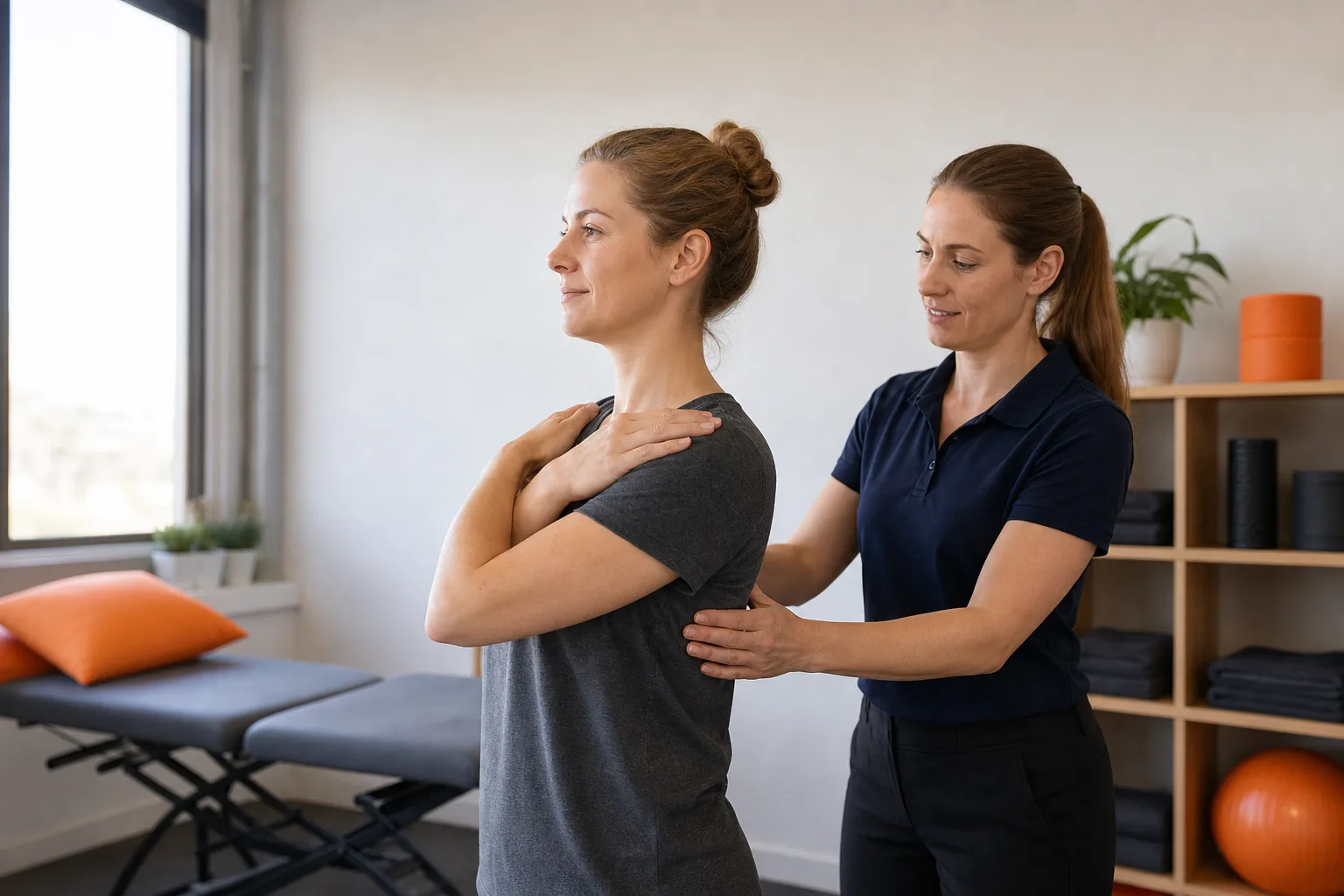
Book personalised guidance when pain keeps returning, your neck pain spreads into an arm, your back pain travels into a leg, or you can't find a comfortable starting position. A chiropractor or other suitable health professional can assess your movement and refer you on when needed.
At Unleashed Health Chiropractic in Ascot Vale, we take the time to understand how your symptoms affect work, sleep, sport and home life. We tailor care and exercise advice to your presentation. A chiropractic adjustment may be considered when appropriate, but it isn't a substitute for screening or a graded plan.
Bring your notes or a short video of the exercise to an appointment. That gives the clinician useful detail about your form and response. Stop any drill that causes sharp pain, new nerve symptoms or a clear increase in your usual complaint.
Pro Tip:Judge progress by easier movement and steadier daily activity, not by how rigidly upright you can sit.
FAQ
What are the best posture correction exercises?
The best posture correction exercises are the ones you can do with control and without worsening symptoms. Start with a gentle upper-back movement, a light neck glide, a bridge or bird-dog, then add calm breathing. Your ideal mix depends on your strength, pain pattern, injury history and daily demands.
Can posture exercises fix a rounded back?
Posture exercises may help you move more freely and build strength around a rounded position, but they can't fix every cause of spinal curvature. Some changes are flexible and linked to habits. Others relate to bone shape or a diagnosed condition. Seek an assessment if the curve is marked, painful or getting worse.
How often should I do posture exercises?
Most people can begin with short, comfortable sessions and build slowly. Quality matters more than a strict daily target. Repeat a few easy movements during the week, then check how your body feels later. If symptoms rise or last longer, reduce the amount and ask a health professional for a tailored plan.
Are posture correction exercises safe for neck pain?
Posture correction exercises can be safe for some people with neck pain, but the right choice depends on the cause. Use a small range and stop if pain spreads, numbness appears, or a headache worsens. Persistent neck pain deserves an assessment, especially when it affects sleep, work or arm movement.
When should I see a chiropractor for posture?
See a chiropractor when posture concerns come with recurring pain, reduced movement or symptoms that interfere with daily life. You should also seek care when home exercises have not helped or you aren't sure how to progress. Unleashed Health Chiropractic can assess your movement and discuss suitable next steps in Ascot Vale.
Conclusion
Start with a comfortable position, add gentle mobility, then build strength in small steps. Keep a note of what helps and stop when symptoms change in a worrying way. If neck, back or hip problems keep returning, Unleashed Health Chiropractic can provide personalised guidance in Ascot Vale. We look forward to helping you move with more confidence.


Comments