


Exercises for Lower Back Pain: Safe Steps
Exercise can help a sore lower back, but the wrong move can make symptoms worse. The safest plan starts with a quick health check, then builds from calm movement to gentle strength work. We’ll show you how to choose exercises for lower back pain and when to seek help from a qualified health professional in Ascot Vale.
Table of Contents
Step 1: Check Whether Exercise Is Appropriate Today
Before trying exercises for lower back pain, decide if your symptoms are safe to manage with light movement. Pain that feels mild and steady may respond well to gentle activity. Severe, new, or changing pain needs more care first.
Stop and seek prompt medical advice if you have new loss of bladder or bowel control, numbness around the groin, or marked weakness in a leg. You should also seek urgent care after a major fall or crash, or if back pain comes with fever or unexplained weight loss.
These signs don't mean something serious is certain. They do mean you shouldn't test your back with home exercise. A health professional can check your symptoms and guide the next step. It is also important to consider the cause and the person's wider health needs; see this low back pain information .
For less severe pain, use this short check:
Can you walk around the room without a sharp rise in pain?
Can you breathe in without bracing hard or holding your breath?
Does your pain settle within a short time after you stop?
Do you have normal strength and feeling in both legs?
If the answer is no, keep the session to easy walking and speak with a qualified practitioner. At a local chiropractic clinic, we take the time to ask how the pain affects your work, sleep, and daily tasks before suggesting a plan.
Choose a good day for your first session. Your goal is calm movement, not a test of toughness.
Step 2: Start With Gentle Movement and Breathing
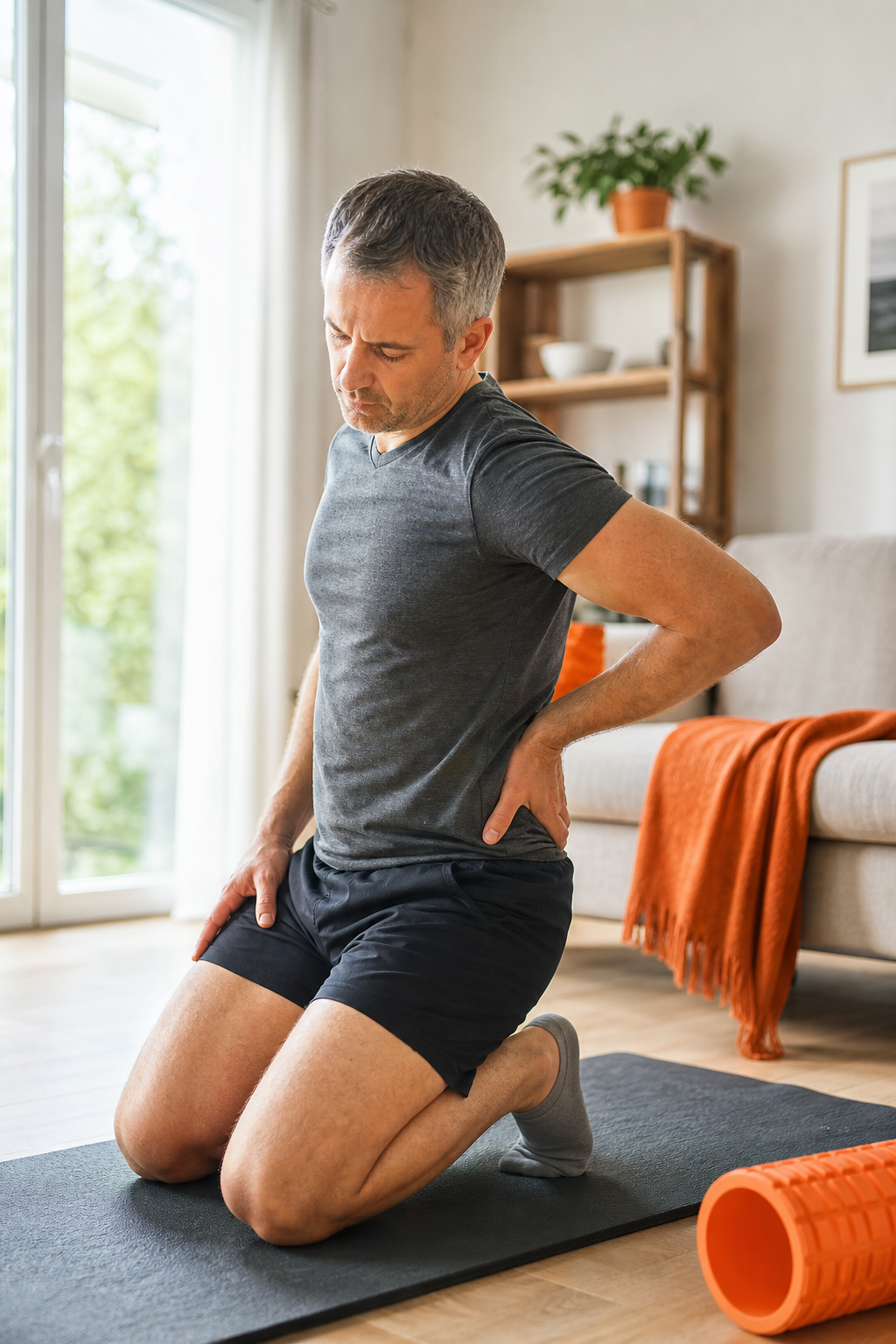
Gentle movement is the first stage of exercises for lower back pain because it lets you test how your body responds. Pick a warm room and wear clothes that don't restrict your hips or ribs.
Start with five minutes of easy walking. Walk at a pace that lets you speak in full sentences. If walking feels too much, stand near a bench and shift your weight from one foot to the other.
Next, try relaxed breathing. Lie on your back with your knees bent, or sit in a firm chair. Place one hand on your lower ribs. Breathe in through your nose without forcing your belly out. Breathe out slowly and let your shoulders drop.
Take six to eight easy breaths. Don't push into pain. A soft breath can help you stop gripping the muscles around your spine, which often happens when you feel worried about movement.
Now add small movements:
Slide one heel away, then bring it back. Change sides.
Roll each knee a small way towards the other side, then return.
Stand tall and gently move your hips back as if reaching for a chair.
Use a small range at first. The movement should feel smooth, not forced. A mild stretch can be acceptable, but sharp pain, spreading pain, or new tingling is a reason to stop.
Some people need more support before they exercise. Our chiropractic care in Ascot Vale and Moonee Ponds may include an assessment plus soft tissue work, stretches, or rehabilitative exercise when appropriate. We tailor the plan to your findings rather than handing everyone the same routine.
Pro Tip:Rate your symptoms before movement, during movement, and ten minutes after. A session that leaves you worse for hours was too much.
Step 3: Perform These Gentle Lower Back Mobility Exercises
Once your back feels settled after walking and breathing, add one or two mobility exercises for lower back pain. Work slowly. Keep the range small enough that you can relax your jaw and breathe normally.
Pelvic tilt
Lie on your back with your knees bent and feet on the floor. Gently flatten your lower back towards the floor by tipping your pelvis. Hold for a moment, then let your back return to its natural curve.
Repeat the movement only while it feels easy. You should feel the pelvis move, not a hard squeeze in your lower back. If lying down increases your pain, try the same small tilt while standing with your back against a wall.
Cat-camel movement
Start on your hands and knees, with your hands under your shoulders. Slowly round your back a little, then ease it in the other direction. Don't force either end range.
Think of this as a moving stretch, not a pose you must hold. Place a folded towel under your knees if the floor feels uncomfortable. If weight through your hands causes wrist pain, use a bench or skip this exercise.
Knee-to-chest variation
Lie on your back and bring one knee towards your chest. Use your hands behind the thigh rather than pulling on the knee. Stop before the movement causes pinching or sends pain down the leg.
Try one side at a time. Some backs feel better with this motion, while others prefer a more neutral position. Your response is the guide.
A paper describes a Modified Roman Chair movement targeting the erector spinae and multifidus. It requires a Roman chair.
That equipment detail matters. Many online lists name a movement but leave out the dose and the technique cues. If an exercise needs special equipment, ask a practitioner to show you how to set up safely before you try it.
Step 4: Build Strength Gradually Without Flare-Ups
Strength work helps you tolerate daily tasks, but it should come after you can move with control. Exercises for lower back pain should feel manageable during the session and settle soon after.
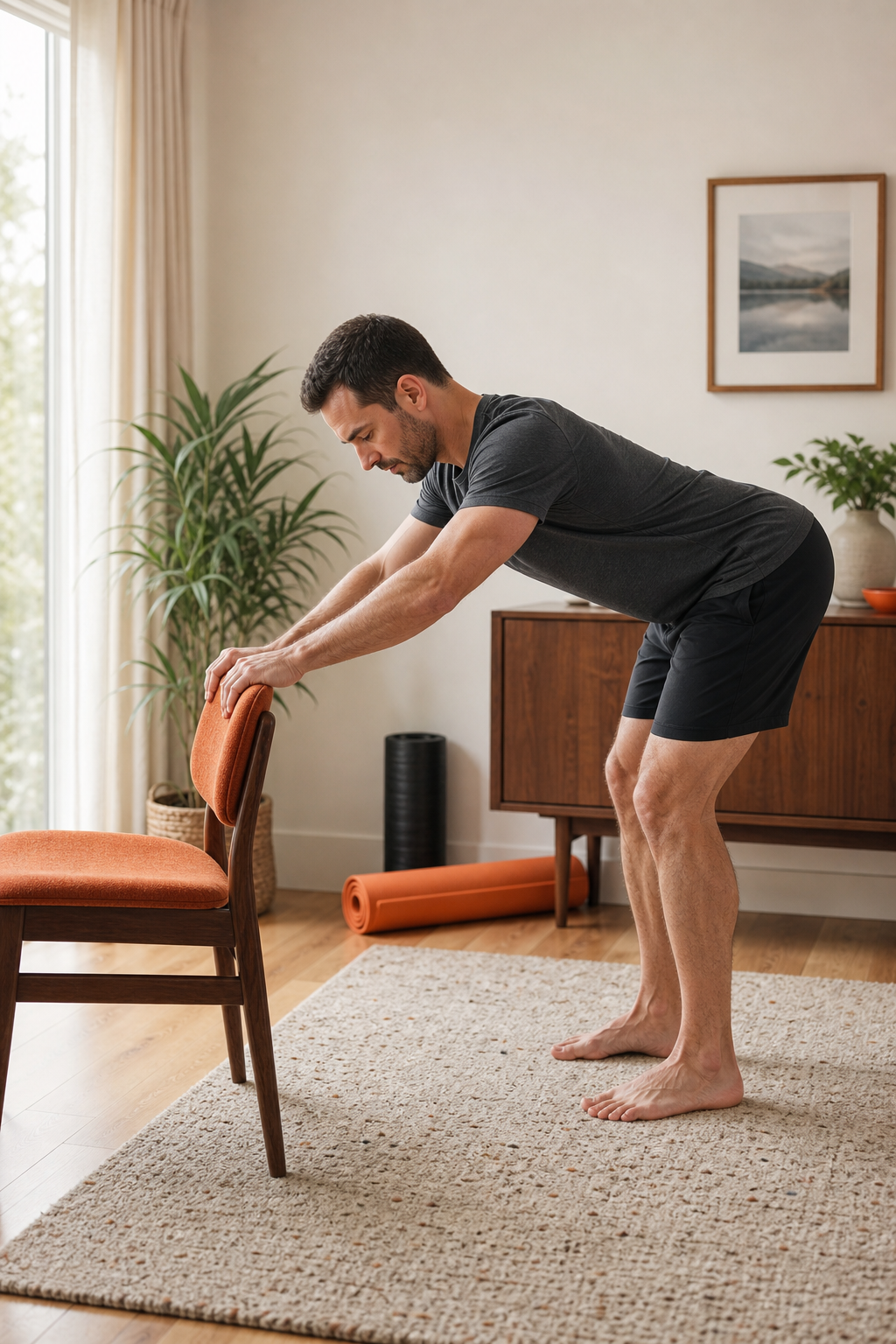
Begin with a supported hip hinge. Stand with your feet under your hips. Place your hands on your upper thighs. Bend slightly at the knees, then move your hips back while keeping your chest open. Return to standing by pressing through your feet.
Practise near a wall or chair. The aim is to learn how to bend from the hips without rounding or bracing your back too hard. This pattern can help when you lift a laundry basket or reach into a low cupboard.
Choose one strength exercise
Try a bridge if lying on your back feels comfortable. Bend your knees, tighten your lower stomach gently, and lift your hips a small amount. Lower with control. If your hamstrings cramp, reduce the lift or stop.
Another option is a sit-to-stand from a firm chair. Keep your feet under your knees. Lean forward slightly, stand up, then sit down slowly. Use your hands for support if needed.
Start with a small amount of work. For example, you might perform a few controlled repetitions, rest, and judge your response later that day. We won't give a fixed dose because the right amount depends on your symptoms, strength, sleep, and current activity.
The Modified Roman Chair targets the erector spinae and multifidus.
Unleashed Health Chiropractic may use rehabilitative exercise as part of care when it fits your needs. You can read about the clinic's chiropractic techniques and rehabilitative exercise to understand how home movement may fit within a wider plan.
Key Takeaway:Increase only one thing at a time, such as range, time, or repetitions. If symptoms flare, return to the last comfortable level.
Step 5: Turn the Exercises Into a Safe Weekly Routine
A safe weekly routine for lower back pain needs room for good days and bad days. Set a short time aside for movement rather than waiting for a large block of free time.
On a settled day, begin with walking and breathing. Add one mobility exercise. If that goes well, finish with one strength exercise. Keep the session short enough that you still feel able to do normal tasks afterwards.
On a sensitive day, reduce the range. You might walk for less time and use only pelvic tilts or gentle position changes. Don't treat a flare as a failure. It is feedback about the load your body can manage today.
Keep a simple record for one week. Note:
What you did.
How your back felt during it.
How you felt later that day.
What happened the next morning.
This record can show patterns. Sitting for a long stretch may be worse than walking. A large exercise session may feel fine at first, then cause a late flare. Those details help us adjust the plan.
Change one factor at a time. First add a little walking time. Then test a slightly larger movement range. Once that feels steady, add a small amount of strength work. Don't increase everything in the same week.
Pause the routine and arrange an assessment if pain keeps spreading, weakness appears, sleep becomes hard, or your function keeps falling. We understand that persistent back pain can affect your confidence. A review of your progress can help tailor advice to your daily life in Ascot Vale or nearby Melbourne suburbs.
The best routine is the one you can repeat without fear or a major flare. Keep it steady before you make it harder.
FAQ: Exercises for Lower Back Pain
What is the best exercise for lower back pain?
There isn't one best exercise for every person with lower back pain. Gentle walking, breathing, pelvic movement, and supported strength work are common starting points. Choose the movement that feels controlled and doesn't spread symptoms. If your pain is severe, new, or linked with weakness or numbness, seek an assessment before exercising.
Should I stretch when my lower back hurts?
You can try gentle stretching when it feels comfortable, but don't force a painful range. A mild stretch should settle when you stop. Sharp pain, tingling, or pain that travels down the leg means you should stop. Some people do better with easy movement than with long held stretches during a flare.
Can exercise make lower back pain worse?
Yes, exercise can worsen lower back pain if the load or range is too high. Pain that builds during a session or stays worse for a long time suggests you did too much. Reduce the range, shorten the session, or pause that movement. Get professional guidance if symptoms keep rising.
How often should I do lower back exercises?
How often you exercise depends on your symptoms and recovery after each session. Start with a short routine that leaves you able to manage normal tasks. Repeat it only when your back has settled. A practitioner can help set the dose, since many exercise sources don't provide clear sets or repetitions.
When should I see a chiropractor for back pain?
See a chiropractor when pain limits your work, sleep, walking, or normal movement, or when it keeps returning. A chiropractor can assess your symptoms and discuss suitable care. Seek urgent medical help for new bladder or bowel changes, groin numbness, marked leg weakness, or severe pain after major injury.
Conclusion
Start with a symptom check, then use calm movement before adding strength. Don't force a movement that spreads pain or leaves you worse later. If your back pain keeps limiting daily life, explore the services at Unleashed Health Chiropractic and arrange an assessment in Ascot Vale. We’d love to help you find a safe next step.


Comments