


How to Fix Bad Posture: Daily Steps
If you catch yourself leaning towards your screen or rounding your shoulders, small changes to your setup and daily habits can help. Learning how to fix bad posture starts with noticing what you do now, then making adjustments you can keep up.
Try the steps below at your own pace. Stop any movement that causes pain, dizziness or chest discomfort, and seek individual advice if symptoms persist or worsen.
Table of Contents
Step 1: Notice Your Usual Posture and Symptoms
First, take stock of how you sit, stand and move during an ordinary day. Posture describes how you hold your body while still or moving. It isn't a test you need to pass, and there isn't one rigid position you must hold all day.
Stand as you normally would, without pulling your shoulders back or lifting your chin. Notice whether your head sits forward, whether your shoulders feel tense, or whether you shift your weight to one side. Then check your seated position at your desk. Where do your feet rest? Do you lean towards the screen to read?
A posture guide explains that posture includes both still and moving positions , and describes the spine's natural curves. That can be a useful reminder: aim for a relaxed, supported position rather than forcing yourself to sit bolt upright.
For a few workdays, make a brief note when discomfort appears. Record what you were doing and how long you'd been in that position. For example, note whether your neck feels stiff after reading on a laptop, or whether your lower back feels uncomfortable after a long meeting. A simple pattern can help you choose which change to try first.
Posture alone doesn't explain every ache. Pain can have different causes, so don't use a mirror or checklist to diagnose yourself. If symptoms affect daily tasks, keep returning, or are getting worse, discuss them with a health professional. You can also read about screen habits and text neck if looking down at a device is a regular part of your day.
By now, you should have one or two clear situations to work on, such as leaning forward to see a laptop or sitting for long stretches without changing position.
Step 2: Adjust Your Workstation for Comfortable Support
Set up the space around your body, rather than trying to hold a perfect pose. Start with your chair. Sit back so it supports you, and bring it close enough to the desk that you don't need to reach forward. Let your shoulders rest instead of holding them back with effort.
Place your screen in front of you, near eye height, and close enough that you can read without leaning in. If you work on a laptop, a stable stand can raise the screen. Pair it with a separate keyboard and mouse so your hands can stay near your body. Keep the mouse beside the keyboard, not far out to the side.
Set your seat so your feet can rest flat. If they don't reach the floor, use a stable footrest. Let your elbows bend comfortably near desk height, with your wrists in a relaxed line as you type. Adjust one part at a time, then use the setup for a while before deciding whether it feels easier to maintain.
Workstation advice from Fellowes covers screen height, back support and keeping items within reach. The same ideas can work at a kitchen table. A stack of stable books may raise a screen, while a cushion can add support if your chair feels uncomfortable.
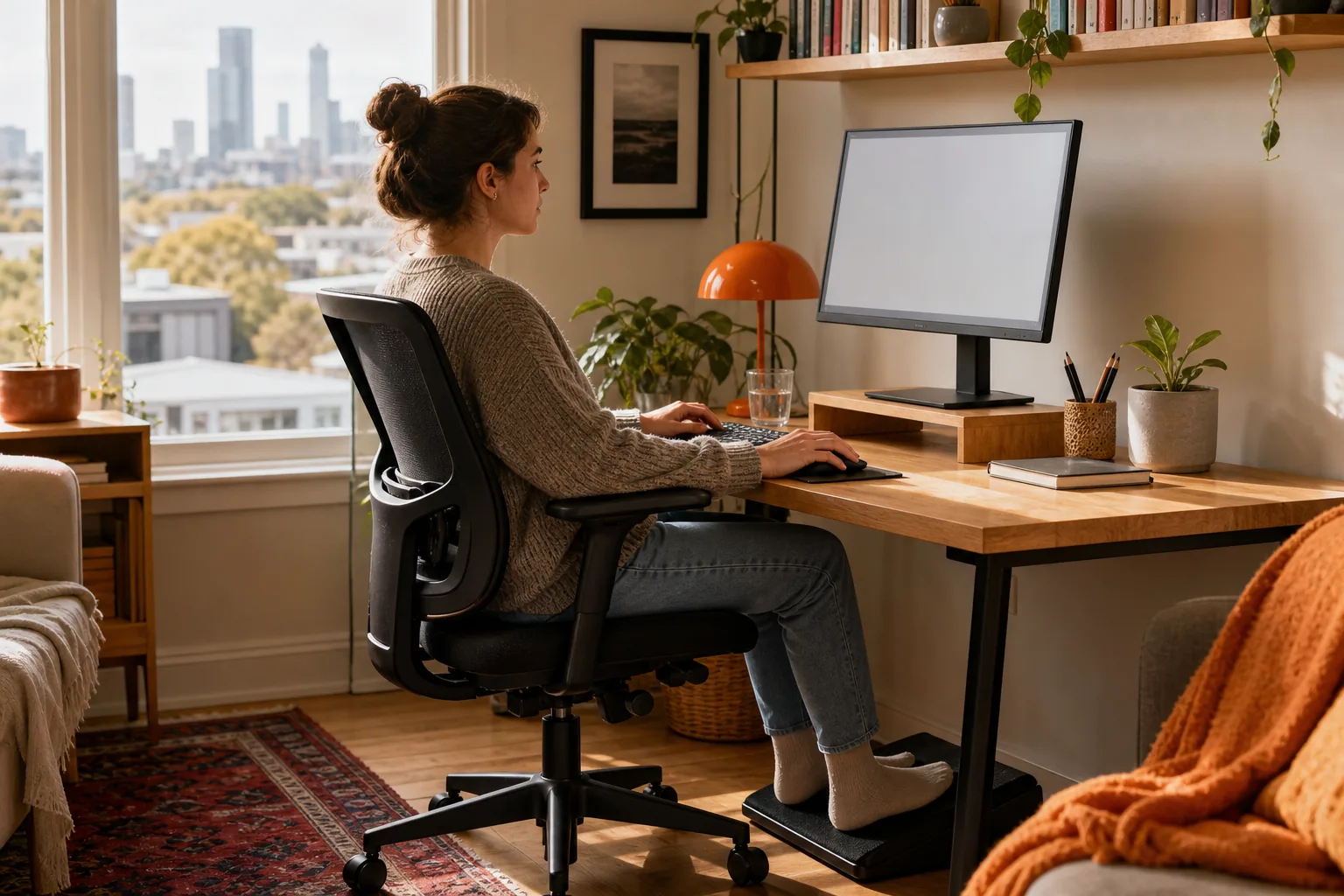
Check your setup again when the task changes. A video call may pull you towards the screen, while reading paper notes can make you bend your neck. Move the notes closer to the screen or raise them on a stand, then return to a comfortable seated position.
Don't spend money on new gear before checking what you can adjust. Raise the screen, move the keyboard closer, or bring frequently used items into easy reach. Comfort is the guide, not a stiff pose.
Step 3: Change Positions and Take Movement Breaks
Even a well-set desk can't make one position comfortable forever. Set a reminder to change position every 30 to 60 minutes, then stand, walk briefly or do a gentle stretch. Treat the reminder as a prompt, not a strict rule.
If you can't leave your desk, shift your weight in the chair and relax your shoulders. Look away from the screen for a moment. When you can stand, take a short walk to refill water or collect a document. The aim is to break up long periods of staying still, not to complete a workout each time.
Try matching breaks to tasks. After finishing a call, stand while you review your next task. Before a long meeting, check that your feet are supported and your screen is in front of you. If you work from home, a reminder on your phone or computer can help you remember to move. Keep the alert simple so it doesn't become another thing to ignore.
Changing position doesn't mean you need to stand all day. Try a mix that suits your work and your body. If standing makes you uncomfortable, choose a different gentle movement, such as walking a few steps or sitting back with support.
Notice how your symptoms respond over time. If discomfort repeatedly appears during a task, look at the task itself. You may need to move the screen or change the way you handle documents, rather than trying harder to hold your shoulders back.
Keep the habit small: one reminder, followed by a brief change in position. A routine you can repeat is more useful than a complicated schedule that doesn't fit your workday.
Step 4: Practise Gentle Posture Exercises
Choose a few slow movements that feel comfortable, and begin with a short session. You don't need to force a stretch or push through pain. Try the sequence below as a starting point, not as a treatment plan for a specific condition.
Try a chin glide
Sit or stand with your eyes facing ahead. Gently draw your head back, as if making a small double chin. Keep your chin level rather than looking down. Pause briefly, then relax. Use a small range of motion and stop if it brings on pain, dizziness or other concerning symptoms.
Open the front of your chest
Stand near a doorway and rest one forearm on the frame at a comfortable height. Step forward a little until you feel a mild stretch across the front of your chest. Keep your ribs relaxed. Ease out of the stretch if it feels sharp or uncomfortable, then try the other side if it feels suitable.
Move your shoulder blades gently
Sit or stand with your arms relaxed. Draw your shoulder blades slightly back and down, without squeezing hard or lifting your chest. Hold for a moment, then let go. Think of it as a gentle movement, not a pose you need to keep throughout the day.

Keep the first session short. You might try a few easy repetitions of each movement, then stop and see how your body feels later. If you want a longer routine, add time gradually rather than adding several new exercises at once.
For a broader set of gentle movements, see our page on posture exercises for back pain . If you already do strength training, ask a qualified health professional or exercise professional how to adapt it to your needs. You can also consider home strength workouts or coaching as a separate option.
Stop exercising and seek medical advice if a movement causes pain, dizziness or chest discomfort. If you have an injury or a health condition, get individual guidance before starting a new exercise routine.
Step 5: Get Individual Advice and Know When to See a Doctor
Seek individual advice if posture changes feel hard to manage, discomfort keeps returning, or movement is limited. A health professional can ask about your symptoms and daily activities, then discuss which options may suit your situation. You don't have to wait until you have a perfect account of every symptom.
Arrange a GP or doctor review if pain persists or worsens, or if you notice new tingling, numbness or weakness. Seek urgent medical care for sudden severe symptoms, major weakness, or new problems controlling your bladder or bowel. If symptoms follow an injury, get medical advice. These signs need assessment rather than a posture exercise.
Unleashed Health Chiropractic is a chiropractic clinic in Ascot Vale serving nearby Melbourne suburbs. The clinic's initial appointment includes a medical history and physical, neurological, orthopaedic and chiropractic examinations, along with a postural assessment. Spinal X-rays may be covered by Medicare if clinically indicated.
Unleashed Health Chiropractic also lists rehabilitation exercises among its services. An assessment can help you discuss whether chiropractic care or another option is appropriate for your needs. Any plan should be based on your situation, and results can vary. Chiropractic care doesn't replace medical assessment when you have concerning symptoms.
Bring notes about what makes your symptoms better or worse, how long they've been present, and which daily tasks are affected. That gives you a clearer starting point for a conversation about next steps.
Frequently Asked Questions
How long does it take to improve posture?
There isn't a set timeline for posture changes. It depends on your habits, comfort, health and the changes you're making. Start with one workstation adjustment and a regular movement break, then notice how you feel over time. If pain persists or worsens, seek individual advice rather than waiting for a posture routine to solve it.
Should I sit up straight all day?
No, you don't need to hold one rigid position all day. Aim for a comfortable, supported posture, then change position regularly. Forcing your shoulders back or bracing your body can feel tiring. Adjust your chair and screen so you can work without leaning, and take brief movement breaks as your day allows.
Is it normal for posture exercises to feel uncomfortable?
A gentle stretch or mild effort can feel unfamiliar, but pain isn't a goal. Reduce the range or stop if a movement causes pain, dizziness or chest discomfort. If symptoms keep returning, get advice before continuing. People with an injury or health condition may need an exercise plan tailored to them.
When should I see a doctor about posture-related pain?
See a GP or doctor if pain persists, gets worse, or limits your usual activities. Seek urgent medical care for sudden severe symptoms, new weakness, or changes in bladder or bowel control. New numbness or tingling also needs medical advice. Don't rely on posture changes alone to assess or manage these symptoms.
Conclusion
Start with one change you can make today, such as raising your screen or setting a movement reminder. If symptoms persist, speak with a GP or arrange an assessment with Unleashed Health Chiropractic in Ascot Vale to discuss suitable options. We understand each person's needs differ, and we look forward to helping you consider your next step.


Comments