


Stretches for Neck Pain: A Step-by-Step Routine
If your neck feels tight, a few slow movements may help you feel more comfortable. These stretches for neck pain focus on the neck and shoulders, with clear cues to help you move gently and know when to stop.
We analyzed 35 comments and questions from YouTube and Quora about Neck pain stretches and found that 34% mentioned the frequency of doing the stretches.
Table of Contents
Step 1: Check That Gentle Neck Movement Is Suitable for You
Start by checking how your symptoms began and how you feel now. Mild stiffness after sitting still can be different from pain that started after a fall, a car accident or another sudden injury. If an accident caused your neck pain, or the pain is sudden and severe, get urgent medical help rather than trying these stretches.
Pause the routine and seek prompt medical advice if you have new weakness or numbness, or if neck pain comes with chest pain, shortness of breath or sweating. These symptoms need more than a home stretch routine. If you’re unsure what’s safe, ask your GP or another qualified health professional before you start.
For mild symptoms without warning signs, sit comfortably and try a small, slow head turn in each direction. Keep your shoulders relaxed. A gentle pulling feeling may be part of a stretch, but don’t force the movement or continue if it causes pain, dizziness or symptoms that spread into your arm.
For mild symptoms without warning signs, gentle movement can be a reasonable starting point, but it isn’t a diagnosis. Persistent pain, worsening symptoms or trouble with daily tasks deserve individual advice.
At Unleashed Health Chiropractic in Ascot Vale, an initial appointment includes a medical history and physical, neurological, orthopaedic and chiropractic examinations. The team also assesses posture and considers spinal X-rays covered by Medicare if they’re clinically indicated. An assessment can help guide what movement is suitable for you.
If you’re weighing up which movements to try, our neck pain exercise guide covers another gentle approach. Keep the aim modest today: comfortable movement, not a deep stretch.
Step 2: Practise a Gentle Chin Tuck
A chin tuck is a small glide of your head backwards. It targets the area around the base of your head and the top of your neck. The movement can also help you notice when your head has drifted forward while you’re reading or sitting at a screen.
Sit in a firm chair with your back supported. Let your shoulders rest.
Look straight ahead, with your jaw relaxed.
Slide your head straight back, as if making a small double chin. Keep your eyes level. Don’t look down.
Pause briefly, then return to your starting position without jutting your chin forward.
Make the glide small. You might feel light work or a mild stretch near the back of your neck. You shouldn’t need to press your head into your hand or pull on your chin. If sitting upright feels tiring, use the chair back for support and reduce the movement.
Try a few slow repetitions first. If they stay comfortable, you can build a short set into a break from screen work. There’s no need to hold your breath. Breathe out as your head glides back, then breathe in as you return. Stop if you feel pain, dizziness or tingling.
For more ideas about managing tightness at home, our guide to relieving tight neck muscles explains other gentle options. A chin tuck is a movement, not a test of how far your head can travel. Keep it easy.
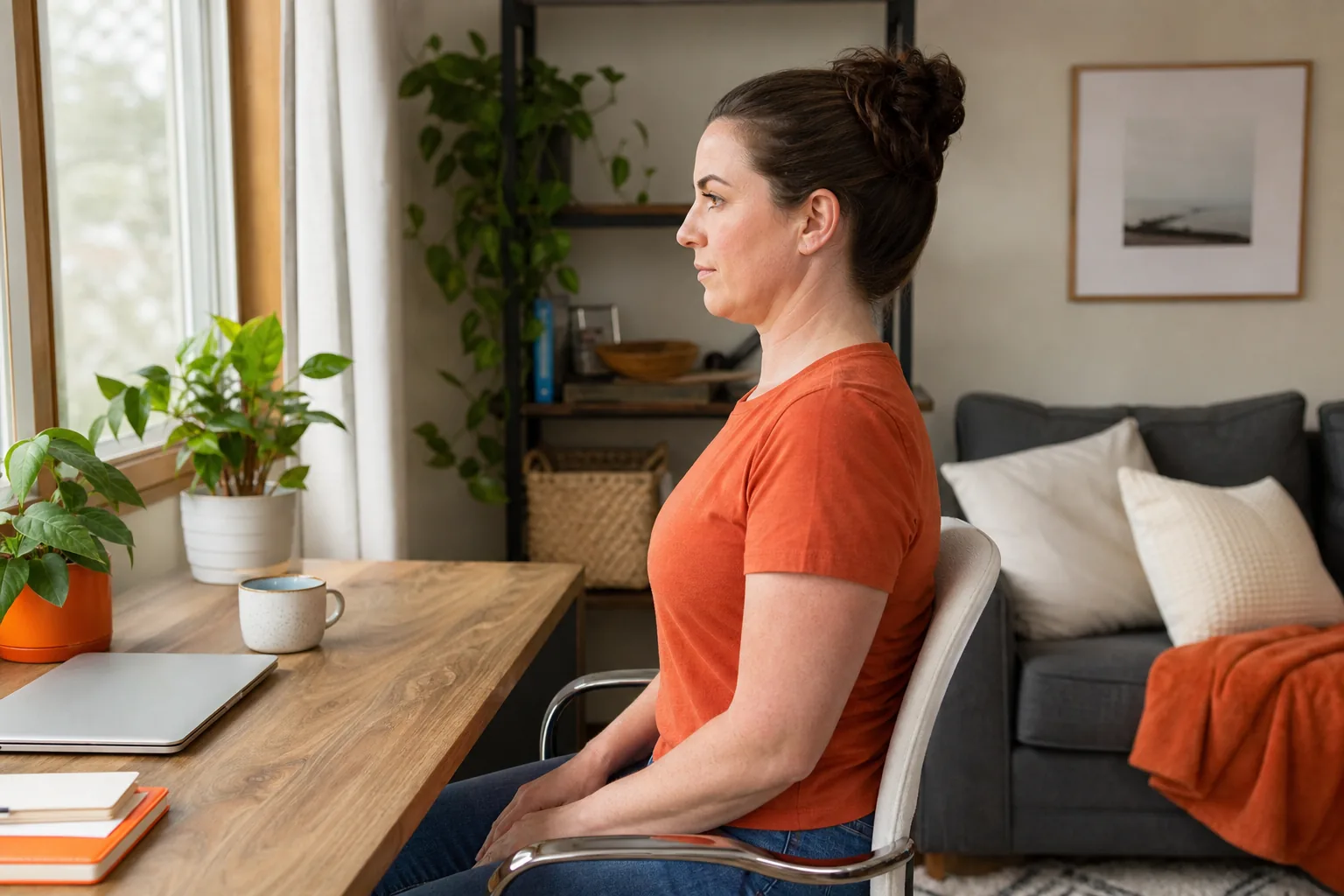
Key Takeaway:Keep the chin tuck small and smooth. Your head moves straight back, not down.
Step 3: Slowly Turn and Side-Bend Your Neck
Turning and side-bending move your neck in two different directions. Both can help you check your comfortable range of motion . They should feel controlled, not like a contest to see how far you can move.
Gentle head turns
Sit or stand tall, with your gaze forward and shoulders loose.
Slowly turn your head to one side. Stop at the first mild stretch or before discomfort.
Return to the centre, then turn the other way.
Keep your nose level as you turn. Try a few repetitions each way, moving only as far as feels comfortable. If one side feels tighter, don’t push through it. A smaller, smooth turn is a better choice than a fast twist.
Easy side-bends
Let one ear move towards the same-side shoulder, while keeping that shoulder down. Come back to centre and change sides. Don’t lift your shoulder to meet your ear, and don’t pull your head down with your hand.
Harvard Health’s neck movement advice describes a slow ear-towards-shoulder movement and says not to do it if it increases pain. That’s a helpful rule for both side-bending and turning: stop or make the movement smaller if symptoms rise.
For a visual demonstration of controlled neck movement, use the video below as a cue, not as a reason to copy a range that doesn’t suit you.
Move at a pace that lets you breathe normally. If a turn affects your ability to check traffic or drive safely, ask a health professional whether it’s safe for you to drive before getting behind the wheel.
Step 4: Ease Shoulder Tension with an Upper-Trapezius Stretch
The upper trapezius is a broad muscle that runs from the base of the skull towards the shoulders and down the upper back. It can feel tense when your shoulders creep up towards your ears. A gentle side stretch can help you move this area without yanking on your head.
Sit near the front of a chair, or stand with your weight even on both feet.
Let your shoulders drop. Keep your chest facing forward.
Place one hand behind your back, or rest it on the seat if that feels more comfortable.
Tilt your head gently to the other side, bringing the ear towards the shoulder.
Pause when you feel a mild stretch along the side of your neck. Breathe freely, then return to centre.
Repeat on the other side without pulling your head down.
Start with a short, comfortable hold and keep the stretch mild. A sharp pinch or spreading pain is a sign to stop, not to hold for longer.
Some people find it easier to do this while seated, with both feet supported. If keeping one hand behind your back strains your shoulder, let that arm rest by your side instead. You don’t need a towel or other prop for this version.
We understand that neck tension can sit alongside shoulder discomfort or headaches. Unleashed Health Chiropractic takes a full history and assesses each person before tailoring a care plan to their needs and health goals. A hands-on assessment can help you decide whether this stretch fits your situation.
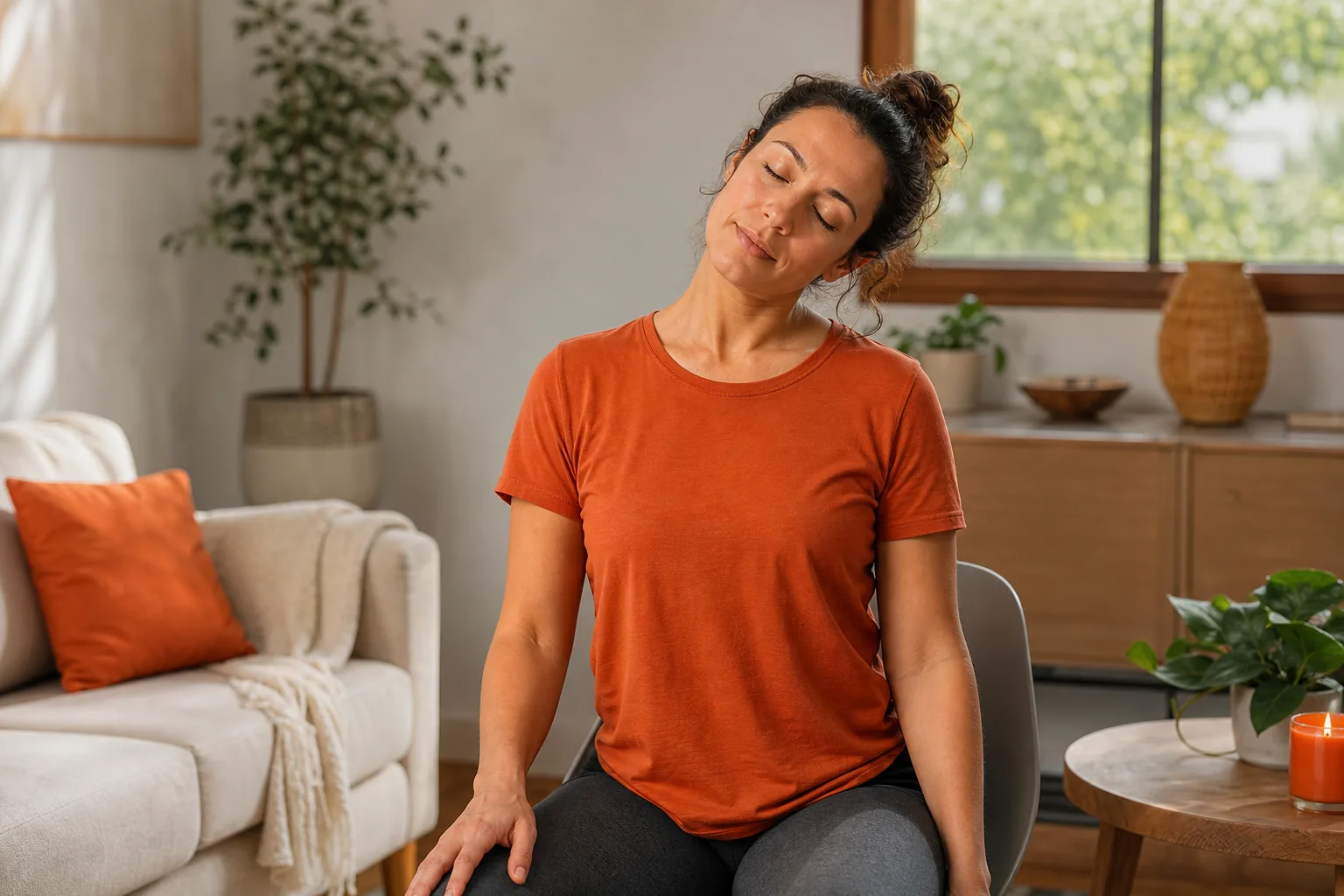
Pro Tip:Keep the shoulder on the stretching side soft and low. If it lifts towards your ear, reset before trying again.
Step 5: Put the Movements into a Comfortable Routine
A short routine is easier to repeat than a long session that leaves your neck tired. For a first try, move through one small set of chin tucks, head turns and side-bends, then finish with the upper-trapezius stretch on each side. Use a slow pace and skip any movement that doesn’t feel right for you.
For the static neck stretches, move gently, breathe freely and avoid bouncing. Stop if you feel pain. Start with a comfortable range, and don’t force it.
For chin tucks and head turns, use a few slow repetitions rather than a long hold. If the movements remain comfortable, you might repeat a brief routine during the day, especially after sitting for a while. Gentle movement through the day, with range increased gradually as comfort allows, may be helpful.
Think about what your neck is doing during everyday tasks. If you’re working at a desk, bring the screen closer to eye level so you’re not leaning forward to read. Let your shoulders rest rather than holding them stiffly back. When you sit for a long time, stand and move around when you can.
Posture isn’t one fixed position you have to hold all day. It’s more useful to change position regularly and keep your neck moving in a way that feels easy. A stretch can loosen the feeling of tension for some people, but it won’t explain every cause of neck pain or correct every posture issue on its own.
Keep a simple note of what you tried and how you felt afterwards. If a movement makes symptoms worse, leave it out. If your pain keeps coming back or affects sleep, work or daily tasks, speak with your GP or another qualified health professional. At Unleashed Health Chiropractic, care plans are tailored after a diagnosis and assessment, rather than using one routine for everyone.
Frequently Asked Questions
How often should I stretch my neck?
Try brief, gentle movement during the day if it feels comfortable. Your needs may differ, so start with a small amount and stop if symptoms increase.
Should neck stretches hurt?
No, a stretch shouldn’t cause pain. You may notice mild tension, but stop if you feel sharp pain, worsening discomfort or symptoms spreading into an arm. Don’t bounce or force the movement. If pain persists after you stop, or keeps returning, ask a health professional for advice.
Can I stretch if I have a herniated disc?
Ask a qualified health professional before starting neck stretches if you have a diagnosed disc problem. The right movement depends on your symptoms and assessment. Don’t copy a stretch that causes pain, tingling or weakness, and seek prompt advice if you develop new or worsening symptoms.
When should I get help for neck pain?
Seek urgent medical help if severe neck pain follows an accident or comes with chest pain, shortness of breath or sweating. Arrange an assessment if pain is persistent, worsening or affecting daily life. A GP or qualified health professional can help assess possible causes and guide your next steps.
Conclusion
Start with small, comfortable movements and let your symptoms set the limit. If the pain began after an injury, feels severe or isn’t settling, get individual advice before stretching. If you’re in Ascot Vale or nearby and would like an assessment, Unleashed Health Chiropractic can discuss your options and tailor care to your needs.


Comments