


How to Do Hip Flexor Stretches Safely
Been sitting for hours or repeating the same leg movements in training? Your hips may feel stiff when you stand up. We’ll walk through simple hip flexor stretches, show you how to keep the movement gentle, and explain when it’s better to seek advice first.
Table of Contents
Step 1: Check Whether Stretching Is Appropriate
Hip flexors are muscles at the front of the hip that help lift your knee and bend at the waist. The group includes the psoas major and iliacus, which join to form the iliopsoas, plus the rectus femoris at the front of the thigh. You use them when walking, climbing stairs or rising from a chair.
Long periods of sitting or repeated leg movements can leave the area feeling stiff. That feeling alone doesn’t tell you what is causing discomfort, though. Hip or groin pain can have different causes, so don’t assume a tight muscle is the whole story.
Before you stretch, notice how you feel while walking and lifting each knee. If you think you’ve injured your hip, or the pain is sharp or getting worse, pause and speak with a GP or another suitable health professional. Don’t try to stretch through an injury.
Choose a small, easy range and stop if it brings on sharp pain, tingling or a new symptom.
Before stretching, warm up with light activity, move slowly and stop if a stretch causes pain. If you have a health condition or an injury, ask a health professional which movements suit you.
Seek medical advice promptly if pain keeps worsening or makes walking hard. Severe or sudden pain, especially after an injury, needs urgent assessment. Don’t stretch while you wait for advice.
Step 2: Set Up and Try the Half-Kneeling Hip Flexor Stretch
This version puts one knee on the floor and the other foot in front. It needs little space and no special gear. A folded towel under the back knee can make the position more comfortable; place a stable chair or wall nearby if you want support.
Start on a firm, non-slip surface. Kneel on one knee, then place the other foot ahead so its sole rests on the floor. Keep the front knee above the ankle, rather than letting it drift far forward. Let your chest face ahead.
Now gently draw your belt line up, as if bringing your front hip bones toward your ribs. Keep breathing. Squeeze the buttock on the kneeling side, then shift your body forward a small amount. Stop when you feel a mild stretch at the front of that hip or thigh.
Stay there for about 20 to 30 seconds if comfortable. Don’t bounce or push farther to chase a stronger pull. Return to kneeling slowly, then switch sides and compare how each side feels.
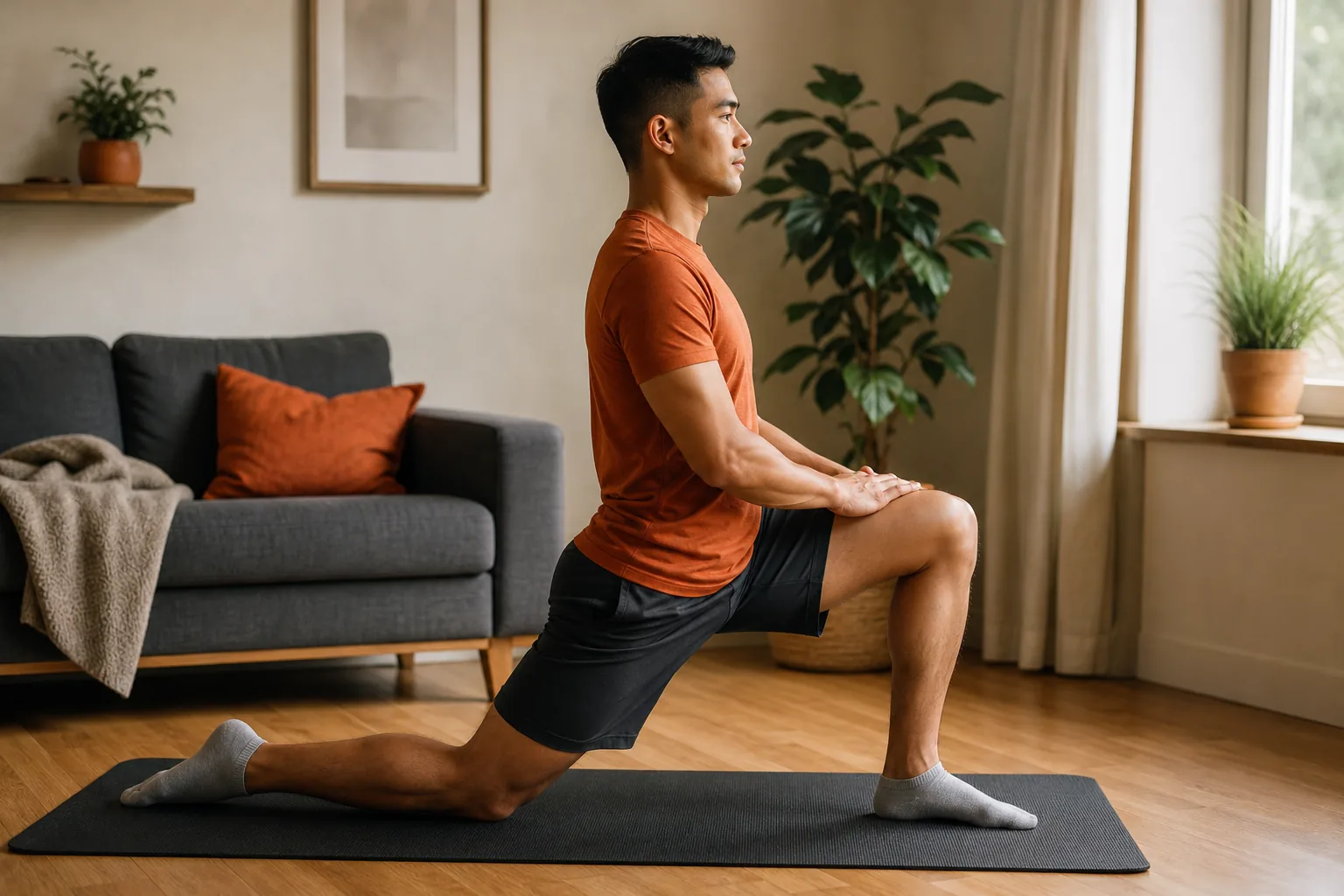
Common form slips are easy to spot. If your lower back arches, reset your ribs above your pelvis and reduce the forward shift. If the front knee feels strained, move the foot slightly farther forward or stop. You should feel a gentle pull, not a pinch inside the hip joint.
If kneeling is uncomfortable, don’t force it. Use the standing option in Step 4 or ask a health professional to help you choose a comfortable position. You can also read about gentle movement options for hip flexor pain before deciding what to try.
Step 3: Add a Gentle Pelvic Tilt or Lunge-and-Reach
A small pelvic tilt can help you find the position without pushing your hips far forward. Begin in the half-kneeling set-up from Step 2. Keep your chest relaxed, tighten your lower tummy lightly, then tuck your pelvis a little. Notice how that changes the feel at the front of the back-leg hip.
Keep the movement small. If you feel it mainly in your lower back, ease out and reset. Once the tuck feels comfortable, add a slight forward shift. You don’t need to make a deep lunge for this to count as a stretch.
Another option is a lunge-and-reach. Use a padded surface under the back knee and keep a wall or sturdy chair close by. Place one foot forward, with the opposite knee on the floor. Gently move your weight forward until you feel a mild pull at the front of the hip on the kneeling side.
From there, reach the arm on the kneeling side up and slightly across your body. Keep your shoulders loose and your ribs from flaring. The reach is optional. Leave it out if it makes you twist or arch your back.
Hold the position for a short, comfortable time, then come out slowly. Repeat on the other side only if the first side felt settled. Don’t judge the stretch by how far you can reach. A steady, easy position is more useful than forcing extra range.
Pelvic tilt and reach variations can feel different from the basic hold. Try one change at a time, so you can tell which part feels comfortable. If a movement causes sharp pain or symptoms that spread, stop and seek advice.
Step 4: Choose a Standing or Supported Stretch Variation
You don’t have to kneel to stretch the front of your hip. A standing version may suit you if floor transfers or pressure on the knee feel awkward. Stand beside a wall or sturdy chair and rest one hand on it for balance.
Step one foot back into a short split stance. Keep both feet pointing ahead and soften your knees. Tuck your pelvis gently, then shift your weight forward a little. Look for a mild pull at the front of the hip on the back-leg side.
Keep your trunk tall without lifting your ribs or arching your lower back. If you want an overhead reach, raise the arm on the back-leg side only as far as you can without losing that position. The reach is optional; leave it out if your shoulder, balance or back doesn’t feel settled.
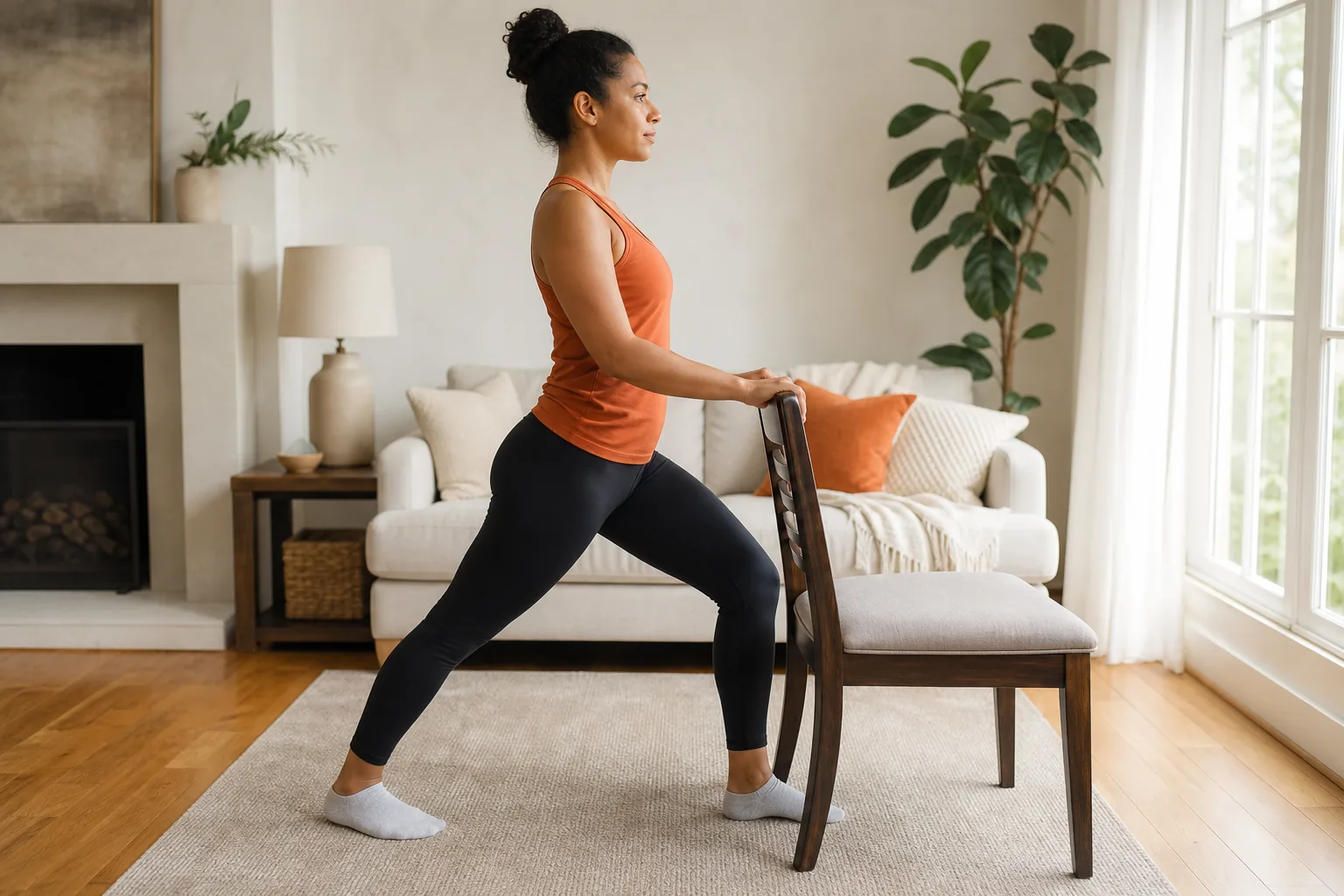
Another supported choice is a shallow standing lunge. Keep the front foot flat and the front knee softly bent. Let the back leg stay long but not locked. Move your body forward a small amount, then return to the start position if you feel a pinch or need to hold your breath.
For balance, keep your hand on the support and shorten your stance. If you’re pregnant, recovering from an injury or managing a health condition, ask your maternity care team or another health professional which position is suitable for you. Comfort and balance matter more than getting into a particular pose.
Unleashed Health Chiropractic in Ascot Vale provides chiropractic care and rehabilitation exercises. An initial appointment includes a medical history and physical, neurological, orthopaedic and chiropractic examinations; spinal X-rays are covered by Medicare if clinically indicated. An assessment can help clarify whether a particular movement fits your situation.
Step 5: Build a Short, Comfortable Stretching Routine
Keep the first routine simple. Start with five to ten minutes of easy movement, such as a gentle walk around the block or your home. Then choose one stretch: half-kneeling if it feels comfortable, or standing with support if it doesn’t.
Hold for about 20 to 30 seconds on each side, breathing normally. Try one easy round first and see how your body responds later that day.
If the stretch feels calm, you can add a second round or a gentle pelvic tilt. Change one thing at a time. For example, keep the same position and add a few seconds to the hold, rather than making the lunge deeper at the same time.
Stretching is only one part of movement. When you feel ready and the movement stays comfortable, a simple straight-leg lift while lying on your back can add a strength-focused task. Bend one knee, keep the other leg straight, then lift the straight leg a short distance and lower it slowly. Stop if it causes pain; there’s no need to add strength work during a flare-up.
If you spend much of the day seated, stand and move around from time to time instead of relying on one long stretch at day’s end. A short walk can break up the time in one position. Your routine should fit your day, not become another task you have to push through.
Note how the movement feels during the stretch and afterwards. If discomfort stays worse, reduce the range or stop and ask for advice. If symptoms keep returning or affect everyday tasks, Unleashed Health Chiropractic can assess your movement and discuss options that fit your needs. You can also use this morning stretch routine for stiffness as a guide to pacing a short session.
Frequently Asked Questions About Hip Flexor Stretches
How long should I hold a hip flexor stretch?
Start with about 20 to 30 seconds if the stretch feels comfortable. Keep breathing and stop if you feel pain. A shorter hold may suit you better at first, especially if you’re unsure how your hip will respond.
Should I stretch my hip flexor if it hurts?
Don’t stretch through sharp, worsening or injury-related pain. If you think you’ve strained your hip, speak with a GP or another suitable health professional before trying a stretch. For mild stiffness, you can test a small range, but stop if it causes pain or brings on new symptoms.
Can I do a hip flexor stretch without kneeling?
Yes. Try the supported standing version by placing one hand on a stable chair or wall, stepping one foot back, then gently tucking your pelvis. Move only until you feel a mild pull at the front of the back-leg hip. Keep the step short if balance feels uncertain.
How often should I stretch my hip flexors?
There isn’t one schedule that suits everyone. You might begin with one gentle round and repeat it on days when it feels comfortable. If you have an injury or health condition, ask a health professional what’s suitable.
When should I see a doctor for hip pain?
See a GP if pain is worsening, keeps returning or makes walking and daily tasks difficult. Seek urgent medical care for severe or sudden pain, particularly after an injury, or if you can’t put weight on the leg. Don’t use stretching as a substitute for medical assessment when symptoms concern you.
A Gentle Next Step
Choose the version that lets you breathe and move without sharp pain, then keep the range modest. If you’re unsure which movement suits your symptoms, an assessment with Unleashed Health Chiropractic in Ascot Vale can help you discuss your options and next steps.


Comments