


How to Relieve Lower Back Pain While Sleeping
Back pain can make bedtime feel like a test of patience. The best sleep position for one person may worsen symptoms for another, so start with small changes rather than forcing your body into one pose. We’ll show you how to relieve lower back pain while sleeping with position checks, pillow support, mattress advice and a clear plan for when to seek help.
Table of Contents
Step 1: Check Your Sleeping Position and Change It Gradually
When you’re working out how to relieve lower back pain while sleeping, check your position before you buy anything. Your body may be twisting for hours without you noticing.
Start on your side if it feels comfortable. Keep your hips and shoulders facing the same way. Let your knees bend slightly, but don’t curl into a tight ball. A supported side-lying position can reduce strain for some people. Research on sleep posture also found that back sleeping may worsen lumbar pain for some people, so the usual advice to sleep on your back isn’t right for everyone. Clinical research on sleep posture and spinal symptoms explains why posture needs to be matched to the person.
If side sleeping feels worse, test your back for a short period instead. Place a pillow under your knees and notice what happens when you relax. Stop if your pain rises, spreads down the leg or causes tingling. Don’t switch positions all night in a rush. Try one change for two or three nights, then compare how you feel when you wake.
Stomach sleeping often puts your lower back into a hollow position. It also makes you turn your neck to one side. If you can’t stop sleeping on your stomach, begin by placing a thin pillow under your hips and work towards side sleeping. Keep the change gradual.
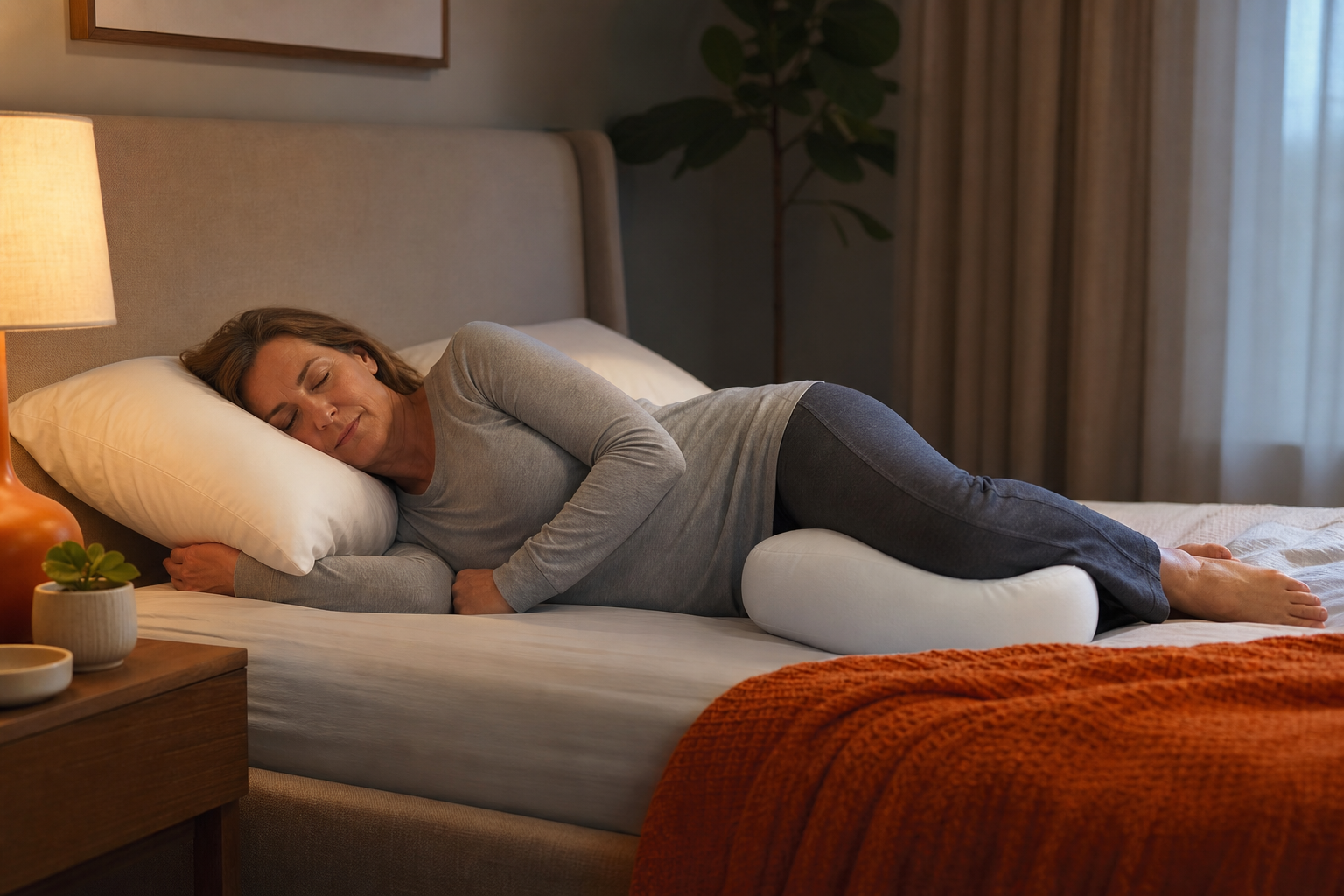
Key Takeaway:Test side sleeping first, but keep the position that lowers your symptoms rather than following a rigid rule.
Step 2: Add Pillow Support for Your Hips, Knees and Neck
Pillow support can help you relieve lower back pain while sleeping by keeping your spine closer to its usual shape. The goal isn’t to build a wall of cushions. It’s to stop your pelvis from rolling forward or your neck from bending.
For side sleeping, place one pillow between your knees. If your top knee falls forward, use a longer pillow that supports the whole leg. Your feet should stay in line with your knees. If your waist hangs away from the mattress, a small folded towel under the waist may help. Use very little height at first.
Your head pillow should fill the gap between your ear and the mattress. A pillow that’s too high pushes your neck sideways. One that’s too low lets your head drop. Lie down and ask someone to check whether your nose points in line with your breastbone. That simple check is more useful than a label such as “orthopaedic”.
For back sleeping, place a pillow under both knees. This can reduce the arch in your lower back. Some people also like a small rolled towel under the waist, but it must feel gentle. If it makes your back tighter, remove it.
Sleep position | Support to test | What to watch for |
Side | Pillow between the knees | Top hip rolling forward or neck bending down |
Back | Pillow under the knees | More pain when lying flat |
Stomach | Thin support under the hips while changing position | More arching in the lower back or neck strain |
Change one pillow at a time. If you change the mattress, head pillow and leg support together, you won’t know what helped. We take the time to ask about how you sleep, not only where it hurts. If neck tension is part of the picture, a posture and wellness assessment may help you look at the whole sleep setup.
Keep the arrangement that helps you settle and wake with less stiffness. Comfort is useful evidence.
Step 3: Improve Your Mattress and Bed Setup
A mattress that is too soft can let your hips sink. A very firm mattress can press into your shoulders and hips. For many adults with non-specific low back pain, a medium-firm mattress is a sensible place to start.
Several studies have examined mattress firmness and low back comfort. A PubMed review of mattress research discusses medium-firm options, including designs that allow firmness to be adjusted, as a useful choice for some people. Evidence on mattress firmness can help explain why a medium-firm option may be preferable to choosing a very hard mattress.
Before replacing the bed, inspect the base. A sagging frame can make a newer mattress feel uneven. Lie in your usual position for ten minutes. Ask yourself three questions:
Does one part of your body sink more than the rest?
Do you feel pressure at your shoulder or hip?
Do you wake with more pain than you had before bed?
If the mattress is old or visibly dipped, test a different bed for a few nights if possible. You don’t need to buy an expensive system on the first night. A temporary change can tell you whether firmness affects your symptoms.
Keep the bedroom setup easy to use. Place anything you need beside the bed so you don’t twist hard when reaching. When you get up, roll onto your side first. Let your legs move over the edge, then push up with your arms. This avoids a sudden bend through the lower back.
Pro Tip:Give a mattress change several nights unless it clearly increases your pain. A single night may reflect your position, activity or stress that day.
If you have pain after sitting, bending or twisting, don’t assume the bed is the only cause. Read about lumbar disc injuries in Ascot Vale and Moonee Ponds to understand why some back symptoms need a closer assessment.
Step 4: Use a Gentle Pre-Bed Routine Without Aggravating Symptoms
A gentle pre-bed routine can help you settle into a position that feels safe. It won’t fix every cause of night pain, so treat it as a comfort check rather than a test of strength.
Start with five slow breaths. Let your belly rise as you breathe in. Let your shoulders drop as you breathe out. Then walk around the room for a few minutes if movement feels better than sitting. Keep the pace easy.
Next, try one gentle movement at a time. You might lie on your back with your knees bent and slowly rock them a small distance from side to side. You could also draw one knee towards your chest, but only if that motion feels easy. Don’t force a stretch to chase a “release”. Pain that shoots down the leg, increases with each repetition or stays worse afterwards is a sign to stop.
Heat may feel soothing for some people. Use a warm pack for a short period, with a layer between it and your skin. Don’t fall asleep with a heat pack in place. If heat makes the pain throb or your skin feels numb, remove it.
Stress can also make muscles feel guarded. A short breathing exercise may be worth adding, especially if your mind stays busy in bed.
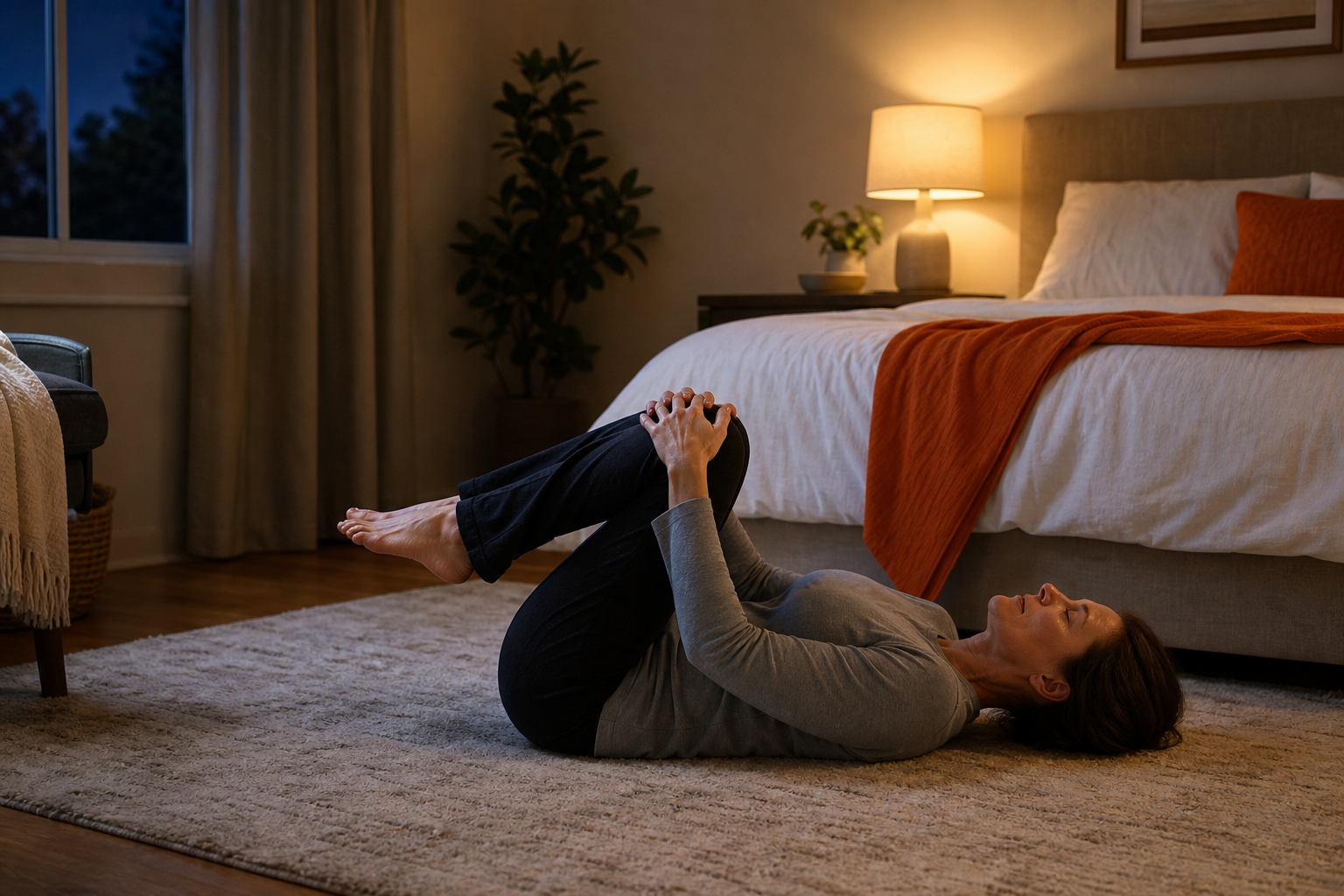
Write down what happened the next morning. Note your sleep position, the support you used and whether pain changed during the night. This turns vague frustration into useful information for your next step.
Step 5: Know When to Arrange an Assessment at Unleashed Health Chiropractic
If sleep changes don’t settle your lower back pain, arrange an assessment rather than endlessly changing pillows. Unleashed Health Chiropractic in Ascot Vale works with people from nearby Melbourne suburbs who want help understanding back pain and movement limits.
We take the time to ask when the pain began, what makes it worse and how it affects sleep. An assessment may look at spinal movement, muscle tension and how your hips, back and neck work together. We then explain what we find in plain language. If chiropractic care is suitable, the plan may include manual care, a personalised exercise plan and advice about daily posture or sleep support.
That process matters because night pain can have different patterns. Pain that stays in the centre of the lower back is different from pain that travels into the buttock or leg. Numbness, weakness or a change in bladder or bowel control needs prompt medical attention, not a new mattress or home stretch.
Seek urgent medical care if you have severe pain after a major fall, new loss of strength, numbness around the groin, or trouble controlling your bladder or bowel. You should also arrange medical advice if pain comes with fever, unexplained weight loss or a history of serious illness.
For people in Ascot Vale, Moonee Ponds, Flemington or nearby suburbs, back pain care at Unleashed Health Chiropractic can be a useful next conversation when home changes haven’t been enough. We’ll tailor advice to your symptoms rather than promise that one sleep position works for everyone.
Key Takeaway:Use sleep changes as a first step, then seek an assessment when pain persists, spreads or limits normal movement.
FAQ
What is the best sleeping position for lower back pain?
Side sleeping with support between the knees is a useful first position for many people with lower back pain. Keep your shoulders and hips aligned, and avoid curling tightly. Back sleeping with a pillow under the knees may suit others, but it can worsen symptoms for some people. Keep the position that reduces pain rather than following a fixed rule.
Should I sleep on my back if my lower back hurts?
You can test back sleeping, but it isn’t right for everyone. Lie flat with a pillow under your knees and check how you feel after several minutes. If pain increases, try supported side sleeping instead. Research has found that back sleeping may raise lumbar pain risk in some people, so comfort and symptom response should guide your choice.
Is a firm or soft mattress better for lower back pain?
A medium-firm mattress is often a reasonable starting point for lower back pain. A soft bed may let your hips sink, while a very firm bed can create pressure at the shoulders and hips. Check the bed base for sagging before replacing the mattress. Give a new setup several nights unless your symptoms clearly worsen.
How should I use a pillow for lower back pain at night?
Place a pillow between your knees when you sleep on your side. This can stop the top hip from rolling forward. When you sleep on your back, try a pillow beneath both knees. Your head pillow should keep your neck level. Change one support at a time so you can tell what helps.
When should I see a chiropractor for night-time back pain?
Arrange an assessment when pain keeps disturbing sleep, returns often or limits your daily movement. A chiropractor can discuss your symptoms and check whether chiropractic care is suitable. Seek urgent medical care for new weakness, groin numbness, bladder or bowel changes, severe trauma, fever or other serious warning signs.
Conclusion
Start tonight with supported side sleeping, a pillow between your knees and a calm check of your mattress. If your pain persists or keeps waking you, arrange an assessment with Unleashed Health Chiropractic so you can receive advice matched to your symptoms. We look forward to helping you find a safer, more comfortable way to rest.


Comments