


How to Sit With Lower Back Pain: Simple Tips
Updated: Aug 25
Sitting can make lower back pain worse, but the fix isn't always a rigid “perfect” posture. Research has found that a gentle rounded position with a flat cushion may reduce strain for some people. Use the steps below to set up your chair, find a position your back tolerates, and move before pain builds.
Table of Contents
Step 1: Check Your Pain and Set Up Your Chair
Before you change how you sit with lower back pain, note what makes your symptoms better or worse. Sit for a few minutes, then ask yourself where the pain is, how strong it feels, and whether it travels into your buttock or leg.
Don't force a posture that causes sharp pain, tingling, or a clear increase in leg symptoms. A useful chair setup starts with support rather than strain. Choose a firm chair with a backrest. Sit close enough to your desk that you don't need to lean forward to reach your keyboard.
Set the backrest so it supports your middle and lower back. If the chair has adjustable seat tilt, test a small change rather than moving it to the full range. Consider lumbar support, seat pan tilt, and a neutral spine as separate parts of chair setup. Further detail is available in the published research on seated posture .
Place your hips near the back of the seat.
Keep your screen close enough to avoid reaching.
Let the backrest carry some of your weight.
Remove bulky items from your back pocket.
Try the chair for five to ten minutes. Then stand and walk a little. If the pain settles, the setup may suit you. If symptoms spread down the leg or stay worse after you stand, change the setup again or seek an assessment.
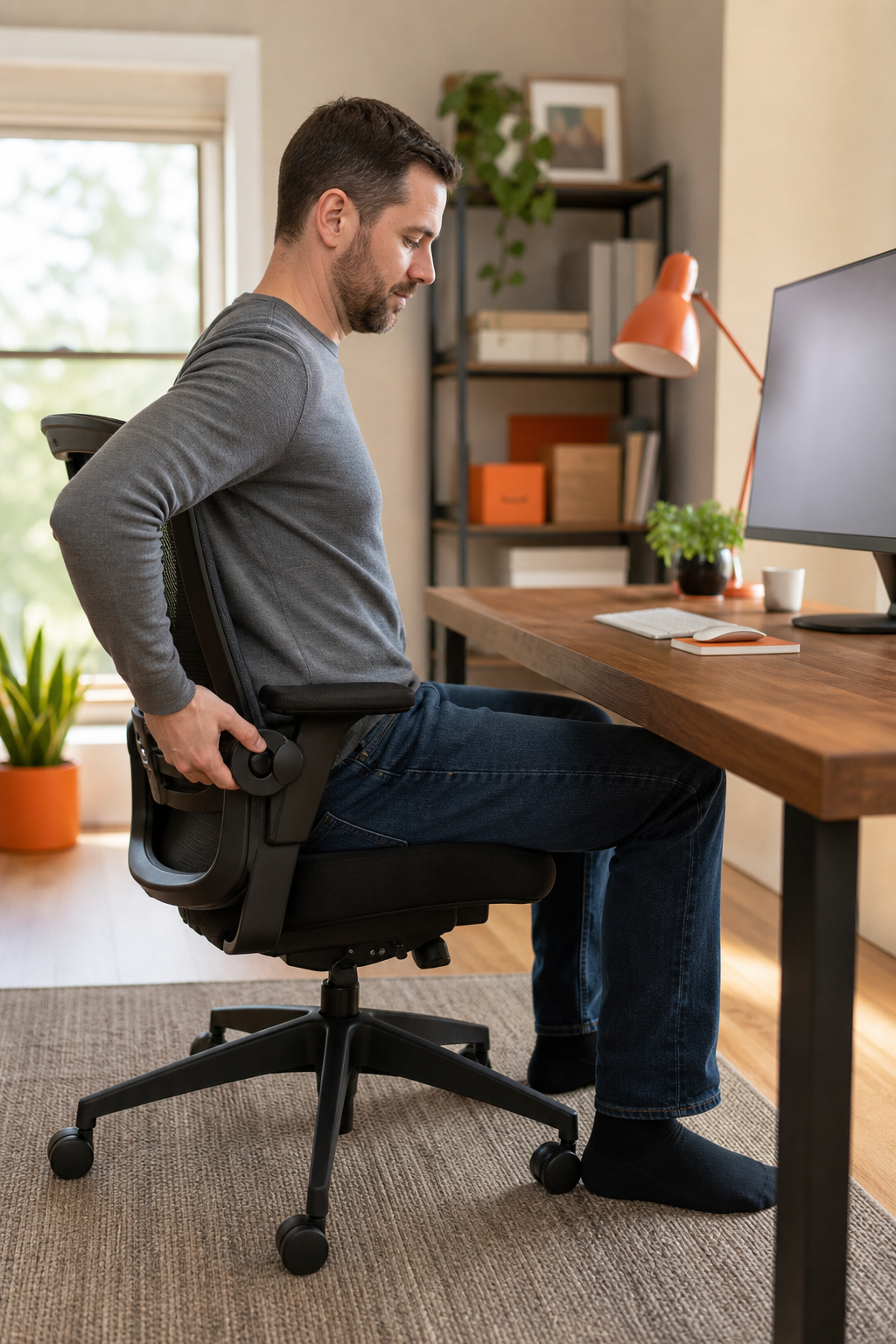
Key Takeaway:Start with a chair that supports your back, then test small changes instead of forcing one fixed posture.
Step 2: Position Your Pelvis and Lower Back Comfortably
To work out how to sit with lower back pain, focus first on your pelvis. Your pelvis is the bony base beneath your waist. When it rolls too far back, your lower back may slump. When it tips too far forward, you may hold a stiff arch.
Begin in the middle. Sit with your sitting bones taking your weight. Let your lower back keep a small, easy curve. Don't pull your shoulders back hard or brace your stomach all day. You should be able to breathe and shift position.
A lumbar roll can help if your chair has a hollow space behind your waist. Place it at belt height, not high on your ribs. Lean back into it, then check whether your pain eases within a few minutes. A roll that is too thick can push you into an arch and make sitting harder.
There is no single back shape that suits every person. One study found that a flat foam cushion could support a slightly kyphotic posture, which means a gentle rounding through the spine. Another option was a lordotic posture supported by a lumbar roll. Lordotic means the lower back keeps its inward curve. The original research describes these sitting options in the research .
Use a simple test. Sit with the roll for five minutes. Remove it and sit without it for five minutes. Compare your symptoms during both trials. Keep the option that lets you sit with less pain and less effort.
For some people, a slightly rounded posture feels better during a short task. For others, the roll gives better support. Your response matters more than a rule that says every back must look the same.
Pro Tip:Put a small towel inside a pillowcase if you want to test lumbar support before buying a purpose-made roll. Change its thickness until your back feels supported, not pushed forward.
Step 3: Set Your Hips, Knees, Feet and Arms
Good sitting posture for lower back pain also depends on your legs and arms. Set them so your back doesn't have to hold your whole body in place.
Adjust the seat height until your hips and knees sit close to 90 degrees. Your thighs should feel supported without the front edge pressing behind your knees. Keep both feet on the floor. If they don't reach, use a footrest or a stable support.
Place your feet about shoulder width apart. This gives you a steady base and makes it easier to shift without twisting. Keep your knees in line with your feet. Don't let one leg tuck under you for long periods if that position increases your symptoms.
Bring your arms close to your sides. Set your keyboard near the front of your body, so your elbows can stay relaxed. Your shoulders should drop rather than creep toward your ears. If you use a mouse, move it close to the keyboard. Reaching across the desk can turn a mild back ache into a whole-body strain.
Now check your head. Keep the top of the screen near eye level when possible. Look down with your eyes before bending your neck. A low laptop often pulls your head and chest forward, which can change the load through your back.
For a quick reset, place both feet down, let your arms hang loosely, and take two calm breaths. Then move your pelvis a little forward and back. Stop at the point where your back feels free, not stretched.
Step 4: Break Up Sitting Before Your Back Gets Irritated
The best way to sit with lower back pain includes standing before discomfort becomes strong. A well-set chair cannot replace movement.
Start with a timer if you often lose track of time. One research model used 30 minutes of sitting followed by 15 minutes of standing. It also looked at standing periods chosen around each person's discomfort. Use these as trial patterns, not strict medical orders.
During a standing break, keep the task small. Walk to the kitchen. Fill a glass of water. Stand beside your desk while you read a short message. You don't need a hard workout. The goal is to change the load on your back.
Stand before pain reaches its usual peak.
Take a few steps rather than standing stiffly.
Change tasks so you don't stay bent over.
Return to sitting when your symptoms have settled.
If 30 minutes feels too long, begin with ten minutes. If you feel well, add a few minutes every few days. If standing makes your pain worse, use a short walk or a different chair position instead.
Work from home brings its own traps. A couch may feel soft, but it often leaves your pelvis low and your screen too far away. A dining chair may be firm but lack back support. Move between two suitable places if one position becomes tiring.
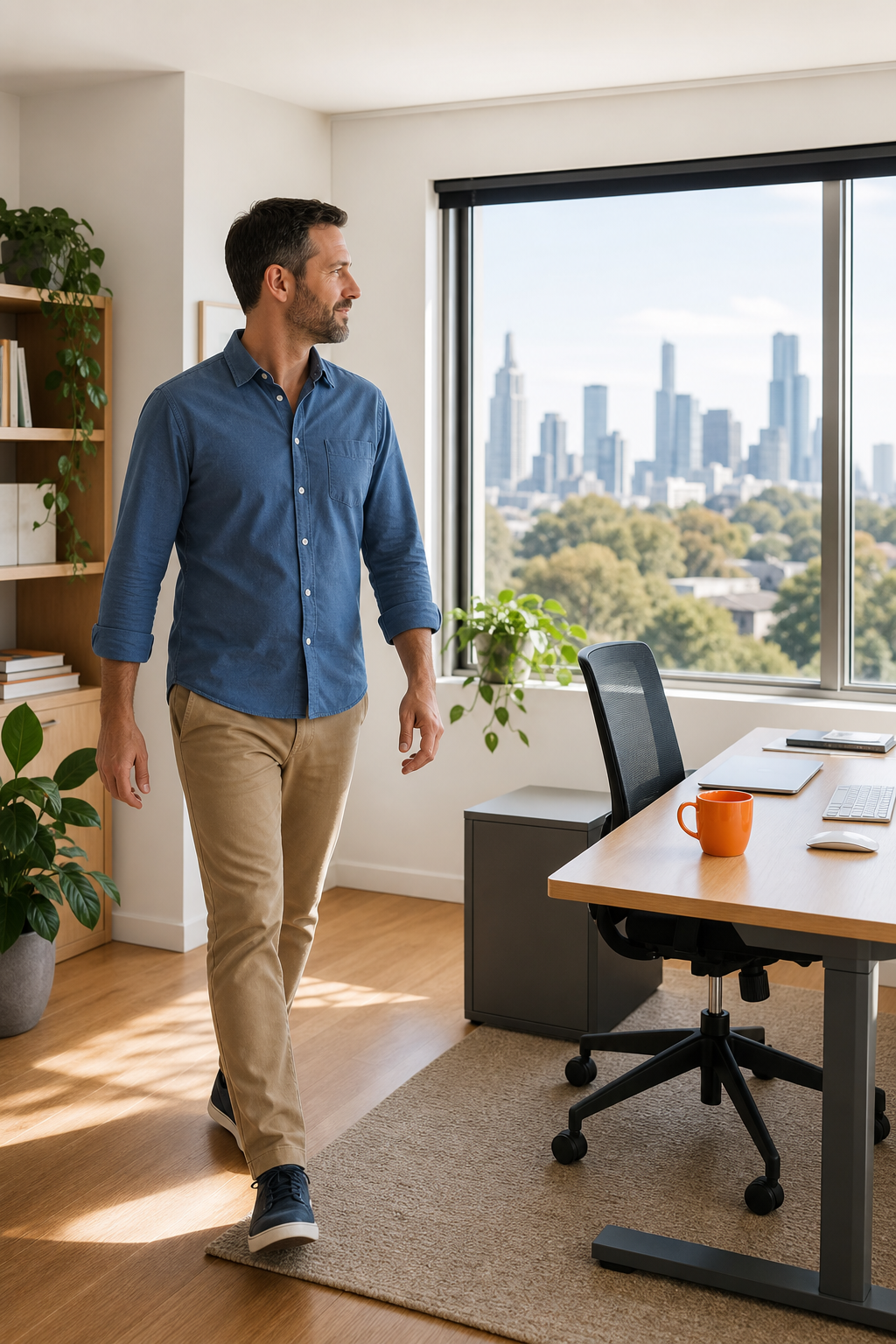
The research on sit-stand timing supports regular changes, but it doesn't prove that one schedule suits everyone. Use your symptoms as feedback. Pain that builds each afternoon may mean your breaks need to happen sooner.
Key Takeaway:Breaks work best when they happen before your back becomes sore, not after you have pushed through the discomfort.
Step 5: Adjust the Plan and Know When to Get Help
If you still struggle with how to sit with lower back pain after changing your chair, look at the pattern rather than one moment. Does pain start after driving? Does it spread into your leg? Is it worse after lifting, sport, or sleep?
Write down the activity, the time symptoms begin, and what helps them settle. This short record can show whether the issue is sitting itself or the way you sit during a task. It also gives a health professional useful information.
Seek prompt medical care if back pain follows major trauma, comes with fever, or is paired with new loss of bladder or bowel control. Numbness around the groin or a rapidly worsening weakness in the leg also needs urgent assessment. These signs are different from ordinary sitting discomfort.
Arrange an assessment if pain keeps returning, limits sleep, or stops you from working or walking normally. A chiropractor can assess movement and discuss whether chiropractic care is suitable. At Unleashed Health Chiropractic in Ascot Vale, we take the time to ask how your pain affects daily tasks before discussing care.
Our approach is natural and non-surgical. Where appropriate, we may discuss a chiropractic adjustment, soft tissue work, or rehabilitation within a tailored plan. A chiropractic adjustment is a hands-on technique used to apply a controlled force to a joint. It isn't right for every person, so assessment comes first. You can learn more about these techniques in the techniques guide .
If you have symptoms that suggest a disc problem, avoid guessing from online advice. A disc is the soft structure between the bones of the spine, and pain from that area can feel different from local muscle soreness. Our information on lumbar disc injuries in Ascot Vale and Moonee Ponds explains why an individual assessment may help.
We understand that everyone responds differently. The right plan may be a chair change, more frequent movement, clinical care, or a mix of these steps. Keep the changes that make daily life easier, and drop the ones that increase symptoms.
FAQ
What is the best way to sit with lower back pain?
The best position is one that supports your back without increasing symptoms. Sit near the backrest, keep your feet supported, and place your hips and knees close to 90 degrees. Try a small lumbar roll, then compare it with a flatter support. Change position before pain builds rather than holding one “perfect” pose.
Should I sit up straight with lower back pain?
You don't need to sit rigidly straight with lower back pain. A relaxed neutral position often works better than forcing your chest up and shoulders back. Some people feel better with a lumbar roll and a gentle inward curve. Others prefer a slightly rounded posture with a flat cushion. Let your symptoms guide the trial.
Is it better to sit or lie down with back pain?
Short rest can help during a painful flare, but staying in bed for long periods may make movement harder. Try changing between brief rest, easy walking, and supported sitting. If every position hurts or your pain keeps worsening, arrange an assessment. Severe symptoms after an injury need prompt medical care.
How often should I stand if sitting hurts my back?
Stand before your usual pain peak, rather than waiting until your back is very sore. A research model tested 30 minutes of sitting followed by 15 minutes of standing, while another approach used breaks based on personal discomfort. Start with a schedule you can repeat, then adjust it to your symptoms.
When should I see a chiropractor for lower back pain?
You may wish to see a chiropractor when pain keeps returning or affects work, sleep, or normal movement. A chiropractor should assess your symptoms before suggesting care. Unleashed Health Chiropractic provides education and natural, non-surgical care in Ascot Vale. Seek urgent medical help first for new bladder or bowel changes, groin numbness, or fast-worsening leg weakness.
Conclusion
Start with a supported chair, test a comfortable lower-back position, and stand before pain builds. If your symptoms keep limiting daily life, a chiropractor can assess your movement and discuss suitable care in Ascot Vale. For a next step, explore our low back pain and rehabilitation services , then bring your chair setup and symptom notes to an appointment. We look forward to helping.


Comments