


Stretches for Sciatica During Pregnancy: A Safe How-To
Stretches for sciatica during pregnancy may ease tightness around your hips, thighs or lower back, but a stretch shouldn’t send pain further down your leg. We’ve set out five gentle options with ways to adapt them as your belly grows.
We analyzed 41 comments and questions from Reddit, YouTube and Quora about stretches for sciatica during pregnancy and found that 15% mentioned unbearable pain preventing stretches.
At Unleashed Health Chiropractic , we encourage you to check with your maternity care team first if you have pregnancy complications or new symptoms.
Table of Contents
Step 1: Check that stretching is appropriate today
Sciatica is pain that travels from your lower back or hip down one leg. It may feel sharp, burning or like an electric shock. Some people also notice tingling, numbness or weakness.
Pregnancy can change posture as your belly grows. Hormonal changes can also loosen joints around the hips. These changes may add pressure near the sciatic nerve, but pain in the buttock or leg can have other causes too.
Before you begin, note where the pain starts and where it travels. If a movement makes it spread further down your leg, or brings on sharp pain, stop. Don’t try to stretch through numbness or weakness.
If you’re unsure which movements suit your pregnancy, our notes on chiropractic care during pregnancy explain what an initial visit at Unleashed Health Chiropractic may involve. We take the time to assess each person and tailor care to their needs.
Get advice from your maternity care team before stretching if you have a high-risk pregnancy, a known injury or symptoms that are new or worsening.
Contact your maternity care provider promptly if you have severe or worsening pain, new leg weakness, or numbness. Seek urgent care for loss of bladder or bowel control, or if you have symptoms that could signal labour, such as bleeding or regular contractions.
Set up a safe space
Choose a clear area beside a sturdy chair or bench. Keep water close, wear clothes that let you move, and avoid stretching on a slippery floor. Use a folded towel under your knees if you’ll be on the floor.
For each stretch, begin with one easy hold of about 10 seconds. If it feels comfortable and your care team hasn’t advised otherwise, you can repeat it once. There’s no single dose that suits every pregnancy. A mild pull is enough; don’t bounce or force the range.
Step 2: Begin with seated hamstring and piriformis stretches
A chair gives you support and lets you keep your belly free. Start with the hamstrings, the muscles along the backs of your thighs. Tight hamstrings can add to lower-back tightness, so keep the movement small and easy.
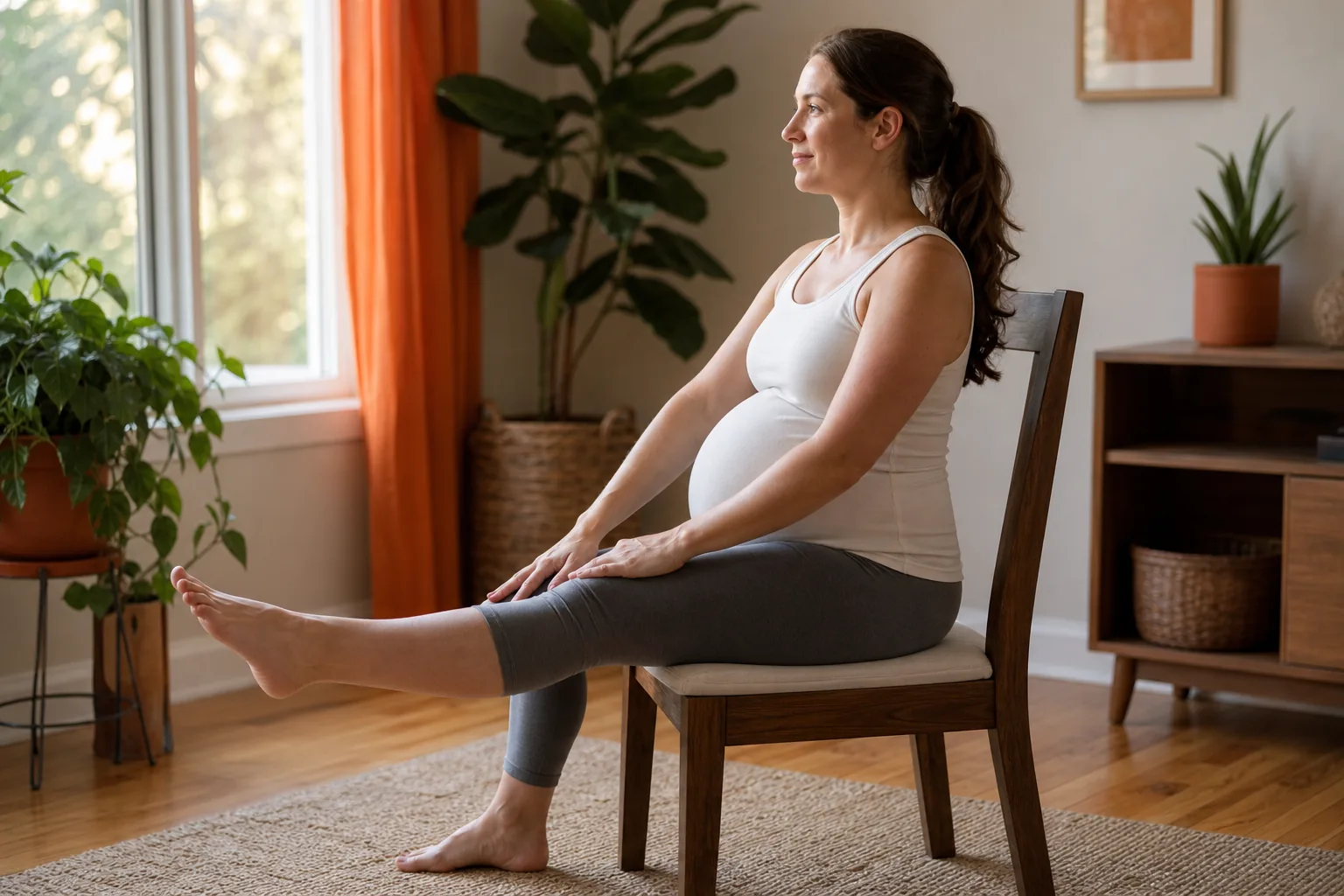
Seated hamstring stretch
Sit near the front of a firm chair. Keep one foot flat on the floor.
Extend the other leg in front of you, with the heel on the floor and toes pointing up.
Sit tall, then tip forward a little from your hips. Keep your back long and your belly free.
Stop when you feel a gentle pull at the back of your thigh. Hold for about 10 seconds while breathing normally.
Sit upright again, then switch legs if both sides feel comfortable.
Don’t reach for your toes or fold your body over your leg. The Bump’s pregnancy stretch advice specifically warns against leaning too far forward or pressing on your abdomen. Ease off if the stretch feels sharp or changes your leg symptoms.
Seated piriformis stretch
The piriformis is a small muscle deep in the buttock. If crossing your legs feels comfortable, sit tall and place one ankle on the opposite thigh, just above the knee. Keep the foot relaxed.
Stay upright at first. If you feel steady, hinge forward a little from the hips until you notice a mild stretch in the buttock. Hold for about 10 seconds, then return to sitting. Don’t press down on the raised knee. Skip this position if it pinches your hip or strains your abdomen.
For another set of cues on this movement, our safe piriformis stretch guide explains how to keep your back tall and stop if symptoms worsen. During pregnancy, choose the seated version only if it feels comfortable for you.
Step 3: Try Child’s Pose on hands and knees
This supported version gives your lower back and hips room to move without lying on your back. Keep the stretch restful. You don’t need to reach the floor or press your chest down.
Come onto your hands and knees on a mat or folded towel. Place your hands under your shoulders.
Move your knees wider than your belly so your abdomen has space. Keep your toes relaxed.
Slowly shift your hips back towards your heels. Stop as soon as you feel a gentle stretch or your belly meets resistance.
Rest your forearms on a cushion, chair seat or exercise ball if reaching the floor feels too far.
Stay for a few calm breaths, then use your hands to return to all fours.
If your knees are sore, use more padding or choose a seated stretch instead. Stop if you feel pressure in your abdomen, pelvic pain or symptoms travelling down your leg.
Start slowly and stay within what feels comfortable. If you have a high-risk pregnancy or complications, check with your care team before stretching.
Child’s Pose may not suit every stage of pregnancy. You can rest your hands on a sturdy chair and gently move your hips back instead. Keep your head and neck relaxed, and come out of the pose if you feel dizzy or uncomfortable.
Step 4: Use a supported standing hamstring stretch
Try this option if getting down to the floor feels awkward. A wall or sturdy bench can help with balance. Keep the raised foot low; a high support can make it harder to stay steady.
Stand beside a wall or bench and rest one hand on it for support.
Place one heel on a low, stable step or firm surface in front of you. Keep a slight bend in that knee.
Face your toes up and keep your hips level. Stand tall rather than rounding your back.
Move your hips back a small amount until you feel a mild stretch along the back of your thigh.
Hold for about 10 seconds while breathing easily. Return to standing, then change sides only if you feel steady.
Don’t lock the raised knee or lean heavily on the supporting surface. If you feel off balance, lower your foot and use the seated stretch instead. Stop if your pain sharpens or spreads further down your leg.
Posture can help make daily movement more comfortable, though it won’t fix every cause of pain. When sitting, use a chair with back support and keep both feet grounded if possible. When standing, shift position now and then rather than staying still for a long time.
The video below is an additional visual aid. Follow your care team’s advice and leave out any movement that doesn’t feel right for your body.
Step 5: Add a supported kneeling lunge if comfortable
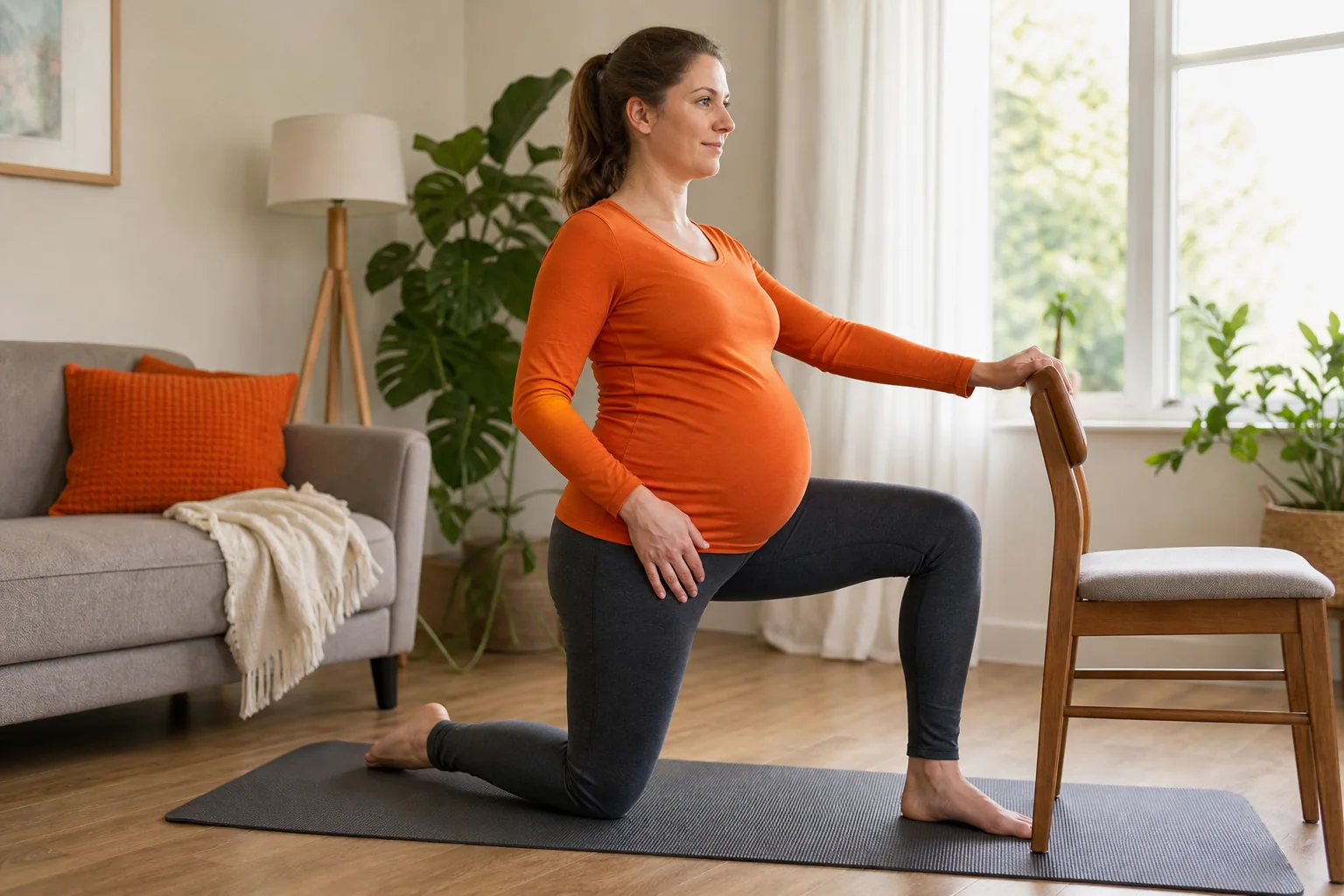
A small kneeling lunge can gently stretch the front of the hip. It’s optional. Skip it if kneeling feels uncomfortable, your balance feels off or your maternity care team has advised against it.
Kneel on a folded towel beside a wall or sturdy chair. Keep one hand on the support.
Step one foot forward so it rests flat on the floor. Keep the front knee above the ankle.
Stay tall through your chest. Gently shift your weight forward until you feel a mild stretch at the front of the hip behind you.
Hold for about 10 seconds without arching your lower back or pushing into pain.
Ease back to the start. Change sides only if the position remains comfortable.
Keep the shift small. A deeper lunge isn’t a better one, especially if your pelvis feels sore or unstable. If kneeling is hard, stand in a short split stance beside a bench and move your hips forward by a small amount instead.
Everyday comfort can matter too. Break up long periods of sitting with gentle position changes. A warm pack or light massage may feel soothing for some people; ask your maternity care team what’s suitable for you. If you’re considering a pregnancy support belt, ask a midwife or physiotherapist about fit and use.
Unleashed Health Chiropractic provides pregnancy care in Ascot Vale. We understand that each person’s symptoms and goals differ, so any care plan should follow an assessment and suit your needs. Stretching is one possible part of self-care, not a substitute for maternity or medical advice.
Frequently asked questions
Can I stretch if I’m in my third trimester?
Often, gentle stretching may still be possible in the third trimester, but the right position depends on your health and comfort. Use support, give your belly space and avoid lying flat on your back for a prolonged stretch. Check with your maternity care team first if you have complications or aren’t sure which movements are suitable.
How long should I hold a stretch?
There’s no single hold time that suits everyone during pregnancy. As a cautious starting point, try about 10 seconds and keep breathing normally. Stop if pain sharpens, spreads down your leg or brings on tingling. Your midwife, doctor or physiotherapist can suggest a plan based on your symptoms and pregnancy.
Should I stretch through sciatic pain?
No. A stretch should feel mild, not sharp or electric. Stop if pain travels further down your leg, or if you notice new numbness or weakness. If symptoms keep returning or are getting worse, contact your maternity care provider for advice rather than adding more stretches.
When should I contact my maternity care team?
Contact them if your pain is severe, worsening or comes with new weakness or numbness. Seek urgent medical advice for loss of bladder or bowel control, bleeding, regular contractions or other symptoms that concern you. Back pain can have causes beyond muscle tightness, so it’s safer to check than to guess.
Conclusion
Choose one supported stretch that feels comfortable, keep the movement small and stop if symptoms worsen. If pain persists or you’re unsure what’s causing it, speak with your maternity care team. You can also read what to expect from a sciatica assessment at Unleashed Health Chiropractic and decide whether an appointment is right for you.


Comments