


Best Rotator Cuff Exercises: 5 Options
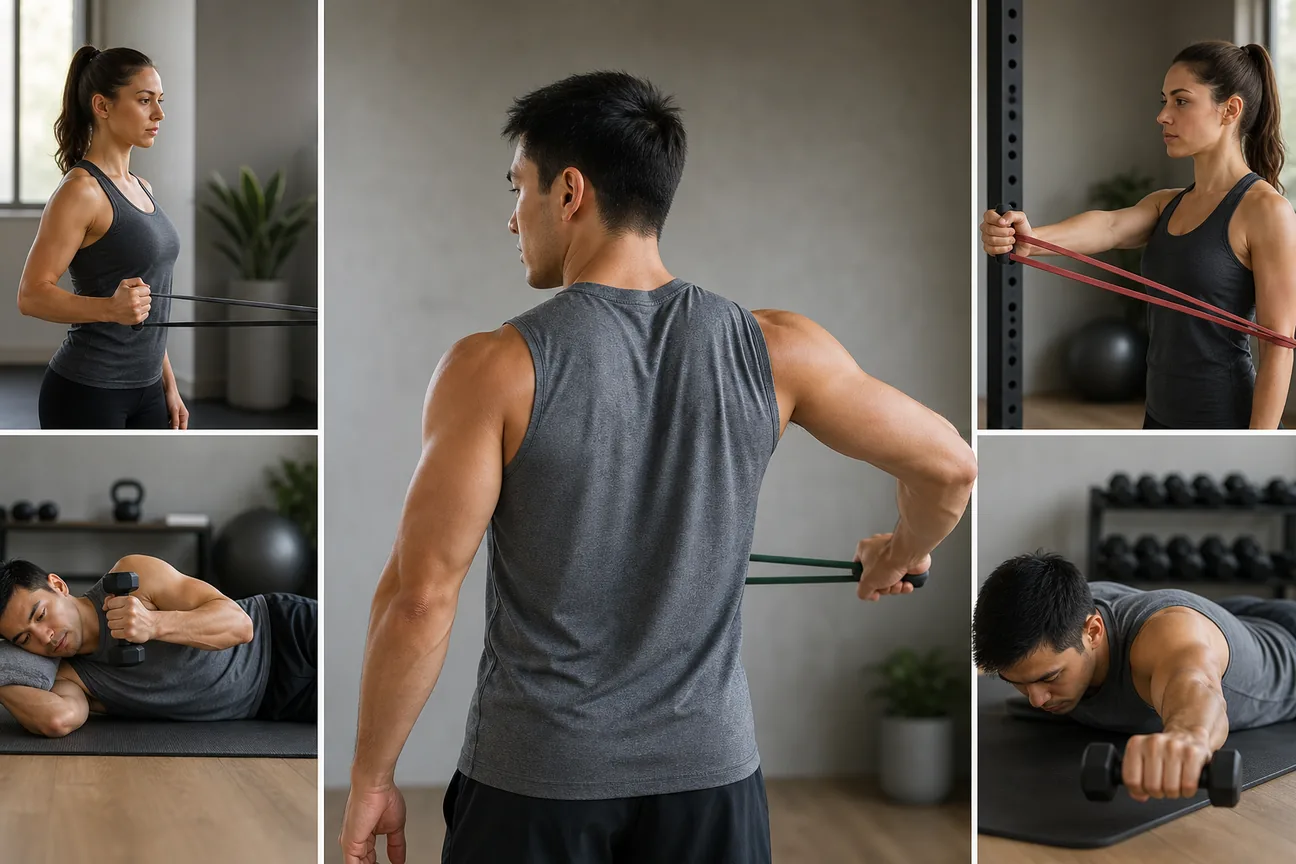
Shoulder pain can stop you from reaching a high shelf or throwing a ball. The right rotator cuff moves can bring that freedom back. Here are five proven exercises, who they suit, and what to watch out for.
Table of Contents
1. Pendulum — a gentle starting movement for an irritable shoulder
2. Crossover Arm Stretch — a simple mobility option for the back of the shoulder
3. Passive External Rotation — controlled range‑of‑motion work with a light stick
4. Standing Row — band‑based strengthening for shoulder‑blade control
5. Sleeper Stretch — a targeted option for the back of the affected shoulder
Quick comparison: which rotator cuff exercise may suit your starting point?
1. Pendulum — a gentle starting movement for an irritable shoulder
The pendulum swing lets gravity do the work while you keep the joint loose. You stand, lean forward, place one hand on a sturdy chair, and let the other arm dangle. With a straight back and bent knees, swing the hanging arm forward‑back, side‑to‑side, then in a small circle. Do two sets of ten reps, four to five days a week.
This motion is easy on the cuff because the muscles are not actively lifting. It helps calm inflammation and restores a painless range before you add load.
According to WebMD, the pendulum is the classic first move for an irritable shoulder. Keep the motion smooth; any jerky swing can irritate the tendons.
Bottom line: start here if your shoulder feels sore or stiff. Once the swing feels painless, you can move on to more active stretches.
2. Crossover Arm Stretch — a simple mobility option for the back of the shoulder
The crossover stretch targets the posterior deltoid and the supraspinatus. Stand tall, bring one arm across your chest, and use the opposite hand to gently pull it closer. Hold for about 30 seconds, then relax. Repeat four times per side.
Because the stretch is done while the shoulder is in a comfortable position, it reduces strain on inflamed tissues. It also encourages a healthier range for reaching behind the back.
We often recommend this stretch as part of a daily routine for people who spend a lot of time at a desk. The movement can be done at a workstation without special equipment.
For more detailed rehab plans, see rehabilitative exercises available through this resource.
Key note: stop if you feel sharp pain in the front of the shoulder; a mild pulling sensation is normal.
3. Passive External Rotation — controlled range‑of‑motion work with a light stick
Grab a light stick or wooden ruler. One hand holds the stick near the elbow, the other hand grasps the far end. Keep your elbow tucked to your side, forearm across your abdomen, and gently push the stick outward, rotating the shoulder. Do four reps, three times a day.
This exercise isolates the infraspinatus and teres minor, the external rotators most often weakened after injury. Because the stick does the work, the joint stays stable.
Make sure you do not bend the wrist or press down on the stick; the movement should come from the shoulder joint alone.
Tip: if you feel any grinding, pause and check your form before continuing.
4. Standing Row — band‑based strengthening for shoulder‑blade control
Attach an elastic band to a sturdy anchor at chest height. Stand with feet shoulder‑width apart, grab the band with both hands, and pull toward your torso while keeping elbows close to your sides. Perform three sets of twelve reps.
The row works the middle and lower trapezius as well as the infraspinatus, helping the scapula stay flat against the ribcage during arm lifts. Strong scapular control reduces impingement risk.
As you get stronger, increase the band’s resistance or add a light dumbbell for extra challenge.
Caution: avoid shrugging your shoulders upward; the motion should stay in the plane of the back.
5. Sleeper Stretch — a targeted option for the back of the affected shoulder
Lie on the side of the injured shoulder, arm bent at 90 degrees with the forearm pointing upward. Use the opposite hand to gently press the forearm down toward the floor. Hold for 30 seconds, then relax. Do four repetitions, three times a day.
This stretch hits the infraspinatus and teres minor directly, loosening the posterior capsule that often tightens after a rotator cuff strain.
It’s easy to over‑press, so stay within a comfortable stretch. You should feel a gentle pull, not pain.
Our clinic often pairs this stretch with sports injury management advice to keep athletes moving safely.
Takeaway: consistency matters more than intensity; a few minutes each day yields steady improvement.
Quick comparison: which rotator cuff exercise may suit your starting point?
Exercise | Best for | Typical difficulty |
Pendulum | Very sore or post‑surgery | Easy |
Crossover Arm Stretch | Limited rear‑deltoid flexibility | Easy‑moderate |
Passive External Rotation | Early external rotator rehab | Easy‑moderate |
Standing Row | Scapular control and mid‑range strength | Moderate |
Sleeper Stretch | Posterior capsule tightness | Moderate |
For a deeper look at technique, our clinic’s chiropractic techniques page explains how adjustments complement these movements.
FAQ
What are rotator cuff exercises?
Rotator cuff exercises are movements that stretch or strengthen the four small shoulder muscles that keep the joint stable. They help restore range, reduce pain, and prevent future injury.
How often should I do these exercises?
Most experts recommend a daily routine of low‑to‑moderate volume, such as the sets and reps listed for each move. If pain spikes, back off and repeat the previous comfortable level.
Can I do these exercises at home?
Yes. All five options need little or no equipment, a chair, a light stick, or an elastic band, so you can follow them in a living room or bedroom.
When should I see a chiropractor?
If you experience sharp pain, night‑time discomfort, or a sudden loss of strength, schedule an assessment with a qualified practitioner. Manual adjustments can speed recovery and address underlying joint misalignments.
Are there any risks?
Any exercise that hurts beyond a mild stretch should be stopped. Pay attention to form, avoid jerky motions, and progress gradually. People with severe tears or recent surgery need professional guidance before starting.
Conclusion
Start with the pendulum swing, then add the crossover stretch, passive rotation, standing row, and sleeper stretch as your shoulder tolerates more load. If you want a personalized plan, explore our main services page for a next step.
Ready to put this into practice? Unleashed Health Chiropractic was built for exactly this.


Comments