


Levator Scapulae Pain: Causes, Symptoms and Care
A tight pull at the back of your neck can make turning your head or lifting your shoulder uncomfortable. Levator scapulae pain can be linked to muscle strain, but other neck or shoulder problems can feel similar, so the symptoms need context.
We’ll explain what this muscle does, how a clinician may assess it, and what you can try safely. We’ll also cover when to seek medical care.
Table of Contents
What the levator scapulae does—and why it can hurt
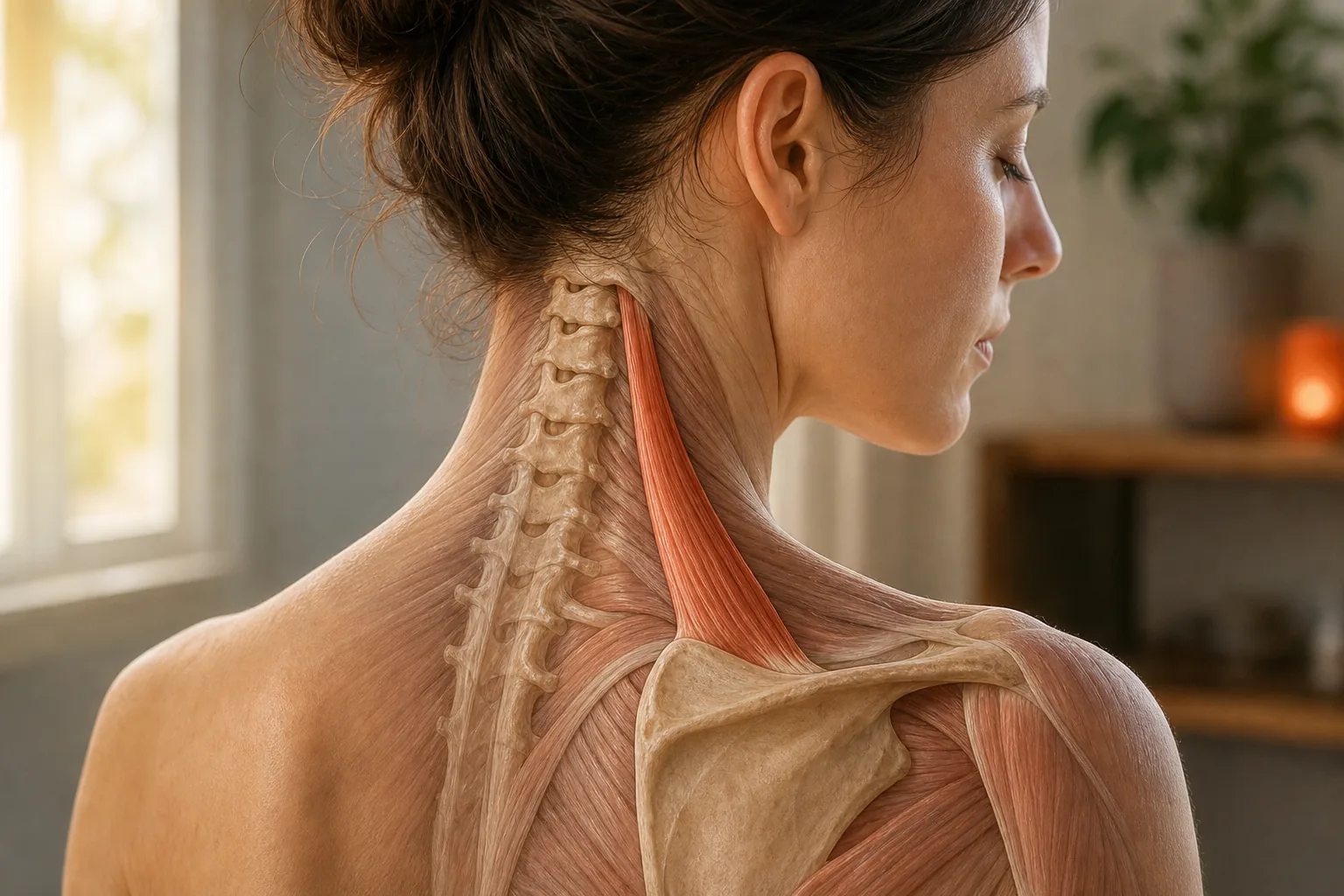
The levator scapulae is a narrow muscle at the back and side of your neck. It runs from the upper neck vertebrae to the top inner edge of your shoulder blade. Its name describes one job: helping lift the shoulder blade. It can also help move the neck when the shoulder blade is held still.
Because it links the neck and shoulder blade, strain in the area may feel like a sore spot between the neck and shoulder. It may also feel tender near the upper inner corner of the shoulder blade. Some people notice stiffness or pain when they turn or bend their head, especially if that movement stretches the muscle.
There isn’t one cause in every case. Holding your head forward for a long time may increase the muscle’s work. Long spells at a computer can keep the neck and shoulder muscles active without much rest. Carrying a heavy bag on one shoulder or doing more lifting than usual may also add strain. A sudden injury is another possible cause.
Pain from this area can sometimes spread towards the shoulder or be linked with a headache that starts in the neck. That doesn’t confirm the levator scapulae is the cause. Neck joints, other muscles, nerves, or the shoulder itself can create similar symptoms. If you’re also dealing with pain around the shoulder blade, our guide to shoulder blade pain and gentle self-care covers related concerns.
Notice what brings the discomfort on. Does it build during desk work, after carrying a bag, or when you move your neck? That pattern can help guide an assessment, but it can’t provide a diagnosis on its own.
How levator scapulae pain is assessed
A clinician will usually ask when your symptoms began and what makes them better or worse. They may ask about desk work, lifting, sport, recent injury, and how the pain affects sleep or daily tasks. This helps set the symptoms in context. It does not mean posture or one muscle is automatically the cause.
A physical assessment may include checking how far and comfortably you can move your neck and shoulder. The clinician may look at how the shoulder blades move, then feel around the muscle and its attachments for tenderness. Trigger points may be hypersensitive areas that elicit pain and can refer pain to surrounding tissue.
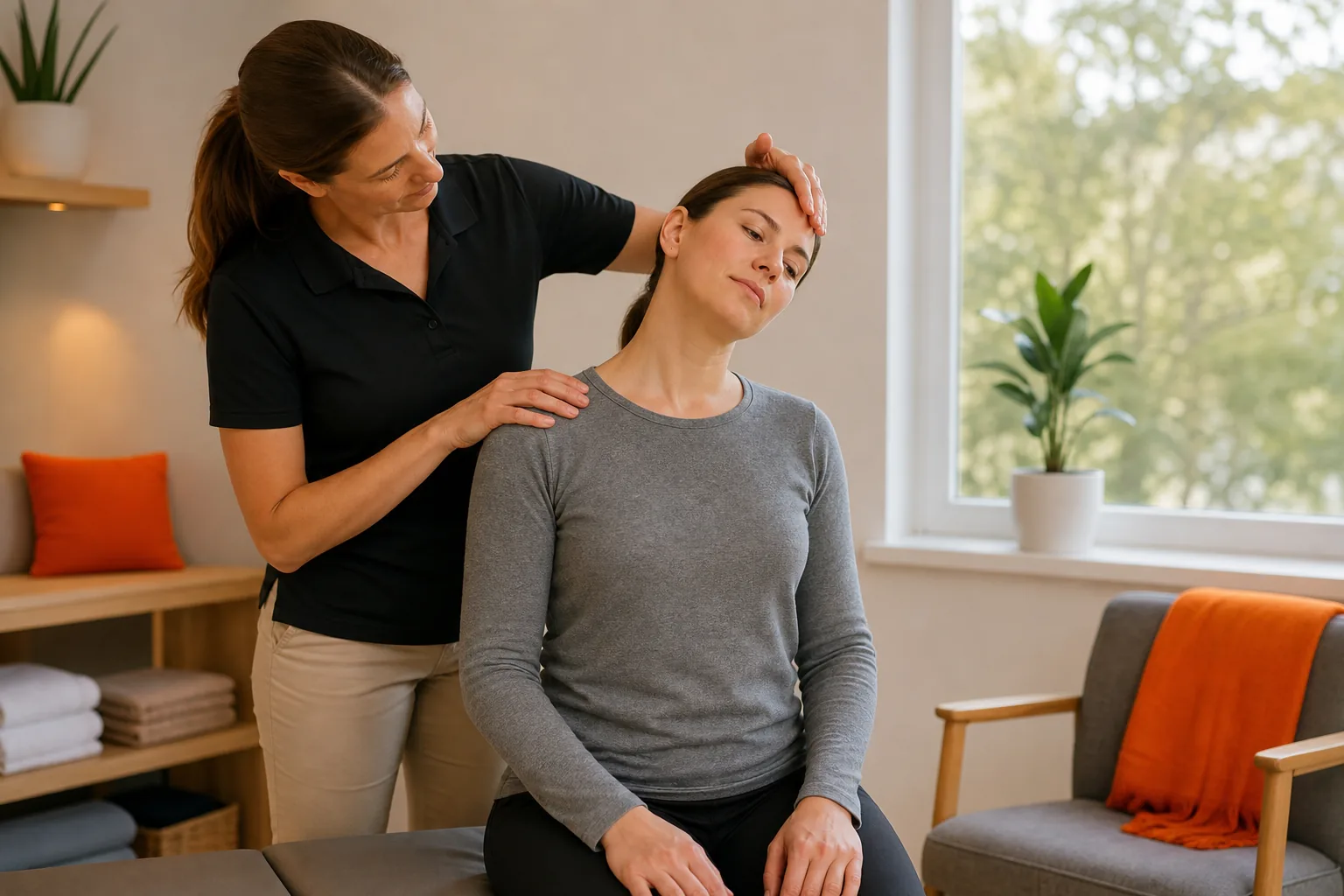
Some assessments check the muscle while you lie on your back. The clinician stabilises the shoulder blade, then gently moves the head to lengthen the muscle. They may also feel for tender points near the upper and lower parts of the muscle. These checks need to be considered alongside neck movement and other possible causes.
Symptoms around the neck and shoulder can overlap. Pain with head movement may fit a muscle problem, but a clinician may also assess the neck joints, upper back, shoulder, and nerve function. Weakness, tingling, or numbness calls for careful assessment rather than an assumption that a muscle is tight.
Imaging is not automatically needed for every sore neck or shoulder. A clinician may consider it if your history or examination suggests an injury or another cause that needs further checking. At Unleashed Health Chiropractic in Ascot Vale, the initial appointment includes a medical history and physical, neurological, orthopaedic, chiropractic, and postural assessments. Spinal X-rays may be considered if clinically indicated.
If pain is closer to the base of your neck or the pattern doesn’t seem to fit, our page on pain at the base of the neck explains other points to consider.
What may help: movement, muscle release and daily adjustments
When symptoms seem mild and no warning signs are present, start with small changes rather than forcing a stretch. Move your neck and shoulders within a comfortable range. If a movement makes pain sharper or sends symptoms into your arm, stop and seek advice.
A gentle levator scapulae stretch may involve turning your head slightly away from the sore side, then looking down towards your armpit. Keep your shoulders relaxed. Use your hand only to guide the head lightly, not to pull it down. Hold the position only while it feels comfortable, then return to neutral. There’s no need to push for a deep stretch.
Easy neck turns and shoulder-blade movements can break up long periods of stillness. Start with a few slow repetitions. If symptoms increase during the movement or stay worse afterwards, pause and ask a health professional what suits you. Our guide to doing shoulder pain stretches safely offers more general movement guidance.
Self-massage may feel soothing for some people, but pressure can irritate a tender area. If you try a soft ball against a wall, place it beside the shoulder blade rather than pressing on the bones or the front or side of your neck. Use light pressure and stop if you feel tingling, numbness, dizziness, or a rise in pain. A foam roller is not a must, and harder pressure isn’t automatically more helpful.
Try adjusting the task that seems to trigger symptoms. At a desk, bring your screen closer to eye level and rest your forearms when you can. Change position now and then instead of holding one posture for hours. A bag that can be carried across both shoulders may reduce the one-sided load. During lifting, keep the load close and avoid a sudden jump in effort.
Sleep can affect how comfortable your neck feels in the morning. There is no single pillow shape that suits everyone. Aim for a position that keeps your neck comfortable, and consider changing one part of your sleep set-up at a time. If your symptoms persist, Unleashed Health Chiropractic can assess whether its care options are appropriate for your situation. The clinic lists chiropractic techniques, dry needling, and rehabilitation exercises among its services; suitability depends on your assessment and goals.
When to seek care and what may be considered if pain persists
Arrange a health assessment if the pain is not settling, keeps returning, or limits normal tasks. It’s also sensible to seek advice if you’re unsure whether the pain is coming from the neck, shoulder, or another area. A clinician can review your symptoms and decide whether further assessment or referral is needed.
Seek prompt medical care after a significant injury, or if neck pain comes with fever or a new loss of strength. New numbness or tingling also needs medical assessment. Get emergency help for sudden, severe symptoms, particularly if they come with chest pain, trouble breathing, fainting, or a sudden severe headache. Don’t use a muscle stretch or manual treatment in place of urgent medical care.
If symptoms continue despite changes in activity and gentle movement, a clinician may discuss options based on the findings. These may include tailored exercise or hands-on care. Some clinical references also discuss injections for selected cases, but an injection is a medical decision that needs a discussion of possible benefits, risks, and other options. Surgery is not a routine response to suspected muscle strain; a doctor would need to assess another specific problem before considering it.
At Unleashed Health Chiropractic, care begins with an assessment, then any proposed plan is tailored to the person and their health goals. We take the time to consider your symptoms and daily routine. Chiropractic care may not suit everyone, and your clinician should discuss relevant risks and alternatives. Keep your GP or other health professional involved when symptoms need medical review.
Think of follow-up as a chance to review what has changed, not as a promise that one method will work for everyone. If a plan isn’t helping or symptoms change, tell your clinician so the next step can be reconsidered.
Frequently asked questions
What does levator scapulae pain feel like?
It may feel like soreness or stiffness at the back or side of the neck, near the top inner edge of the shoulder blade. Turning or bending your head may bring on discomfort. Pain can spread towards the shoulder, but similar symptoms can come from other muscles, joints, nerves, or the shoulder. An assessment is needed to work out the likely cause.
Can sitting at a computer cause levator scapulae pain?
Long periods at a computer may contribute to neck and shoulder muscle strain, especially if you stay in one position. That doesn’t mean posture is the only cause. Try changing position regularly and setting your screen where you can look ahead comfortably. If the pain persists or affects daily tasks, ask a health professional for advice.
Which stretch is suitable for the levator scapulae?
A gentle option is to turn your head slightly away from the sore side and look down towards your armpit. Keep your shoulders relaxed and don’t pull hard on your head. Stop if the movement causes sharp pain, tingling, dizziness, or symptoms that travel down your arm. A clinician can check whether this movement is appropriate for you.
When should I see a doctor for neck and shoulder pain?
Seek medical advice if pain follows a significant injury, persists, or comes with fever, weakness, numbness, or tingling. Get emergency help for sudden severe symptoms, chest pain, trouble breathing, fainting, or a sudden severe headache. These symptoms may need urgent assessment and should not be managed with stretching alone.
Conclusion
Start with comfortable movement and a small change to the activity that seems to trigger your symptoms. If the pain persists or you’re unsure what’s causing it, consider an assessment with a GP or a suitably qualified health professional. We’re happy to discuss whether an assessment at Unleashed Health Chiropractic in Ascot Vale may suit your needs.


Comments