


Uneven Hips: How to Check and What to Do
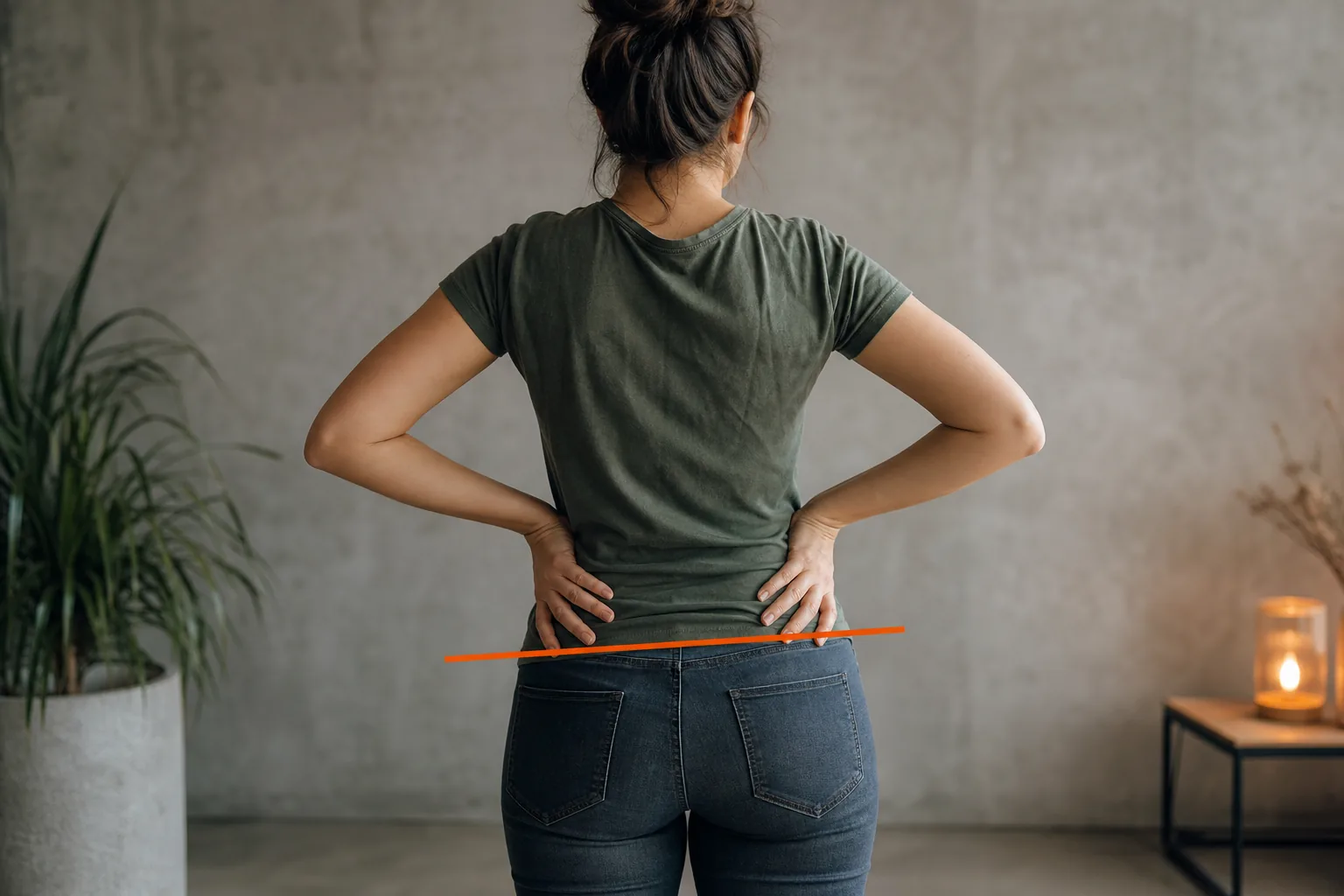
Noticed one hip looks higher than the other? That difference may be a natural variation, or it may relate to how you stand and move. Here’s a careful way to observe it, try gentle movement and decide when to ask a health professional for an assessment.
Table of Contents
Step 1: Understand what you’re seeing
People often use “uneven hips” to describe one side of the pelvis looking higher, or the waist and hips appearing different from side to side. The pelvis sits between the lower spine and the thigh bones. Its position can shift as you move, so a mirror or photo only shows one moment.
A visible difference doesn’t confirm that your pelvis is misaligned. Body shape, stance and clothing can affect what you see. Some people also have a difference in leg length or a spinal curve, while others notice no pain or movement problem at all.
Watch this demonstration as general movement information. It can’t assess your body or tell you what’s causing a visible difference.
Step 2: Note symptoms and patterns
Before checking your posture, notice what you feel during daily tasks. You might have no symptoms. If you do, note where discomfort occurs and whether it shows up while sitting, walking, climbing stairs or standing for a while.
Write down when it began and what changes it. A brief note can help you explain the issue during an assessment. Don’t assume that a difference in hip height caused pain, or that pain proves the pelvis is uneven.
If hip discomfort is part of the concern, our guide to safe exercises for hip pain covers ways to approach movement with care.
Step 3: Consider common contributors
Several factors may affect how level your hips look. Muscle tightness or differences in muscle use are possible contributors. So are a sideways pelvic tilt, a measurable leg-length difference or scoliosis, which is a curve in the spine.
Daily habits can affect how you stand and move, too. Notice if you often rest on one leg, carry a heavy bag on the same shoulder, or sit for long stretches without changing position. These clues don’t prove a cause. They simply give you useful details to share with a clinician.
Key Takeaway:Hip height in a mirror is a clue to observe, not a diagnosis.
Step 4: Do a gentle standing check
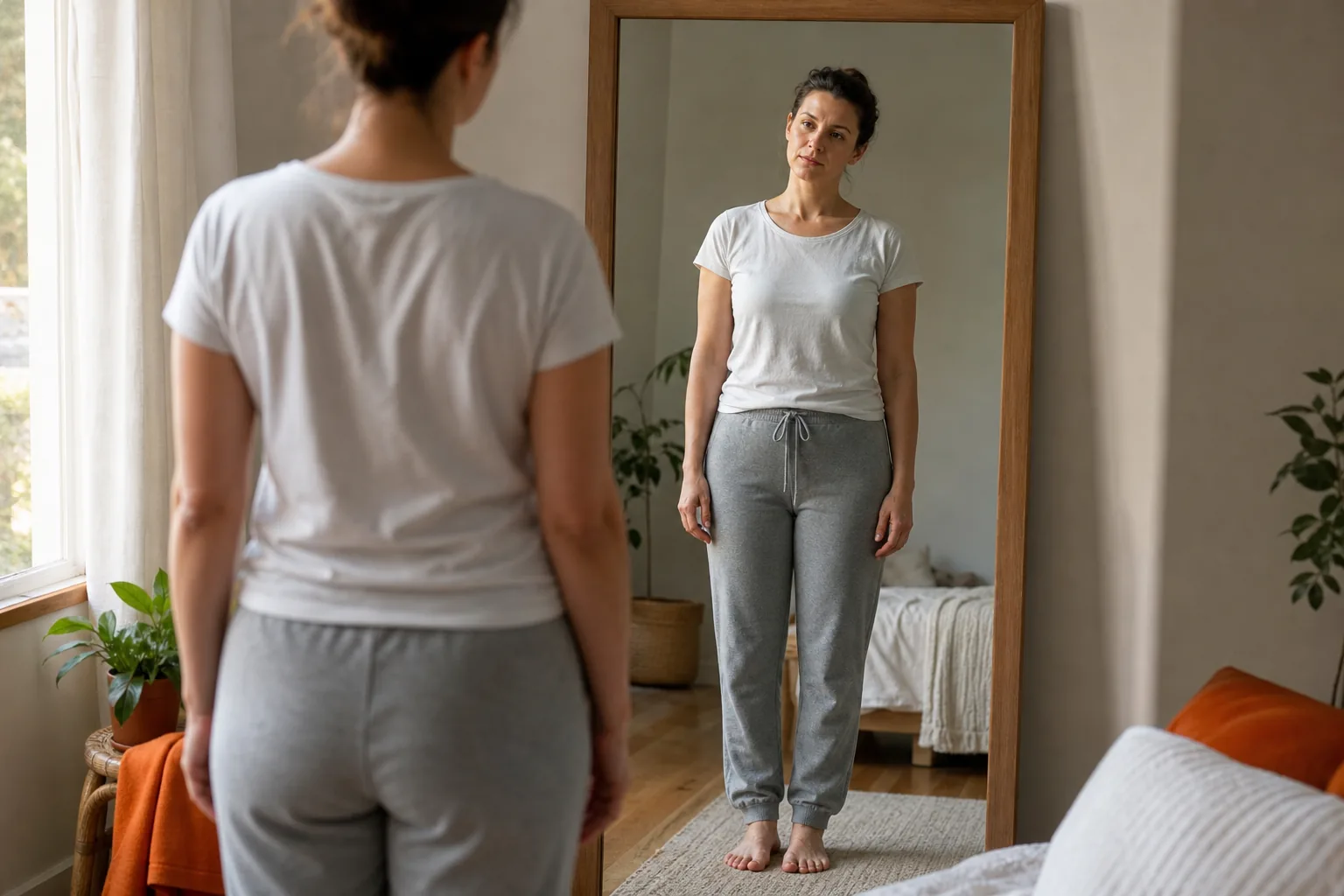
Stand in front of a mirror in comfortable clothing. Place your feet about hip-width apart and let your arms rest by your sides. Look at your waist and pelvis without pulling your shoulders back or forcing your body into a pose.
Then take a few relaxed steps and look again. Does the difference seem to change as you move? A standing check can help you notice a pattern, but it can’t show whether bones, muscles or another factor are involved. Don’t press on your hips or try to push them level.
Step 5: Compare easy movements
Try a few ordinary movements near a stable support, such as shifting your weight from one foot to the other or taking a small step. Notice whether one side feels less comfortable or harder to control. Keep the movement small and stop if it brings on pain.
A still image can’t show how your pelvis behaves through a task. Even a movement check at home has limits, so don’t use it to label yourself with a pelvic tilt or leg-length difference. If you have pain or trouble with everyday movement, an individual assessment may be more useful than repeated self-tests.
For background on a forward pelvic position, see our page about anterior pelvic tilt, its possible signs and movement options . A visible arch or tilt alone doesn’t establish a problem.
Step 6: Try gentle movement with care
If you feel well and have no reason to avoid exercise, start with a small, comfortable range. A pelvic tilt is one simple movement to explore: lie on your back with your knees bent, then gently rock your pelvis so your lower back moves a little closer to the floor. Breathe normally and return to your starting position.
You could also try an easy hip extension while standing and holding a stable surface. Move one leg a short distance behind you without arching your back, then return it. Keep both movements smooth. Stop if you feel sharp pain, new tingling or a clear increase in discomfort.
There isn’t one routine or set number of repetitions that suits everyone. Don’t push through pain or assume that stretching one side will correct the difference. For more detail on comfortable hip movement, read our guide to doing hip flexor stretches safely .
Step 7: Review daily habits and special circumstances
Notice how long you stay in one position at work or at home. Changing position from time to time may make it easier to see how your body feels across the day. If you carry a bag, try not to load it heavily on one side every time. These are simple observations, not a treatment plan for pelvic alignment.
Pregnancy can change how your body carries weight and how you move. Hormonal changes are also part of pregnancy, but you can’t tell from hip height alone whether they are affecting your joints or posture. If you’re pregnant and have new or ongoing pain, ask your GP, midwife or another suitable clinician what movement is appropriate for you.
Footwear and shoe inserts can affect comfort and how you stand, but don’t add a heel lift or insert based only on a mirror check. A clinician can assess whether it fits your situation.
Step 8: Know when to seek an assessment
Ask a GP or another suitable health professional for advice if pain persists, gets worse or limits your usual activities. Seek prompt medical advice if pain follows a significant fall or injury, or comes with fever or feeling unwell. Sudden severe pain, new weakness or numbness, numbness around the groin, or new trouble controlling your bladder or bowel needs urgent medical care.
Unleashed Health Chiropractic is an Ascot Vale clinic that provides chiropractic care and rehabilitation. Its initial appointment includes a medical history and physical, neurological, orthopaedic and chiropractic examinations, along with a postural assessment. Spinal X-rays are covered by Medicare if clinically indicated. An assessment can help clarify what care may suit you; it doesn’t guarantee a particular result.
We understand that everyone’s needs differ. If you’re considering care with Unleashed Health Chiropractic, you can ask whether an assessment is appropriate for your symptoms and health history. Some medical conditions may need medical advice or clearance before hands-on care or exercise.
Frequently asked questions
Can uneven hips be normal?
Yes, a difference in hip height can be a natural variation. Your stance, body shape and the position you’re in may change what you see. A visible difference alone doesn’t confirm a pelvic problem or explain pain. If it comes with ongoing discomfort or difficulty moving, ask a suitable health professional to assess your symptoms.
How can I check if one hip is higher?
Stand comfortably in front of a mirror and observe your waist and pelvis without changing your posture. You can look again after a few relaxed steps. Treat this as a simple observation, not a test that diagnoses pelvic alignment or leg length. A clinician can assess your movement and symptoms in more detail.
What can cause one hip to look higher?
Possible contributors include muscle tightness or differences in muscle use, a pelvic tilt, leg-length differences and scoliosis. Your stance and how you carry yourself can also affect appearance. These are possibilities, not a diagnosis. A clinician can consider your history and movement before suggesting what may be relevant to you.
Should I exercise if my hips look uneven?
You may be able to do gentle movement if it feels comfortable and you have no reason to avoid exercise. Start with a small range and stop if pain increases or you develop new symptoms. Exercise isn’t a way to diagnose or force your hips into matching positions. Ask a clinician for advice if you’re unsure what suits you.
When should I see a doctor about hip asymmetry?
See a GP if discomfort persists, worsens or affects everyday tasks. Seek prompt advice after a significant injury or if you feel unwell with pain. Sudden severe pain, new weakness or numbness, numbness around the groin, or new bladder or bowel control problems need urgent medical care.
Conclusion
Use a mirror check only to notice a pattern, not to diagnose or correct yourself. If pain or movement limits persist, arrange an assessment with a suitable clinician and ask what next steps fit your health needs. We look forward to helping you understand your options.


Comments