


Poor Posture Symptoms: 7 Signs to Notice
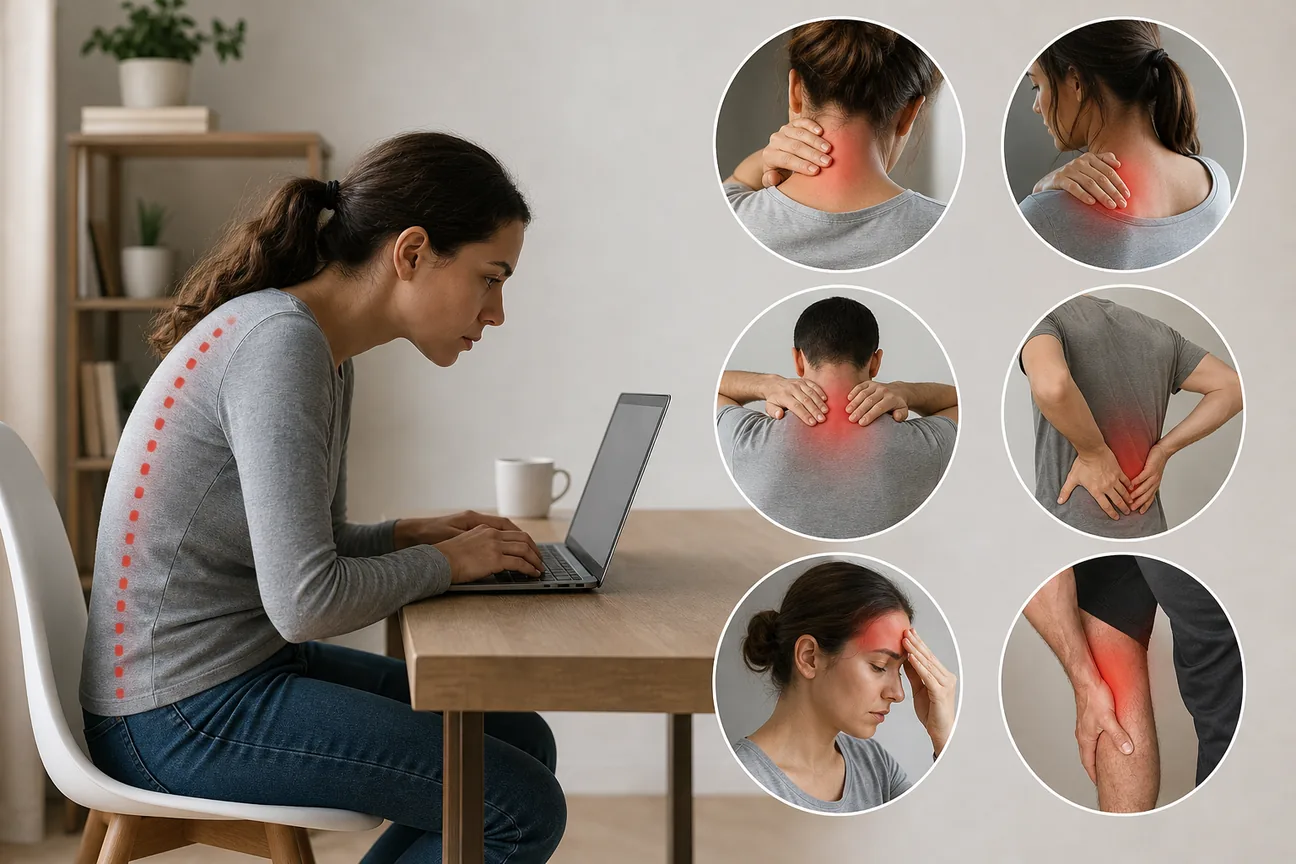
Neck tightness, a sore lower back or a headache can make you wonder if your posture is part of the problem. These poor posture symptoms can have many causes, so they’re clues to notice, not a diagnosis. Here are seven possible signs, along with simple ways to check your daily setup and guidance on when to seek medical advice.
Table of Contents
1. Neck and shoulder pain or stiffness
Neck or shoulder discomfort may show up after long periods at a desk, while driving or when looking down at a device. You might notice tightness across the shoulders, a stiff neck when turning your head or an ache that eases when you move around. These symptoms can also relate to muscle strain, injury or other health issues, so posture isn’t always the cause.
Try a gentle desk check. Keep your screen near eye level, let your shoulders rest, and change position from time to time. If you’re reading on a phone, bring it up towards your line of sight rather than holding your head down for long stretches. Small changes may make the setup easier to tolerate, but stop any movement that brings on sharp pain.
Healthdirect’s guidance on neck pain describes pain or tightness that can spread towards the shoulders, along with stiffness that limits movement. It also suggests staying active and gently moving the neck. If your symptoms persist or limit daily tasks, a health professional can help assess possible causes.
Unleashed Health Chiropractic in Ascot Vale includes a postural assessment as part of its initial appointment. That assessment sits alongside a medical history and physical examination, rather than relying on posture alone.
2. Lower back discomfort and hip tightness
Some people notice a dull ache in the lower back or stiffness around the hips after sitting for a while. It may feel more apparent when standing up, walking after a long drive or starting exercise. Long periods in one position can be one part of the picture, but back and hip pain can also have other causes.
Notice what happens when you change position. A short walk or a brief standing break may feel more comfortable than staying seated. Better Health Victoria lists back pain among possible complications associated with poor posture, while Healthline suggests walking breaks to ease pressure through the lower back. These are general suggestions, not a way to identify the cause of your pain.
Pelvic position can affect how your lower back feels, but a posture label by itself doesn’t explain a symptom. Our article on anterior pelvic tilt and its possible symptoms explains why it helps to consider your movement and daily habits as well as how you stand.
If pain travels down a leg, keeps returning or affects your usual activities, consider discussing it with your GP or another registered health professional. Seek prompt medical advice for new weakness or numbness.
Key Takeaway:A sore back can have several causes. Track when it appears and whether movement or rest changes it.
3. Headaches or migraines with neck discomfort
A headache that comes with a stiff or sore neck may lead you to look at your desk habits. Still, posture alone can’t confirm the cause. Headaches and migraines have many possible triggers, and a person’s neck position doesn’t tell the whole story.
Posture alone cannot confirm the cause of pain. Read more about posture and symptoms .
Pay attention to patterns instead. Note when the headache starts, how long it lasts and whether it comes with nausea, light sensitivity or neck movement changes. Take a screen break if you’ve been holding one position, but don’t assume a posture adjustment will resolve a recurring headache.
Unleashed Health Chiropractic lists headaches and migraines among the conditions it sees. If headaches are frequent or changing, talk with your GP. Seek urgent care for a sudden, severe headache, or one that comes with weakness, confusion, fainting or vision loss.
4. Muscle fatigue and reduced energy
Muscles can feel tired or tense after holding one position for a long time. You might find yourself shifting in your chair, rolling your shoulders or wanting to stretch by the afternoon. This can happen during a long work session, though low energy may also relate to sleep, stress, illness or other factors.
Better Health Victoria explains that posture uses different muscle fibres to help hold the body in position. It notes that some fibres tire more quickly when they take on this role. Its guidance also recommends noticing tension or fatigue and moving into another position, rather than forcing yourself to sit rigidly upright.
Try a low-effort reset: stand, walk a short distance, then return to a comfortable position. You can also vary your task or screen position. If fatigue is new, marked or ongoing, don’t assume posture explains it. A GP can help check for other causes.
We understand that a long workday can make small aches hard to separate from general tiredness. At Unleashed Health Chiropractic, an initial appointment includes a medical history and physical examination to help inform an individual assessment.
Pro Tip:Set a gentle reminder to change position during long desk sessions. Use it as a cue to move, not as a signal to hold one “perfect” posture.
5. Reduced mobility and flexibility
Stiffness can make it harder to turn your head, reach overhead or stand comfortably after sitting. These changes may be linked with time spent in one position, but they can also arise from injury, joint conditions or other health concerns. A single mobility check can’t diagnose the reason.
At your desk, notice whether you can look left and right without strain, and whether reaching for an everyday item feels different on one side. Keep the movement gentle. Don’t push into pain or keep testing a movement that feels restricted.
Some stiffness eases as you move through the day. If it persists, worsens or limits work, sleep or exercise, ask a health professional for advice. Posture involves more than how a person sits or stands; comfort and movement matter too.
If you’re looking for gentle ideas to discuss with a health professional, our posture correction exercise guide covers movement for the neck, shoulders, back and hips. Choose activities that suit your body, and stop if symptoms increase.
6. Breathing or digestive discomfort
A folded or compressed position may feel uncomfortable for some people, but breathing changes can have many causes. Don’t treat new or ongoing breathlessness as a posture issue. Seek medical advice, especially if it comes with chest pain, faintness or a sudden change in how you breathe. For severe or sudden symptoms, seek emergency care.
Evidence linking everyday digestive symptoms to posture is also not enough to use them as a reliable sign. If you have ongoing pain, reflux, bloating or changes in bowel habits, speak with your GP rather than trying to correct your posture as the sole response.
Our guide to office chair posture and sitting setup may help you review comfort at your desk. A workstation change can support a more comfortable position, but it can’t assess the cause of a breathing or digestive concern.
7. Sleep, mood or everyday wellbeing changes
Neck or back discomfort may make it harder to settle into a comfortable sleeping position. A poor night’s sleep can then leave you feeling less rested the next day. But sleep changes and mood shifts have many possible causes, and posture by itself can’t explain them.
Rather than judging your shape in a mirror, track what affects your comfort. Do symptoms change after a long drive or desk session? Does a gentle walk or a change of position help? These notes can give you and your health professional a clearer view of the pattern.
What you notice | What to consider | Next step |
Stiffness after sitting | How long you stay in one position | Vary positions and take a movement break |
Discomfort disrupting sleep | Pain, stress or other sleep factors | Discuss ongoing symptoms with your GP |
Ongoing mood or energy change | Posture is only one possible factor | Seek health advice if the change persists |
We take the time to understand how symptoms affect your daily life. If you’re in Ascot Vale, Moonee Ponds or nearby, Unleashed Health Chiropractic can assess posture as one part of an appointment. An assessment doesn’t replace medical advice when symptoms call for it.
Frequently asked questions
What are common signs of poor posture?
Possible signs include neck or shoulder discomfort, lower back aches, muscle tension and stiffness after staying in one position. These symptoms can also have causes unrelated to posture, so they don’t confirm a problem by themselves. Look for patterns, such as discomfort that appears during a certain task, and seek advice if symptoms persist or affect daily activities.
Can poor posture cause headaches?
Posture may be relevant for some people, but it isn’t possible to identify the cause of a headache from posture alone. Headaches and migraines can have many causes. Note when they occur and whether they come with other symptoms. Speak with your GP about frequent or changing headaches, and seek urgent care for a sudden severe headache or neurological symptoms.
Can posture affect breathing or digestion?
Some research has examined how body position relates to breathing mechanics, but a small study can’t show that posture is the cause of breathlessness in daily life. Digestive discomfort also has many possible causes. Don’t rely on posture changes to assess either concern. Contact a GP about ongoing symptoms, and seek emergency care for severe or sudden breathing difficulty.
How can I check my posture at a desk?
Notice whether your screen is near eye level and whether you can rest your shoulders without reaching forward. Check if you can change position with ease, rather than holding yourself rigidly. Take a short movement break and see whether your comfort changes. This simple check can help you review your setup, but it can’t diagnose the cause of pain.
When should I see a doctor about posture-related symptoms?
See a GP if pain persists, keeps returning or limits your usual activities. Get prompt medical advice for new weakness, numbness or a marked change in movement. Seek emergency care for severe or sudden symptoms, such as a sudden severe headache or serious breathing difficulty. Don’t assume these signs are caused by posture or delay medical care while trying self-care.
Conclusion
Posture may be one part of a symptom pattern, but it doesn’t explain every ache, headache or change in wellbeing. Notice when symptoms appear and seek medical advice if they persist or raise concern. If you’d like to discuss whether a postural assessment suits your needs, Unleashed Health Chiropractic in Ascot Vale can explain what an assessment involves.


Comments