


Sharp Pain in Upper Back: Causes, Care and When to Seek Help
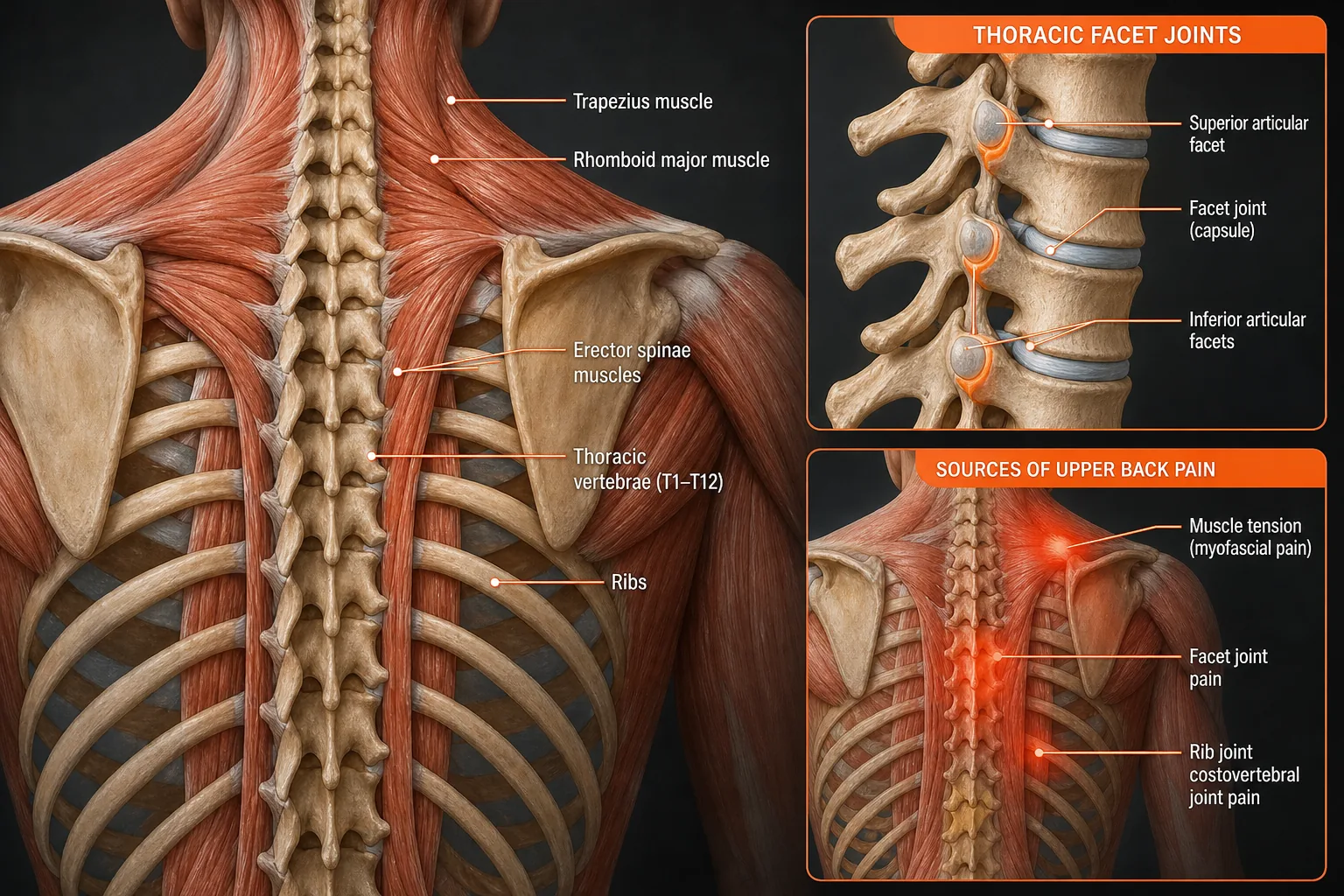
Sharp pain in the upper back can feel like a sudden sting that stops you in your tracks. It often shows up when you’re sitting, lifting or breathing deeply. Below we break down what the pain means, what can cause it, and how you can respond safely.
Table of Contents
Where the Pain Is and How It Feels Can Offer Clues
The upper back, or thoracic spine, sits between the base of the neck and the bottom of the rib cage. Because the ribs lock the vertebrae in place, the area moves less than the neck or lower back, so pain here usually points to a local problem.<\/p>
Sharp pain often feels like a stabbing jab that sits under a single vertebra or spreads across the shoulder blades. It may worsen when you turn, lift, or take a deep breath. Dull aches, burning or tightness are other common descriptors.<\/p>
Where you feel the pain can hint at the source. Pain centered between the shoulder blades often involves the muscles or facet joints, while pain that radiates toward the chest or arms may suggest a nerve irritation.<\/p>
Understanding the pattern helps clinicians narrow the list of possible causes. For a clear anatomical overview, see Wikipedia’s thoracic spine entry.<\/p>
Common Muscular and Joint Causes of Sharp Upper‑Back Pain
Most sharp aches in this region come from muscles, joints or the ribs that support the thoracic spine. Below are the typical culprits.
Muscle strainoccurs when the muscles or tendons are overloaded, for example, by heavy lifting, repetitive reaching or prolonged sitting with a rounded posture. The strain irritates the fibers and creates a stabbing sensation.<\/p>
Upper crossed syndrome (UCS)is a pattern of tight chest and neck muscles paired with weak upper‑back muscles. Poor ergonomics at a desk can set this up, leading to sharp pain when the weakened muscles are asked to stabilise the spine.<\/p>
Costovertebral joint irritationinvolves the joints where ribs meet the thoracic vertebrae. Heavy compound lifts like deadlifts or snatches can overload these joints, producing a localized sting.<\/p>
Osteoporosis or osteopeniareduces bone density, making the vertebrae vulnerable to tiny fractures that feel like a sudden, sharp jab, especially after a minor fall or sudden twist.<\/p>
Osteoarthritis of the spinewears down the small facet joints, causing stiffness and sharp pain that often worsens with extension movements.<\/p>
Muscle spasmis a reflex contraction that can be triggered by irritation of the dorsal rami nerves or a local injury. The spasm itself feels like a hard, stabbing point.<\/p>
Facet joint dysfunctionarises from arthritis or mechanical irritation of the facet joints. Extension or rotation can make the pain flare sharply.<\/p>
Myofascial trigger pointsare tender knots in muscle tissue that refer pain to the upper back. Pressing on a trigger point often reproduces the sharp sting.<\/p>
Poor postureslouching or forward‑head posture, places constant strain on the thoracic muscles and joints, gradually turning a dull ache into a sharp pinch during certain movements.<\/p>
Disc herniationin the thoracic region can press on a nerve root, sending a sharp, shooting pain down the back or into the arm.<\/p>
If you notice any of these patterns, a targeted assessment can confirm the exact source.<\/p>
Other Possible Causes and Symptoms That Need Prompt Attention
While most cases are mechanical, a few red‑flag signs suggest a more serious condition that warrants urgent medical review.

Severe nocturnal or disabling pain, fever or unexplained weight loss can be warning signs that warrant prompt medical review.<\/p>
Neurologic red flags include numbness, tingling, weakness in the arms or legs, or loss of bowel or bladder control. Those signs may point to spinal cord compression or cauda equina syndrome, a medical emergency.<\/p>
Chest‑related red flags, such as sharp pain that worsens with breathing, shortness of breath, or a feeling of pressure, could be cardiac or pulmonary in origin. Call emergency services if you experience these alongside back pain.<\/p>
Traumatic events like a fall from height or a high‑speed car accident can cause fractures or severe soft‑tissue injury. Even if the impact seemed minor, persistent sharp pain after trauma should be examined with imaging.<\/p>
When any of these warning signs appear, seek care promptly. Early assessment helps rule out infection, tumor, fracture or serious nerve involvement.<\/p>
How a Health Professional May Assess Upper‑Back Pain
When you visit a practitioner, the first step is a detailed history. The clinician asks when the pain started, what makes it better or worse, and whether you’ve had recent injuries or changes in activity.<\/p>
Next comes a physical exam. The practitioner checks posture, range of motion, muscle strength and any tender points. Neurological testing looks for sensation changes or reflex abnormalities.<\/p>
At Unleashed Health Chiropractic we also perform a postural assessment and may order spinal X‑rays if clinically indicated, Medicare can cover the cost in Australia.<\/p>
Imaging such as X‑ray, MRI or CT is reserved for cases with red‑flag symptoms, persistent severe pain, or when the exam suggests a structural problem.<\/p>
Based on the findings, the clinician recommends a plan that may include hands‑on techniques, guided exercises and advice on ergonomics. The goal is to reduce irritation, restore movement and prevent recurrence.<\/p>
Usable Ways to Respond and Support Everyday Movement
Most sharp aches improve when you stay gently active and avoid prolonged stillness. Here are steps you can try at home.
If pain persists beyond two weeks, worsens, or is accompanied by any red‑flag signs, book an assessment. Our clinic in Ascot Vale offers a thorough, non‑surgical approach that matches the latest evidence‑based recommendations for musculoskeletal back pain.<\/p>
Learning more about how chiropractic care fits into a broader back‑pain strategy? See How Chiropractic Helps Back Pain for a clear explanation.<\/p>
For a wider view of back‑pain resources available in Melbourne, check Back Pain Ascot Vale: Causes, Care and Local Support .<\/p>
Frequently Asked Questions
What can cause a sudden, stabbing pain in the upper back?
A sudden sting often comes from muscle strain, a rib joint irritation or a disc herniation that presses on a nerve root.<\/p>
When should I see a doctor instead of trying self‑care?
Seek medical attention if you have fever, unexplained weight loss, numbness, weakness, loss of bladder or bowel control, or pain that wakes you at night.<\/p>
Is it safe to use heat on sharp back pain?
Heat is helpful after the first 24‑48 hours once the area no longer feels hot or inflamed. It relaxes tight muscles and improves blood flow.<\/p>
Can chiropractic adjustments help my sharp upper‑back pain?
Chiropractic care may help by improving joint mobility and reducing muscle tension, but outcomes vary and should be discussed with a qualified practitioner.<\/p>
Do I need imaging for every episode of upper‑back pain?
Imaging is usually reserved for cases with red‑flag symptoms, persistent severe pain, or when a structural injury is suspected.<\/p>
Conclusion
If sharp pain in your upper back is mild and without red‑flag signs, try gentle movement, posture tweaks and the stretches above. Should the pain linger or any warning signs appear, book an assessment at Unleashed Health Chiropractic to get a personalized, evidence‑based plan.<\/p>
Move within comfort. Short walks, gentle shoulder rolls or light arm circles keep blood flowing without aggravating the pain.
Use ice for the first 24‑48 hours if the area feels hot or inflamed. Apply a cold pack for 10‑15 minutes, a few times a day.
Switch to heat after the initial phase. Warm compresses relax tight muscles and improve flexibility.
Check your workstation. Keep the monitor at eye level, elbows close to the body and shoulders relaxed. A small lumbar roll can help maintain a neutral thoracic curve.
Practice diaphragmatic breathing. Slow, deep breaths expand the rib cage and reduce tension in the surrounding muscles.
Incorporate the stretches from our Best Stretches for Upper Back Pain guide, a few minutes each morning can keep the muscles supple.


Comments