


How to Crack Your Own Back Safely

If you’re wondering how to crack your own back safely, start with a simple rule: don’t chase a pop. Gentle movement may feel soothing, but a cracking sound doesn’t prove that anything has been realigned or fixed. We’ll show you how to move carefully, when to stop and when to seek help.
Table of Contents
Step 1: Check Whether Self-Cracking Is Appropriate for You
First, check how your back feels today. If you have pain, swelling or a recent injury, skip deliberate twisting or self-cracking. The same applies if you’re recovering from an injury or have a known disc or spinal problem. A stretch that feels mild to one person may be unsuitable for another.
Pause and arrange advice from a GP or another health professional if your back discomfort keeps returning, lasts a long time or is getting worse. Don’t try to force a joint to pop because it feels as though your spine is out of place. A sound can happen during movement, but it can’t tell you what is causing discomfort.
Take extra care if you’re pregnant or have a condition that affects your spine or bones. Avoid movements that press on your abdomen during pregnancy. If you’re unsure whether a stretch suits your health, ask your GP or another qualified health professional before trying it.
People often seek a pop because it feels satisfying or seems to ease a sense of tightness. Any relief may be short-lived, and the sound itself isn’t needed for a stretch to count. If discomfort is driving you to crack your back again and again, focus on finding out what may be behind it. Our guide to ways to manage middle back pain also covers gentle home care and when to seek guidance.
Before you move:Check for pain, swelling, injury or a known spinal condition. If any apply, don’t try to make your back crack.
Step 2: Set Up with Comfortable Posture and Easy Breathing
Choose a clear space where you can lie on a firm, level surface or sit without being rushed. Wear clothes that let you move freely. Keep nearby furniture out of the way so you won’t need to twist suddenly to catch your balance.
Before stretching, notice your starting point. Can you bend or turn a little without pain? If a small movement already brings on pain, stop here. Don’t use a stretch to test how far you can push through discomfort.
Let your shoulders drop. Breathe in at an easy pace, then breathe out as you move into a gentle stretch. Don’t hold your breath. Exhaling may help you avoid bracing or making a quick, jerky movement. Aim for a light stretch, not a strong pull.
Keep the movement small at first. You don’t need to reach the floor with a knee or twist as far as possible. If you feel you have to use your hands to force your body into place, ease off. A comfortable range is enough.
If you spend much of the day at a desk, a short break to stand and move may be more useful than repeatedly trying to produce a pop. For movement ideas suited to desk breaks, see our guide to managing back discomfort linked with desk work .
Now you’re set up to try a small, controlled movement. Keep checking in with your body as you go.
Step 3: Try Gentle Movements, Never Force a Pop
Choose one easy stretch, move slowly and stop if you feel pain. These movements may create a popping sound for some people, but that isn’t the goal. Health information about back cracking describes the sound as gas shifting in joint fluid during movement. It doesn’t mean a bone has gone back into place.
Cat and camel
Start on your hands and knees, with your hands under your shoulders and knees under your hips. Slowly round your back and let your head follow without tucking hard. Then ease into a gentle arch, looking slightly ahead. Move between the two shapes at a pace you can control. Stop if pain starts.
Kneeling back extension
Stay on hands and knees. Gently tuck your chin, round your back, then move your hips towards your heels only as far as feels comfortable. Keep your hands on the floor. Don’t bounce or push into the end of the stretch.
Knee to chest
Lie on your back with your knees bent. Bring one knee towards your chest using your hands on your shin or thigh. Keep the other leg comfortable, and hold only while the stretch feels mild. Lower the leg slowly, then try the other side if it feels fine.
Sitting rotation
Sit on the floor with both legs out in front. Bend one knee and place that foot across the other leg. Turn your upper body gently towards the bent knee, using the floor for light support. Keep the turn small. Return to the middle slowly rather than pulling with your arm.
These stretches are not a test of flexibility. If one feels wrong, leave it out. The bridge stretch is more difficult, so it isn’t a good first move when you’re trying to find a gentle range. An extension stretch while lying face down is only suitable if that position itself doesn’t cause back pain.
There’s no need to repeat a movement to make a sound happen. Move once, pause and notice how your back responds. If you’d like to see the pace of a gentle movement, the video below is included as a visual aid. Follow your own comfort rather than trying to match a pose.
If the movement causes pain, stop. Don’t repeat it in the hope that the next attempt will feel better.
Step 4: Avoid Common Mistakes and Use Props Carefully
The most common mistake is using force to chase a pop. Avoid sharp twists, bouncing, pulling hard on a knee or pushing down on your spine. Fast movements can take you beyond the range that feels comfortable. A stretch should feel controlled, not like a test of how much pressure you can handle.
Another mistake is repeating the same movement over and over. There isn’t a set frequency that suits everyone, and the guidance available for common self-stretches doesn’t give a routine schedule. If you feel you need to crack your back many times a day, or discomfort keeps coming back, stop relying on repeated self-manipulation and seek personalised advice.
Props aren’t a shortcut to a deeper stretch. A chair or roller can change how your body moves, so use one only if you can stay in control and it doesn’t cause pain. Don’t use a hard object to press directly into your spine, and don’t ask another person to push or twist your back. That can make it harder to judge the force being used.
A foam roller is sometimes used for gentle movement around the upper back, but it isn’t a tool for forcing a crack. Keep pressure light and avoid rolling directly over the low back. Our foam roller exercise guide explains movement options with technique tips.
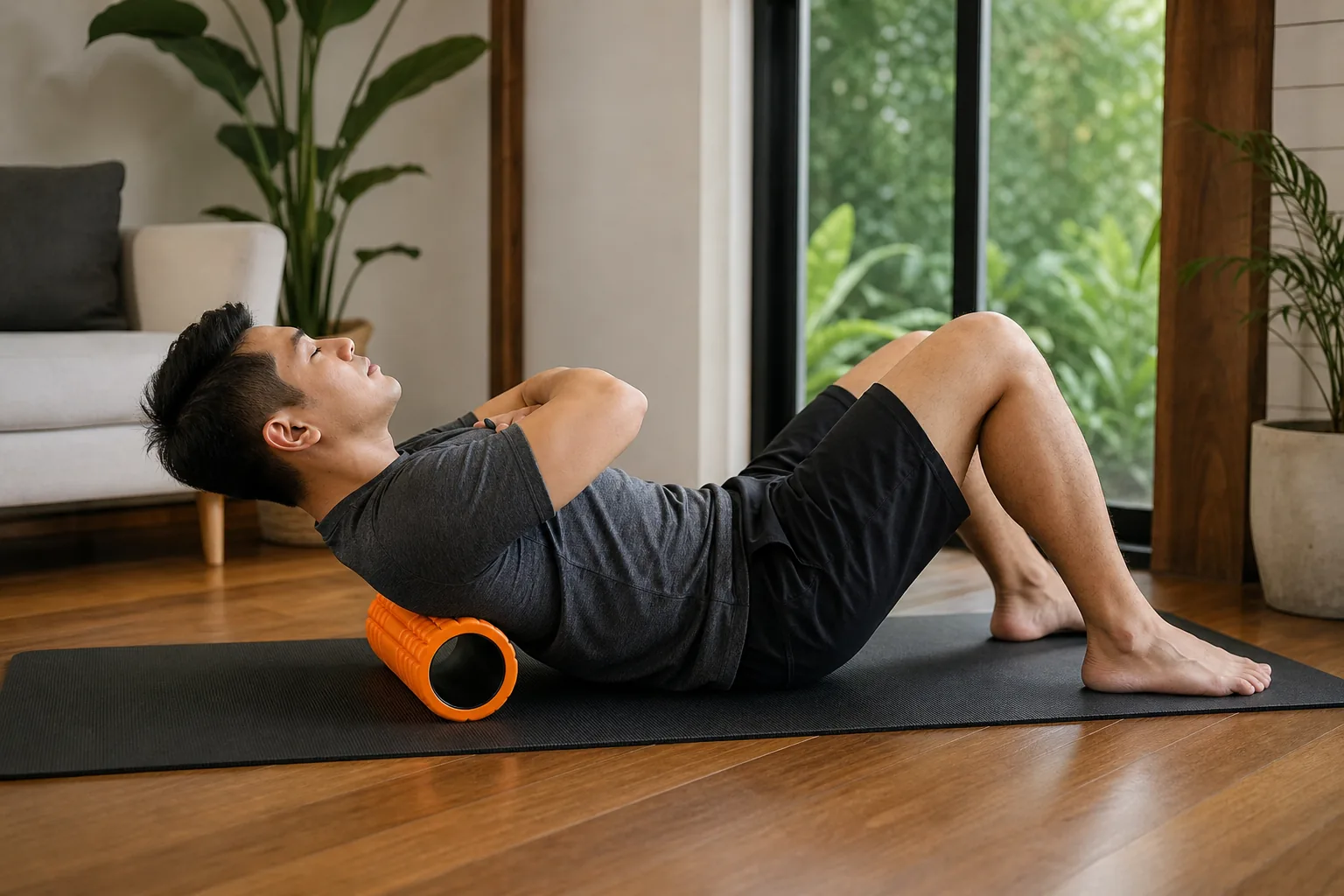
Keep a clear rule: if a prop makes you brace, twist sharply or feel pain, set it aside. You can simply stand, walk a little or return to easy movement.
Step 5: Recheck How You Feel and Know When to Get Help
After a stretch, pause before moving on. Notice whether your back feels the same, more comfortable or worse. A pop isn’t a reliable measure of progress. You don’t need to keep stretching if you feel comfortable, and you shouldn’t push through pain to chase a change.
Stop and seek advice if you develop pain, swelling, numbness or weakness, or if symptoms worsen. Contact a GP or another health professional for ongoing or recurring discomfort. Seek urgent medical care for severe or sudden symptoms. New trouble controlling your bladder or bowel needs prompt medical attention.
Don’t assume a self-crack can fix a slipped disc or explain persistent pain. Back symptoms can have different causes, and a stretch can’t diagnose them. If you’re worried or have a known spinal condition, a health professional can help decide what assessment or care may be suitable.
At Unleashed Health Chiropractic in Ascot Vale, an initial appointment includes a medical history and physical, neurological, orthopaedic and chiropractic examination. Spinal X-rays may be covered by Medicare if clinically indicated. We take the time to assess your situation and discuss care options in relation to your needs. A consultation can help you understand whether an option is appropriate, but results vary between people.
After a gentle stretch, return to normal activity at a pace that feels manageable. If symptoms keep drawing your attention back to your spine, get advice instead of repeatedly trying to make it pop.
Frequently Asked Questions
Is it safe to crack your own back every day?
There isn’t a set daily frequency that suits everyone. The available stretch guidance doesn’t give a routine schedule, so avoid treating repeated cracking as a daily requirement. If you feel the need to do it often, or you have pain before or after, stop and ask a GP or qualified health professional for advice about the cause.
Why does my back make a popping sound?
A popping sound can happen when gas in the fluid around a joint shifts as you move. It doesn’t show that a bone was out of place or that your spine has been corrected. Some joints and soft tissues can also make sounds during movement. If the sound comes with pain or follows an injury, seek health advice.
Should I crack my back if it hurts?
No. If you have back pain, swelling or a recent injury, don’t deliberately twist or force a crack. Pain may have different causes, and self-cracking won’t tell you what’s behind it. Stop the movement and speak with a GP or another qualified health professional, especially if the discomfort persists or gets worse.
Can stretching fix a slipped disc?
No stretch can confirm or fix a slipped disc on its own. Back discomfort has many possible causes, and a self-stretch isn’t a diagnosis. If you have a known disc problem, or you suspect one because symptoms are ongoing, ask a GP or qualified health professional what movement is suitable for you.
When should I see a doctor for back symptoms?
See a GP for persistent or recurring back symptoms, or if you develop numbness or weakness. Seek urgent medical care for severe or sudden symptoms. New difficulty controlling your bladder or bowel needs prompt medical attention. Don’t wait for a stretch or a pop to change these symptoms before seeking care.
Conclusion
Choose gentle movement over force, and stop if it hurts. If you’re unsure what’s causing recurring discomfort, speak with your GP or arrange an assessment with Unleashed Health Chiropractic in Ascot Vale to discuss whether care may suit your needs.


Comments