


How to Warm Up Before Exercise
Ready to move? A good warm-up takes only a few minutes, but it can change how your whole session feels. We’ll start with easy cardio, work from your feet upwards, then match the last moves to your workout. That structure suits most adults, including people managing mild stiffness or a past sports injury.
Table of Contents
Step 1: Start with 3–5 Minutes of Easy Cardio
The first step in learning how to warm up before exercise is to raise your heart rate slowly. Start at an effort that lets you speak in short sentences. You should feel warmer, but you shouldn’t feel puffed.
Choose one simple movement. Walk briskly, pedal lightly, or jog at an easy pace. If you’re at home, march on the spot. Add small arm swings once your legs feel warm. Keep your feet quiet and your steps soft.
Use five minutes as a useful starting point. You may need closer to 10 minutes if you’ve been sitting for much of the day, the weather is cold, or your first exercise is demanding. You don’t need to chase sweat. The goal is a gradual rise in body temperature and breathing.
Keep the first few minutes easy. A common mistake is starting with sprints or hard high knees before your body is ready. Save faster work for later, once you’ve checked how your joints feel.
If your back feels stiff, shorten your stride and keep your chest relaxed. If a joint feels sharp or unstable, stop and change the movement. At Unleashed Health Chiropractic , we take the time to understand how pain affects your movement before suggesting exercise changes.
Pro Tip:Use the talk test. If you can’t speak a short sentence, ease off until your breathing settles.

By now, you should feel warmer and more alert. You shouldn’t feel tired. Next, bring motion into the joints that guide your stride, squat or lift.
Step 2: Mobilise from Your Feet Up
To warm up before exercise safely, move from the feet up. This order helps you check each area before adding more range or speed.
Start with ankle circles. Hold a wall if you need balance. Lift one heel slightly, circle the ankle in both directions, then change sides. Keep the circles smooth. Don’t force the end of the range.
Next, rise onto your toes and lower with control. Try 8 to 10 slow heel raises. Then walk forward with a soft heel-to-toe step. Notice if one foot turns out or feels less steady than the other.
Move to the knees with shallow bends. Keep your feet about hip-width apart. Bend only as far as feels easy, then stand tall. After a few repetitions, add a gentle side-to-side shift. This warms the legs without asking for deep force.
For the hips, make small hip circles. Then lift one knee and draw a half-circle out to the side before placing the foot down. Alternate sides. Keep your trunk quiet rather than leaning away from the lifted leg.
Now add a few walking lunges if they suit your body. Take a short step back instead if forward lunges feel awkward. The aim is to rehearse the pattern, not test your deepest range.
Continue upwards with slow torso turns. Keep your ribs stacked over your pelvis. Then roll the shoulders backwards and forwards. Finish with gentle head turns. Look left, return to centre, then look right. Don’t pull your head into a stretch.
Mobility work should feel like movement, not a contest. Guidance on basic neck, hip, ankle and shoulder drills also stresses gradual progress and stopping when discomfort goes beyond a normal stretch. See these mobility exercise progressions for the movement details.
Keep breathing as you move. Breathe out during the effort and avoid holding your breath. If neck turns bring on dizziness or a headache, stop that drill. We understand that a movement that feels fine for one person may irritate another, so Unleashed Health Chiropractic can help you adjust the range when pain keeps returning.
By now, your ankles, knees, hips, spine and shoulders should have had some easy motion. The next step adds more useful range without keeping you still for too long.
Step 3: Use Dynamic Movements Instead of Long Static Stretches
Most people should use moving stretches during the warm-up. Dynamic movements take a joint through a controlled range while your body stays active. Long static holds fit better after training or in a separate flexibility session.
Try leg swings while holding a wall or rail. Swing one leg forwards and backwards with a small range at first. Build up only if the movement stays smooth. Then turn sideways and swing the leg across your body. Keep your pelvis facing forward.
Add alternating knee hugs as you walk. Bring one knee towards your chest without rounding your back, lower it, then switch sides. Follow with heel-to-bottom steps. Pull the arms back gently as your heels lift to add movement through the chest and shoulders.
For the upper body, use arm circles. Make small circles first, then slightly larger ones. Add cross-body arm swings. Keep your shoulders away from your ears. If you’re preparing for a press-up or upper-body session, finish with a few slow wall push-ups.
Dynamic does not mean fast. You should control each repetition and stop short of pain. A warm-up should help you feel ready. It shouldn’t leave you sore before the session begins.
Movement choice | Use it when | Keep in mind |
Leg swings | You’re preparing to run, squat or kick | Hold support and start with a small arc |
Knee hugs | Your hips and hamstrings feel stiff | Stand tall instead of pulling hard |
Heel-to-bottom steps | You want to raise the pace gently | Keep the steps light |
Arm circles | You’re training the shoulders or chest | Increase the circle only if it feels smooth |
Walking lunges | You need more hip and leg control | Use a shorter step during a sore day |
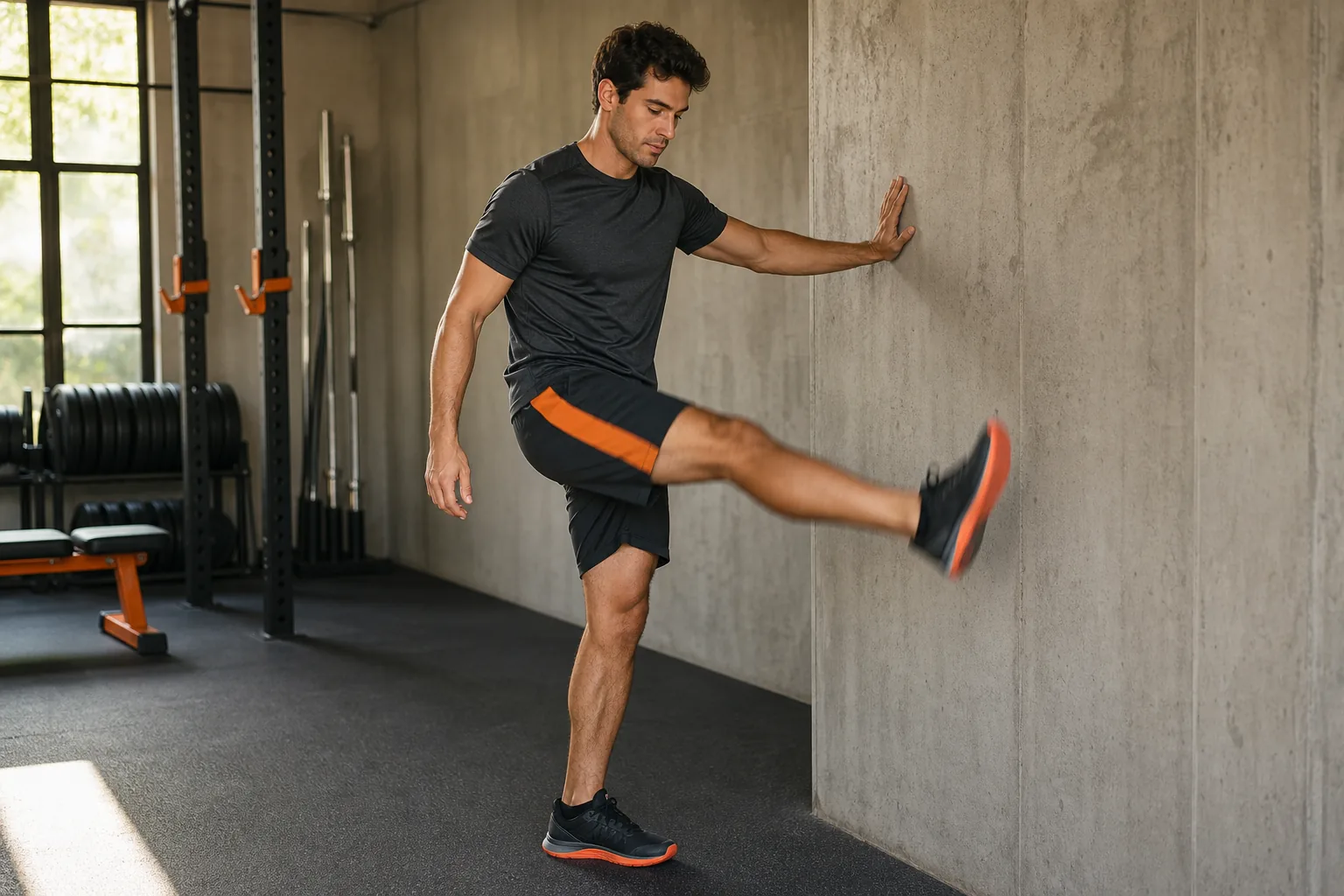
Dynamic movement is one possible way to prepare the body, and one routine won’t suit every person or sport. That matters if you have back pain, a recent sprain or symptoms that spread into an arm or leg. A warm-up may reduce stiffness, but it should not be used to push through warning signs.
If you want more flexibility work, place longer holds after the session or on a separate day. Our guide to safe flexibility exercises and breathing can help you plan that part without turning the warm-up into a long stretch session.
Key Takeaway:Move through a comfortable range before exercise, then save long static holds for later.
By now, you should be moving freely without feeling drained. The last step makes the routine specific to what you’re about to do.
Step 4: Finish with Exercise-Specific Practice
The final part of how to warm up before exercise should look like a gentler version of your workout. This helps your body and attention prepare for the exact task ahead.
Before running
Start with an easy walk or jog. Add a few short bursts at a pace below your planned speed. You can include leg swings and marching knee lifts between bursts. Keep the first running minutes relaxed. Build speed only after your stride feels even.
Before strength training
Rehearse the main lift without weight or with a very light load. For a squat, practise the stance and depth. For a deadlift, practise sending the hips back while keeping the load close. For a press, move the arms through the path you’ll use.
Use the warm-up to check technique. If your knee caves in, your back rounds, or one side feels weak, reduce the range and slow down. You may need a different exercise that day.
Before HIIT or court sport
Begin with easy cardio, then add short periods of quicker footwork. Try side steps before lateral shuffles. Use small hops only if landing feels steady. Keep the final burst brief. You’re preparing for speed, not testing your limit.
Sport-specific practice can also help you focus. A warm-up may prepare your attention as well as your muscles. It can be a useful time to rehearse a swing, change of direction or lifting cue at a low load. For broader strategies, see our guide to preventing sports injuries safely .
Isometric exercise may be used during rehabilitation. Isometric work means producing muscle tension without much joint movement. It may affect pain or inhibition in some cases, but pain relief during exercise can make it easier to do too much. Don’t use a temporary change in symptoms as permission to push harder.
For people returning after an injury, we tailor the final stage to the activity and current tolerance. Unleashed Health Chiropractic in Ascot Vale can assess how your back, neck, hip or sports injury affects movement and discuss suitable next steps. If pain is severe, worsening, linked with weakness, or paired with loss of bladder or bowel control, seek urgent medical care.
A simple session might look like this:
3 to 5 minutes of easy walking, cycling or jogging.
2 minutes of ankle, knee, hip, spine and shoulder mobility.
2 minutes of dynamic leg and arm movements.
1 to 3 minutes of gentle practice for the main exercise.
That gives you a flexible 5 to 10 minute routine. On a cold morning or before a hard session, take longer. On a warm day before an easy walk, you may need less.
Frequently Asked Questions
How long should a warm-up last before exercise?
A warm-up usually takes 5 to 10 minutes before exercise. Start with easy cardio, then add mobility and movements that match your session. Take longer if you’ve been still for hours or the workout will be intense. You should feel warmer and ready, not tired. If you finish breathless, reduce the pace.
Should I stretch before working out?
You can stretch before exercise, but choose gentle dynamic movements first. Leg swings, walking lunges and arm circles keep you moving while you explore range. Save long static holds for after training or another flexibility session. Never force a stretch, especially when pain feels sharp or spreads.
Is a warm-up needed before walking?
A short warm-up can help before a brisk or hilly walk. Start slowly for several minutes, then build your pace. Add ankle circles and gentle leg swings if your calves or hips feel stiff. For an easy stroll, the first few minutes of relaxed walking may be enough preparation.
What is the best warm-up for back pain?
The best warm-up for back pain is one that feels controlled and does not increase symptoms. Begin with easy walking, then use small hip movements and gentle trunk turns. Avoid forcing deep bends or twists. If pain travels into a leg, causes numbness, or keeps returning, ask a qualified health professional for individual advice.
Can I exercise if my warm-up makes pain worse?
Stop and reassess if your warm-up makes pain worse. A mild sense of stiffness may settle as you move, but sharp pain, spreading symptoms or new weakness needs attention. Reduce the range first. If the problem continues, pause the workout and seek care. We can help you work out which movements need changing.
Keep your warm-up simple: raise your temperature, move through comfortable ranges, then rehearse the task ahead. Try the four stages before your next session and note what feels better or worse. If pain or stiffness limits that plan, Unleashed Health Chiropractic is here to help you find a safer starting point.


Comments