


7 Rounded Shoulders Exercises to Try at Home
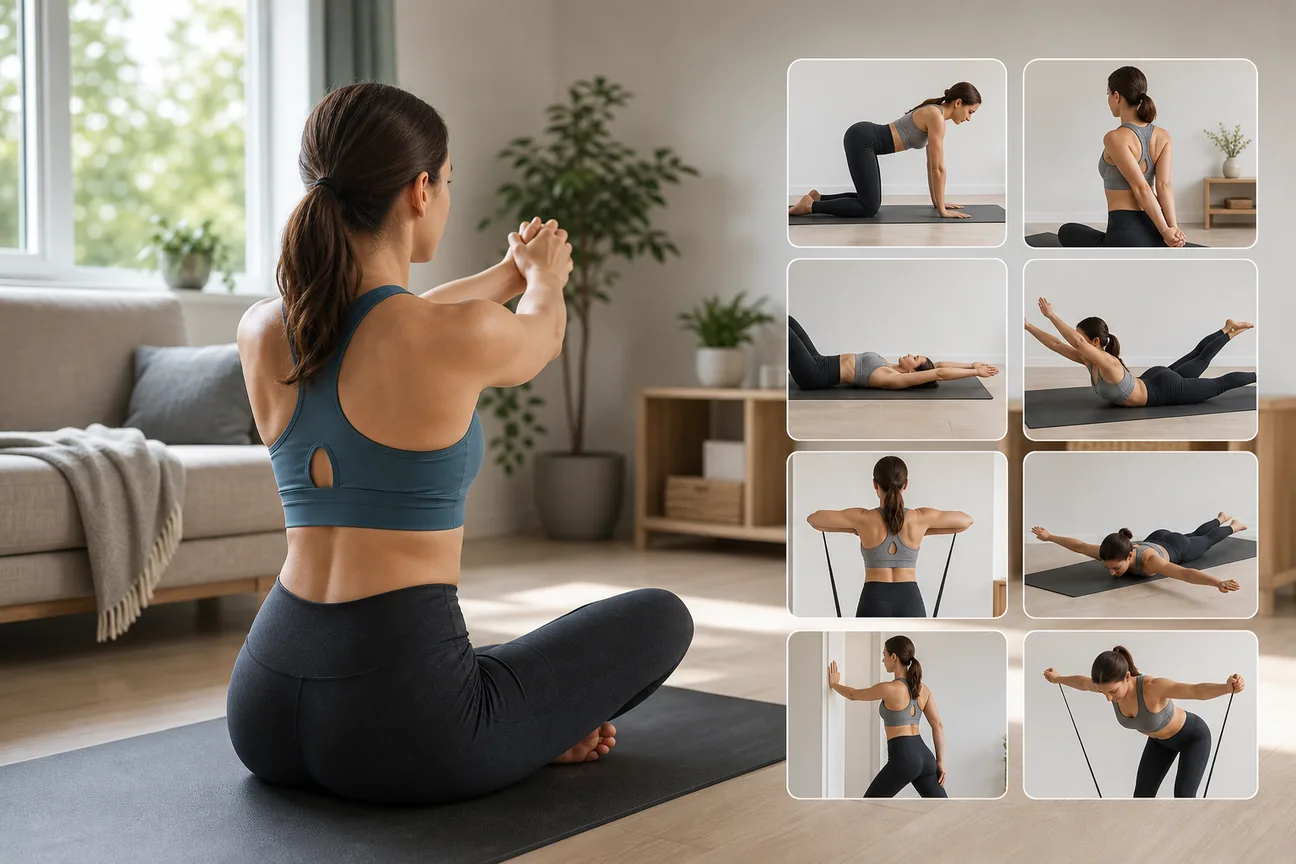
Rounded shoulders can make you look and feel slouched, and they often hide tight chest muscles and weak upper‑back work. Below are seven exercises you can try at home to stretch, strengthen and restore balance, alongside this practical guide to rounded shoulders .
Table of Contents
1. Foam‑Roller Thoracic Extension: Gently move the upper back
This move uses a foam roller to extend the middle‑upper back, loosening the tissues that pull the shoulders forward. It’s a good starter if you spend long hours at a desk.
Lie on the floor, place the roller perpendicular under your upper back, cross your arms over your chest and lift your hips slightly. Roll slowly from the bottom of your shoulder blades up toward the base of your neck, pausing at tight spots for a few seconds. Aim for six to ten controlled repetitions, moving the roller a little each time.
Because the roll targets the thoracic spine, it can improve the space needed for the shoulder blades to sit back. The motion is low‑impact, but if you have a diagnosed spinal condition, check with a health professional before adding it.
2. Doorway Chest Stretch: Ease into a gentle pec stretch
This stretch targets the pectoralis minor and major, the muscles that often shorten and pull the shoulders forward.
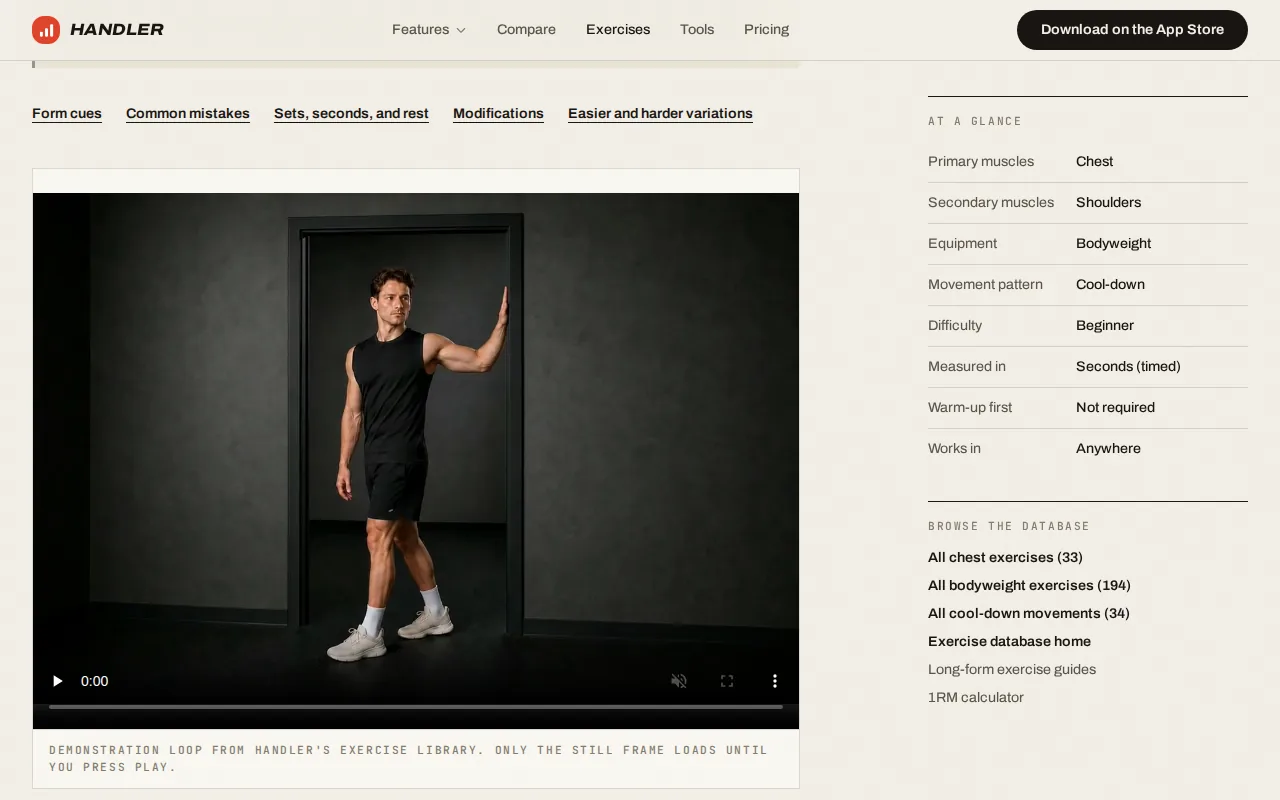
Stand in a doorway, place one forearm against the frame at about shoulder height, and step forward with the opposite foot until you feel a mild stretch across the front of the chest. Keep your ribs down and avoid arching your lower back. Hold for 30‑45 seconds, then switch sides.
Doing the stretch a few times a day helps keep the chest supple, giving the upper‑back muscles room to pull the shoulder blades back.
We like to pair this stretch with a brief chin tuck to cue the neck and upper back into alignment.
3. Wall Slide: Practise controlled shoulder movement
Wall slides train the scapulae to glide smoothly while the arms move overhead.
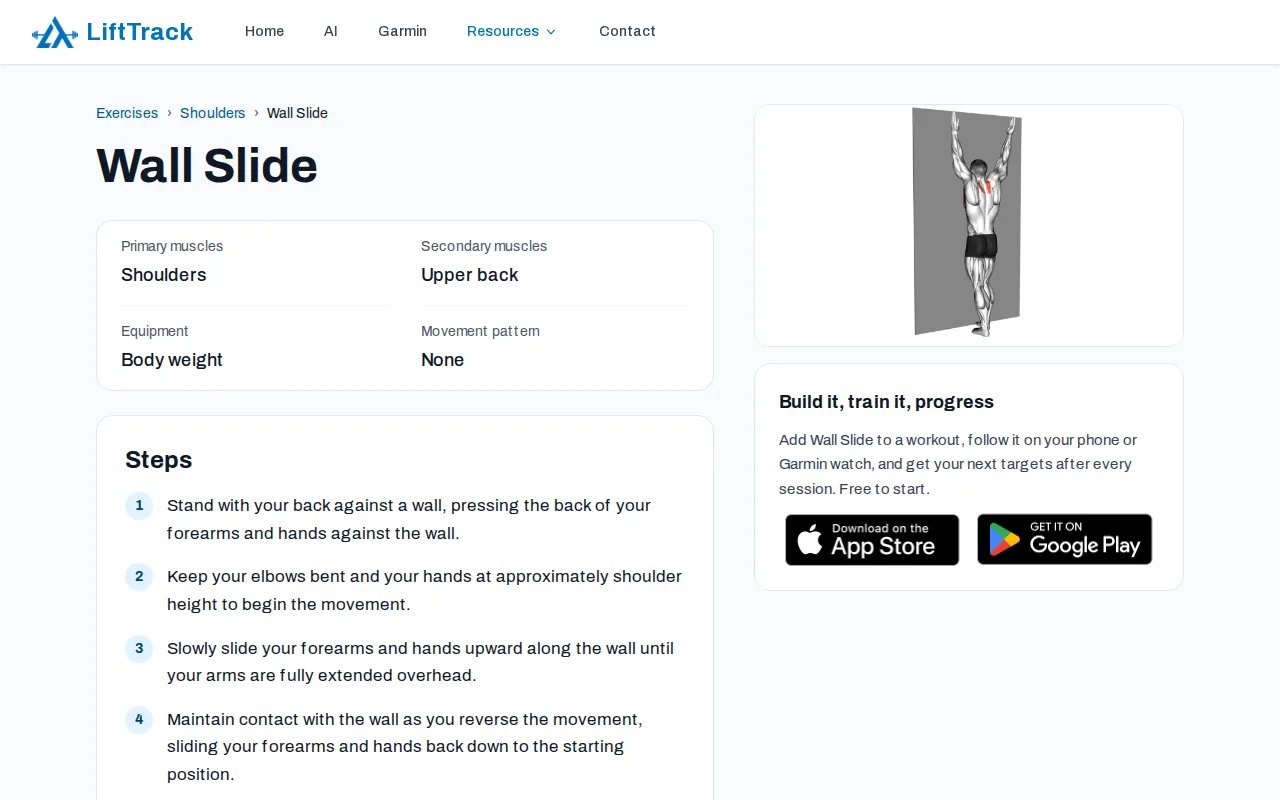
Stand with your back, head and hips against a flat wall. Bend your elbows to 90°, palms facing forward, and press the forearms against the wall. Slide the arms upward, keeping every point of contact on the wall. When the elbows start to lift off, stop and reset.
Three sets of eight to ten slow reps give the middle‑ and lower‑trapezius a chance to fire without shrugging the shoulders.
Wall slides are a common part of the shoulder strengthening advice given to patients.
4. Chin Tuck: Build awareness of gentle neck positioning
Chin tucks activate the deep neck flexors that keep the head balanced over the shoulders.

Sit or stand tall, pull the chin straight back as if making a tiny double chin, and hold for five seconds. Relax and repeat ten times.
The cue helps reverse the forward-head drift that often accompanies rounded shoulders. If you feel dizziness or sharp pain, stop and seek advice.
5. Chest‑Supported Row: Strengthen the upper‑back muscles
Rows train the rhomboids, middle‑trapezius and posterior deltoid, the primary stabilisers that pull the shoulder blades together.
Lie face‑down on an incline bench, grip the handles, and pull the elbows back while squeezing the shoulder blades back and down, then lower slowly. Perform two to four sets of eight to fifteen reps, two or three times a week.
Because the chest supports your torso, the movement isolates the back muscles without loading the lower spine.
Rows pair well with light band work, such as the next exercise.
6. Band Pull‑Apart: Practise steady shoulder‑blade control
Using a light resistance band, this exercise reinforces the rear deltoids, middle‑trapezius and rhomboids.
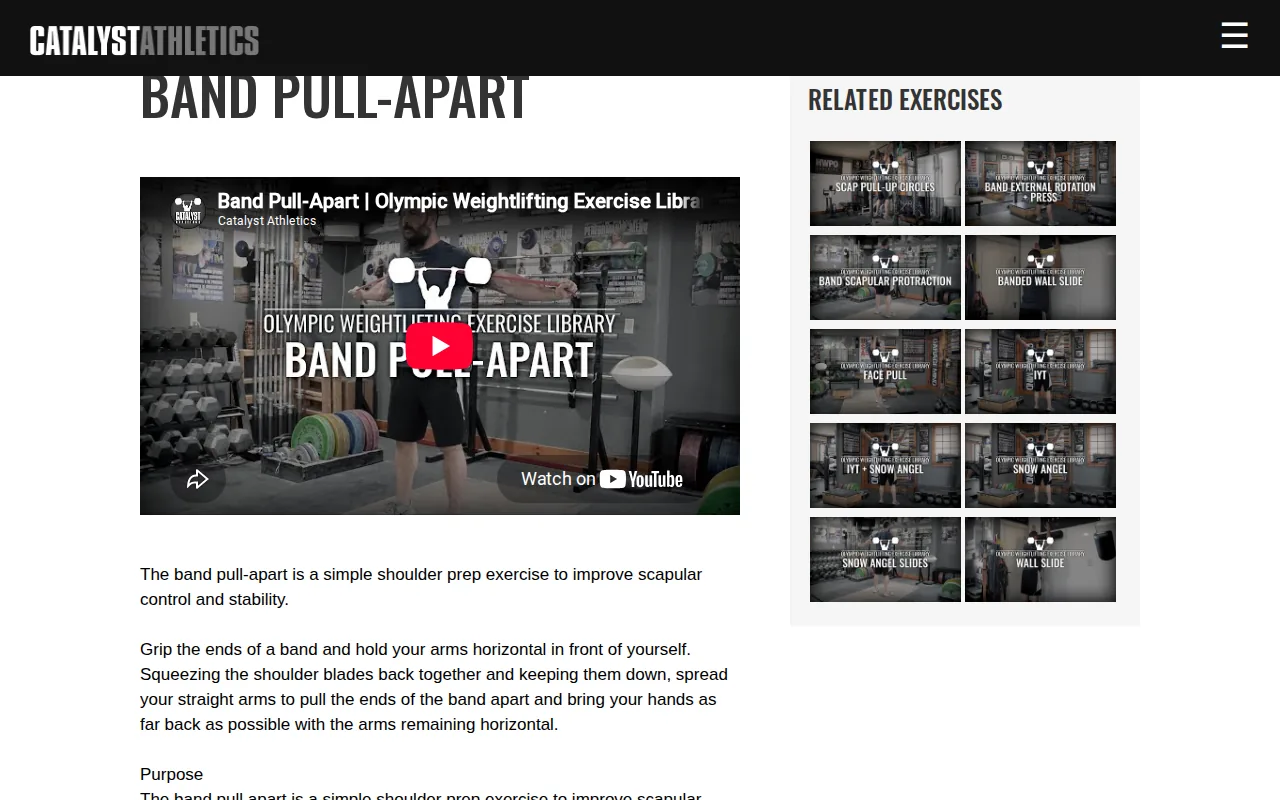
Hold the band with both hands at shoulder width, arms extended in front of you. Pull the band apart by squeezing the shoulder blades together, keeping the elbows slightly bent. Complete three sets of fifteen to twenty reps.
Slow, controlled movement prevents the shoulders from shrugging up toward the ears.
7. Side‑Lying External Rotation: Work the rotator cuff with control
This move isolates the external rotators of the shoulder, helping the joint stay stable when the scapula is in a retracted position.
Lie on your side with your head supported. Bend your top elbow to 90 degrees and keep it tucked against your side, forearm across your stomach. Holding a light dumbbell (or no weight), rotate the forearm up toward the ceiling, then lower slowly. Perform three sets of ten to twelve reps per side.
The rotator cuff helps steady the shoulder during daily tasks, so this move builds strength where many people with rounded shoulders feel weak.
How to Choose the Right Exercise
Pick moves that match your current comfort level and any advice from a health professional. If a stretch feels sharp, stop. If a strength move feels too easy, add a light band or a small dumbbell.
Start with the mobility work (foam‑roller, doorway stretch, wall slide) before adding the strengthening moves (row, band pull‑apart, side‑lying rotation). Consistency beats intensity, aim for a brief routine most days rather than a long session once a week.
Frequently Asked Questions
What are the main causes of rounded shoulders?
Rounded shoulders often stem from tight chest muscles and weak upper‑back muscles, a pattern known as upper crossed syndrome.
How often should I do these exercises?
Perform the mobility stretches daily and the strengthening moves two to three times a week, adjusting volume as your comfort improves.
Can I do these exercises if I have neck pain?
If neck pain is present, start with gentle chin tucks and doorway stretches, and stop any movement that triggers sharp pain. A health professional can advise safe progressions.
When should I see a chiropractor or physiotherapist?
If you notice persistent pain, numbness, tingling, or loss of shoulder strength despite regular exercise, schedule an assessment with a qualified practitioner such as Unleashed Health Chiropractic in Ascot Vale.
Do I need any special equipment?
Most of the moves use body weight or a simple resistance band. A foam roller, a sturdy doorway and an incline bench are helpful but not mandatory.
Will these exercises fix my posture permanently?
Consistent practice can improve shoulder positioning, but posture is also influenced by daily habits, ergonomics and overall activity level. Ongoing awareness and regular movement are key.
Conclusion
We recommend starting with the foam‑roller thoracic extension and doorway chest stretch, then adding the row and band pull‑apart as you build strength. If you’d like a personalised assessment, consider booking an appointment with Unleashed Health Chiropractic to see whether these exercises fit your individual needs.


Comments