


Best Stretches for Upper Back Pain
Updated: Aug 21

Upper back pain often feels worse after long hours at a desk, in the car or on a phone. Gentle movement may help, but the right hold time and dose are easy to miss. Here are five useful options, plus the safety checks we use at Unleashed Health Chiropractic in Ascot Vale.
Table of Contents
Thoracic Stretch with Roller - for gentle upper-back mobility
Thoracic Extension Exercise with Arms Behind Head - a chair-based option
Thoracic Paraspinal Stretch - for the muscles alongside the spine
Shoulder Stretch - when shoulder tension contributes to upper-back discomfort
Sidelying Thoracic Rotation - for controlled rotational movement
1. Thoracic Stretch with Roller - for gentle upper-back mobility
The thoracic stretch with a roller uses support under the mid-back to encourage gentle extension. It suits people who feel stiff through the upper spine after sitting.

Lie on your back with your knees bent. Place the roller across your mid-back, not under your neck or lower back. Support your head with your hands. Let your upper back ease over the roller while your hips stay on the floor.
Keep the movement small. Breathe out as you extend, then return to a neutral position. You should feel a broad stretch across the upper back. You shouldn't feel sharp pain, pressure in the ribs or strain in the neck.
A research protocol recorded five sets of 30 repetitions daily for 10 days for a roller-based thoracic stretch. That is a specific protocol, not a target for everyone. Start with fewer, slow repetitions if this is new to you.
At home, a softer roller may feel easier than a firm one. If you can't control the movement, use another form of support instead. We also explain setup and pressure in our guide to foam roller exercises for back pain .
This option isn't a good fit when lying back causes a sharp increase in pain, dizziness or rib pain. A hands-on assessment can help you find out whether stiffness, muscle tension or another issue is limiting movement.
2. Thoracic Extension Exercise with Arms Behind Head - a chair-based option
This chair-based thoracic extension exercise is useful when floor work feels awkward. It targets movement through the upper spine while your feet stay grounded.

Sit on a chair with your feet flat. Place your hands behind your head without pulling on your neck. Keep your elbows open only as far as feels comfortable. Lean your upper back over the chair's top edge, then return to upright.
Move through the mid-back rather than hinging from the lower spine. Keep your chin gently tucked. Think of lifting through the breastbone, not throwing your head back.
A protocol for this chair-based extension exercise uses five sets of 30 repetitions daily for 10 days. That level may be too much during a pain flare. Use a small range first, then judge how you feel later that day.
A chair gives you more control than a roller, but it can still place pressure through the ribs. Don't force the elbows back. Stop if you feel pins and needles, arm symptoms or a sharp catch.
This is one of the easier choices for a work break. It takes little space and no special gear. But a chair cannot tell you why your movement is limited. Persistent pain deserves a proper review rather than endless repetitions.
3. Thoracic Paraspinal Stretch - for the muscles alongside the spine
The thoracic paraspinal stretch targets the muscles that run beside the upper and mid-spine. It may suit you when the area feels tight on both sides after static work.

Choose a comfortable seated or supported position. Lengthen through the spine, then gently round the upper back or move into the position shown by your practitioner. Keep your breathing calm. Avoid forcing the spine into a deep bend.
The documented prescription is a 15-second hold for five repetitions per set, with two sets twice daily. That gives you a clear starting point, which many online exercise lists fail to provide.
Seven included repetition or frequency guidance. This guidance can help people avoid holding too long or repeating a painful movement too often.
Keep the effort mild. A stretch should ease when you stop. It shouldn't cause burning, electric pain or symptoms that travel around the chest. If one side feels much tighter, don't yank it into line. Asymmetry can reflect more than a short muscle.
We take the time to ask what the pain changes in your day. That includes reaching, driving, sleep and work at a desk. It helps us tailor a movement plan instead of handing you a long list to guess through.
4. Shoulder Stretch - when shoulder tension contributes to upper-back discomfort
A shoulder stretch can help when tight shoulders add load to the upper back. It suits people who notice tension around the shoulder blades or upper trapezius muscles.

Bring one arm across your chest. Use the other arm to guide it gently closer. Keep the working shoulder down, and don't twist your trunk to gain range. Hold at mild tension, then release slowly.
The documented dose is a 10-second hold for three repetitions on each side, twice daily. You can use that as a measured starting point. If the shoulder feels irritated after the session, reduce the range or stop.
Shoulder tension can build when your head sits forward or your arms stay raised. It can also follow a shoulder injury. Stretching the shoulder won't address every cause of upper-back pain, so pay attention to the pattern.
A short walk or a few easy shoulder rolls can warm you first. Static stretches are often better tolerated once your body feels warm. Don't stretch into a fresh injury or severe pain.
For desk-related tension, our advice on neck and shoulder pain includes small movement breaks and ways to change your sitting habits. Small changes often make a stretch easier to tolerate.
5. Sidelying Thoracic Rotation - for controlled rotational movement
Sidelying thoracic rotation lets you work on upper-back rotation while your knees support the pelvis. It suits people who feel stiff when turning to look behind them.
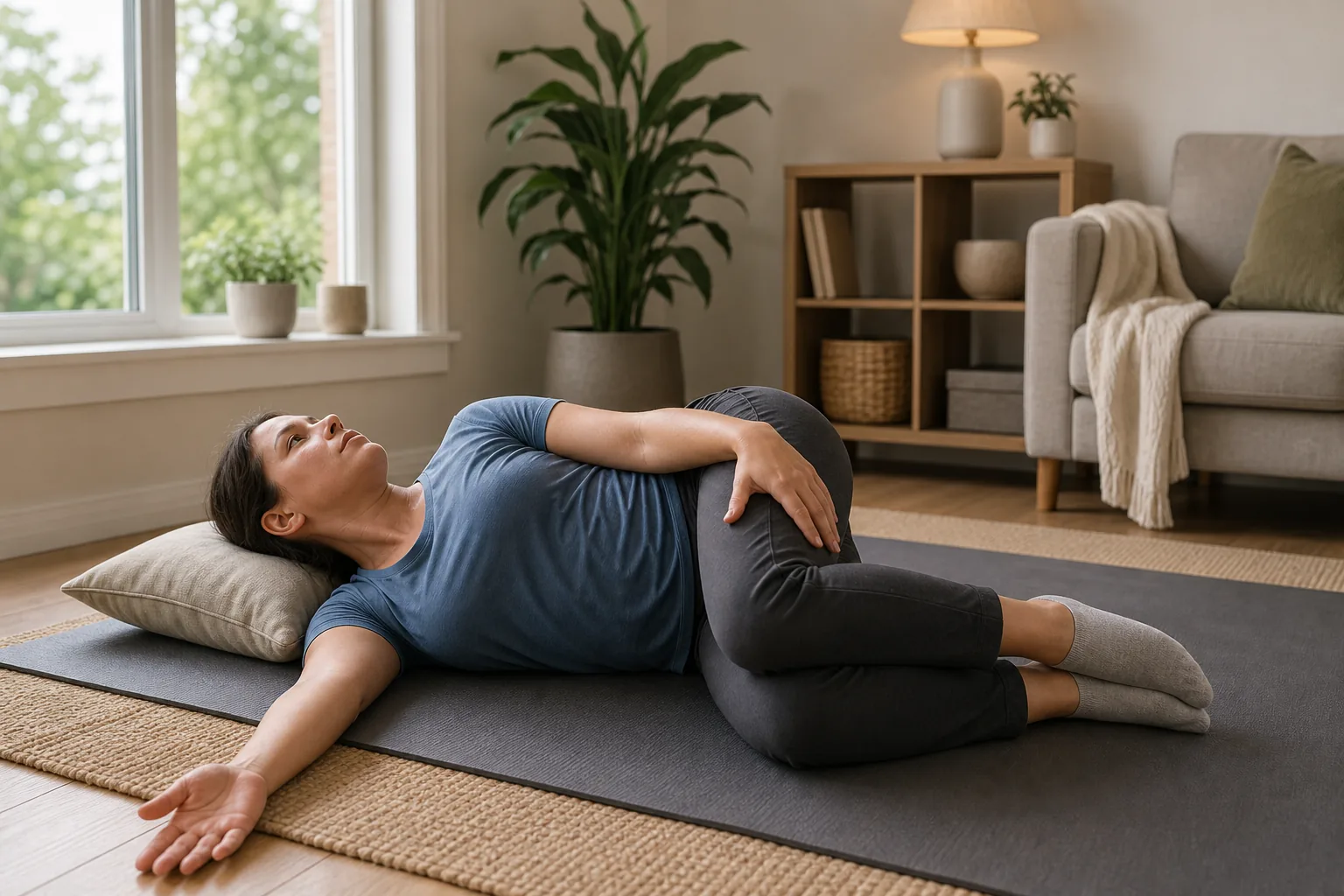
Lie on your side with your knees bent and stacked. Reach both arms in front of you. Slowly open the top arm towards the floor behind you while your knees stay together. Follow the hand with your eyes only if your neck feels comfortable.
Return to the start with control. Don't let the top knee lift. The aim is movement through the thoracic spine, not a hard twist through the lower back.
This option needs no equipment, which makes it useful at home or while travelling. It also gives you a clear comparison between sides. A large difference may be worth discussing with a health professional.
Rotation can feel strong even when the range is small. Move slowly and stop before a pinch. Don't use this exercise during a fresh rib injury, after surgery or when twisting brings on sharp chest pain without professional guidance.
We understand that everyone moves differently. At Unleashed Health Chiropractic, we can assess your limits and explain which movements fit your symptoms and current stage of recovery.
How These Stretches for Upper Back Pain Compare
There isn't one best stretch for every upper-back problem. Your choice should match your available space, the movement that feels limited and how your symptoms respond afterwards.
Option | Best fit | Equipment | Recorded dose | Main caution |
Thoracic stretch with roller | Mid-back extension stiffness | Roller | 5 sets of 30 repetitions daily for 10 days | Don't roll into the neck or lower back |
Chair-based extension | Desk breaks and limited floor space | Chair | 5 sets of 30 repetitions daily for 10 days | Keep the range small |
Thoracic paraspinal stretch | Muscle tightness beside the spine | None stated | 15 seconds, 5 reps, 2 sets twice daily | Avoid forced rounding |
Shoulder stretch | Shoulder blade and upper-trap tension | None | 10 seconds, 3 reps per side twice daily | Don't pull through shoulder pain |
Sidelying thoracic rotation | Controlled turning movement | None | Individual guidance needed | Keep the knees stacked |
Warm up before stretching. A few minutes of easy walking or marching can help your body feel ready. A measured hold and repetition plan is more useful than vague advice.
Most documented options target the thoracic spine, and about one-third need no equipment. That gives you room to choose a simple routine. Gear isn't the deciding factor. Your response is.
Key Takeaway:Pick one gentle movement, use a clear dose and check how your symptoms respond later that day.
Safety Notes for Upper Back Pain Stretches
Stop a stretch if it causes sharp pain, new tingling, numbness, weakness, dizziness or pain that spreads into the arm or chest. Seek urgent medical care for severe chest pain, trouble breathing or sudden neurological symptoms.
Arrange an assessment if pain is severe, keeps returning or does not settle with gentle movement. We tailor care to your symptoms at Unleashed Health Chiropractic, including advice on when stretching is suitable and when it should wait.
FAQ About Stretches for Upper Back Pain
What is the best stretch for upper back pain?
The best stretch depends on what limits your movement and what causes your pain. A chair-based extension may suit desk stiffness, while sidelying rotation may suit trouble turning. Start with a mild range and stop if symptoms spread. A chiropractor or other qualified health professional can help match the movement to your needs.
How long should I hold an upper-back stretch?
Hold time depends on the exercise. The documented options above use 10 seconds or 15 seconds, while some have no recorded hold. Begin with a short, comfortable hold. Don't assume a longer stretch works better. If the sensation becomes sharp or lingers after you stop, reduce the hold or seek advice.
Can I stretch my upper back every day?
You can often do gentle upper-back mobility daily if it feels comfortable, but the right frequency depends on your symptoms. Some documented protocols use twice-daily practice, while others use a 10-day schedule. Start below your maximum. Your body should settle after the session rather than feel worse.
Should I use a foam roller for upper back pain?
A foam roller may help some people move through the thoracic spine, but it isn't right for every pain pattern. Keep it across the mid-back and support your head. Never roll over the neck. Stop if you feel sharp pain, dizziness, numbness or worsening symptoms.
When should I see someone about upper back pain?
See a health professional when pain is severe, persistent or affects normal tasks. You should also seek care when symptoms travel into an arm or come with weakness, numbness, fever, chest pain or breathing trouble. Unleashed Health Chiropractic can assess movement and help you choose a safe next step.
Conclusion
Start with the option that matches your main limit, keep the range gentle and record how you feel later. If the pain keeps returning or you aren't sure which movement fits, explore our simple posture exercises or arrange an assessment with Unleashed Health Chiropractic in Ascot Vale. We look forward to helping you move with more confidence.


Comments