


Exercises to Improve Posture: A Simple Guide
Good posture isn't about holding yourself stiff all day. It's about having enough control and movement to change position with less strain. These exercises to improve posture start with breathing, then build support through your neck, upper back, trunk, and daily habits.
We understand that posture problems can come with neck pain, headaches, low back pain, or no pain at all. Move slowly, stay below sharp pain, and seek advice if symptoms spread or worsen.
Table of Contents
Step 1: Check Your Starting Posture and Set Up Safely
Start by finding your usual position, rather than forcing a picture-perfect pose. This gives you a safe baseline for posture exercises.
Stand side-on near a mirror. Let your arms rest by your sides. Look for a few simple points:
Does your head sit far in front of your shoulders?
Do your shoulders lift or round forward?
Does your lower back feel pinched when you stand tall?
Do you shift more weight onto one leg?
Don't pull your shoulders back hard. Don't tuck your chin until your neck feels tight. Instead, soften your knees and let your ribs sit over your pelvis. Take two calm breaths. You should still be able to turn your head and shift your weight.
Now test a seated position. Place both feet on the floor. Sit close enough to your desk that you don't need to reach. Keep the screen near eye level when possible. A good position should let you breathe and move, not trap you in place.
If low back pain is part of the picture, our guide to how to sit with lower back pain explains how to test chair support without overcorrecting.
Write down what you notice before exercising. You might find that sitting for 30 minutes brings on symptoms, while walking feels fine. That detail helps you choose the right starting point.
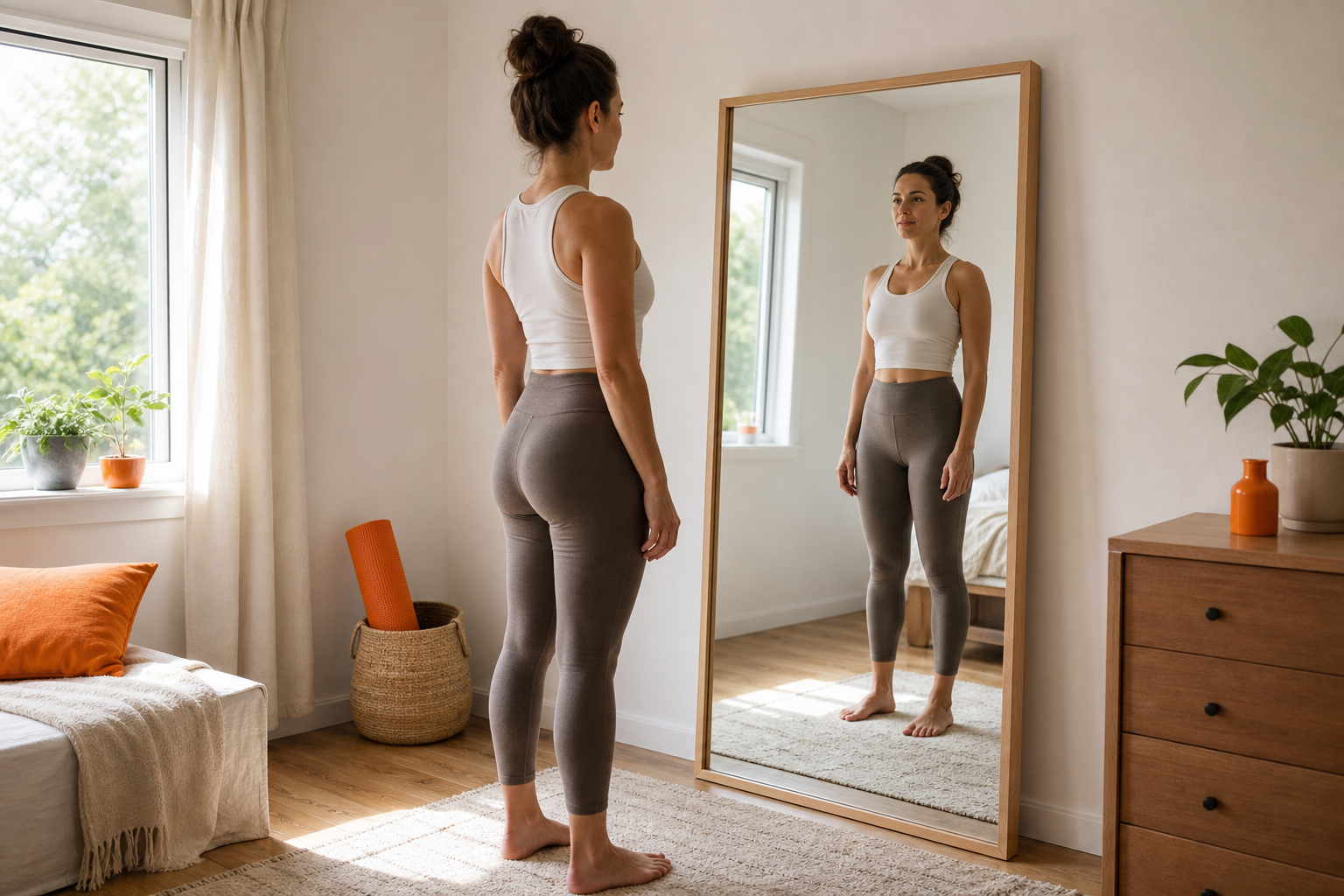
Key Takeaway:Aim for a position you can breathe and move in, not a rigid pose you can only hold briefly.
Step 2: Use Diaphragmatic Breathing to Find a More Balanced Position
Diaphragmatic breathing is one of the simplest exercises to improve posture because it helps you find a less tense trunk position. The diaphragm is a breathing muscle below the lungs. When it works well, your ribs can move without your neck doing all the work.
Lie on your back with your knees bent. You can also sit in a firm chair if lying down feels uncomfortable. Place one hand over your lower ribs. Let the other hand rest on your upper chest.
Follow this sequence:
Relax your jaw and let your shoulders drop.
Breathe in gently through your nose.
Feel the lower ribs widen. Don't force your stomach out.
Breathe out slowly and allow your ribs to settle.
Repeat for six to eight easy breaths.
Your upper chest may move a little. That's fine. The goal is less effort in your neck and a smooth breath, not a big belly push.
Verywell Health describes diaphragmatic breathing as an equipment-free method that helps improve posture. We use the same idea as a reset before movement. It can help you notice when you're bracing too hard or lifting your ribs.
Next, try the exercise while standing. Place your feet under your hips. Keep your knees soft. Breathe in without lifting your shoulders. As you breathe out, let your ribs settle over your pelvis.
Stay here for five breaths. Then walk slowly across the room. Keep the same easy breath. If you feel light-headed, stop and breathe normally. Don't practise through dizziness.
If breathing feels difficult or your posture changes with pain, seek professional advice. An assessment can consider how your symptoms affect work, sleep, sport, and daily tasks.
Step 3: Strengthen Deep Neck and Upper-Back Support
Neck and upper-back strength gives your head a steadier base. These posture exercises should feel controlled, not like a hard neck workout.
Start with a gentle chin tuck
Sit or stand with your eyes facing ahead. Slide your head straight back, as if making a small double chin. Don't look down. Hold for about five seconds, then release fully.
Begin with a few easy repetitions. Stop if the movement brings on dizziness, a sharp headache, or pain that travels into your arm. You should feel light work at the front of your neck, not a strong squeeze at the throat.
Add an upper-back squeeze
Let your arms rest by your sides. Gently draw your shoulder blades back and slightly down. Keep your ribs relaxed. Hold for a short breath, then let go.
A common mistake is lifting the chest and arching the lower back. Keep the movement small. Your shoulders should not creep towards your ears.
Build control with a wall slide
Stand with your back near a wall. Keep your feet a short step forward. Place your arms in a comfortable bent position. Slowly slide them upward only as far as you can without shrugging or arching.
Lower your arms with the same control. If the wall makes your neck or shoulder pain worse, skip this step. A smaller range is still useful.
Our guide to simple steps for neck and shoulder pain includes gentle chin tuck advice and desk changes that pair well with this work.
Use these movements on a settled day first. If your symptoms rise during the session or remain worse later, reduce the range and effort next time. If arm weakness, numbness, or severe headache appears, stop and seek medical advice.
Step 4: Improve Thoracic Mobility with Gentle Extension and Rotation
The thoracic spine is the middle part of your back. Improving its movement can make it easier to sit and stand without asking your neck or lower back to do all the work.
Try supported extension
Lie on your back with a rolled towel across your mid-back. Keep your hips on the floor. Support your head with your hands if needed.
Take a breath in. As you breathe out, let your upper back ease over the towel. Use a small range. Return to neutral before your neck feels pulled. Repeat slowly a few times.
Don't place the towel under your lower back. Don't force your head towards the floor. The stretch should feel mild and broad, not sharp or pinched.
Add gentle rotation
Lie on your side with your knees bent and stacked. Reach both arms in front of you. Slowly open the top arm towards the other side while your knees stay together.
Follow your hand with your eyes only if that feels comfortable. Return to the start. Repeat on the other side.
If lying on your side is uncomfortable, sit in a chair. Cross your arms over your chest and turn your upper body a small amount. Keep your pelvis facing forward.
The foam roller exercises for back and mid-back mobility use similar ideas, including supported extension and controlled rotation. Begin with light pressure. Your back should feel freer after the movement, not bruised or irritated.
Thoracic mobility is often limited by long periods at a screen. A short movement break can work better than one long session at night. Try two or three gentle repetitions when you change tasks.
Pro Tip:Keep your breath easy during mobility work. If you hold your breath, the range is probably too large or the effort is too high.
Step 5: Build Posture into Everyday Movement
Posture improves when your body practises useful positions during normal tasks. The best exercises to improve posture are the ones you can repeat without making your day harder.
Use a simple standing reset
When you stand from your desk, place both feet under you. Let your arms hang. Breathe out and allow your ribs to settle. Shift your weight gently towards one foot, then the other.
This takes less than a minute. It also reminds you that good posture includes movement. You don't need to freeze your spine in one position.
Practise a hip hinge
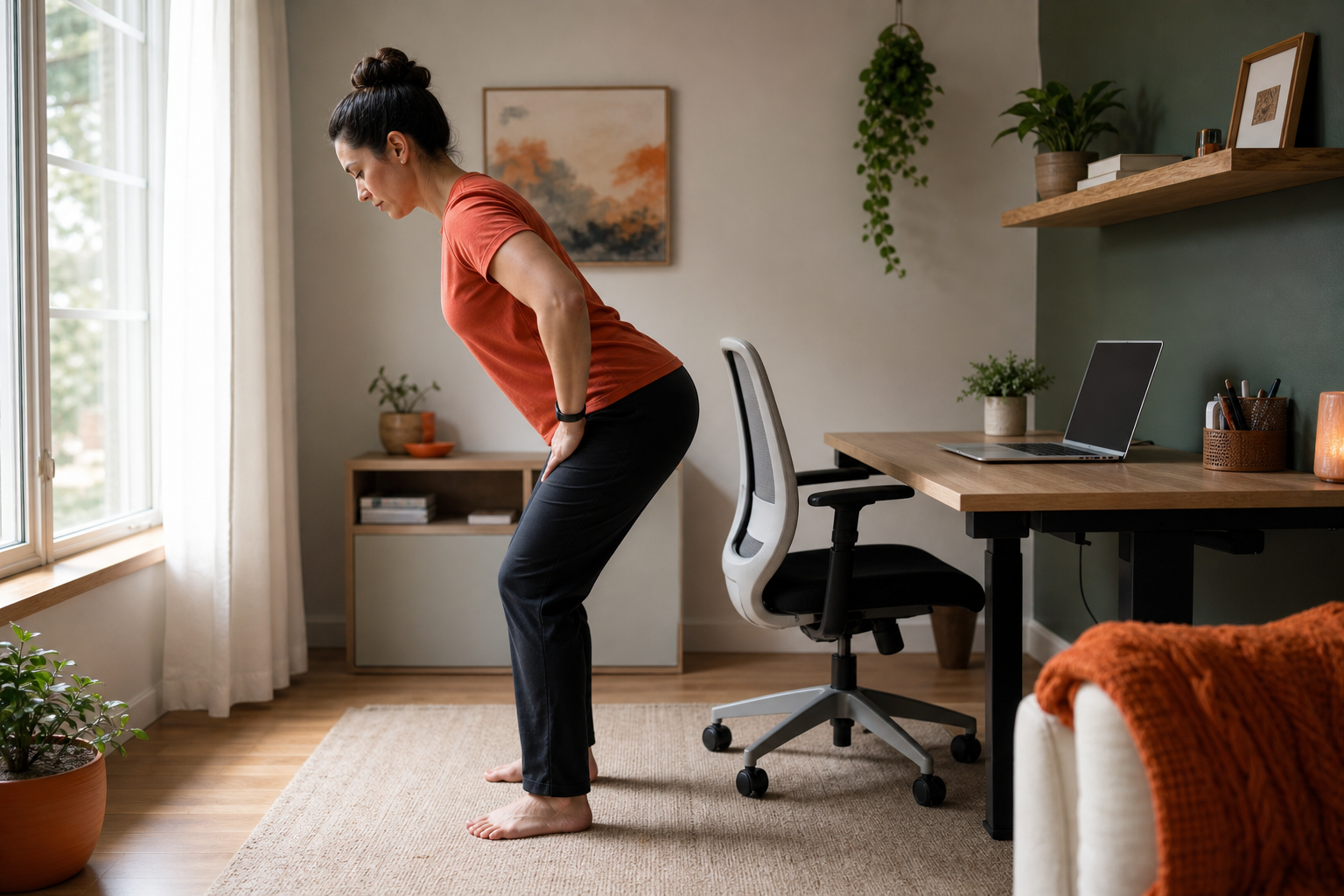
Stand near a bench or kitchen counter. Keep your feet under your hips. Bend your knees a little. Move your hips back as if reaching for a chair.
Keep your chest easy rather than forcing it up. Return to standing by pressing through your feet. Use this pattern when reaching towards a laundry basket or low shelf.
If your low back is sensitive, our guide to gentle core exercises for back pain shows how to begin with breathing, light bracing, and small controlled movements.
Change your setup before pain builds
Move your screen closer if you lean towards it. Keep your keyboard near your body. Let the chair support some of your weight. If you carry a bag, change sides or use both backpack straps.
At night, choose a pillow that keeps your head level with your spine. Side sleepers may need more height than back sleepers. Stomach sleeping can keep the neck turned for long periods, so try another position if you can.
Short breaks work well. Stand before your usual pain peak. Walk a few steps, then return to the task. If standing increases symptoms, change the chair position instead.
Guided movement classes can also give you a set time to practise control. For readers seeking a class-based option, a movement studio may offer classes. Use any class only if its level matches your symptoms and you can keep good control.
Unleashed Health Chiropractic takes a full view of posture by considering movement, symptoms, and the tasks that bring them on. We can help you decide whether exercises are suitable or whether an assessment is the better first step.
Frequently Asked Questions
What are the best exercises to improve posture?
The best starting exercises are gentle breathing, chin tucks, upper-back control, thoracic mobility, and hip hinges. Choose one or two that you can do without sharp pain or symptom spread. Practise them with relaxed breathing. A clinician can adjust the plan if your posture changes because of neck pain, back pain, injury, or weakness.
How often should I do posture exercises?
Most people can start with short sessions on several days each week, plus small movement breaks during the day. The right amount depends on your symptoms and recovery. Begin with easy work rather than a long circuit. If you feel worse later that day or the next morning, reduce the range, effort, or session length.
Can posture exercises help neck pain?
Posture exercises may help some people with neck pain by improving movement control and reducing long periods in one position. They aren't right for every cause of pain. Stop if you develop arm symptoms, dizziness, severe headache, or worsening pain. An assessment can help identify safe movements for your neck.
Should I sit up straight all day?
No. Sitting rigidly all day can make your muscles tired. Better posture means changing position while keeping your head, ribs, and pelvis reasonably balanced. Let the chair support you. Stand or walk briefly before discomfort builds. Aim for variety, since your body needs both support and movement.
When should I see a chiropractor for posture?
See a chiropractor when posture changes come with ongoing pain, repeated headaches, restricted movement, or symptoms that limit work and sleep. A chiropractor can assess your neck, back, and movement pattern. Seek urgent medical care for sudden weakness, loss of bladder or bowel control, or severe symptoms after an injury.
Conclusion
Start with five calm breaths, then add one neck or upper-back exercise and one gentle movement task. Keep the effort easy for the first week and track how you feel later that day. If pain keeps returning, a qualified health professional can help you choose a plan that fits your body and daily routine.


Comments