


Core Exercises for Back Pain: A How-To Guide
Gentle core work can help your back move with more control, but the right starting point depends on your symptoms today. Most research-backed exercises focus on deep stabilising muscles, and many need only a mat or no equipment at all. We’ll show you how to start safely, build control, and know when to seek personalised care.
Table of Contents
Step 1: Check Whether Core Exercise Is Appropriate Today
Before trying core exercises for back pain, check how your body is responding. A gentle session may suit mild, steady symptoms. It may not suit a sudden flare, a new injury, or pain that is spreading.
Walk around the room for a minute. Notice whether your pain rises sharply. Then take a few relaxed breaths. You should be able to breathe without holding your breath or gripping your stomach hard.
Pause the exercise plan and seek qualified advice if you have new weakness, marked numbness, loss of bladder or bowel control, fever, or severe pain after major trauma. These signs need medical assessment rather than a home exercise test.
For less severe symptoms, use this short check:
Can you walk without a sharp rise in pain?
Can you change position with control?
Does discomfort settle soon after you stop?
Do both legs feel and move as usual?
If one answer is no, keep today’s movement easy. A short walk may be enough while you arrange advice. Our safe steps for lower back exercises also explain how to test movement without forcing a flare.
Track symptoms before movement, during the session, and about ten minutes later. A session that leaves you much worse for hours was too much. Pain that spreads down the leg, new tingling, or a clear loss of function is a reason to stop.
We understand that back pain changes from day to day. At our clinic, we take the time to assess how your symptoms affect walking, sitting, sleep, and work before suggesting a plan.
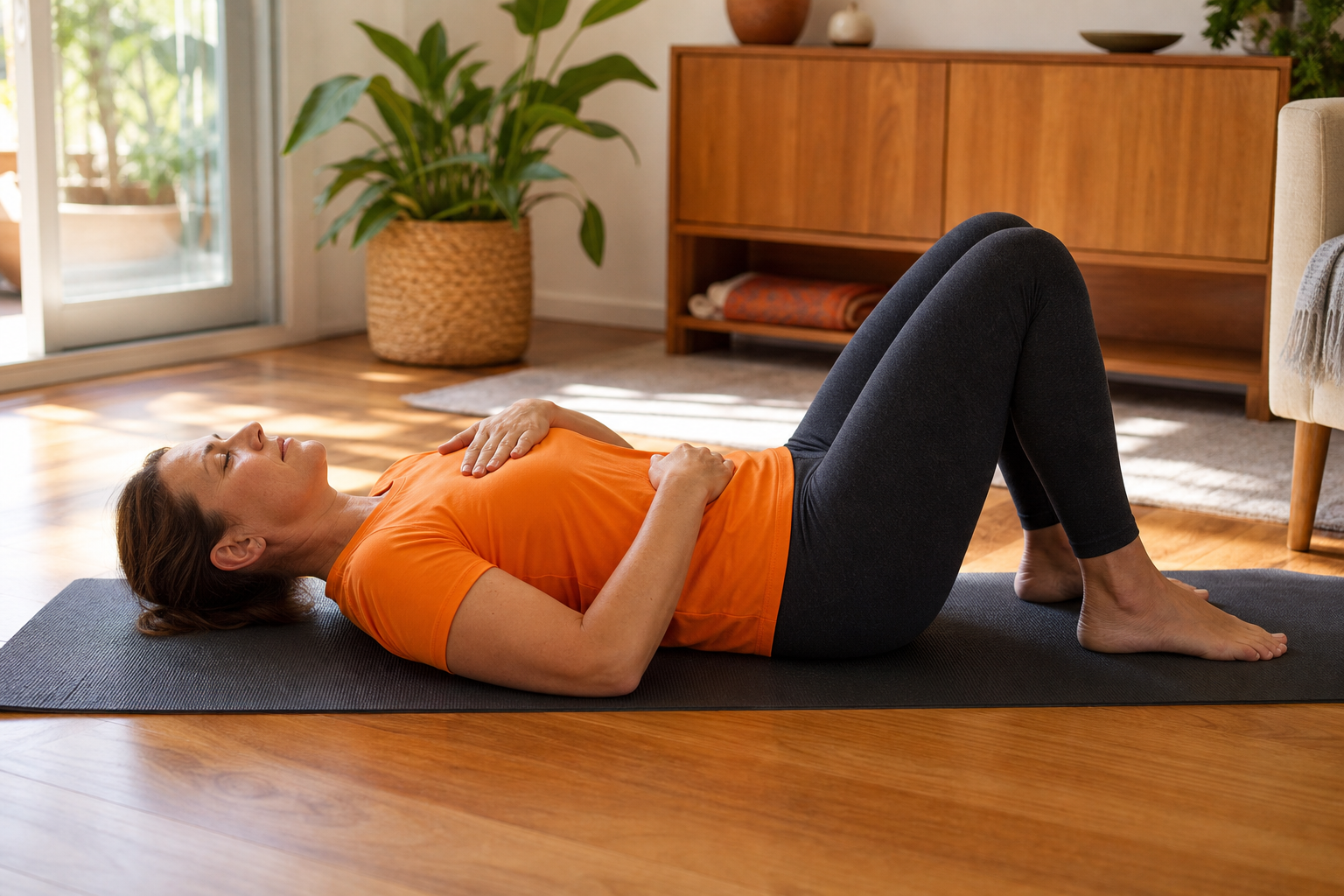
Step 2: Learn Gentle Core Bracing in a Hook-Lying Position
lying core activation is a calm way to learn deep abdominal control. Lie on your back with your knees bent and feet flat. Keep your feet about hip width apart.
Let your spine rest in its natural position. Don’t press your lower back hard into the floor. Place your fingertips just inside the front points of your hip bones, where you can feel the lower abdominal wall.
Breathe in gently through your nose. As you breathe out, draw the lower part of your stomach in slightly. Think of tightening a wide belt by one notch. The effort should be light enough that you can keep breathing.
Hold the gentle brace for a few breaths, then let it go fully. Rest before repeating. The aim is control, not a hard squeeze. If your ribs lift, your jaw tightens, or your breath stops, reduce the effort.
Deep stabilisers such as the transversus abdominis and multifidus are involved in lumbar stability. Hook-lying activation and drawing-in work can train these muscles, helping improve lumbar stability and reduce back pain.
Try a small leg slide only after the brace feels steady. Keep one heel on the floor as you slowly slide it away. Bring it back before your pelvis shifts. Change sides. If your back arches or pain increases, return to breathing and bracing alone.
You can also try a gentle pelvic movement. Tip your pelvis a small amount so your lower back moves closer to the floor. Then return to your usual curve. Keep this smooth. It should not feel like a forceful stretch.
There is no fixed dose that suits every person. Start with a few calm repetitions and rest between them. The next morning matters as much as the session itself. If you feel more sore or less able to move, return to the last level that felt settled.
By now, you should be able to breathe normally while keeping a light abdominal brace. That skill is the base for the next position.
Step 3: Progress to Quadruped Core Control
Quadruped core work teaches your trunk to stay controlled while your arms or legs move. It is often called the hands-and-knees position. Use a mat, carpet, or another surface that feels steady.
Place your hands under your shoulders. Set your knees under your hips. Keep your neck relaxed and look at the floor a short distance ahead. Before moving, take one easy breath and find the light brace from Step 2.
First, shift your weight gently backwards and forwards without losing your spine position. Keep the range small. This lets you test whether your wrists, hips, and back tolerate the position.
Next, lift one hand a small amount. Put it down before your trunk twists. Repeat on the other side. If that feels controlled, slide one foot backwards along the floor. Bring it back before your pelvis tips.
Only later should you lift the opposite hand or leg. Move slowly enough that you could pause at any point. Your back does not need to stay perfectly still, but avoid a sudden sag, twist, or sharp pain.
A quadruped functional core exercise targets the transversus abdominis and multifidus and can help reduce pain and improve lumbar stability.
Use a folded towel under your knees if the floor feels hard. Place your hands on a bench if wrist pressure is a problem. You can also practise the weight shift beside a sturdy table, but don’t use furniture that may slide.
Stop and reset if:
Pain travels farther down your leg.
Your back pain rises sharply.
You hold your breath through each movement.
Your arm or leg feels weak or unusually numb.
Watch the video below as a movement reference, not as a personal diagnosis or prescription.
We tailor exercise choices to your current control. A quadruped drill may be useful for one person but too demanding during another person’s flare. If you’re unsure, an assessment at Unleashed Health Chiropractic can help you choose a safer starting point.
Step 4: Add Standing Core Exercises for Everyday Movement
Standing core exercises help you carry control into daily tasks. Start once you can brace lightly in lying and quadruped positions without a symptom increase.
Stand near a bench or kitchen counter. Place your feet under your hips. Keep your knees soft. Let your arms rest by your sides and take a slow breath.
Practise a small hip hinge. Move your hips backwards as if reaching for a chair. Keep your chest easy rather than forcing it up. Return to standing by pressing through your feet. This teaches your hips to share the work when you bend towards a laundry basket.
Then try a standing weight shift. Move your weight towards one foot and back to the middle. Change sides. Keep your pelvis level and your shoulders relaxed. Hold the bench lightly if balance is uncertain.
For a simple standing brace, breathe out and gently draw in your lower stomach. Keep breathing as you take a slow step in place. Stop if the brace makes your movement stiff. Your goal is to stay adaptable, not rigid.
Standing functional core exercises focus on control during upright movement. The right exercise still depends on the person and the condition.
Progress one feature at a time. You might first increase the time you stand. Later, you could add a small reach with one arm. Once that feels steady, test a light household task. Don’t add speed, load, and range in the same session.
Good flooring also helps when you practise at home. A surface should stay flat and reduce slipping. If you’re planning a dedicated exercise space,this guide to gym flooring tile costsexplains how material choice can affect a training area. You still need to choose flooring that suits your room and local safety needs.
Use sitting as another control test. If you spend long periods at a desk, small changes to your chair may reduce the load before you exercise. Our guide to sitting with lower back pain covers chair support and position changes.
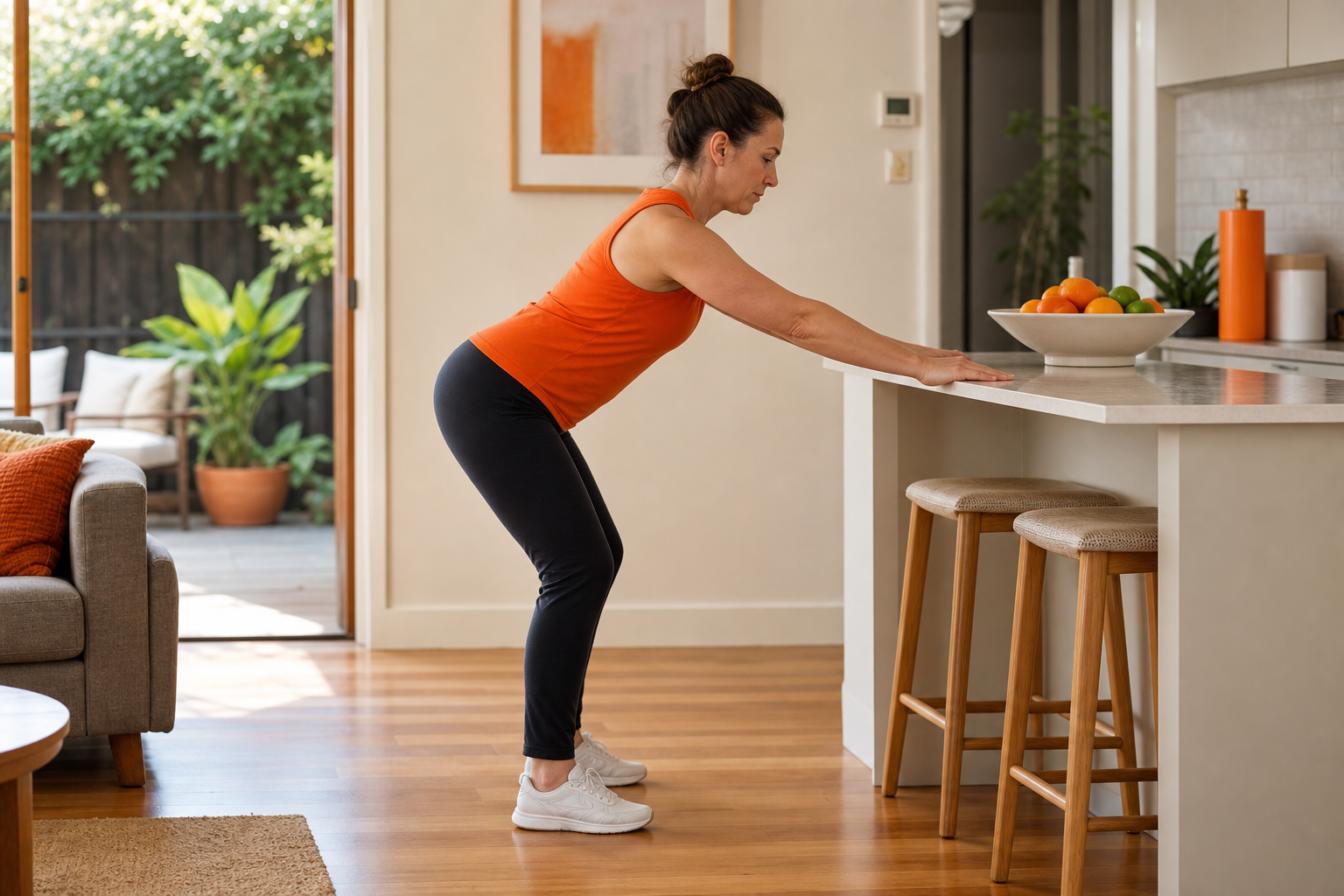
By now, you should be able to keep a relaxed breath while standing and shifting weight. If standing work brings on spreading pain, return to a supported position and seek advice.
Step 5: Build a Consistent Routine and Progress Gradually
A useful routine is one you can repeat without a flare. Start with the easiest level that gives you control. That may be breathing and bracing, rather than a full exercise circuit.
Use this order on a settled day:
Walk gently for a few minutes.
Practise hook-lying breathing and bracing.
Add one small leg slide or pelvic movement.
Try quadruped weight shifts if the earlier work feels steady.
Finish with a short standing hinge or weight shift.
Different schedules can be used, including home exercise and supervised exercise. That variation is a reminder that a fixed prescription cannot replace an individual assessment.
Change one factor at a time. First add a little time. Then test a slightly larger movement range. Once that feels stable, add a small amount of resistance or repetition. Record how you feel during the session and later that day.
Do not chase soreness as proof of progress. Better signs include easier bed movement, smoother bending, or more confidence during a short walk. If those gains stop, or symptoms keep worsening, reduce the load.
Movement forms such as Tai Chi and yoga may suit some people, but they still need sensible limits during a flare. Choose the form that lets you breathe and move without spreading symptoms.
We take a full view at Unleashed Health Chiropractic. That means we consider your movement, work demands, sleep, and daily habits when discussing care. If your pain keeps returning or limits normal life, arrange an assessment rather than repeatedly pushing through the same routine.
FAQ
What are the best core exercises for back pain?
The best starting exercises are usually gentle bracing, hook-lying activation, quadruped weight shifts, and controlled standing work. Core exercises for back pain should feel manageable during the session and settle soon after. Your symptoms, strength, and diagnosis guide the choice, so stop if pain spreads or weakness appears.
Can core exercises make back pain worse?
Yes, core exercises can make back pain worse if the load is too high or the movement does not suit your symptoms. Reduce the range and effort first. Stop if you develop spreading pain, new tingling, marked weakness, or a lasting flare. Seek personalised advice when symptoms keep increasing.
Should I exercise during a back pain flare?
You may manage a mild flare with easy movement, but avoid forceful core exercises for back pain until symptoms settle. Try short walks, relaxed breathing, or small position changes if they feel comfortable. Severe or changing pain needs assessment, especially after injury or with new neurological symptoms.
How often should I do core exercises for back pain?
There is no single schedule for everyone. Start with a small amount that does not worsen your symptoms later that day or the next morning. Your response matters more than copying a fixed plan. Increase only one factor after the current level feels steady.
When should I see a chiropractor for back pain?
Consider an assessment when back pain keeps limiting work, sleep, walking, or exercise despite gentle self-care. A chiropractor can review movement and discuss whether care is suitable. At Unleashed Health Chiropractic in Ascot Vale, we can help you understand your options and refer you for medical care when needed.
Conclusion
Start with a symptom check, then use calm bracing before moving into quadruped and standing work. Keep the dose small and watch your response the next day. If back pain keeps returning or affects daily life, explore our guide to back pain care in Ascot Vale and Moonee Ponds , or arrange a personalised assessment with a local chiropractor. We look forward to helping you find a steady next step.


Comments