


Best Exercises for Hip Flexor Pain
Hip flexor pain can make walking, stairs and long periods of sitting feel harder than they should. The simplest place to start is a gentle stretch held for about 30 seconds, but the right next step depends on how your hip and lower back respond.
We’ll show you how to check your symptoms, stretch without forcing the joint, build support with your glutes and progress safely. The advice is general education, not a diagnosis. If your pain is sharp, worsening or linked with weakness, seek an assessment.
Table of Contents
Step 1: Check Your Symptoms and Warm Up Gently
The best exercises for hip flexor pain start with a quick symptom check, not a hard stretch. First, notice where the pain sits and what brings it on.
Hip flexor pain often feels at the front of the hip or high in the groin. You may notice it when lifting your knee, getting out of a chair or taking a long stride. Pain can also feel linked to the lower back because the hip and pelvis work together during movement.
Ask yourself these questions:
Did the pain begin after a sprint, kick, jump or sudden change in activity?
Does it feel like mild tightness, or is it sharp and catching?
Can you walk with a normal stride?
Does lifting your knee make the pain worse?
Are you also feeling pins and needles, numbness or weakness?
Stop home exercise and seek prompt medical care after a fall, or if you have severe pain, fever, unexplained weight loss or worsening symptoms. Urgent care is also needed for progressive leg weakness, numbness around the groin, or bowel and bladder changes.
For mild stiffness, warm up first. Walk at an easy pace for five to ten minutes. You should feel warmer, not tired. A few slow pelvic movements can follow, but keep the range small.
Try five to eight gentle cat-cow movements on hands and knees if that position feels comfortable. Move with your breath. Don't push into a deep back bend or let the movement become painful.

Prolonged sitting can leave the front of the hip feeling short and stiff. If your work keeps you seated, stand up for a brief walk every so often. You don't need special gear. A change in position can be a useful first move.
We understand that pain can come from more than one structure. The front of the hip, the lumbar spine and nearby muscles can produce similar symptoms. At Unleashed Health Chiropractic , we take the time to assess how your pain behaves before suggesting a plan.
Key Takeaway:Start with a symptom check and five to ten minutes of easy movement. Mild stretch is acceptable, but sharp pain is your signal to stop.
Step 2: Perform a Gentle Hip Flexor Stretch
The main stretch in this plan is a half-kneeling hip flexor stretch . It targets the muscles at the front of the back-leg hip without needing equipment.
Set up beside a wall or chair if you need balance. Place one knee on a folded towel. Put the other foot in front of you, with the front knee bent and the foot flat.
Now follow these steps:
Bring your ribs over your pelvis. Keep your chest tall without arching your lower back.
Squeeze the glute on the kneeling side.
Gently tuck your pelvis, as if you are bringing your belt buckle towards your ribs.
Shift your whole body forward a small amount.
Stop when you feel a mild pull at the front of the back-leg hip.
Hold the position for about 30 seconds while breathing normally.
Return slowly, then change sides.
The glute squeeze and small pelvic tuck matter. Without them, you may create the movement by arching your lower back. That can make the stretch feel strong, but it may miss the area you meant to target.
Mayo Clinic's stretching guidance recommends holding a gentle stretch for about 30 seconds and repeating it two to four times on each side. You can read the Mayo Clinic stretching guidance for its general approach to warm-up, controlled movement and static holds.
Keep the effort easy. A stretch should not cause a sharp groin pain, burning pain or a sense that the joint is being pinched. If your back starts to ache, reduce the forward shift and reset your pelvis.
You can make the exercise easier by placing more weight through your hands. You can also shorten your stance. If kneeling is uncomfortable, try a standing split stance and keep the back heel lifted.
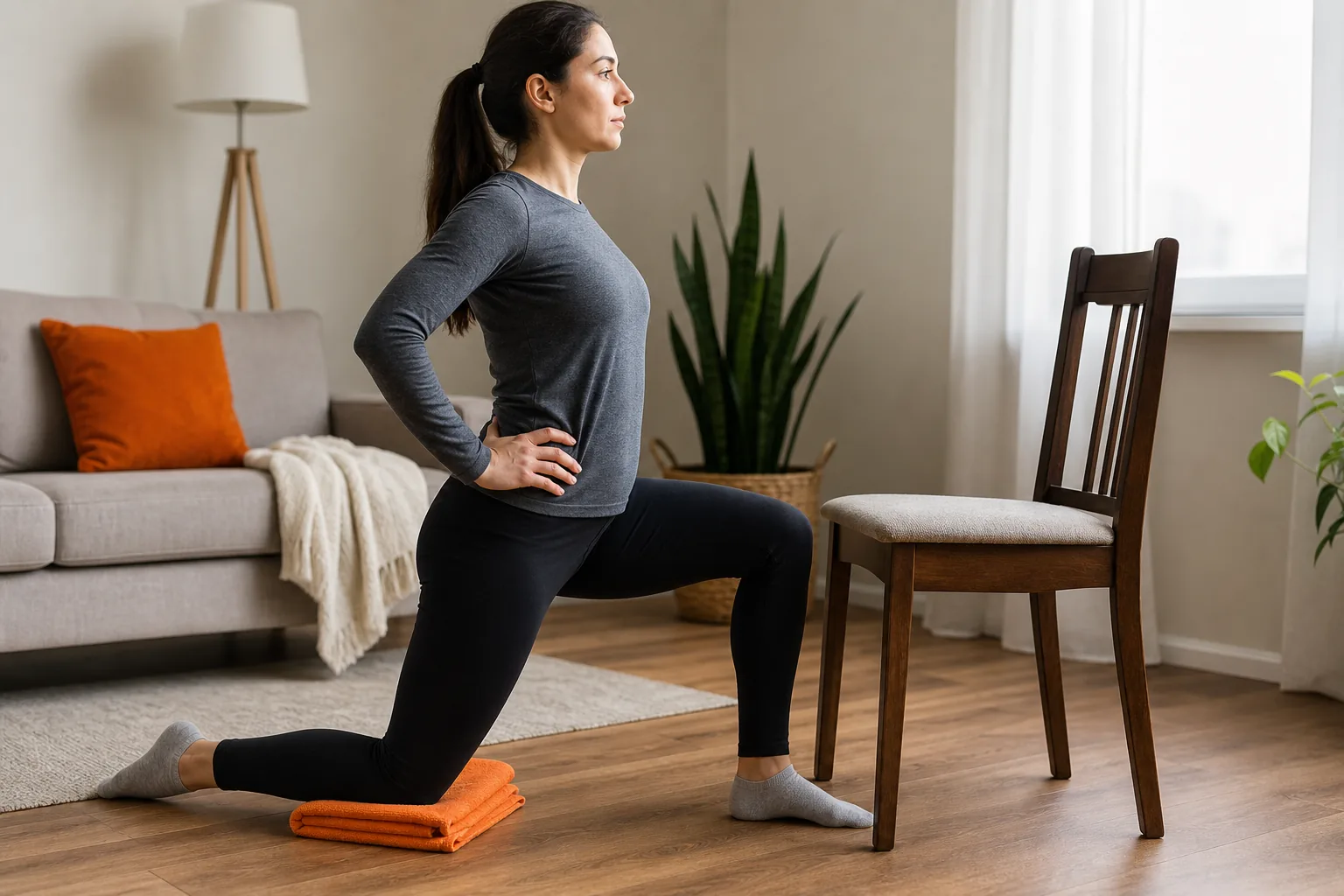
Use the stretch after your warm-up, not as a test of flexibility.
If you want to explore other gentle hip positions, our guide to gentle stretches for tight hips includes options that may suit people who don't tolerate kneeling well. Pick one movement that feels calm. You don't need to force several stretches in one session.
Pro Tip:Film one repetition from the side. Check that your lower back stays fairly quiet while your hips move forward. Small changes in form can make the stretch feel very different.
By now you should know whether a controlled stretch eases your symptoms, leaves them unchanged or makes them worse. That response guides the next step.
Step 3: Build Support with Glute Bridges and Core Control
Strength work can support the best exercises for hip flexor pain when stretching alone doesn't feel like enough. We start with a glute bridge because it trains hip extension while you lie on your back.
Lie on a firm surface with your knees bent and feet flat. Place your feet about hip-width apart. Let your arms rest by your sides.
To perform the bridge:
Gently tighten your stomach without holding your breath.
Press through your feet.
Squeeze your glutes and lift your hips a short distance.
Pause while keeping your ribs relaxed.
Lower slowly until your hips touch down.
Start with one set of eight to ten smooth repetitions. The lift should come from your hips, not from pushing your lower back into a large arch. If you feel the movement mainly in your hamstrings, bring your feet slightly closer to your body.
Core control means keeping your trunk steady while your hips move. It doesn't mean bracing as hard as possible. Think of your ribs and pelvis staying in a quiet stack while you breathe.
Good form matters more than chasing a high number of repetitions. Stop if pain becomes sharp or severe.
Try this simple sequence:
Bridge for eight to ten repetitions.
Rest for about one minute.
Repeat once if the first set felt controlled.
Keep both feet on the floor at first. Later, you may be ready for a slow heel lift or a small march, but only if your pelvis stays level and your symptoms remain settled.
Use a smaller lift if your lower back takes over. You can also practise the abdominal set without lifting your hips. Lie down, breathe out gently and feel your lower ribs settle. Then relax.
We take a full view at Unleashed Health Chiropractic because the hip does not work in isolation. Your walking pattern, sitting habits and lower-back movement may all affect how the front of the hip feels. A tailored assessment can show whether you need more mobility, more strength or a slower return to activity.
By now you should have a calm bridge pattern with no sharp pain. If the bridge increases groin pain or causes new symptoms down the leg, stop and arrange an assessment.
Step 4: Progress to Standing Hip and Lower-Body Exercises
Standing work helps you carry the control from the floor into daily movement. Progress only when the hip flexor stretch and bridge feel steady for several sessions.
Begin with a supported split stance. Stand near a bench, wall or sturdy chair. Place one foot forward and the other foot behind. Keep both feet pointing ahead.
Shift your weight between the legs without letting the front knee collapse inward. Keep the movement small. You are practising control, not chasing a deep lunge.
Next, try a supported mini squat. Hold the support lightly. Send your hips back a little, bend both knees and rise through your feet. Keep your chest comfortable and your spine in a neutral position.
For each exercise, start with six to eight repetitions. Rest, then repeat once if the first round felt easy. Use a slow pace. A slower movement gives you time to notice whether the front of the hip is working or guarding.
A standing knee lift can be useful later, but it places direct demand on the hip flexors. Stand tall and hold the wall. Lift one knee only as high as you can without pain or leaning back. Lower it with control.
Don't add resistance yet. Bands and weights can wait until you can control your body weight. The right progression may mean more range, more repetitions or less hand support. Change one factor at a time.
Some people tolerate a long runner's lunge. Others feel pinching at the front of the hip. If you feel a pinch, shorten the stance and return to the half-kneeling version. A deep position is not automatically a better one.
Walking is also part of the progression. Begin with a comfortable distance and a normal stride. Increase time only when your symptoms settle during the walk and later that day.
Use the rule of response: mild effort is fine, sharp pain is not. If symptoms linger or climb after exercise, reduce the range or return to the previous step.
Step 5: Create a Safe Weekly Routine and Know When to Seek Help
A safe weekly routine for hip flexor pain is short, repeatable and easy to adjust. Consistency beats a hard session that leaves you sore for days.
For a starting plan, warm up with an easy walk. Then perform the hip flexor stretch on both sides. Finish with one or two bridge sets if they feel comfortable.
You might use this schedule:
On three days, complete the warm-up, stretch and bridge sequence.
On other days, take short movement breaks and walk at an easy pace.
After several calm sessions, add supported split stance work.
Keep one rest day if your hip feels more sensitive after exercise.
Write down three things after each session: what you did, how the hip felt during it and how it felt later. This simple record can show whether a movement is helping or quietly irritating the area.
Break up long sitting when you can. Stand to drink water. Walk while you wait for the kettle. At your desk, change position before the front of the hip becomes sore. Our guide to desk stretches for your hips and legs may help you build those small breaks into the workday.
Arrange professional advice if pain continues for a few weeks, keeps returning or stops you from normal activity. You should also seek help if the pain is sharp, radiates down the leg or comes with numbness or weakness.
A clinician can help check whether the symptoms fit a hip flexor problem or may be coming from the lumbar spine, hip joint or another nearby structure. At Unleashed Health Chiropractic in Ascot Vale, we take the time to understand how the problem affects your daily life. We tailor advice to your current movement and goals, rather than handing you a routine that may not fit.
Hands-on care, such as a chiropractic adjustment, may be considered when appropriate after an assessment. An adjustment is a clinician-guided movement applied to a joint. It is not a substitute for checking red-flag symptoms or building your own movement capacity.
Key Takeaway:Keep the routine gentle, track your response and get personalised guidance when pain persists, spreads or limits normal movement.
Frequently Asked Questions
What is the best exercise for hip flexor pain?
Hold it for about 30 seconds and repeat it two to four times on each side, as tolerated. Add strength work only when the stretch feels calm. A clinician should guide progression if pain is ongoing or the cause is unclear.
Should I stretch a sore hip flexor?
You can try gentle stretching when the soreness feels mild and the movement does not cause sharp pain. Use a small range and avoid bouncing. Stop if the pain feels pinching, severe or worse after the session. Soreness after a sudden injury may need assessment before you begin the best exercises for hip flexor pain.
How long should I hold a hip flexor stretch?
Hold a gentle hip flexor stretch for about 30 seconds, then relax slowly. Repeat it two to four times on each side if your symptoms remain settled. Keep your pelvis lightly tucked and squeeze the back-leg glute. A shorter hold may be more suitable during a flare-up or when kneeling feels uncomfortable.
Can glute bridges help hip flexor pain?
Glute bridges may help by building control in the muscles that extend the hip. Lie on your back, lift your hips a small amount and keep your lower back from arching. Start with a few smooth repetitions. Stop if the exercise causes sharp groin pain, back pain or new symptoms.
When should I see a chiropractor for hip flexor pain?
See a chiropractor or other suitable health professional when hip pain persists, keeps returning or limits walking and daily tasks. Seek urgent medical care for severe pain after a fall, progressive weakness, groin numbness or bowel and bladder changes. Unleashed Health Chiropractic can assess local patients in Ascot Vale and nearby Melbourne suburbs.
Conclusion
Start with a five to ten minute walk, then try the gentle hip flexor stretch with a small pelvic tuck. Add bridges only when the movement feels controlled. If your pain persists or does not fit this pattern, book an assessment with Unleashed Health Chiropractic so we can help you choose a safe next step.


Comments