


How to Relieve Back Pain Fast: 6 Safe Steps
When your back hurts, you want a plan you can use now. Start with a safety check, then try gentle movement, a cold or heat pack, and small changes to how you sit and sleep. These six steps explain how to relieve back pain fast without pushing through pain that needs medical care.
Table of Contents
Step 1: Check for warning signs and settle the pain
Before trying to relieve back pain fast, check whether your symptoms need urgent care. Most new low back pain is not linked to a serious spinal problem, but a small group of conditions needs prompt assessment. History and examination should guide the next step.
Seek urgent medical help if your back pain comes with new loss of bladder or bowel control, numbness around the groin, or marked weakness in a leg. Also seek prompt care after major trauma, or when pain comes with fever, unexplained weight loss, a history of cancer, or feeling very unwell.
Progressive numbness or pain that travels below the knee also deserves an assessment. These signs don't prove that something serious is wrong. They do mean that home care alone may not be the right first move.
If none of those signs apply, reduce the load without taking complete bed rest. Lie on your side with a pillow between your knees, or on your back with your lower legs supported on a chair. Stay in that position only long enough for the pain to settle. Then get up slowly and take a short walk around the room.
Try an ice pack wrapped in a towel during the first day or two if the area feels hot or irritated. Heat may feel better when the main issue is stiffness or muscle tightness. Keep either option comfortable, and protect your skin from direct contact.
Pharmacy pain relief may help some people stay gently active, but it isn't safe for everyone. Ask a pharmacist or GP what suits you, especially if you have kidney, heart, stomach, bleeding, or pregnancy concerns.
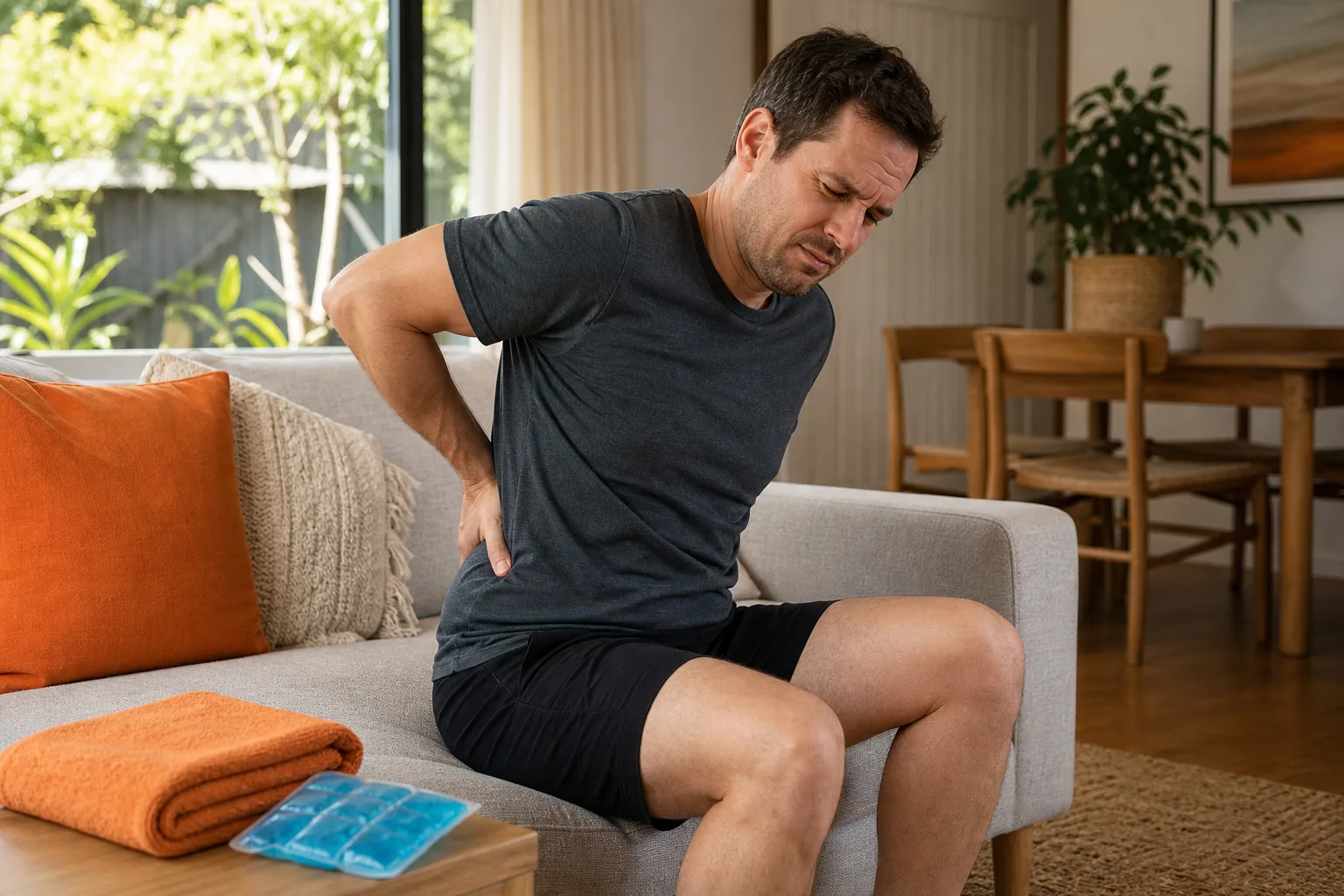
Key Takeaway:Check warning signs first. If they aren't present, use comfort measures for a short time, then return to gentle movement.
Step 2: Use gentle movement, stretching and strengthening
Gentle movement is often the best way to relieve back pain fast and protect your ability to move. Your aim isn't to force a stretch. Your aim is to find a calm range that your back accepts.
Start with knee rolls. Lie on your back with both knees bent and your feet on the floor. Let both knees move a little to one side while your shoulders stay relaxed. Return to the middle, then move the knees the other way. Keep the motion slow. Do two or three easy repetitions at first.
Next, try a gentle knee-to-chest movement. Bring one knee towards your chest only as far as it feels comfortable. Lower it with control, then change sides. If both legs feel good, bring both knees towards your chest for a brief hold. Skip this move if it increases leg pain or causes sharp back pain.
A piriformis stretch may help when tightness sits deep in one buttock. Cross one ankle over the opposite knee. Hold behind the thigh and draw the legs towards you until you feel a mild stretch. Hold for about 20 seconds. Don't pull hard. A mild stretch should not feel sore.
For the back of your legs, lie down with one knee bent. Hold behind the thigh and slowly straighten the other leg until you feel a light hamstring stretch. Keep your back relaxed. A shorter stretch done often is more useful than one hard stretch that causes a flare-up.
Once movement feels easier, add a bridge. Lie on your back with both knees bent. Gently brace your stomach, squeeze your glutes, and lift your hips a small amount. Pause for a few seconds, then lower slowly. Start with a few repetitions. Stop if the pain spreads down your leg or feels sharper after each repetition.
Start with small amounts, then add repetitions gradually. Exercise should not leave your pain worse the next morning. For more movement cues, see the back pain exercise guidance .
Use this simple rule: mild effort is acceptable, but rising pain is a reason to reduce the range or stop. If you're unsure which exercises fit your symptoms, our guide to gentle stretches for lower back pain can help you choose a calmer starting point.
Pro Tip:Do two or three easy movements during the day instead of one long routine. Your back often responds better to regular, low-load practice.
Step 3: Release tight muscles with self-massage and breathing
Self-massage can ease the feeling of tight muscles, but it should stay gentle. It won't tell you what structure is causing the pain. Use it as a comfort tool, not as a test of how much pressure you can tolerate.
Lie on your back with your knees bent. Use your fingertips to massage the soft muscles beside your spine. Stay away from the bones in the middle of your back. Work on one small area for 10 to 20 seconds, then move on. Keep the pressure light enough that you can breathe normally.
You can also use a tennis ball against a wall. Place it on the muscle beside your spine, not directly over the spine. Lean in gently, hold for a few breaths, then move the ball a small amount. A firm ball on the floor gives much more pressure, so it isn't the best first choice during a sharp flare-up.
Stop if massage causes tingling, numbness, new weakness, or pain that travels further into the buttock or leg. Don't massage over bruised skin, an open wound, a recent injury, or an area that feels hot and swollen.
Now add slow breathing. Lie down or sit with your ribs relaxed. Breathe in through your nose, then breathe out slowly while letting your stomach soften. Repeat for five calm breaths. On the next breath, gently tighten your lower stomach as if preparing for a light cough. Hold that gentle support while breathing normally.
This isn't about sucking your stomach in all day. It helps you notice how your trunk supports movement. Try the light brace before standing, lifting, or rolling in bed. If you hold your breath, reduce the effort.
A positional release technique may feel helpful for some people, but the correct position depends on the direction and type of pain. Don't copy a forceful manoeuvre from a video if it worsens your symptoms. A chiropractor or physiotherapist can show you a safer version after checking your movement.
We understand that a tight back can make you want to press harder. More pressure isn't always better. Calm input, followed by easy movement, is the safer pattern.
Step 4: Adjust posture and everyday activities
Small changes to posture can help relieve back pain fast when sitting or lifting keeps irritating the area. There is no single perfect posture. The better goal is to avoid staying in one position for too long.
At a desk, place both feet on the floor if you can. Bring the chair close to the desk so you don't reach forward. Keep the screen near eye level, and let your shoulders drop. Set a timer to remind you to stand or walk for a minute. Frequent changes matter more than holding one stiff pose.
If sitting is your main trigger, try a rolled towel at the small of your back. Adjust its size until it feels supportive rather than forced. Our advice on how to sit with lower back pain also covers chair set-up and movement breaks.
Lift with the load close to your body. Face the object before you pick it up. Bend through your hips and knees, then stand without twisting. For a light object, a hip hinge may feel more natural than a deep squat. If the load is heavy or awkward, ask for help.
When you turn, move your feet instead of twisting through a fixed lower back. This is especially useful when loading a washing machine, lifting a child, or moving stock at work. Break a large task into smaller trips.
Your shoes may also affect how comfortable walking feels. Choose a pair that feels stable and gives your feet enough room. Avoid making a sudden switch to very different footwear during a painful flare-up.
If you need a cheaper way to look for a supportive chair or mattress, you could search a second-hand marketplace such as a second-hand marketplace . Check the condition in person where possible. A chair that suits one person may still feel wrong for your height or hip position.
Try changing one thing at a time. If you replace the chair, alter your desk, and start a new exercise routine on the same day, you won't know what helped or what caused irritation.
Step 5: Support recovery with sleep, food and a maintenance routine
Sleep gives your body time to settle, and a simple routine can help stop back pain from taking over your day. These steps won't fix every cause, but they can support recovery while you monitor your symptoms.
Choose the sleep position that lets you relax. Side sleepers often feel more comfortable with a pillow between the knees. Back sleepers may prefer support under the knees. If lying flat on your stomach is the only position that feels good, use it for now, but avoid forcing a position that increases pain.
Make the turn into bed slowly. Roll onto your side first, then move your legs and shoulders together. When getting up, roll to your side and push through your arms. This reduces the sudden twist that can catch a sore back.
A mattress doesn't need to feel hard to support you. It needs to let you sleep without repeated waking and without a strong increase in morning pain. If your mattress feels uneven or sagged, test another sleep surface before spending money. You can find more position and pillow ideas in our guide to relieving lower back pain while sleeping .
Eat regular meals and drink enough water for your usual needs. Include a source of protein and a range of whole foods when you can. No single food has been shown here to provide a fast cure for back pain, so be wary of expensive products that promise one.
Stress can make pain feel louder. Try five minutes of slow breathing, a quiet walk, or a short break away from your screen. You don't need to feel completely calm before moving. You only need to lower the effort enough to move without bracing hard.
Build a maintenance routine once the flare settles. For example, practise a few mobility movements during the day, then add bridge work or another comfortable strength exercise on set days. Increase the work in small steps. If the next morning is worse, return to the last level that felt settled.
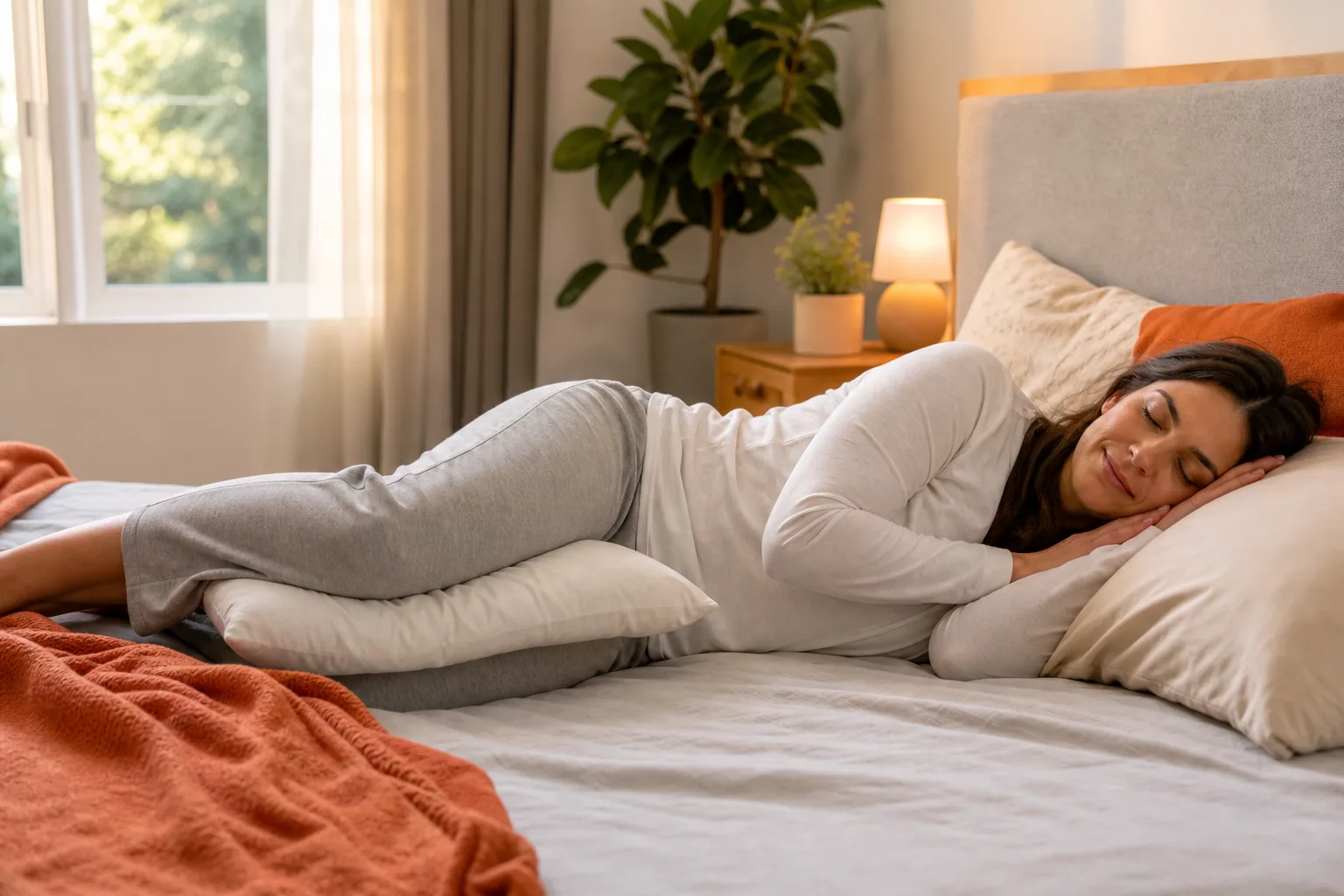
Key Takeaway:Recovery is easier to maintain when sleep, movement breaks, and strength work become small habits rather than a single intense session.
Step 6: Get an individual assessment when pain persists or returns
If back pain keeps returning, an individual assessment is the fastest way to stop guessing. We take the time to ask how the pain began, what makes it better or worse, and how it affects work, sleep, walking, and daily tasks.
A proper assessment may include movement checks and a neurological screen. That means checking strength, sensation, and reflex-related signs when your symptoms suggest nerve involvement. It helps decide whether conservative care is suitable or whether you need another health professional.
Routine scans aren't always the answer. Imaging can show common changes that are not the source of pain, and it may not change care when there are no warning signs. The scan should have a clear reason and a result that could alter the plan.
Book a GP review if your pain is getting worse, hasn't begun to settle, keeps waking you, or limits normal activity. You should also seek advice if you have repeated episodes, pain below the knee, or symptoms that return each time you increase activity.
At Unleashed Health Chiropractic , we provide non-surgical chiropractic care and rehabilitation for people in Ascot Vale and nearby Melbourne suburbs. We tailor care to your assessment rather than assuming every sore back needs the same chiropractic adjustment. An adjustment is a hands-on technique used to apply a controlled force to a joint, and it should be considered only when it suits your presentation.
We also provide clear home guidance so you understand what to do between visits. That may include changes to daily tasks, gentle exercise, or a gradual return to sport and work. The aim is to help you take part in your recovery, not depend on passive care alone.
Research on non-specific low back pain supports education, self-management, and a return to normal activity when serious causes have been excluded. For more information about exercise for low back pain, see this resource .
That is why we keep the plan individual. What settles a short muscle strain may not suit nerve-related pain, a disc problem, a facet sprain, or sacroiliac joint irritation. If symptoms change, the plan should change too.
Frequently asked questions
How can I relieve back pain fast at home?
You can often start with a short walk, a comfortable position, gentle knee rolls, and either ice or heat. Keep the movement easy and stop if pain spreads into the leg or becomes sharper. Fast relief varies, so use the first session to find what settles symptoms rather than forcing a large stretch.
Is heat or ice better for lower back pain?
Heat may feel better for stiffness, while ice can feel soothing when the area feels irritated after a recent strain. Wrap either pack in a towel and keep it comfortable. Neither option treats every cause of pain. If symptoms are severe, persistent, or linked with warning signs, arrange an assessment.
Should I rest in bed when my back hurts?
Complete bed rest is usually not the best choice for uncomplicated back pain. Rest briefly in a comfortable position, then return to gentle walking and normal tasks as you can. Avoid heavy lifting at first. If even light movement causes worsening leg symptoms or new weakness, seek professional advice.
When should I see a chiropractor for back pain?
You can see a chiropractor when pain limits movement, keeps returning, or isn't settling with sensible home care. Seek urgent medical help first for bladder or bowel changes, groin numbness, major weakness, fever, or serious trauma. At Unleashed Health Chiropractic, we assess your symptoms before discussing whether chiropractic care fits.
Can stretching make back pain worse?
Yes, stretching can worsen back pain when the range is too large or the exercise doesn't suit the cause. Use a mild stretch without bouncing or pulling hard. Pain should not keep rising during the session or remain worse the next morning. Reduce the range or stop if that happens.
Start with the safety check, then choose one gentle movement and one comfort measure. If your back pain keeps returning or affects your daily life, arrange an individual assessment with Unleashed Health Chiropractic in Ascot Vale so we can help you choose a safe next step.


Comments