


Stretches for Lower Back Pain: A Step-by-Step Guide
That stiff, sore lower back can make even simple tasks feel harder. Gentle stretches for lower back pain may help you move with more ease, but the right choice depends on how your symptoms respond.
We analyzed 59 comments and questions from Reddit, YouTube and Quora about lower back pain stretches and found that 15% mentioned ongoing frustration with ineffective relief.
We’ll start with a safety check, then build a short routine around your comfort. You don’t need to force a deep stretch or push through pain.
Table of Contents
Step 1: Check Your Symptoms and Set Up Safely
Low back pain is discomfort between the bottom of your ribs and your hips. It can feel like an ache or stiffness, and sometimes it spreads into the buttocks or legs. A sore back may relate to sensitive muscles, joints, discs or nerves. Often, there isn’t one clear structure to blame.
Notice what changes your symptoms. Does standing feel easier than sitting? Does a short walk loosen you up, or does bending make the ache sharper? These clues help you choose a gentle starting point. They don’t tell you the exact cause.
Before stretching, make sure you can move around the room without a sudden jump in pain. Choose a steady floor or a firm bed, and keep a chair or wall nearby for support. Wear clothes that let you move freely. Start with a small range.
We understand that everyone’s back feels different. Our safe steps for lower-back exercises also suggest stopping if a movement brings sharp pain, pain that spreads, or new tingling.
Seek urgent medical care if you have new trouble controlling your bladder or bowel, numbness around the groin, or sudden weakness in a leg. If pain began after a major fall or accident, get medical advice before trying a routine. Don’t use stretching to test a serious symptom.
Step 2: Begin with Gentle Spinal Movement
Start with movement rather than a long, strong hold. Slow motion lets you see what your back tolerates today. Keep your breathing easy, and stop short of a pinch or sharp pull.
Try a small pelvic tilt
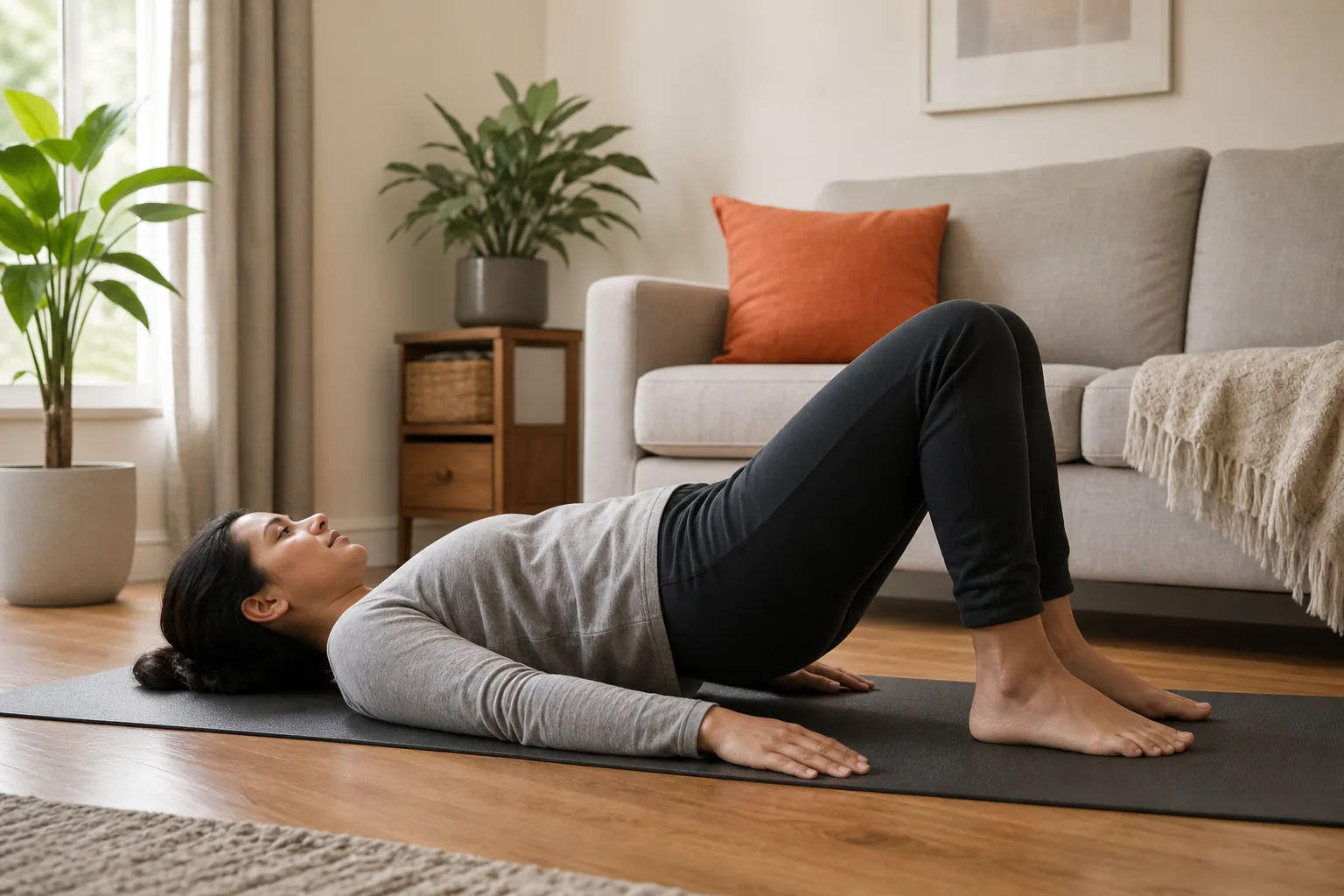
Lie on your back with your knees bent and feet flat. Gently tip your pelvis so your lower back moves closer to the floor. Pause for a moment, then let your back return to its usual curve. Repeat for about 30 seconds, moving only as far as feels easy.
Next, try Cat-Cow on your hands and knees . Place your hands under your shoulders and your knees under your hips. Slowly round your back, then ease it the other way without pushing to the end of your range. This movement gently mobilises the spine.
For a knee-to-chest movement, lie back and bring one knee towards your chest. Hold behind your thigh rather than pulling on the kneecap. Start with a gentle movement and see how your back feels afterwards.
To add a gentle trunk rotation, keep both knees bent and let them drift a little to one side. Bring them back to the centre before changing sides. Keep your shoulders relaxed on the floor. The movement should feel smooth, not like a hard twist.
Don’t try to perform every movement at its full range on your first go. A small, calm motion is a useful starting point.
Step 3: Stretch the Hamstrings Without Forcing the Range
Your hamstrings run along the backs of your thighs. A hamstring stretch can be part of a back-care routine, but reaching for your toes isn’t the goal. Keep your back comfortable and ease into a mild pull at the back of the leg.
Use a supported lying stretch
Lie on your back with both knees bent. Keep one foot on the floor, then lift the other leg and hold behind the thigh. Slowly straighten that knee only until you feel a light stretch. If reaching your thigh is hard, loop a towel behind it and hold the ends. Don’t pull the leg towards your face.
Hold for 10 to 20 seconds to start, then lower the leg and relax. Try two holds on each side. These are gentle starting amounts, not a target you need to reach. If your back or leg feels worse, reduce the range or leave this stretch out.
Keep your head and shoulders relaxed. Breathe out as you ease the knee straighter. A common mistake is to lock the knee or jerk the leg up. Another is to round the back to get a stronger pull. Both can turn a mild stretch into an uncomfortable one.
Research on common back stretches includes hamstring movements, while some recommendations focus on hip flexibility instead of moving the spine. That doesn’t mean one stretch suits everyone. A static hamstring stretch may not suit some people with nerve-related symptoms, so get personal guidance if pain travels down your leg or you notice tingling.
If a towel helps, use it to guide the leg, not to pull harder. Stop when you feel a mild stretch, then let the leg rest before switching sides.
Step 4: Add a Gentle Hip Flexor or Glute Stretch
Many back-stretch plans include the hips. Tight hip flexors or hamstrings may affect how your pelvis moves, so hip stretches can be useful for some people. But a hip stretch doesn’t prove that your back pain comes from a tight muscle.
Try a supported hip flexor stretch
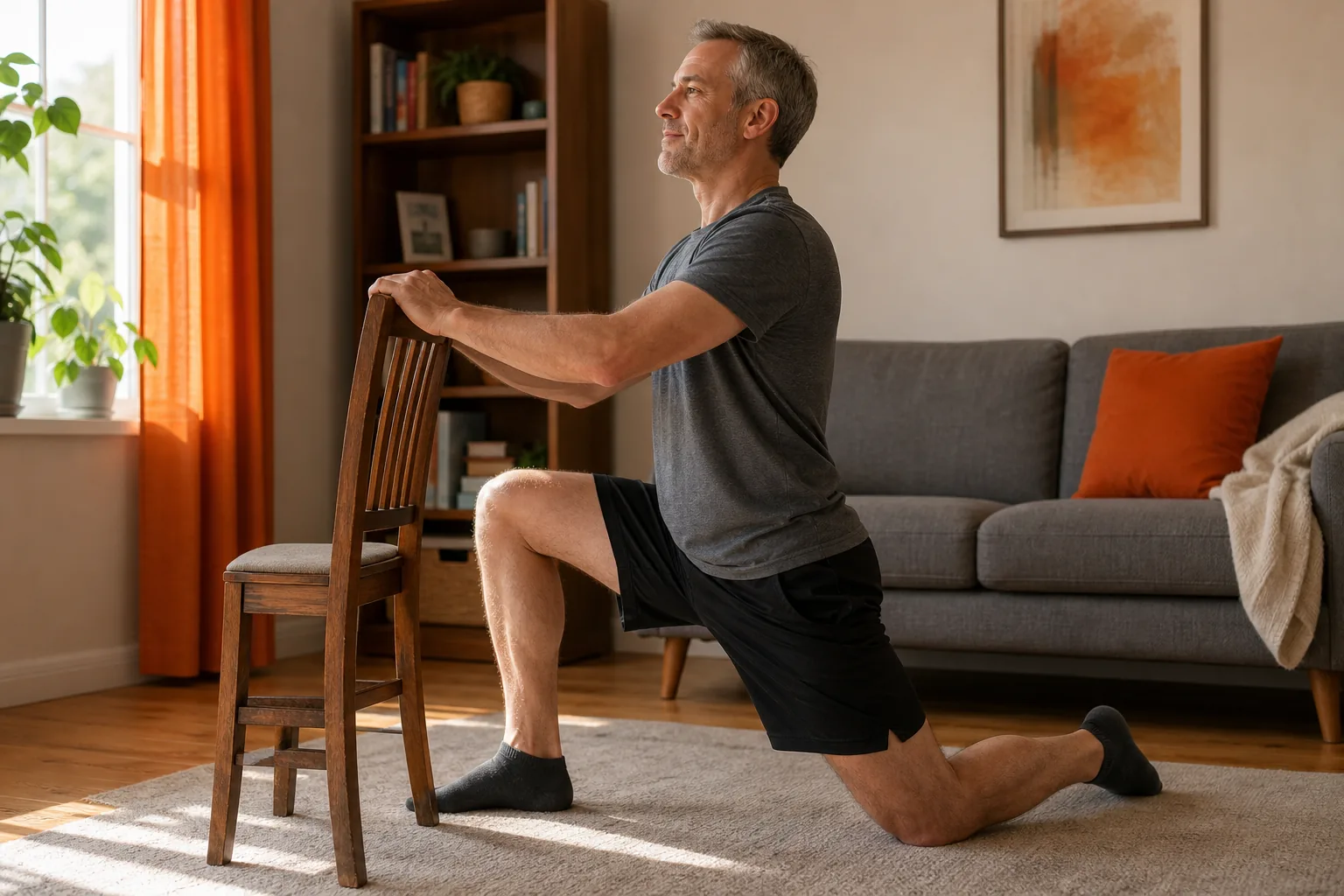
Kneel on one knee with the other foot in front, as if making a short lunge. Hold a chair or bench if you need balance. Gently tuck your pelvis, then shift forward a little until you feel a stretch at the front of the hip on the kneeling side. Keep your chest relaxed and don’t arch your lower back.
Hold for 15 to 20 seconds, then come out slowly and change sides. If kneeling feels uncomfortable, stand near a wall and take a small step back instead. Keep the movement modest. Pushing the hips far forward can make the lower back arch, which misses the point.
Or try a gentle glute stretch
Lie on your back with knees bent. Rest one ankle across the opposite thigh, then stay there if you already feel a gentle pull in the buttock. If it feels easy, draw the supporting thigh a little closer. Keep your head down and don’t press on the crossed knee.
Some hip-focused stretch plans include a kneeling hip flexor stretch or a glute-focused option such as a piriformis stretch. Choose one to try, not every variation at once. If it causes pain down the leg, numbness or tingling, stop and seek personalised advice.
Unleashed Health Chiropractic in Ascot Vale takes time to assess how your symptoms affect movement before discussing an individual care plan. If hip or back pain keeps returning, a clinician can help you work out which movements fit your situation.
Step 5: Put the Stretches into a Short, Comfortable Routine
A useful home plan is brief enough to repeat. Try it when your body feels warm, such as after a short walk, or begin with a few minutes of easy movement. There’s no single ideal time of day. Pick a time when you can move without rushing.
For a first session, choose two spinal movements and one stretch. For example, try pelvic tilts, a few slow Cat-Cow cycles, then a supported hamstring stretch. If those feel fine during the session and afterwards, add a gentle hip stretch another day.
Use this simple order:
Walk around your home for a few minutes at an easy pace.
Do pelvic tilts for about 30 seconds.
Move through Cat-Cow slowly for a short set.
Choose one stretch for the hamstrings or hips, then switch sides.
Finish by standing and walking gently for a minute.
On a comfortable day, you can add a bridge as a basic strengthening move. Lie on your back with your knees bent and feet flat. Tighten your lower tummy gently, squeeze your buttocks, then lift your hips a small way. Pause for five seconds and lower with control.
Stretching and strengthening have different jobs. A stretch explores a comfortable range; a bridge asks the muscles around your hips and trunk to work. If the bridge feels too demanding, return to the easier movements rather than forcing it. Our core exercise guide for back pain explains a gradual way to build control before adding harder moves.
Keep a brief note after each session: which movement you tried and whether your symptoms settled, stayed the same or increased. If you’re worse for hours afterwards, shorten the next session or leave out the movement that brought on the change.
Low back pain often responds better to comfortable movement than to long periods of bed rest. Aim to stay active within your comfort, and modify an activity if it worsens your pain. Build up in small steps, not by adding every stretch in one day.
Key Takeaway:Keep the routine short, use a range that feels manageable, and let your symptoms guide the next session.
We tailor care to the person, not just the sore area. Unleashed Health Chiropractic can assess your back and movement in Ascot Vale if home exercises aren’t helping or you’re unsure what to try next.
Frequently Asked Questions About Stretches for Lower Back Pain
How often should I stretch my lower back?
Start with a short session on a day when gentle movement feels manageable. If you feel the same or better afterwards, you can repeat it regularly and build up slowly. You don’t need to stretch several times a day. If symptoms worsen or spread, pause and seek advice about a plan for you.
Should stretching hurt if my back is sore?
No. A mild pulling feeling can happen, but sharp pain, new tingling or pain that travels further down your leg is a reason to stop. Don’t push through a movement to reach a deeper stretch. If symptoms don’t settle after you stop, contact a health professional for guidance.
Is walking or stretching better for low back pain?
It depends on what feels comfortable. Some people find easy walking more manageable than holding a stretch, especially when their back is sensitive. Try a few minutes at a calm pace, then check how you feel. You can use gentle stretches later if they don’t increase your symptoms.
Can I stretch if I have pain going down my leg?
Be cautious if pain travels down your leg, or if you have numbness or tingling. Some stretches may not suit nerve-related symptoms, and a generic routine can’t tell you the cause. Stop any movement that worsens these signs and ask a qualified health professional for personalised advice.
When should I get help for lower back pain?
Seek urgent medical care for new bladder or bowel control problems, numbness around the groin, or sudden leg weakness. Arrange an assessment if pain keeps returning, limits daily tasks or isn’t settling as expected. Unleashed Health Chiropractic can discuss low-back pain care and whether an individual assessment may be suitable.
Conclusion: Keep It Gentle and Get Guidance If Needed
Pick two gentle movements and one stretch, then notice how your back responds later that day. If pain spreads or you’re unsure which movements fit your symptoms, pause the routine and seek personalised advice. We’re happy to help you discuss your options with Unleashed Health Chiropractic in Ascot Vale.


Comments