


Stretches to Do at Your Desk: A Simple Guide
Long hours at a desk can leave your neck tight, your hips stiff and your legs flat-out unhappy. The good news is that you can loosen up with one chair and a few minutes. We’ll show you safe stretches to do at your desk, plus when it’s wise to get help from Unleashed Health Chiropractic in Ascot Vale.
Table of Contents
Step 1: Set Up Your Desk Stretch Break Safely
The first step is to make space for movement. Desk stretches work best when your chair is stable and your feet can reach the floor.
Push your chair away from the desk if your knees or arms might hit it. Sit near the front edge with both feet flat. Keep your back tall without forcing it straight. Your screen can stay where it is, but move your keyboard or mouse aside for a moment.
Start with a few slow breaths. Notice how your body feels before you move. A stretch should feel mild to moderate. It should not cause sharp pain, pins and needles, dizziness or a strong pulling feeling.
Simple seated movements use only a chair and can cover different areas, including the upper back, hips, neck and ankles. That makes a useful base for a short workday routine.
Move slowly rather than bouncing.
Breathe normally throughout each stretch.
Stay within a range that feels controlled.
Stop if symptoms spread into an arm or leg.
If you have a recent injury, surgery, severe pain or a known joint condition, ask your health professional before trying new movements. We take the time to understand your symptoms at Unleashed Health Chiropractic, then tailor advice to your needs.
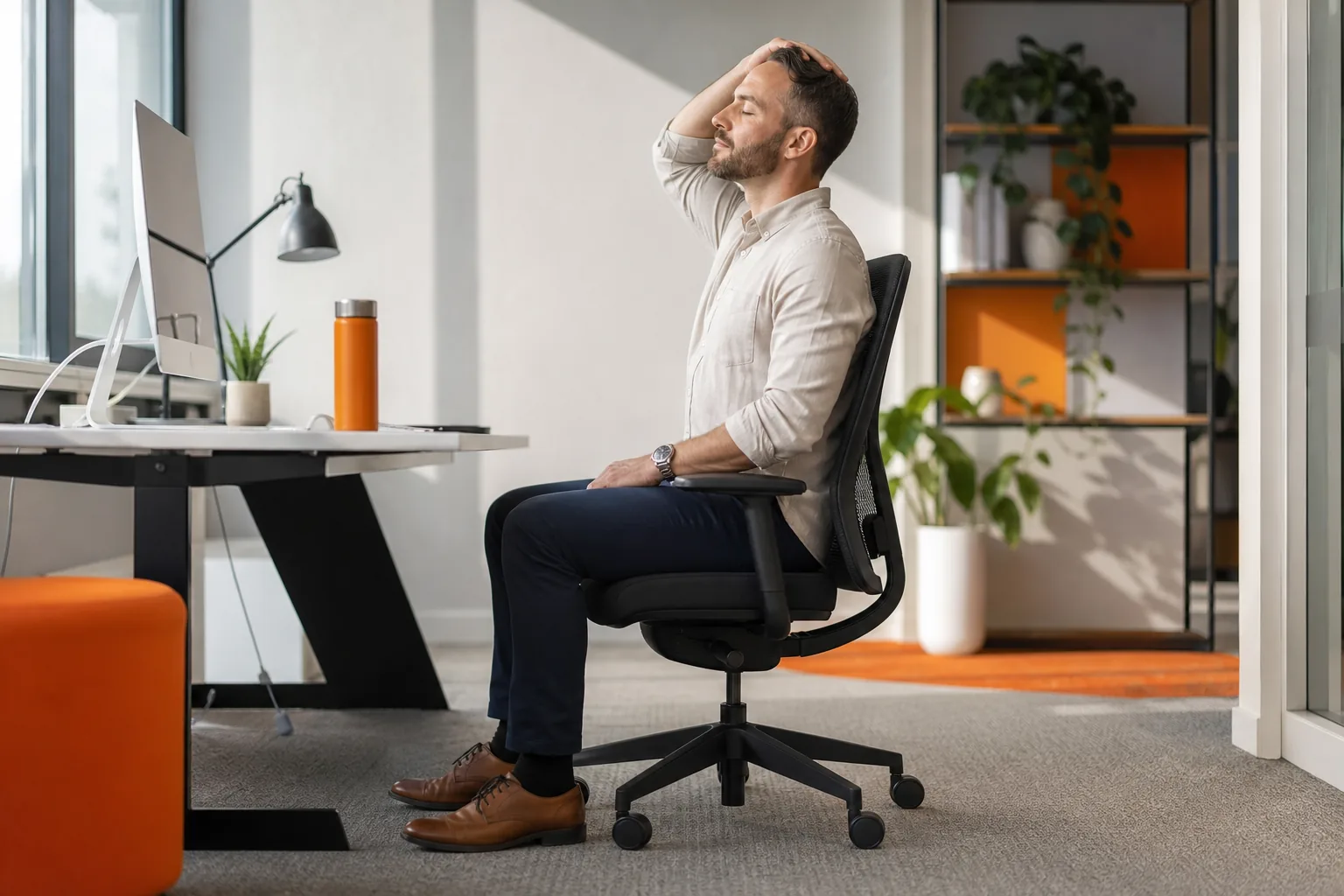
Key Takeaway:Set up a clear space first, then keep every movement slow, easy and pain-free.
Step 2: Release Neck, Upper-Trap and Shoulder Tension
These stretches to do at your desk target the neck and upper shoulders, where many people feel tension after looking at a screen.
Begin with a chin tuck. Sit tall and draw your chin straight back, as if making a small double chin. Do not look down. Hold for three to five seconds, then relax. Repeat five times.
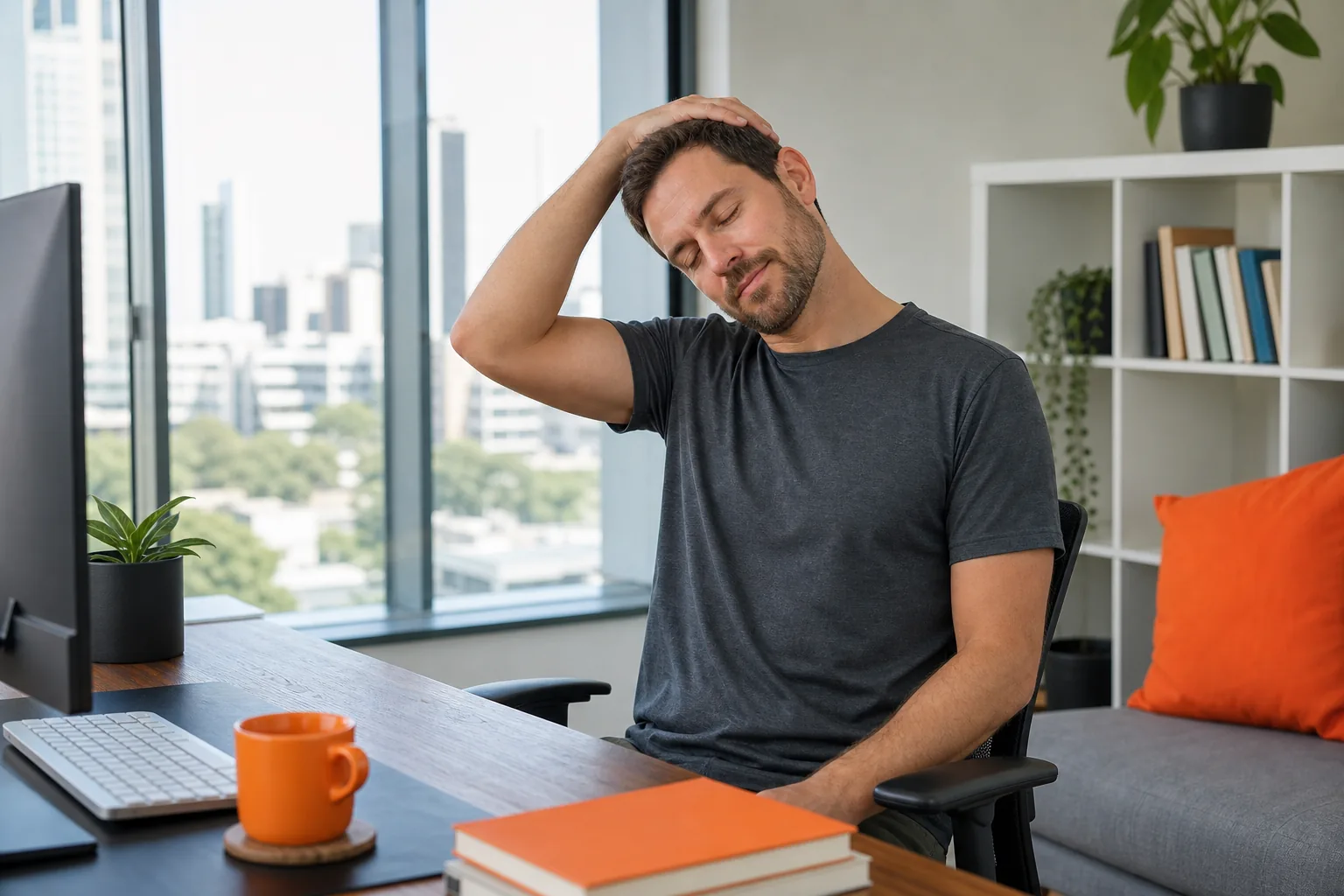
Next, try an ear-to-shoulder stretch. Let your right ear move towards your right shoulder. Keep the shoulder down. Hold for 15 to 20 seconds, then change sides. Do not pull hard on your head. Your hand can rest on your thigh instead.
For the upper trapezius, the large muscle between your neck and shoulder, think about making space between your ear and shoulder. If one side feels tighter, spend a little more time there, but keep the stretch gentle.
Finish with shoulder blade squeezes. Draw your shoulder blades slightly back and down, as if they are moving towards your back pockets. Hold for three seconds. Relax fully before repeating eight to ten times.
Forward head posture can make the neck work harder while you sit. Our guide to how to fix forward head posture explains how gentle exercises and desk changes can support better habits.
Neck tension may also sit alongside tension headaches. If your pain keeps returning, affects sleep or limits daily tasks, stretching alone may not address the cause. We can assess how your neck, upper back and workstation habits fit together at Unleashed Health Chiropractic.
Step 3: Mobilise Your Arms, Wrists, Rib Cage and Upper Back
Typing keeps the hands busy, but it can leave the wrists and upper back in one fixed position. Add these desk movements after the neck work.
Interlace your fingers and turn your palms away from you. Keep the palms together while making small wrist circles. Go both ways. Then release your fingers and stretch one arm forward with the palm facing out. Use the other hand to gently draw the fingers back. Hold for five seconds, then swap sides.
Keep the effort light. Wrist stretches should not hurt. People with swelling, inflammation, a recent wrist injury or serious joint damage should get individual advice before trying them.
For the shoulders, reach both arms overhead as you breathe in. On the breath out, lower them in a wide circle. Repeat three times. Then cross one arm across your chest. Support it with the opposite arm without lifting the shoulder. Hold for 10 to 15 seconds on each side.
Try a simple upper-back lift next. Place both hands behind your head. Gently lift your elbows and extend through the upper back. Avoid arching your lower back. Return to neutral and repeat three slow times.
For rib-cage movement, sit tall and trace a small circle with your chest. Move slightly forward, to one side, back and to the other side. Keep your pelvis still. Reverse the direction after three circles. Breathe into the side ribs rather than holding your breath.
Finish with a seated twist. Place one hand on the opposite thigh and the other on the chair. Inhale to lengthen your spine. Exhale as you turn a little further. Do not yank yourself around. The movement should come from your upper and middle back.
Step 4: Stretch Your Hips, Hamstrings and Lower Back
Seated hip and lower-back stretches can ease the feeling of being stuck in one position. Keep one leg moving at a time so you can control your balance.
Start with a seated figure-four stretch. Place your right ankle above your left knee. Keep the raised foot active and let the right knee relax out to the side. Hinge forward from your hips while keeping your back long. Stop when you feel a stretch through the outer hip or deep glute. Hold for 15 to 20 seconds, then change sides.
Do not press down on the knee. If your hip feels pinched at the front, reduce the angle or return both feet to the floor. People with hip surgery, a recent fall or strong leg symptoms should seek advice first.
For the hamstrings, extend one leg in front of you. Keep the heel on the floor and pull the toes gently towards you. Sit tall, then lean forward slightly from the hips. Hold for 10 to 15 seconds. Swap legs.
You can add pelvic tilts to free the lower back. Rock your pelvis forward to create a small arch. Then tuck your pelvis underneath you so your lower back moves gently towards the chair. Repeat 10 slow times. Keep the movement small. It should not cause pain down the leg.
A seated twist can also help the spine move after a long period of sitting. Turn only as far as you can while keeping both feet grounded. Think of length first, then rotation.
We understand that low back pain can have many causes, including muscle strain, joint irritation or disc problems. If you want more guidance, our advice on stretches for lower back pain explains gentle options and signs that you may need an assessment.
Step 5: Activate Your Legs, Ankles and Calves
Leg movements are a useful part of desk stretches to do at your desk because they break up stillness without needing much room.
Begin with seated marches. Lift one knee a few centimetres, lower it, then lift the other. Keep your chest tall. March for 10 repetitions on each side, or continue for about 30 seconds.
Next, straighten one knee until the leg is comfortable. Pull the toes towards you to feel the back of the calf and thigh. Lower the foot and change sides. Keep the movement smooth, especially if your desk is close to your knees.
For ankle pumps, lift your toes while keeping your heels down. Then press the toes down and lift the heels. Repeat five times. Finish with five slow ankle circles in each direction per side.
The NHS includes ankle movements in its chair routine and links them with lowering blood clot risk. The page recommends a short prescription, not a long workout. If you have a personal risk of deep vein thrombosis, ask your doctor what movement is suitable for you.
One-sided swelling, warmth, redness or pain in a calf needs medical attention. Sudden chest pain or trouble breathing is an emergency. These symptoms are not a cue to stretch through them.
For everyday comfort, try moving every 30 to 60 minutes. Stand up when you can. If you cannot leave your chair, use ankle pumps and marches as a small reset.
A 5-Minute Desk Stretch Routine to Repeat During the Workday
This short sequence brings the main desk movements together. Set a quiet timer so the break becomes a habit rather than something you remember only when you hurt.
Minute 1:Sit tall. Do five chin tucks, then eight shoulder blade squeezes.
Minute 2:Stretch the neck towards each shoulder. Hold each side for 15 seconds. Add three slow shoulder circles.
Minute 3:Circle your wrists. Stretch each forearm for five seconds. Reach overhead three times.
Minute 4:Perform five pelvic tilts. Then twist gently to each side for two breaths.
Minute 5:Do seated marches, ankle pumps and one figure-four stretch on each side.
Breathe normally. Do not force the final range of a stretch just because the timer is running. You can also split the routine into two shorter breaks, such as neck and shoulders before lunch and hips and legs later.
Pro Tip:Pair your timer with a routine task, such as finishing a meeting or making a cup of tea. The cue makes the habit easier to keep.
Regular movement can help you notice patterns. If the same neck, hip or back pain returns despite changing position, book an assessment rather than continually stretching harder. At Unleashed Health Chiropractic, we’ll take the time to look at how your symptoms affect work and daily life.
Desk Stretch FAQ
How often should I do stretches at my desk?
Try a short movement break every 30 to 60 minutes if your work allows it. You do not need a long session. A few ankle pumps, shoulder blade squeezes or a brief walk can break up sitting. Choose a frequency you can keep, and change position rather than staying in one posture all day.
What are the best stretches to do at your desk for neck pain?
The best starting moves are gentle chin tucks, ear-to-shoulder stretches and shoulder blade squeezes. Keep your neck long and avoid pulling on your head. Stop if pain travels into your arm, or if you notice numbness, weakness or dizziness. Persistent neck pain deserves an individual assessment.
Can desk stretches help lower back pain?
Desk stretches may help mild stiffness linked with staying in one position, but they cannot treat every cause of lower back pain. Try small pelvic tilts, a controlled seated twist and a one-leg hamstring stretch. Stop if symptoms worsen or travel down the leg. Seek care for severe or ongoing pain.
Are seated ankle pumps useful during a long workday?
Seated ankle pumps move the feet and lower legs without needing to stand. They can be useful during long periods at a desk, but they are not a treatment for a suspected blood clot. Seek prompt medical advice for one-sided calf swelling, warmth, redness or pain.
When should I see a chiropractor for desk-related pain?
See a chiropractor when desk-related pain keeps returning, limits your work or affects sleep despite gentle movement. We can assess your symptoms and discuss care that may include advice, rehabilitation or a chiropractic adjustment when appropriate. Unleashed Health Chiropractic supports people in Ascot Vale and nearby Melbourne suburbs.
Conclusion
Start with one five-minute break today, then repeat it during your workday before stiffness builds. Keep every movement comfortable and seek advice if pain persists, spreads or changes. If you’re in Ascot Vale or nearby Melbourne suburbs, Unleashed Health Chiropractic can help you work out the next sensible step.


Comments