


10 Neck Pain Treatment Exercises to Try Safely

A stiff or sore neck can make turning your head feel like hard work. These neck pain treatment exercises start with small movements and build towards gentle strength, without special gear.
Neck pain can follow a muscle strain or whiplash, or relate to age-related changes such as cervical spondylosis. Nerve irritation, called cervical radiculopathy, can also cause arm pain, tingling or weakness. Unleashed Health Chiropractic is based in Ascot Vale, and this article shares general education, not a personal exercise plan.
Table of Contents
1. Gentle Neck Flexion and Extension: Easy Movement Within Comfort
This seated movement takes your head down and then slightly up. Sit with your back supported and your gaze level. Slowly bring your chin towards your chest, stopping before the movement feels sharp or forced. Return to centre, then look up a little without tipping your head far back.
Begin with two or three repetitions in each direction. If that feels comfortable, build up gradually over time. A small range is fine. Don’t push to match someone else’s range of motion.
2. Neck Rotations: Practise Comfortable Side-to-Side Movement
Sit or stand tall, with your shoulders loose. Turn your head slowly to the left, stopping at a comfortable point. Return to centre, then turn to the right. Keep your eyes level and your jaw relaxed; don’t twist your shoulders to make the turn seem bigger.
Try two or three turns each way to start. Increase the number only if symptoms stay settled. Gentle, controlled head turns can also be used as a movement break during screen work.
3. Side-Flexion Stretch: Gently Lengthen the Side of the Neck
Sit upright and let both shoulders drop. Slowly tilt your right ear towards your right shoulder, without lifting that shoulder. Stop when you feel a mild stretch on the other side of your neck. Return to centre and repeat on the left.
Start with two or three slow tilts per side. Don’t pull your head down with your hand. If you want more guidance on neck and shoulder stretches, our neck pain stretching routine has more movement cues.
4. Shoulder Rolls: Add Relaxed Shoulder Movement
Shoulder rolls move the shoulder girdle while your neck stays easy. Sit or stand with your arms relaxed. Lift your shoulders gently, roll them back, then let them settle down. Repeat slowly, then reverse the direction if that feels comfortable.
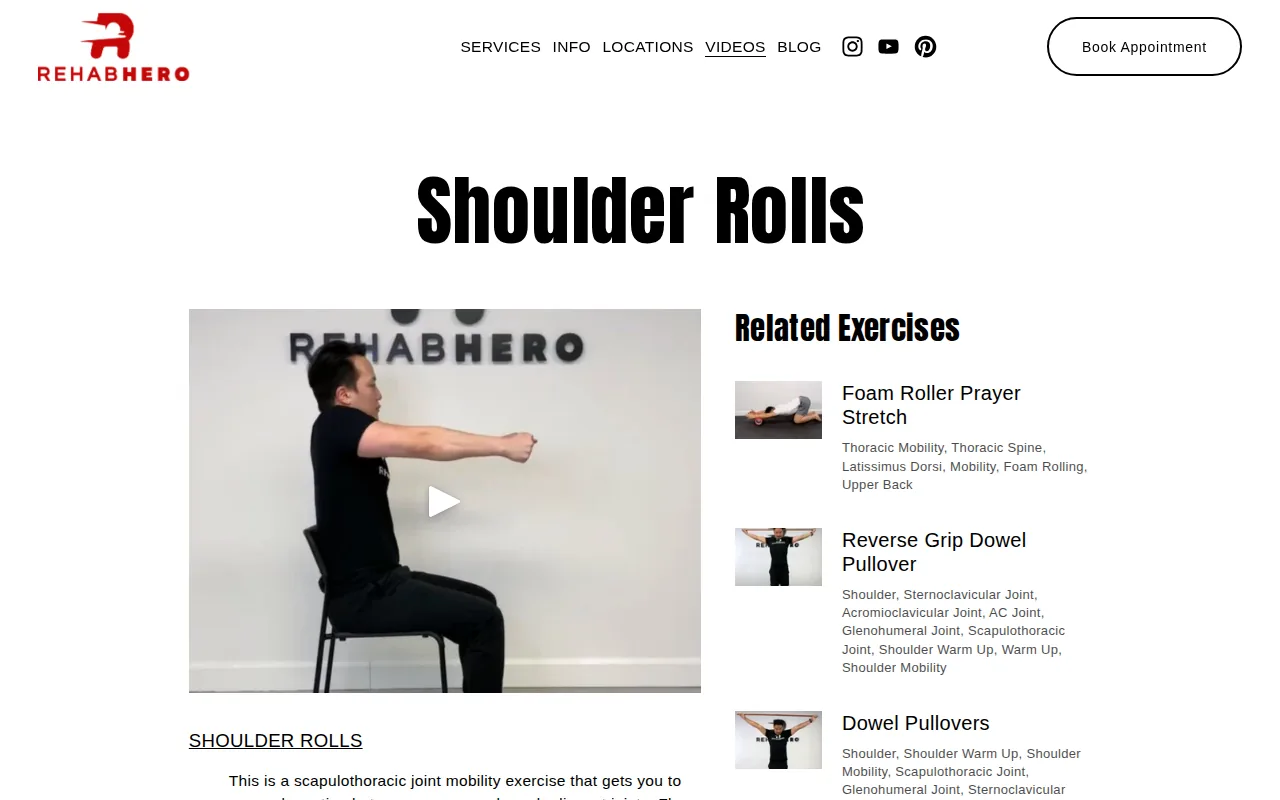
Try five rolls each way during a break from sitting. Keep the motion small, and breathe out as your shoulders drop. Shoulder movement breaks can be a simple way to change position during long periods at a screen.
5. Neck Isometric Holds: Build Gentle Strength Without Moving the Head
An isometric hold is a light muscle effort with no visible head movement. Sit tall. Place your palm against your forehead, then gently press your head into your hand while your hand keeps it still. Hold for three seconds, then relax. Use only a mild effort.
Try three holds. If that stays comfortable, you can repeat with your palm at the back of your head, then at each side. Don’t push hard, hold your breath or press through pain. Ask a health professional whether this exercise suits you if you’ve had an injury or have a diagnosed neck condition.
6. Supine Chin Nod: Activate the Deep Neck Flexors
Lie on your back with your head supported in a comfortable, neutral position. Keep your jaw loose. Make a small “yes” nod, as if gently lengthening the back of your neck. Keep the back of your head resting down; don’t lift it.
Start with three small nods, each held for a few seconds. Rest between efforts. Research on neck exercise includes deep neck flexor work, but the right amount and form depend on the person and their symptoms. Stop if you feel dizzy or your symptoms spread.
7. Scapular Setting: Support Neck and Shoulder Posture
Scapular setting is a small shoulder-blade movement. Sit or stand with your arms resting by your sides. Gently draw your shoulder blades slightly back and down, without arching your back or shrugging. Hold for three seconds, then let go.
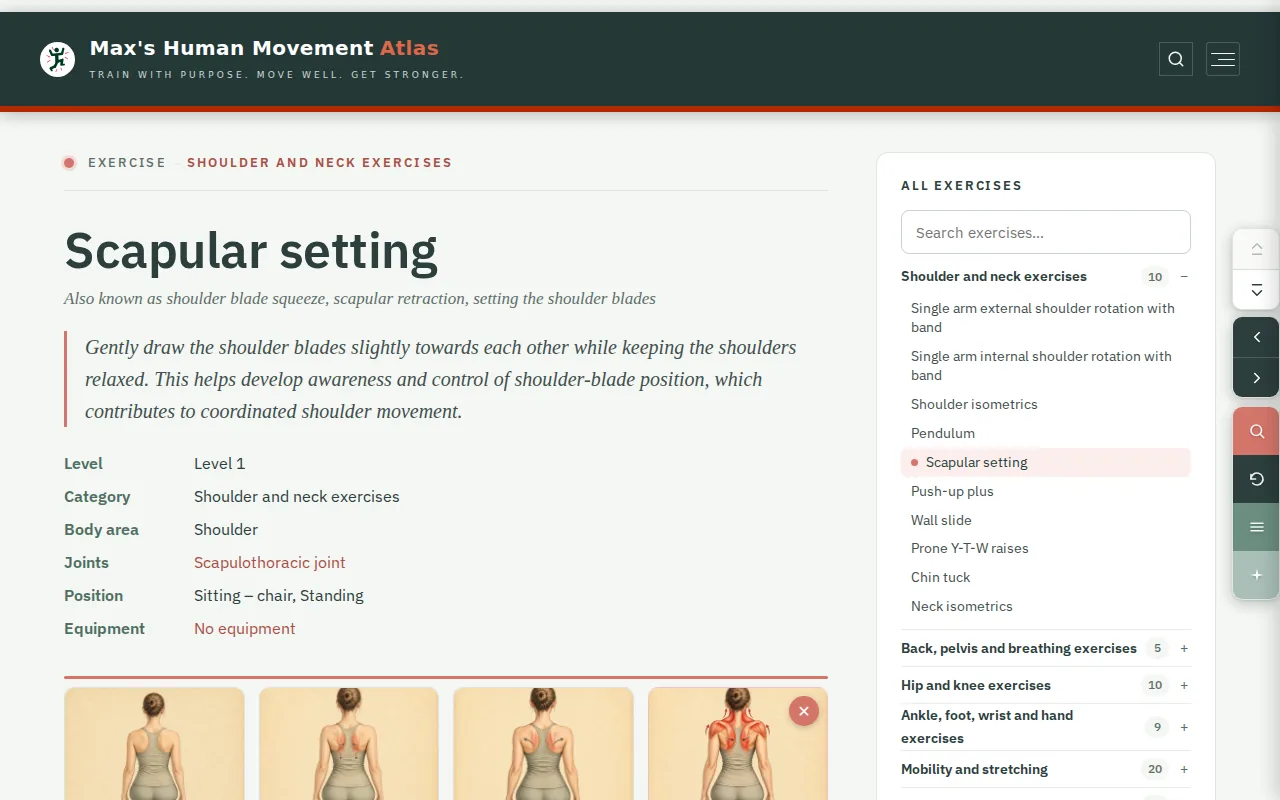
Try five repetitions at first. Keep your neck relaxed throughout. Scapular stabilisation training is one exercise approach. Read more about scapular stabilisation training . You can also see our forward head posture exercise ideas .
8. Thoracic Extension: Move the Upper Back
The thoracic spine is the upper and middle part of your back. To practise a gentle extension, sit in a firm chair with your feet on the floor. Rest your hands across your chest. Slowly lift your chest and let your upper back straighten over the chair back, keeping your neck easy.
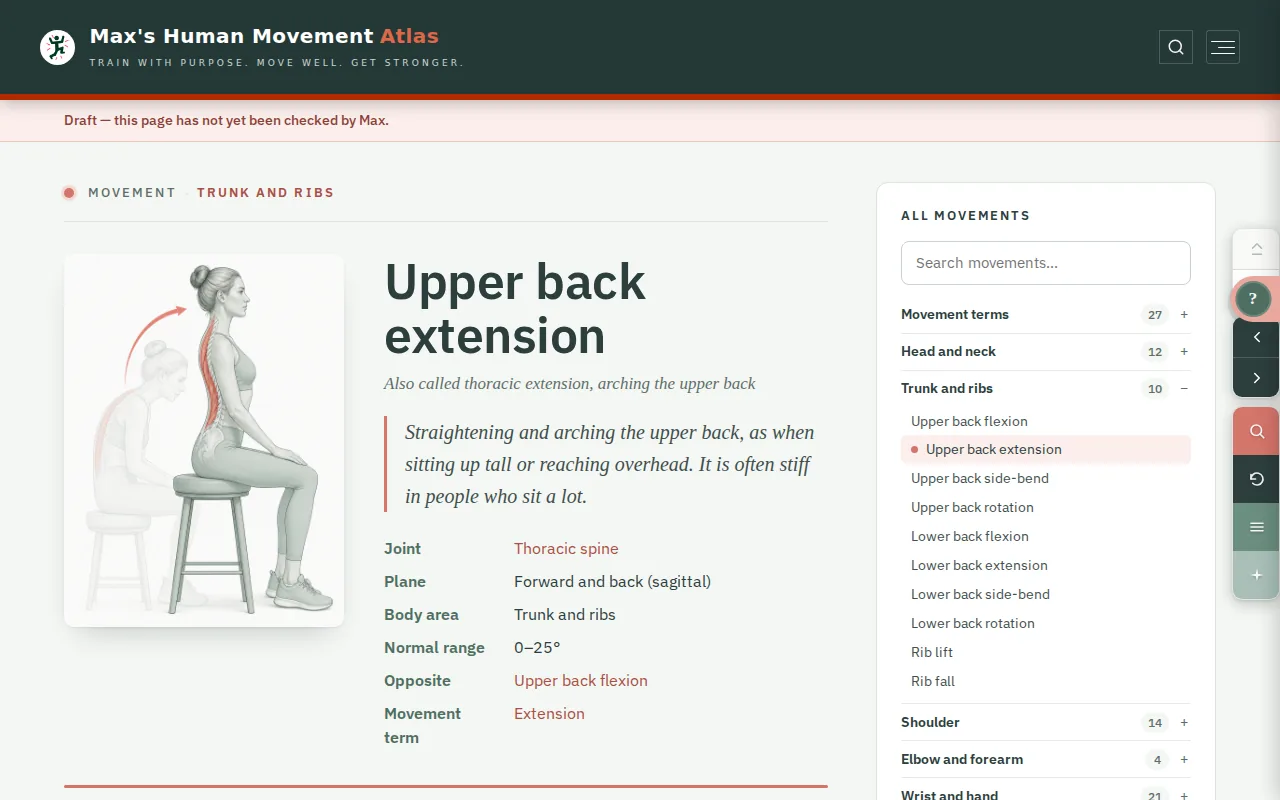
Return to your usual upright position. Try three repetitions. Don’t force your lower back to arch or tip your head back. Stop if the movement brings on pain, tingling or dizziness.
9. Chest and Upper-Trapezius Stretch: Ease into a Mild Stretch
For a gentle chest stretch, stand in an open doorway with your forearms resting lightly on the frame. Take a small step forward until you feel a mild stretch across your chest. Keep your shoulders down and breathe normally. Step back if the stretch feels sharp.
For the upper trapezius, sit tall and tilt one ear towards the same-side shoulder while keeping that shoulder relaxed. Return to centre and change sides. Begin with a short hold of about five seconds, once on each side. Don’t pull on your head or try to stretch through arm symptoms.
10. Gentle Nerve-Gliding Movement: Only When Appropriate
Nerve-gliding drills are specific movements sometimes used when a nerve is irritated. They aren’t a general neck stretch, and symptoms such as arm pain, tingling or numbness need individual assessment before you try one.
Don’t copy a nerve-gliding routine from a video without guidance. A GP or qualified health professional can assess your symptoms and advise whether this type of movement is suitable. Stop if a drill increases tingling, numbness, pain or weakness.
Using the Exercises Safely: Dosage, Progression and When to Seek Help
There isn’t one dose that fits everyone. Start with a small, manageable number of repetitions and build up gradually if the movement feels comfortable.
A deep neck extensor exercise in a quadruped position may use two sets of ten repetitions, holding each for ten seconds, with 40 seconds of rest between repetitions. That is not a universal prescription. Start with a smaller amount, and follow the advice of your treating health professional if you’ve been given a plan. Stop if an exercise causes new pain or makes symptoms worse.
Stop and seek advice if symptoms worsen, don’t settle after easing the movement, or are worse the next morning. See a GP if neck pain affects sleep or daily tasks, or if it persists. Seek urgent medical care for new arm or leg weakness, numbness, problems with balance, or severe pain after an accident. Sudden severe neck pain, especially with chest pain, shortness of breath or sweating, needs emergency care.
At Unleashed Health Chiropractic in Ascot Vale, an initial appointment includes a medical history and physical, neurological, orthopaedic and chiropractic examination. That assessment can help determine whether a movement plan is suitable for your situation.
Everyday Habits That Can Support Neck Comfort
Long periods in one position can leave your neck feeling stiff. Change position during the day, and take short movement breaks when work allows. If you use a screen, place it where you can look ahead without leaning forward. Rest your arms when possible, and adjust your chair so your feet feel supported.
There’s no need to hold one “perfect” posture all day. Notice which tasks leave you looking down or holding your shoulders tense, then vary the position. A brief walk or a few relaxed shoulder rolls may be an easier reset than staying still.
Sleep comfort is personal, too. A pillow that keeps your head in a comfortable, neutral position may suit you better than one that tilts it sharply. For more on choosing a pillow, see our guide to pillow support for neck pain .
Frequently Asked Questions
What exercises can I do for neck pain?
Gentle neck turns, small nods, side tilts and relaxed shoulder rolls are common movements to consider. Start with a few repetitions in a comfortable range. The right exercises depend on how your pain began and whether you have other symptoms, so seek individual advice after an injury or if symptoms travel into your arm.
How many repetitions should I do for neck exercises?
Start with two or three repetitions of a movement, then add one or two every few days if symptoms stay settled. You can gradually build towards about ten. These are general starting suggestions, not a prescription for every neck condition. Stop if you develop new pain, dizziness or spreading symptoms.
Should neck exercises hurt?
They shouldn’t cause sharp pain or new symptoms. A movement may feel mildly uncomfortable for some people, but ease off if symptoms rise. Stop if pain spreads, you feel dizzy or you develop tingling or numbness. If discomfort doesn’t settle after reducing the movement, ask a GP or another qualified health professional for advice.
When should I see a doctor for neck pain?
See a GP if neck pain affects sleep or daily tasks, persists, or comes with arm pain, tingling or numbness. Seek urgent care for new weakness, balance problems or severe pain after an accident. Sudden severe neck pain with chest pain, shortness of breath or sweating needs emergency assessment.
Conclusion
Choose one or two gentle movements and begin with a small, comfortable dose. Stop if symptoms worsen, and seek medical advice for warning signs or pain that affects daily life. If you’d like to discuss whether an exercise plan suits you, Unleashed Health Chiropractic can assess your needs during an appointment in Ascot Vale.


Comments