


Best Sciatica Exercises to Avoid: 5 Moves
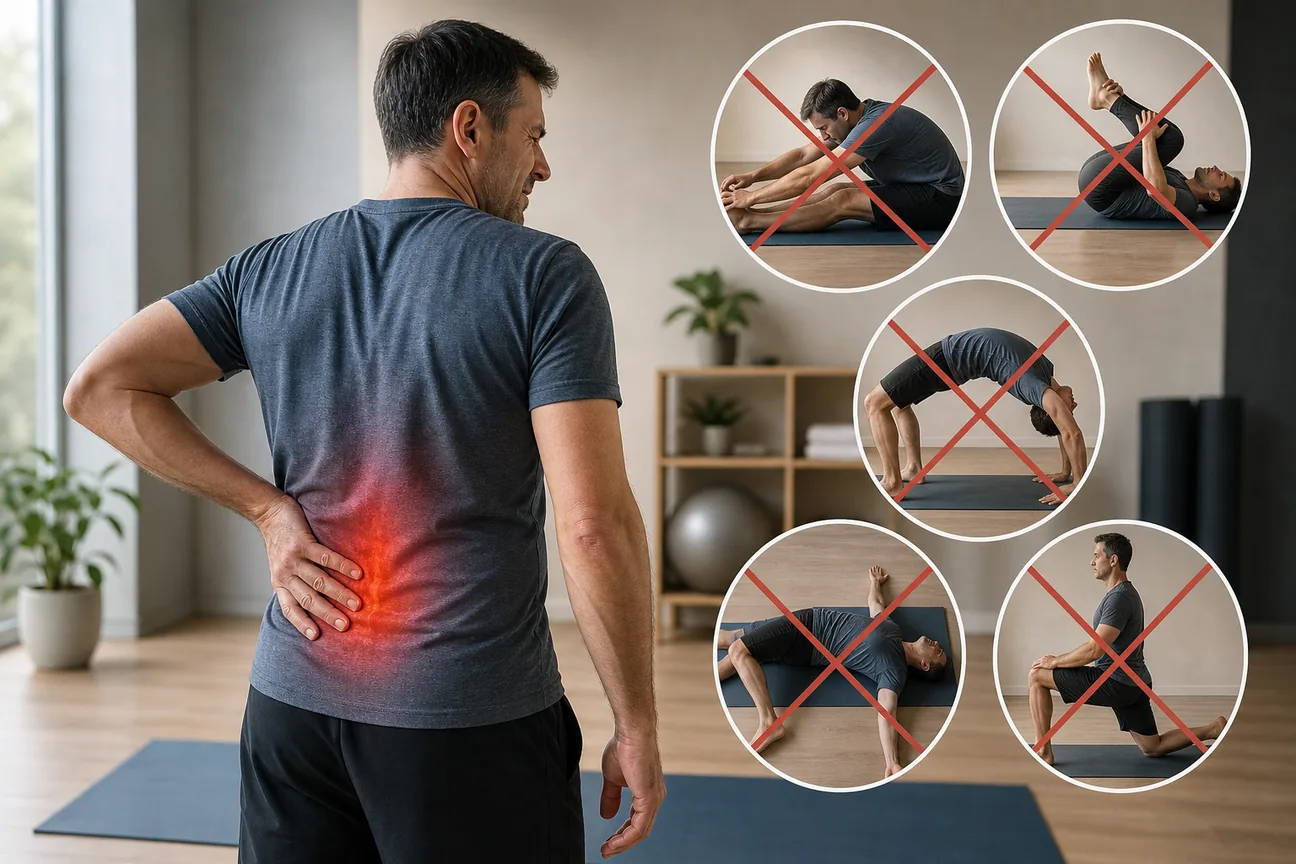
Sciatica can flare during moves that seem harmless. Cycling is one surprise example, especially when a hunched posture puts more pressure on the lower back and sciatic nerve. Here are five movements to treat with care, who should avoid them during a flare, and safer ways to keep moving.
Table of Contents
1. Weighted Squats - Reduce Load During a Flare-Up
Weighted squats place extra load through the lower back, hips and legs. During a sciatica flare, that load may increase pressure around irritated nerves or discs.
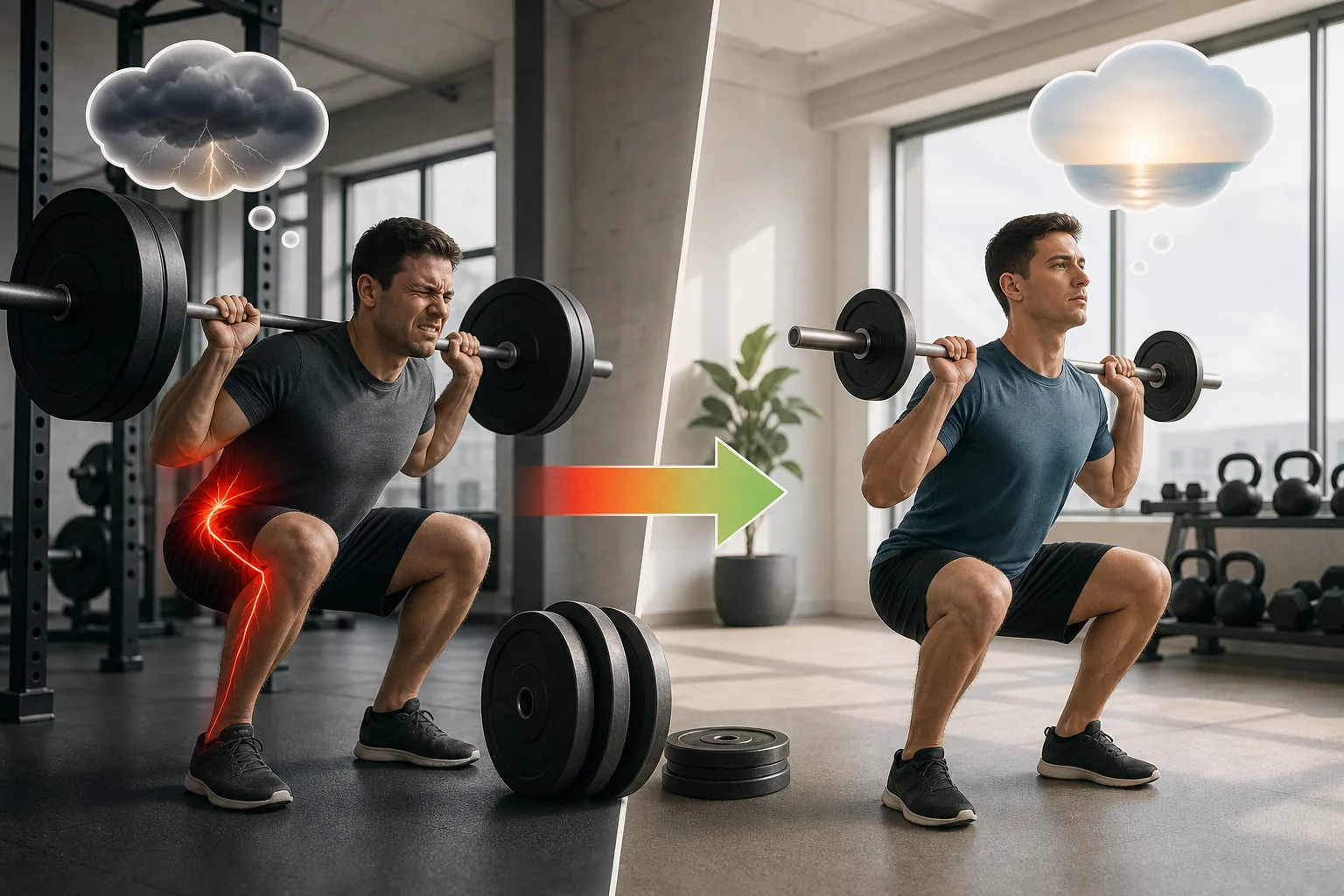
This move is best avoided by anyone who feels more leg pain, tingling or back tightness when squatting with a barbell, dumbbells or another weight. A flare is not the time to test a heavier load or deeper range.
Healthline notes that weighted squats can increase compression around the lower back, nerves and intervertebral discs. The load can also increase pressure into the legs. The key point is simple: a squat may be fine for one person later in recovery, but the weighted version may be too much today.
Try a sit-to-stand from a firm chair instead. Keep your feet under your knees. Lean forward a little, press through your feet, then stand with control. You can use your hands for support. If that feels easy, you can try a shallow bodyweight squat while keeping your spine in a comfortable neutral position.
Keep the range small. Stop if pain travels further down the leg, or if new tingling appears. Our guide to exercises for lower back pain includes other gentle ways to build movement without forcing a painful range.
At Unleashed Health Chiropractic , we take the time to assess how your symptoms respond to load. We tailor advice to your movement tolerance rather than giving every person the same squat plan.
2. Sit-Ups - Avoid Repeated Lumbar Flexion When Painful
Sit-ups repeatedly bend the lumbar spine, which is the lower section of your back. This makes them one of the sciatica exercises to avoid when forward bending increases your leg symptoms.
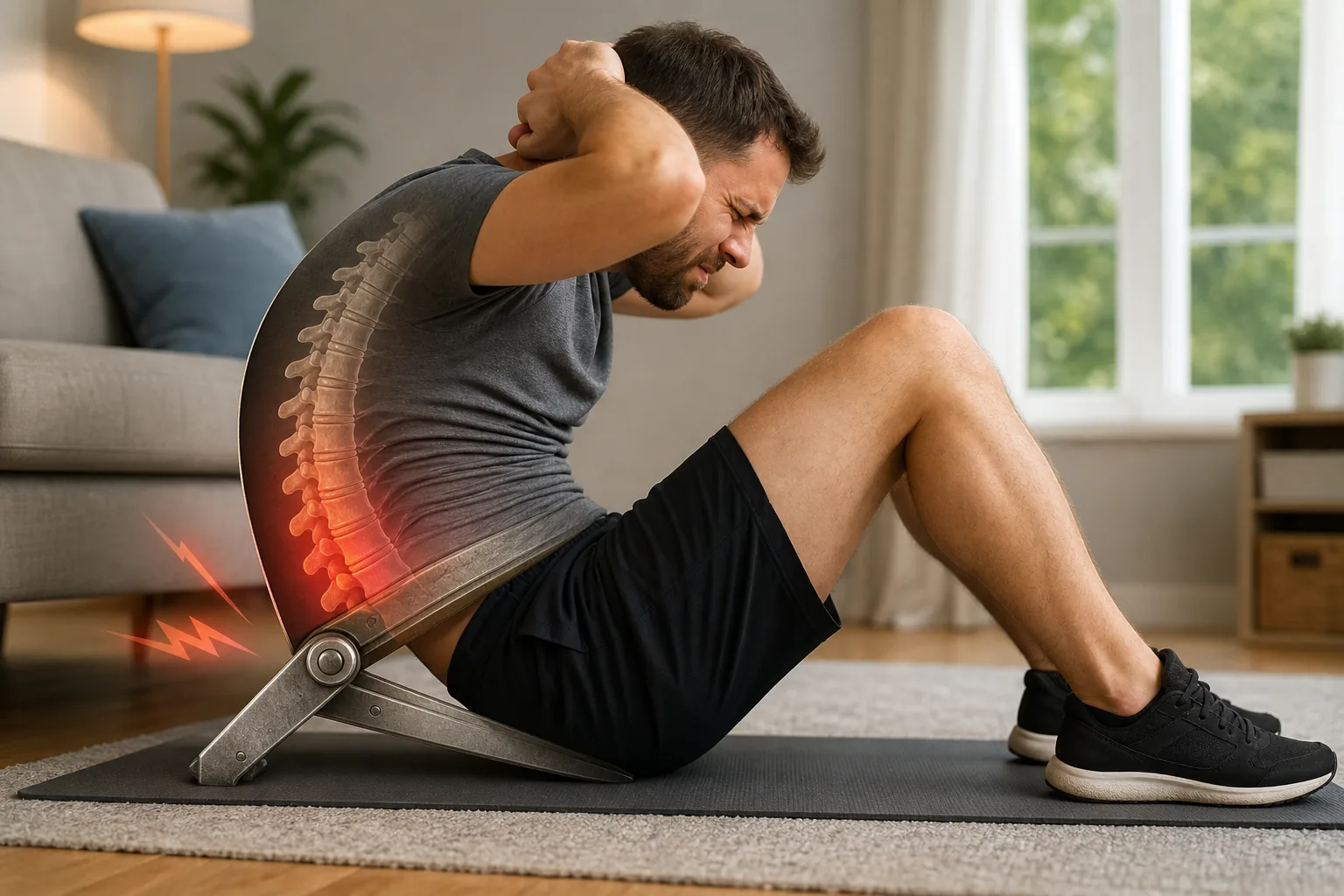
This move may be a poor fit if you feel sharp pain while rising from the floor, or if pain spreads from your back into your buttock or leg. Repeated reps can also make it hard to notice when your symptoms are slowly building.
Spine-Health explains that sit-ups create compressive forces through the lumbar spine. With some disc-related conditions, repeated forward bending may push disc material closer to an already irritated nerve. That does not mean every person with sciatica must avoid all abdominal work. It means your symptoms and diagnosis matter.
Replace sit-ups with gentle core control. Lie on your back with your knees bent if that position feels comfortable. Take an easy breath, then gently brace your lower stomach without holding your breath. Hold the brace for one calm breath before relaxing.
You can later add a small heel slide. Slide one heel away, then bring it back before your pelvis tips or your leg pain increases. The goal is control, not a hard burn in your stomach.
Pelvic floor concerns also matter. Lots of sit-ups can create strong abdominal pressure, so people who are pregnant, early postnatal or recovering from pelvic surgery should seek specific advice before progressing core work. A continence or women’s health physiotherapist can help match the exercise to your needs.
If you want a clearer starting point, our resource on core exercises for back pain explains how to test small movements without rushing into forceful abdominal work.
3. Cycling - Modify a Hunched or Forward-Leaning Position
Cycling can be a problem for sciatica when your riding position keeps you bent forward. It is often seen as a gentle cardio choice, but posture can change the load on your lower back.
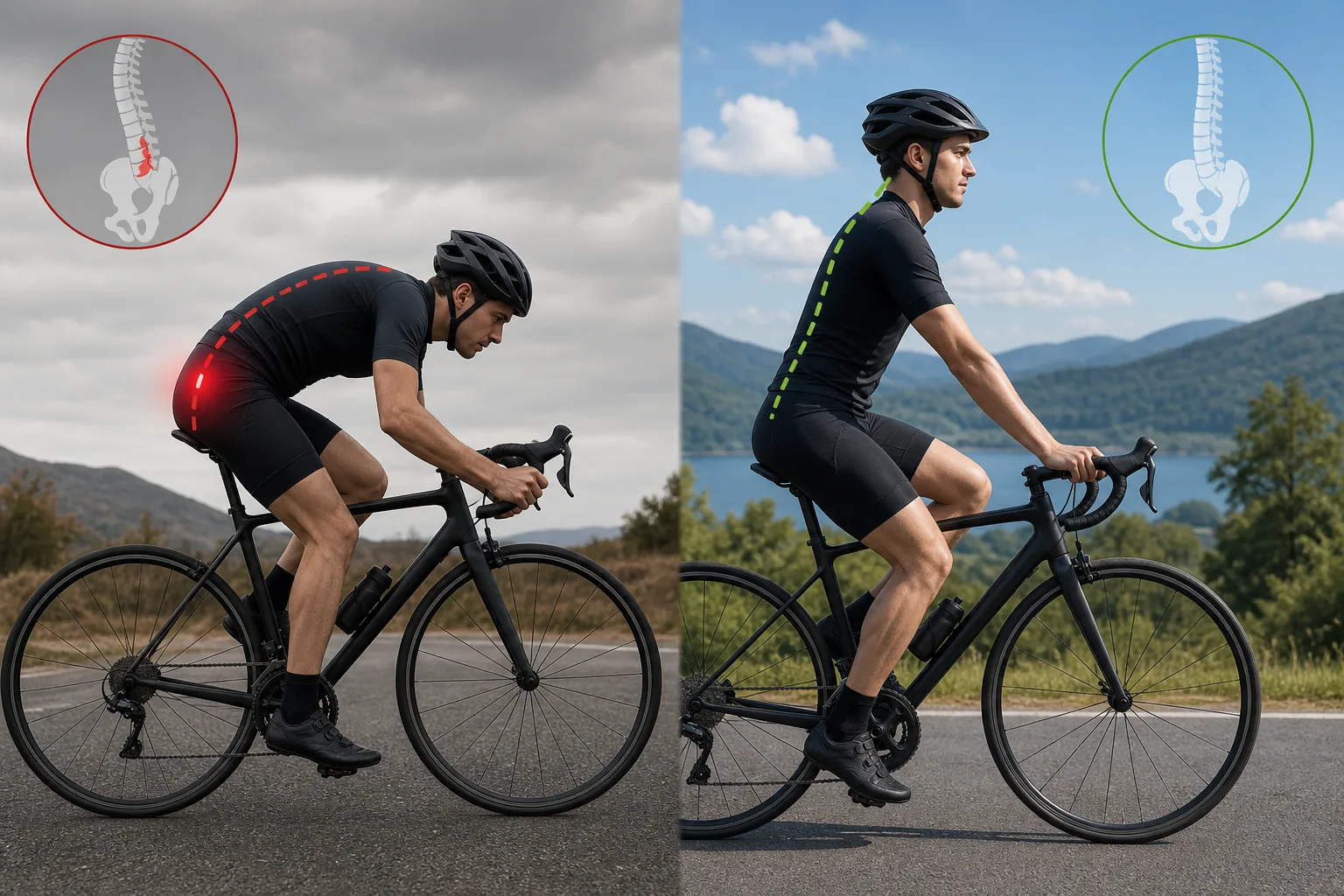
This option is best modified if sitting on the bike brings on buttock pain, tingling or pain below the knee. A hard seat may add pressure. So can handlebars that make you reach too far forward.
Healthline identifies cycling as a possible trigger because a hunched position may increase pressure around the spine and sciatic nerve. That does not mean you must give up every ride. It means you should test the position, duration and surface with care.
Start with a short, easy ride only if normal walking feels settled. Raise the handlebars if that lets you sit more upright. Check that the seat does not force your knees too high or too low. Keep your grip light. Avoid pushing through pain to finish a route.
An exercise bike may still bother you if it keeps you folded forward. A flat walk or pool session may suit you better during a sensitive phase. Your own symptoms still guide the choice. Read the review of exercise approaches for lower back pain for the research context.
Use a simple check. Rate your symptoms before riding, during the ride and later that day. If leg pain remains worse, reduce the time or pause cycling while you seek advice.
We understand that staying active matters to you. At Unleashed Health Chiropractic, we can help you review sitting, riding and work positions as part of a wider plan.
4. Forward Bends - Stop if They Increase Leg Symptoms
Forward bends put the lower back and hips into flexion. They belong on a sciatica exercises to avoid list when bending makes your leg pain stronger or sends symptoms further down the leg.
This includes deep toe touches, repeated hamstring stretches and long periods of folding over a sink or low table. The movement itself is not automatically unsafe. Your response decides whether it belongs in your routine right now.
Some people feel better with a gentle forward bend. Others feel worse, particularly when a disc or nerve root is sensitive. Medical guidance on sciatica exercises also stresses individual tolerance. A stretch that feels mild in the back may still irritate a nerve if it creates burning, pins and needles or shooting pain.
Try a supported hip hinge instead. Stand near a bench or kitchen counter. Keep your feet under your hips and bend your knees slightly. Move your hips backwards while keeping your chest relaxed. Return to standing before your back rounds heavily.
This teaches your hips to share the work when you reach towards a laundry basket. Keep the range short at first. You do not need to touch your toes to make useful progress.
Stop at once if pain becomes sharp, tingling appears, or symptoms move further down the leg. A mild stretch may settle quickly, but a spreading symptom needs more care.
If you are unsure whether the problem is coming from your back, hip or nerve, arrange an assessment instead of repeatedly testing the same painful bend.
5. Heavy Lifting - Be Careful With Bending and Twisting
Heavy lifting can strain the spine, especially when you bend and twist at the same time. It is one of the main activities to avoid or change during a painful sciatica flare.
This matters at home as much as it does in a gym. A full laundry basket, a box on the floor or a child who needs lifting can all create a sudden load. The risk rises when the item is far from your body or you turn while carrying it.
Harvard Health advises people with sciatica to avoid heavy lifting, particularly tasks that involve bending or twisting the back. It also warns against sharp spinal rotation until symptoms settle. Golf swings, tennis strokes and some yoga poses can combine rotation with speed, so they may need a temporary pause.
When you must lift something light, move close first. Set your feet so you can turn with your whole body rather than twisting through the waist. Use a small hip and knee bend. Keep the item near your middle and stand up smoothly.
Ask for help with heavy or awkward objects. That is a sensible change, not a sign that you are weak. If lifting is part of your job, speak with your employer about temporary task changes while you arrange professional advice.
Do not hold your breath or brace as hard as possible. A calm breath helps you notice whether the load is causing symptoms. If pain begins during the lift or worsens later, reduce the load and stop repeating the task.
Gentle movement can still be useful. Short walks and small position changes may be a better choice than full bed rest, provided they do not increase your leg symptoms.
Sciatica Exercises to Avoid: Quick Comparison Table
Use this table as a quick screen, not as a personal diagnosis. The same movement may be tolerated later, once symptoms have settled and your strength has returned.
Movement | Why it may flare symptoms | First change to try |
Weighted squats | Extra compression through the lower back and legs | Use a chair sit-to-stand or bodyweight range |
Sit-ups | Repeated lumbar flexion and compression | Gentle bracing with heel slides |
Cycling | Hunched posture or hard seat may increase pressure | Raise handlebars or choose a short flat walk |
Forward bends | May increase pressure or leg symptoms | Use a small supported hip hinge |
Heavy lifting | Load combined with bending or twisting | Keep the item close and ask for help |
Across the research reviewed for this topic, the steady advice is to stop a movement that causes pain. Do not judge an exercise only by how it feels in the first few seconds.
FAQ
What exercises should you avoid with sciatica?
You should avoid any exercise that increases leg pain, numbness, tingling or sharp back pain. Common sciatica exercises to avoid during a flare include weighted squats, sit-ups, deep forward bends, hunched cycling and heavy lifting with a twist. A clinician can help you find the cause of your symptoms and adjust the plan.
Can I still exercise if I have sciatica?
Yes, you can often keep moving with sciatica, but the activity may need to be easier. Short walks, gentle position changes or pool exercise may suit some people. Stop if symptoms spread or remain worse later. Long periods of complete rest may also make movement harder, so aim for a calm, gradual return.
Is cycling bad for sciatica?
Cycling is not always bad for sciatica, but a hunched riding position can aggravate symptoms. A hard seat or poorly set handlebars may add pressure around the lower back and nerve. Test a short, easy ride only when walking feels settled. Sit more upright and stop if leg symptoms increase.
Are squats safe with sciatica?
Squats may be safe for some people once symptoms settle, but heavy or deep squats can be a poor choice during a flare. Start with a supported sit-to-stand or shallow bodyweight squat. Keep the movement smooth. Stop if you feel increasing back tightness, shooting pain or new tingling.
When should I see someone about sciatica?
You should arrange an assessment when pain limits sleep, work, walking or normal tasks. Seek urgent medical care for new loss of bladder or bowel control, numbness around the groin or anus, sudden marked leg weakness, fever with severe back pain or symptoms after major trauma.
Conclusion
During a sciatica flare, pause heavy loading, repeated bending and any movement that sends symptoms further down your leg. Start with easy movement that settles quickly, then arrange an individual assessment if pain keeps returning. Our guide to pinched nerve symptoms and relief explains what to watch for, and Unleashed Health Chiropractic can help people in Ascot Vale and nearby Melbourne suburbs plan their next step.


Comments