


Best Sleeping Position for Back Pain
Waking with a sore lower back can make the whole day harder. The best sleeping position for back pain is usually a supported side position or back position, not a rigid pose you must hold all night. In fact, plain back sleeping may still leave your lumbar spine under strain if your knees have no support. We’ll show you the small changes that count.
Table of Contents
Step 1: Check your pain pattern before bed
Start by noticing what makes your symptoms better or worse. Lie down for a few minutes and compare your back, side and slightly reclined positions.
Pay attention to pain that travels into the buttock or leg. Numbness, tingling or weakness needs more care than a simple morning ache. If symptoms began after a fall, keep getting worse, or affect bladder or bowel control, seek prompt medical assessment rather than changing pillows alone.
We take the time at Unleashed Health Chiropractic to ask how your pain behaves during sleep, work and movement. That pattern helps guide a safe plan instead of treating the word “back pain” as one single problem.
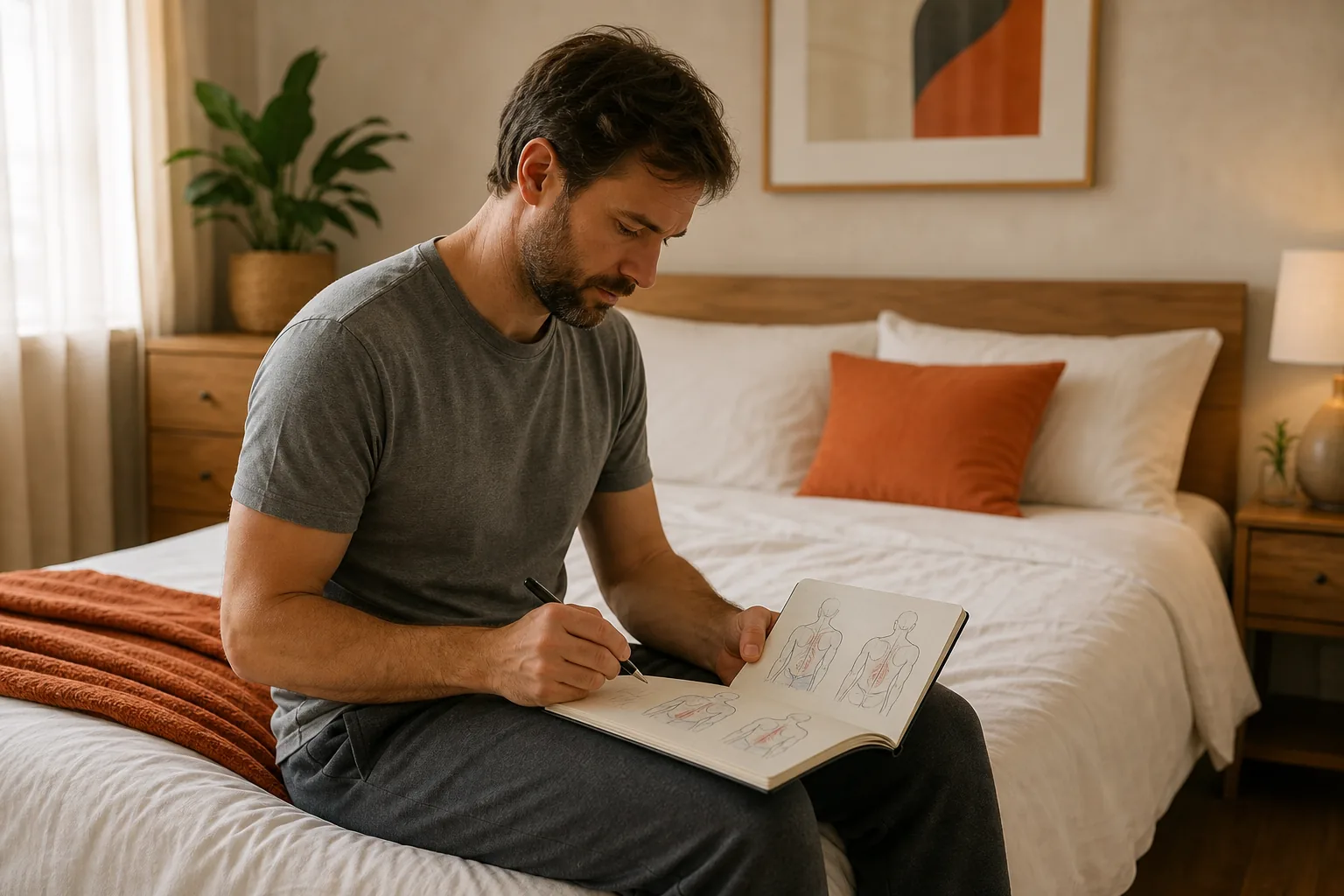
Step 2: Set up a supportive bed
A supportive mattress should hold your body without letting your hips sink into a deep dip. It also shouldn’t feel so hard that your shoulder or hip bears all the load.
Mattress comfort and support can vary from person to person. You can read more about mattresses and low back pain , then compare practical features in this guide to the best mattress for back pain .
Check the bed frame as well. A loose support or sag beneath the mattress can change your body position for hours. If you’re unsure, place a straight edge across the mattress during the day and look for a clear hollow beneath it.
Choose pillow height by position. Your head should stay in line with your spine, rather than tipping towards the mattress or ceiling. A side sleeper often needs more height than a back sleeper because the shoulder creates extra space.
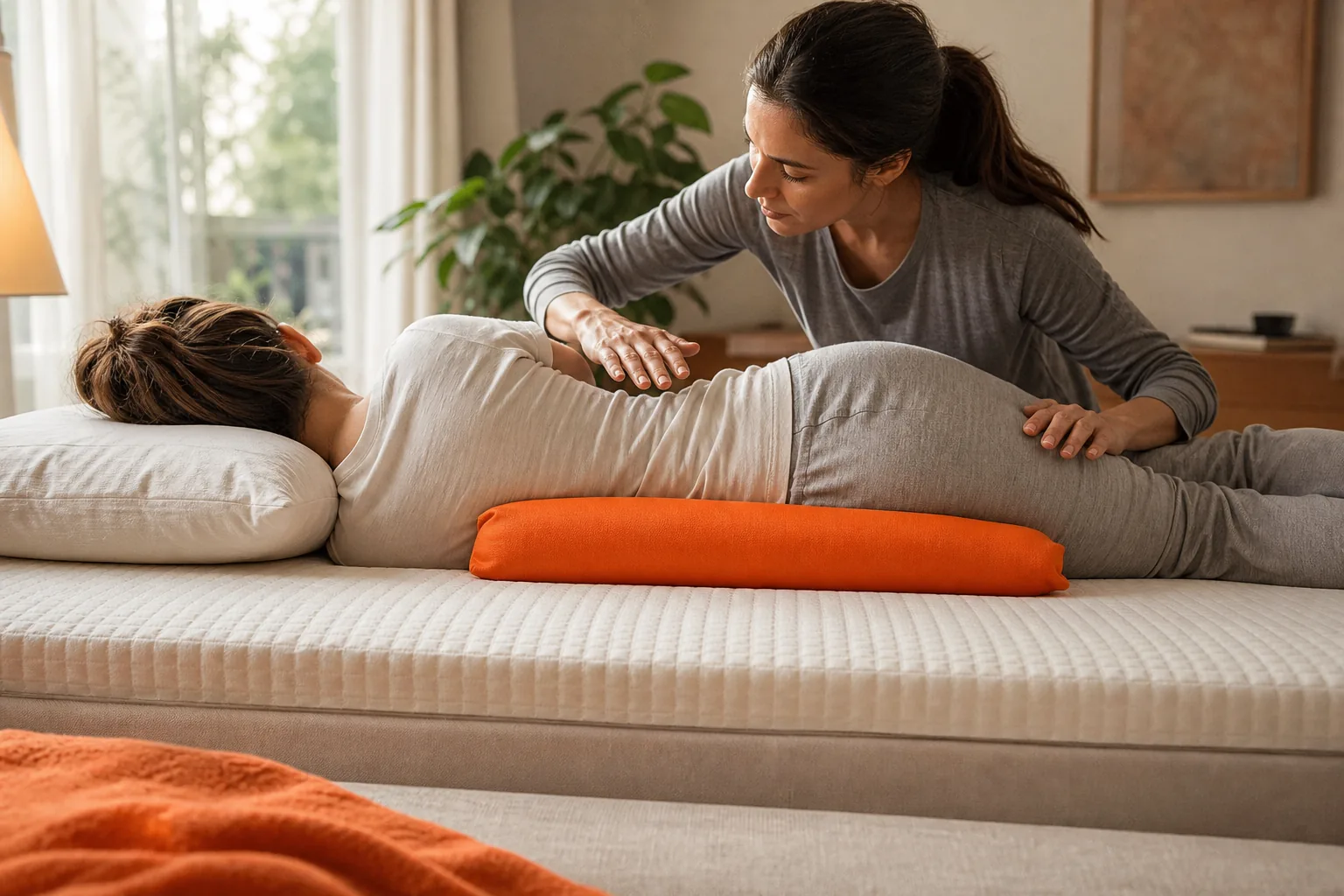
Step 3: Try side sleeping with knee support
For many people, side sleeping with a pillow between the knees is the best sleeping position for back pain. The support helps keep the pelvis from rolling forward and can reduce twisting through the lower spine.
Lie on the side that feels more comfortable. Keep your legs slightly bent, then place a pillow between your knees. A full-length body pillow can support the top arm as well, which may stop your chest from rolling forward.
Keep your head pillow high enough to fill the gap between your shoulder and neck. If your head drops towards the mattress, add a little height. If it tilts upwards, remove some fill.
Shoulder pain changes the setup. Try lying more on your ribs instead of directly on the point of the shoulder. Let the lower shoulder rest slightly forward without trapping it under your chest. If hip discomfort is limiting your side-sleeping options, these simple steps for hip pain may also help you adjust daily movement comfortably.
Supported side lying has shown fewer symptoms than regular side lying or prone sleeping in one study. The pillow is the key part, not the side itself. Watch the demonstration below, then make small changes based on comfort.
Step 4: Adjust back sleeping with a pillow under your knees
Back sleeping can work well when your knees are supported. Place one pillow under both knees, or use a rolled towel if you need a smaller change.
This position can reduce the arch in the lower back. It may also let the back muscles settle instead of holding the hips fully extended. Keep the head pillow fairly low so your chin doesn’t push towards your chest.
Plain back sleeping is the part many people miss. A review found that unsupported supine sleepers were 1.9 times more likely to wake with lumbar pain than sleepers who adjusted the position. So the knee pillow is more than a comfort extra for some people.
If your waist feels unsupported, test a small rolled towel under the natural gap above the belt line. Use the smallest support that feels helpful. Too much lift can push the back into an arch.
For neck concerns, keep your nose pointing towards the ceiling. If your head falls to one side, adjust the pillow shape rather than adding a second thick pillow. People with snoring or breathing concerns should ask their health professional whether a slightly raised upper body is suitable.
Step 5: Keep your neck and shoulders neutral
The best sleeping position for back pain can still cause neck pain if your head pillow is wrong. Check your neck from the side. It should continue the line of your upper back without a sharp bend.
Side sleepers should avoid a pillow that collapses under the head. Back sleepers usually need less height. If you use a shredded foam pillow, remove or add fill in small amounts until your neck feels level.
Give the top arm somewhere to rest. A small cushion in front of the chest may stop the shoulder from dropping forward. Keep the lower arm in a relaxed spot, rather than folding it tightly under the head.
Neck pain can also refer into the upper back. Gentle movement before bed may help, but stop if it sends pain into the arm. Our guide to Best Stretches for Upper Back Pain can help you choose gentle options within your comfort range.
Step 6: Modify the position for your symptoms
Sciatica, disc-related pain and muscle strain can respond differently to the same posture. Use the position that reduces your symptoms, then keep the support steady through the night.
For sciatica, try side lying with the knees supported. Some people prefer a gentle fetal position, with the knees drawn slightly towards the chest. Don’t force the curl. A tight bend may feel worse for someone else.
For disc-related pain, back lying with support beneath the knees may reduce the lower-back arch. You can learn more about how we discuss disc pain in Ascot Vale and nearby Melbourne suburbs when symptoms need individual review.
Pregnancy needs a separate approach. Speak with your pregnancy care provider about back pain. Pain with fever, bleeding, pain when urinating or signs of labour needs medical advice.
We understand that a diagnosis on a scan does not tell the whole story. At Unleashed Health Chiropractic, we tailor advice to your symptoms, movement and daily demands. A position that feels good tonight should still be reviewed if your symptoms keep returning.
Step 7: Move away from stomach sleeping
Stomach sleeping is usually a poor choice during a lower-back flare. It tends to increase the arch in the lumbar spine, while the head must turn to one side so you can breathe.
That neck rotation can add strain above the back problem. The pelvis may also sink into the mattress, which increases the hollow through the waist. Stomach sleeping can be especially uncomfortable when you already have neck pain, shoulder pain or sciatica.
If you fall asleep on your stomach, don’t try to hold a perfect pose by force. Start on your side with a pillow between your knees. Place another pillow in front of your chest so your top arm has support. When you wake, reset the position without judging yourself.
A very thin head pillow can reduce neck bend if you cannot change position straight away. That is a short-term adjustment, not a sign that stomach sleeping is ideal. If you have persistent symptoms, consider an assessment rather than continuing to experiment alone.
Step 8: Build a repeatable night routine
Sleeping position is a habit. You may change it several times during the night, so focus on how you start and what you do when you wake.
Use this short routine:
Place the knee pillow before you get into bed.
Check that your head and neck feel level.
Take a few slow breaths and let your shoulders drop.
Turn with your whole body instead of twisting through the waist.
Reset the pillows if pain wakes you.
Gentle movement during the day may make bedtime easier. Break up long sitting periods and keep your evening stretches calm. These gentle stretches for lower back pain can provide ideas within your comfort range, while gradual core exercises for back pain may support longer-term movement when appropriate. If you spend hours at a desk, voice dictation can reduce repeated typing during tasks; a voice dictation tool is one example of that type of tool.
Comfort also includes skin pressure and friction. If side lying causes rubbing, softer sleep clothes may help, and this guide to anti-chafe cream versus underwear options explains ways to reduce friction.
Keep a simple note for one week. Record your starting position, pillow setup and morning symptoms. That gives you useful information if you later speak with a health professional.
Frequently asked questions
What is the best sleeping position for back pain?
Side sleeping with a pillow between the knees is a strong first choice for many people with lower-back pain. It can help keep the pelvis and spine aligned. Back sleeping with a pillow under the knees is another useful option. Choose the position that reduces your symptoms without forcing your neck, hips or shoulders into an awkward angle.
Is it better to sleep on your back or side for lower back pain?
Neither position is best for everyone, but supported side or supported back sleeping usually works well. Side sleepers should place a pillow between the knees. Back sleepers should place one under the knees. Test each position for several nights and judge it by your morning symptoms, not by a rule that says one posture must suit all bodies.
Why does my back hurt more after sleeping on my back?
Back sleeping may hurt when your legs stay straight and your lower back arches for hours. A pillow under the knees can reduce that arch and help the muscles relax. Your mattress may also sag, or your head pillow may push your neck forward. Change one support at a time so you can tell what helps.
Should I sleep on my stomach with lower back pain?
Stomach sleeping is generally best avoided during lower-back pain because it can increase the lumbar arch and force your neck to turn. If you cannot change at once, use very little head support and place a thin cushion under the pelvis. Work towards side sleeping with a knee pillow, then seek advice if pain continues.
When should I see a chiropractor for back pain that affects sleep?
Consider an assessment when pain keeps disturbing sleep, returns often or limits normal activity. Seek urgent medical care for new weakness, loss of bladder or bowel control, major trauma, fever or rapidly worsening symptoms. Unleashed Health Chiropractic in Ascot Vale can assess musculoskeletal concerns and help you plan suitable next steps within chiropractic care.
Conclusion
Start tonight with side sleeping and a pillow between your knees, or back sleeping with a pillow under your knees. Keep your neck level and change the setup if symptoms increase. If morning pain persists, Unleashed Health Chiropractic in Ascot Vale can help you work out whether your sleeping position is part of a wider movement problem.


Comments