


Heat Treatment for Neck Pain: Uses and Safety
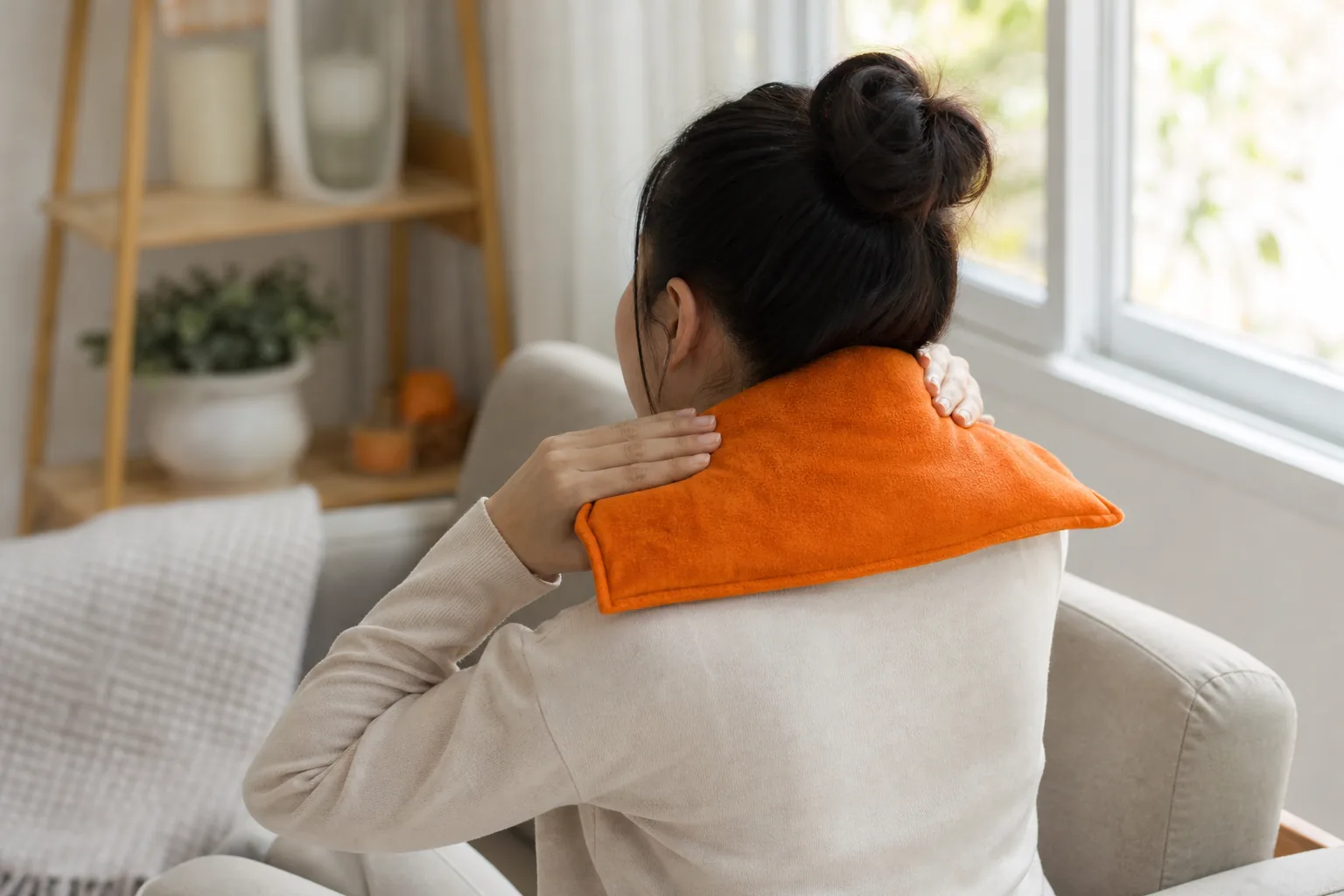
A warm pack may feel soothing on a tight neck, but the right heat method and timing matter. Heat treatment for neck pain can take just 10 minutes or, with some wearable wraps, last for hours. Here’s how the options differ, what the evidence says and when heat may not be suitable.
Table of Contents
What heat does for a sore or tight neck
Neck pain can follow muscle strain or prolonged time in one position. It may also relate to a joint, disc or another health issue. Often, several factors play a part, and the cause isn’t clear from the feeling alone. Heat is generally considered for a sore, stiff or tight area, rather than as a way to find or treat the underlying cause.
Warmth raises the temperature of tissue near the skin. That may increase local blood flow and make soft tissue feel more flexible for a time. Some people find this eases muscle tightness or pain enough to move more comfortably. These effects don’t mean heat will work for everyone, or that it repairs the cause of neck pain.
That’s a careful answer, not a reason to ignore your own response. You can treat heat as a comfort measure and stop if it doesn’t feel right. If the pain keeps returning or affects daily tasks, an assessment may help clarify what to do next. We take the time at Unleashed Health Chiropractic in Ascot Vale to assess each person’s needs before discussing care options.
For more on gentle self-care when your neck feels stiff, see our guide to simple steps for a stiff neck .
Common ways to apply heat to the neck
Heat comes in several forms. The choice affects how warmth reaches your skin and how long an application lasts. It’s useful to tell the difference between a short session with moist heat and a product designed to give lower-level heat for longer. A longer session isn’t automatically a better fit.
Moist heat
Research material on moist heat describes a 10-minute session. Keep the application comfortably warm, not hot. Reapply only if needed, and check your skin as you go. Stop if the heat stings or your skin becomes very red.
Heating pad or heat cream
A heating pad gives dry heat. Research on a heating pad describes a 30-minute session. That figure isn’t a rule for every pad, so follow the instructions for the one you use. Put a layer of cloth between a hot pad and your skin. Don’t lie on an electric pad or fall asleep with it in place. Heat cream can increase blood flow, improve tissue extensibility and reduce muscle tension. Do not use it within the first 48 to 72 hours after an injury, or if sensation is altered or another contraindicated condition applies.
Dry-heat neck wrap (ThermaCare) or ray lamp
A study of a dry-heat neck wrap (ThermaCare) described use for up to 360 minutes, with pain reduction as a primary benefit. That duration applies to the specific wrap studied, not to every heat wrap. Read the product directions and remove it if you feel discomfort. A ray lamp is another option. Do not use it within the first 48 to 72 hours after an injury, or if sensation is altered or another contraindicated condition applies.
The evidence doesn’t set one duration or daily schedule for all heat methods. In one place, the reported sessions range from 10 minutes for moist heat to 30 minutes for a heating pad and up to 360 minutes for a dry-heat wrap. Those study details aren’t a personal prescription. Start with the product instructions and a short, comfortable session.
If neck and shoulder tightness occur together, our page on ways to manage neck and shoulder pain covers other self-care ideas too.
Using heat safely and comfortably
Take a few seconds to check the area before applying heat. Don’t use heat on skin that can’t sense temperature well. Reduced sensation can make it harder to notice when a pack is too hot. Be cautious if you have a condition that affects feeling or circulation, or if you’re unsure whether heat is suitable for you. A GP or pharmacist can help you check.
Heat may also be unsuitable soon after an injury. Avoid using it in the first 48 to 72 hours after an injury, or if sensation is altered or another condition makes heat inappropriate. If your neck pain began after a fall, collision or other trauma, seek medical advice rather than relying on a heat pack.
A careful way to try a warm pack
Choose a method with clear use instructions. Check the pack or device for damage before use.
Place a cloth layer between a hot pack and your skin. Don’t apply very hot water or a heated item directly to bare skin.
Set a timer for the session length in the product directions. If there are no clear instructions, ask a health professional before using it.
Stay awake and keep the pack in view. Check your skin during the session, then remove the heat if it burns, stings or feels uncomfortable.
Let your skin return to its usual temperature before deciding whether another session feels appropriate. Don’t keep reapplying heat just because the first session didn’t change the pain.
Heat should feel gentle and pleasant. Redness that persists, blistering or pain from the heat are reasons to stop. Avoid using heat while sleeping, and don’t strap a hot pack tightly around your neck. If you’re caring for someone else, check in often rather than assuming they can feel when it’s too warm.
When heat may not be suitable, and when to seek medical advice
Skip heat if the pain is new after an injury, especially in the first 48 to 72 hours, or if you have reduced feeling in the area. A warm sensation can mask discomfort without telling you whether the cause needs care. If you have a health condition that affects skin feeling or blood flow, ask a GP or pharmacist before trying heat.
Heat isn’t a substitute for medical assessment. Seek urgent medical care for sudden, severe neck pain or pain after a traumatic accident. Neck pain with chest pain, shortness of breath or sweating also needs urgent attention. In Australia, call 000 for an ambulance in an emergency.
Arrange a GP assessment if your pain is getting worse, keeps coming back or isn’t settling over time. Get prompt advice if you notice new numbness or weakness in an arm or hand. These symptoms can have different causes, so don’t try to diagnose them with a heat response. If you’re worried about a symptom, it’s reasonable to ask for medical advice.
Unleashed Health Chiropractic’s initial appointment includes a medical history and physical, neurological, orthopaedic and chiropractic examinations. This can help the chiropractor understand your symptoms and discuss whether the clinic’s care is suitable. It doesn’t replace a GP or urgent medical review when warning signs are present.
How heat fits into a broader approach to neck pain
Heat is one possible self-care measure, not a full plan on its own. If gentle warmth makes it easier to move, you might then try natural, easy neck movement within your comfort. Don’t push into sharp pain or force a stretch. Heat or ice packs may be used for stiffness and pain.
Cold and heat can feel different. Heat may suit a stiff, tight feeling; after a recent injury, heat is usually avoided during the first 48 to 72 hours. There isn’t one choice that fits every person. If cold feels more comfortable, use it carefully and protect your skin. If you’re unsure what’s safe for your situation, ask a health professional.
Think about what may be adding to the strain during your day. Long periods at a desk, a fixed head position or an awkward sleep position may be relevant for some people, though no single factor explains every sore neck. Take brief movement breaks and adjust your screen or chair if you can do so comfortably. A comfortable sleep position may also help with comfort during sleep.
Exercise can be part of care, but timing and the right movement depend on your symptoms. Don’t begin strengthening work straight after an injury without advice. If movement worsens the pain, stop and seek guidance. A clinician can help decide whether gentle range-of-motion work or a gradual strengthening plan is appropriate. Our overview of neck exercises and safety points gives more detail on this topic.
At Unleashed Health Chiropractic, we take the time to assess your history and goals before discussing a tailored plan. The clinic provides chiropractic care and rehabilitation in Ascot Vale. Any approach should fit your assessment, and results can vary. We aim to keep the discussion full while staying clear about when you may need care from a GP or another health professional.
Frequently asked questions
Is heat good for a stiff neck?
Heat may ease tightness or discomfort for some people, but the evidence for non-specific neck pain is limited. A recent review found only two small studies of dry heat wraps and said the findings weren’t enough to recommend heat for or against its use. If you try warmth, keep it comfortable and follow the product directions.
How long should I apply heat to my neck?
There isn’t one session length for every heat method. Session lengths are 10 minutes for moist heat and 30 minutes for a heating pad. A study of a dry-heat wrap described use for up to six hours. These are method-specific details, not a rule for all products. Follow the directions for your heat source.
Should I use heat or ice for neck pain?
It depends on the timing and what feels comfortable. Heat is usually avoided in the first 48 to 72 hours after an injury. Some people prefer warmth for tightness, while others find cold more comfortable. Protect your skin with either method, and ask a health professional if you have reduced sensation or aren’t sure what to use.
Can I use a heat pack on my neck overnight?
Don’t sleep with a heat pack or heating pad on your neck. You may not notice if it becomes too hot while you’re asleep, which raises the risk of skin injury. Use heat while awake, set a timer and check your skin. Follow the device instructions, and stop if the warmth becomes uncomfortable.
When should I see a doctor for neck pain?
Seek urgent care for sudden, severe neck pain, pain after a traumatic accident, or neck pain with chest pain, shortness of breath or sweating. Arrange medical advice if pain worsens or persists, or if you develop new numbness or weakness. If you’re unsure, a GP can assess your symptoms and advise on next steps.
Conclusion
Heat may be a comfort measure for some sore or tight necks, but timing, sensation and the type of heat source matter. Follow the product directions and seek medical advice for warning signs or ongoing pain. If you’d like to discuss whether chiropractic care is suitable, Unleashed Health Chiropractic in Ascot Vale can assess your needs and talk through options.


Comments