


How to Relieve Jaw Pain: Simple Steps
Jaw pain can make eating, talking, or even yawning feel hard. The good news is that gentle movement and small daily changes may calm an irritated jaw. We’ll show you where to start, what to avoid, and when Unleashed Health Chiropractic may help you find a safer plan.
Start softly. A sore jaw joint can flare when you push too far, so aim for calm, smooth movement rather than a big stretch.
Table of Contents
Step 1: Identify Common Jaw Pain Triggers
Before you work out how to relieve jaw pain, look for the habit that keeps setting it off. The temporomandibular joints , often called the TMJs, connect your lower jaw to your skull. They work each time you chew or speak.
Common triggers include teeth grinding at night, daytime clenching, stress, poor neck posture, gum chewing, and hard or chewy foods. Pain may sit near the ear, spread into the cheek, or travel towards the temple. Some people also notice a headache, ear pain, or a stiff neck.
For one day, keep a simple trigger note. Write down when the pain starts and what happened before it. Did you wake with a tight jaw? Did it begin after a long meeting, a large meal, or a stressful drive?
Check your rest position:keep your lips together but let your teeth stay apart.
Notice your posture:a forward head can change how your jaw moves.
Track chewing:note gum, tough meat, crusty bread, or long meals.
Watch for grinding:ask a partner whether they hear it at night.
These notes don’t prove the cause. They give you useful detail for a dentist, doctor, physiotherapist, or chiropractor. We take the time at Unleashed Health Chiropractic to ask how the problem affects your day before suggesting care.
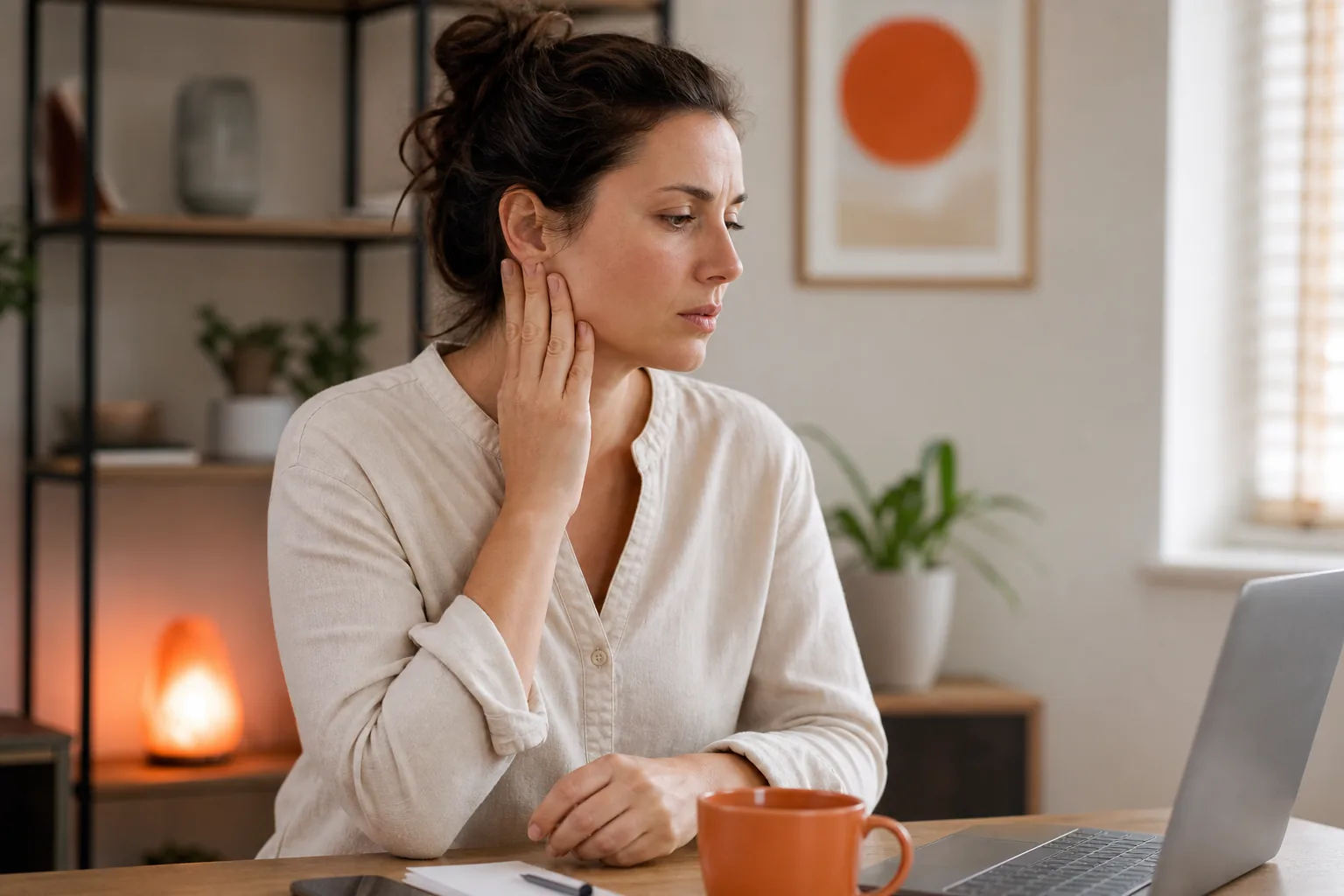
If jaw pain began after a blow to the face, or your jaw locks open or shut, skip home exercises and seek professional advice.
Step 2: Use Heat, Cold and Gentle Self-Care
Heat or cold may give short-term relief while you reduce strain. To work out how to relieve jaw pain at home, test one option at a time and stop if it worsens your symptoms.
Wrap a heat pack or cold pack in a towel. Place it over the sore area for a short period, then remove it. Don’t put ice straight on your skin. Some people prefer warmth for tight muscles. Others find cold more useful after a flare. Your response is the guide.
Food can also give the joint a break. Choose soft meals for a short time when chewing hurts. Avoid very crunchy food, tough cuts of meat, and sticky foods until the flare settles. This is a temporary rest, not a long-term diet.
Try these simple changes:
Take smaller bites and slow your chewing.
Cut food into smaller pieces before eating.
Stop gum chewing while the jaw feels sore.
Keep your tongue resting lightly on the roof of your mouth.
Set a phone or computer cue to check for clenching.
For related neck tension, our guide to relieving neck and shoulder pain covers heat, posture, and gentle movement that may fit into the same routine.
Some clinical material discusses a night-time stabilisation splint, made from hard acrylic or soft polyethylene, for people with jaw pain linked to grinding. A splint needs proper assessment and fit. It shouldn’t be borrowed or chosen only because it appears online.
Dental products may be part of a dental plan. A dentist may advise which dental options, such as night guards, suit your bite and symptoms.
Key Takeaway:Use heat or cold for comfort, rest the jaw with softer food, and reduce clenching while the flare settles.
Step 3: Try Gentle Jaw and Neck Exercises
Gentle exercises can help you learn how to relieve jaw pain without forcing the joint. Keep every movement slow. Stop if you feel sharp pain, a growing ache, or a change in how your teeth meet.
Relaxed jaw
Sit upright. Place your tongue lightly on the roof of your mouth behind your front teeth. Let your teeth separate. Slowly open and close your mouth while keeping the jaw loose. Do a few calm repetitions, then rest.
Partial goldfish opening
Place one finger over the jaw joint near the ear and another on your chin. Open your mouth part-way, then close it. Keep the movement straight and easy. This drill may help with stiffness and jaw range.
Full goldfish opening
Use the same tongue position. Open as far as feels comfortable, without pushing into pain. Close slowly. A smaller range is fine when the joint is irritated.
Chin tuck
Stand or sit tall. Draw your chin straight back, as if making a small double chin. Don’t tip your head down. Hold briefly, then relax. This can help you practise better neck alignment and reduce extra work around the jaw.
These drills are described in the TMJ exercise resource from SARH. The source also describes side-to-side movement, forward movement, and resisted opening or closing. We’d rather see you master relaxed movement before adding resistance.
Try a short routine: breathe out, relax your shoulders, complete a few relaxed-jaw movements, then do gentle chin tucks. The aim is to finish feeling the same or better. More repetitions aren’t automatically better.
Do not use household sticks or pens to force your jaw open. A tool can make you stretch past a safe point. If you need help with range, ask a health professional to show you the movement first.
Step 4: Release Muscle Tension and Improve Daily Habits
Muscle tension often sits in the cheek, temple, neck, or upper shoulders. Releasing those areas can support your plan for how to relieve jaw pain, especially when stress or screen posture plays a part.
For a gentle cheek massage, find the soft muscle below your cheekbone. Use two or three fingertips. Make small, slow circles with light pressure. Stay on soft tissue, not the cheekbone or the jaw joint itself. Stop if the area feels bruised or more painful.
You can use the same light touch at the temple. Keep your breathing slow. The goal is to lower tension, not to dig into a tender spot until it hurts.
Then reset your work position. Bring the screen closer to eye level. Let your shoulders drop. Rest both feet on the floor. Every 30 to 60 minutes, stand up and move your neck gently instead of holding one pose.
Sleep habits matter too. Side sleeping may press on one jaw. A pillow that bends your neck can add strain. Your best pillow height depends on your body and sleep position, so don’t assume a higher pillow is better. Our advice on relieving a stiff neck includes pillow and sleep-position tips.
Stress can increase jaw tension. Try a slow exhale while letting your tongue rest and your teeth separate. You can also place a small note near your keyboard that says, “Teeth apart.” It gives your body a cue before clenching becomes strong.
Pro Tip:Link the jaw check to a habit you already have, such as opening email or waiting for the kettle. Relax your teeth each time.
At Unleashed Health Chiropractic, we can assess related neck and upper-body movement and tailor exercises to your needs. We won’t assume every jaw problem has the same source.
Step 5: Know When to Seek Dental, Medical or Chiropractic Care
Seek professional care when jaw pain is severe, lasts, keeps returning, or changes how you eat or speak. Self-care is a starting point, not a diagnosis.
See a dentist when you have tooth pain, signs of infection, a damaged tooth, strong sensitivity, or concerns about grinding. A dentist can assess your teeth, bite, and jaw joint. They can also discuss whether a night guard is suitable.
Seek prompt medical care if jaw pain comes with chest pressure, shortness of breath, faintness, sweating, or pain spreading into the arm or neck. Get urgent help after a major injury, too.
Arrange an assessment if your jaw locks, your mouth opening becomes very limited, swelling develops, or you have ongoing ear symptoms. Headaches that are new, severe, or unusual also need medical review.
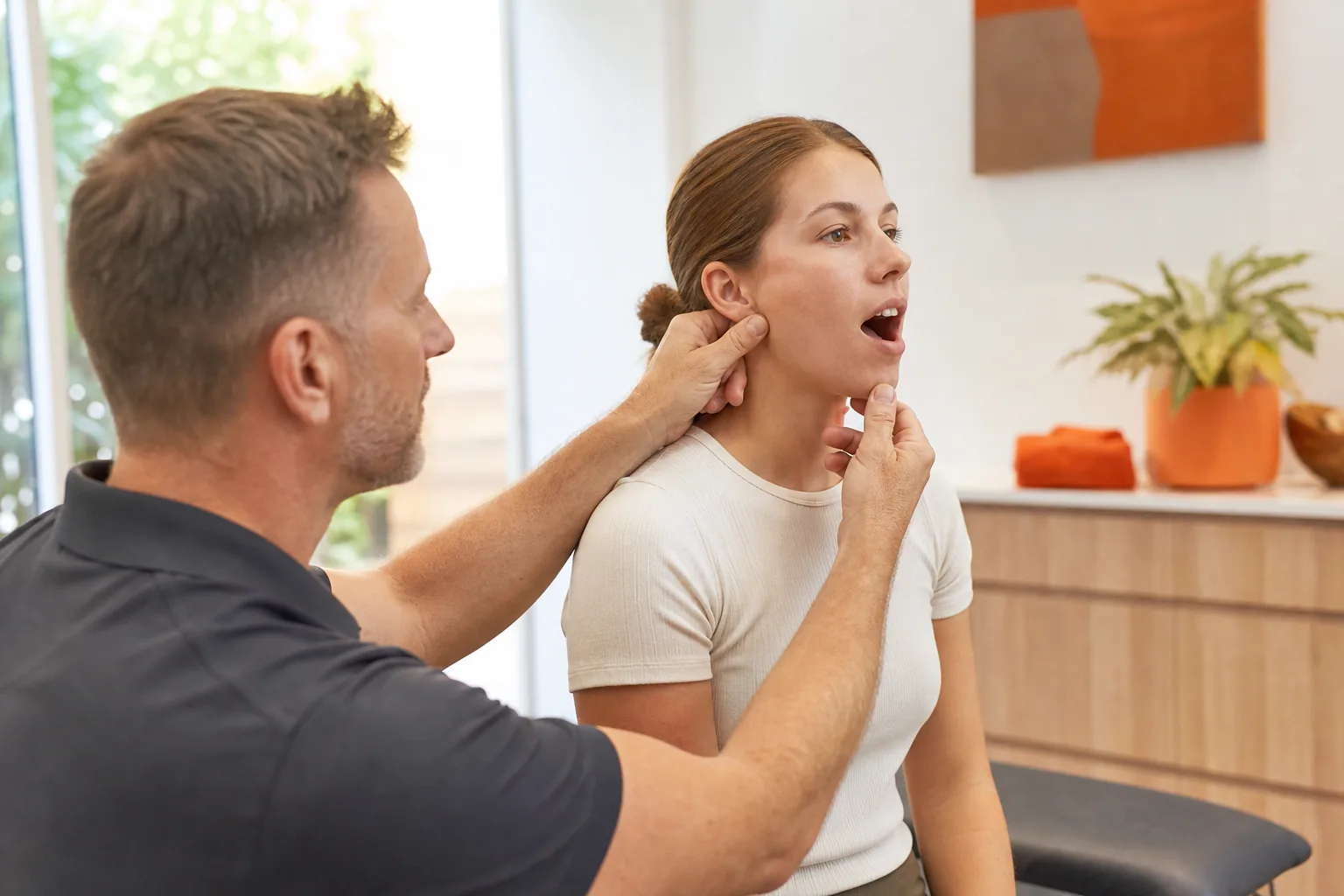
Chiropractic care may suit some people when jaw symptoms sit alongside neck or muscle tension. At Unleashed Health Chiropractic in Ascot Vale, we take the time to discuss your history and daily habits. We can then explain whether manual care and an individual exercise plan are appropriate, or whether another health professional should assess you.
Our approach is supportive and conservative. We don’t promise that one technique will fix every case. If symptoms fall outside our scope, we’ll encourage the right referral.
Be cautious with online exercise lists. A review of self-care information found gaps in step-by-step guidance and contraindications. That’s why a personalised check matters when pain is persistent or your jaw movement feels uneven.
Frequently Asked Questions
How to relieve jaw pain quickly?
Gentle jaw relaxation, a wrapped heat or cold pack, and softer food may ease jaw pain in the short term. Keep your teeth apart when resting and avoid gum or hard foods during a flare. If pain is severe, follows an injury, or comes with swelling or locking, seek dental or medical advice instead of pushing through exercises.
What is the best exercise for jaw pain?
The relaxed-jaw exercise is a safe place for many people to start. Rest your tongue on the roof of your mouth, keep your teeth apart, and open and close slowly. Chin tucks may help when neck posture adds tension. Stop if the movement causes sharp pain or makes your bite feel different.
Should I use heat or ice for jaw pain?
Either heat or ice may help, but the better choice depends on how your jaw responds. Wrap the pack in a towel and test one option gently. Warmth may feel soothing for tight muscles, while cold may feel better after a flare. Don’t apply ice directly to skin or keep any pack on too long.
Can a chiropractor help with jaw pain?
A chiropractor may help assess related neck and muscle factors, but jaw pain can also need dental or medical care. At Unleashed Health Chiropractic, manual therapy or exercises may be appropriate depending on your symptoms. We’ll refer you when signs point to a dental problem, infection, injury, or condition outside chiropractic care.
When should I see a dentist for jaw pain?
See a dentist for tooth pain, suspected grinding, swelling, bite changes, or pain that affects chewing. Dental assessment is also wise before buying a night guard. Seek urgent medical help if jaw pain occurs with chest symptoms, breathing trouble, faintness, or pain spreading into the arm or neck.
Start with relaxed jaw movement, less clenching, and a short period of softer food. If symptoms persist or keep returning, book an assessment with Unleashed Health Chiropractic in Ascot Vale so we can discuss a plan suited to you and refer you when needed.


Comments