


Treatment of Neck Pain and Stiffness: What Helps?

A stiff neck can make checking traffic or turning to talk feel harder than it should. Treatment for neck pain and stiffness often starts with gentle movement and small changes to how you work, but the right approach depends on what’s causing your symptoms.
Table of Contents
Why neck pain and stiffness can develop
Neck pain can come from muscles, joints, nerves or soft tissues. It may follow a strain, a sudden movement or long periods in one position. Sometimes the cause isn’t clear at first, so symptoms alone can’t tell you which structure is involved.
Leaning towards a screen or workbench can strain neck muscles. Holding your head forward for a long time may add to that load. Age-related joint changes can also play a part, but an image of the spine doesn’t always explain someone’s symptoms.
The neck works with the shoulders and upper back as you move. If your upper back stays rounded while you reach for a keyboard or phone, your head may sit forward for longer. That can leave the neck muscles feeling tired or tight. It doesn’t mean that posture is the only cause, or that one “perfect” position will prevent pain.
Poor posture can strain neck muscles, and osteoarthritis is one possible cause.
How symptoms began matters. So does whether pain spreads, affects sleep or changes what you can do day to day. If turning your head is the main issue, our page on neck pain when turning your head covers possible causes and when to seek care.
At Unleashed Health Chiropractic in Ascot Vale, we understand that each person’s symptoms and health needs differ. An assessment can help clarify what may be contributing and whether chiropractic care is suitable for you.
Gentle movement for a stiff neck and tight muscles
For many people, easy movement is a sensible place to start. Keep each movement within a comfortable range. Don’t force your neck through sharp or rising pain.
You can try this seated or standing. Let your shoulders rest, then slowly turn your head a little to one side and back to centre. Repeat on the other side. Next, tilt one ear towards its shoulder without lifting the shoulder. Finish with a small chin tuck, drawing your chin straight back rather than tipping your head down.
Move slowly and keep breathing. A gentle stretch can feel like mild tension, but it shouldn’t feel sharp or make symptoms keep building. If you feel dizzy, stop. If symptoms remain worse after you ease off or rest, ask a health professional what to do next.
Tight spots around the base of the skull or top of the shoulders can tempt you to press hard or stretch further. Start with light movement instead. If you try a soft ball against a wall, use gentle pressure on the fleshy upper-back area, not directly on the neck bones. Stop if it causes pain, tingling or numbness.
A short routine can fit beside a desk or into a break at home. Doing a little regularly may be easier to keep up than one long session. There isn’t one routine or dose that suits everyone, so change the movement or ask for guidance if it doesn’t feel right.
For more movement ideas and safety notes, see our neck pain exercise guide . Exercises should match your comfort and ability, especially if your symptoms began after an injury.
Posture, work setup and upper-back support
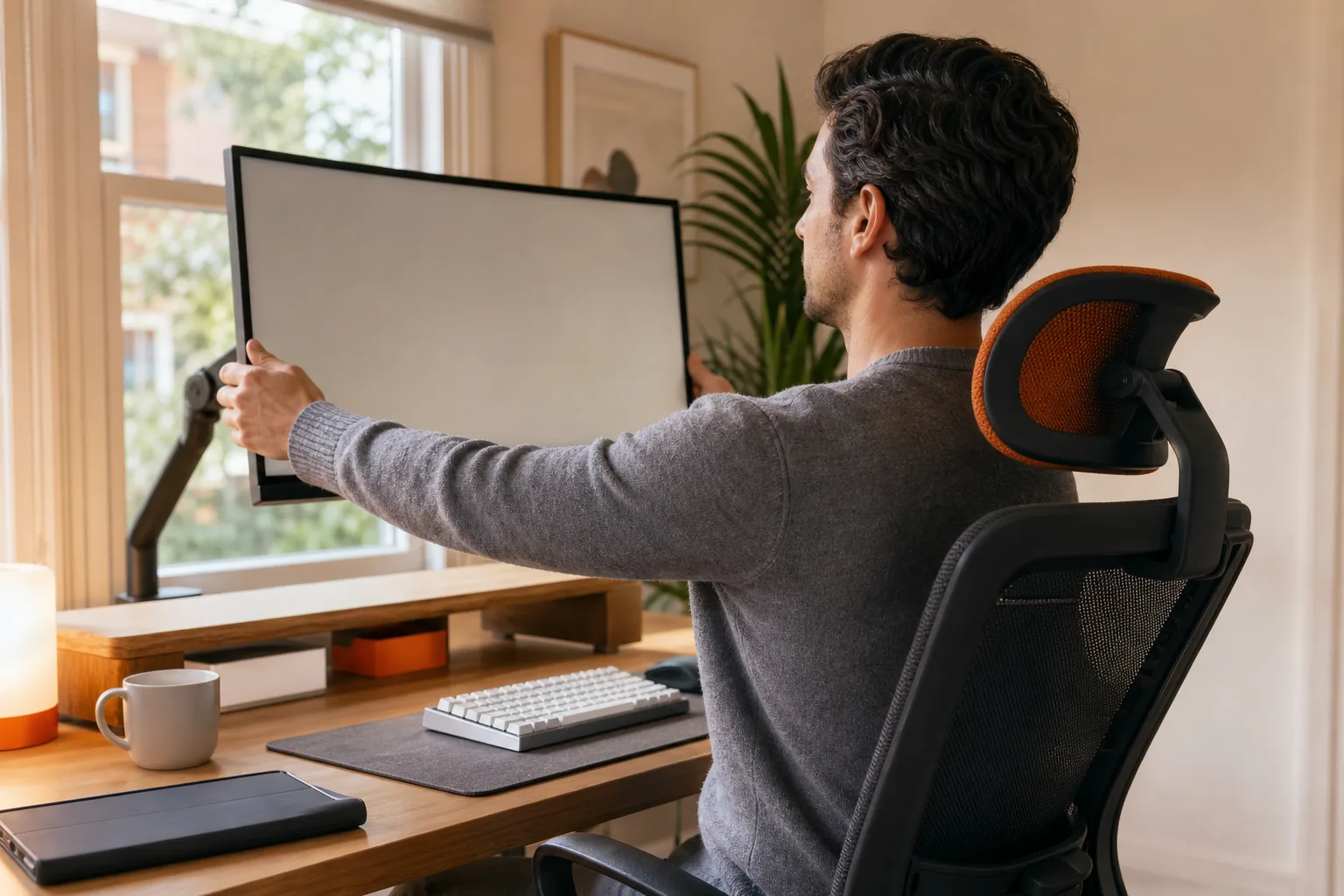
There’s no need to hold a rigid pose all day. Try to keep your screen in front of you, with the top near eye level, so you’re not looking down for long stretches. Place your keyboard and mouse within easy reach. If you use a laptop for long periods, a separate keyboard can help you position the screen higher without reaching for the keys.
Change position during the day. Stand for a short break, walk a little or shift how you sit. These changes won’t guarantee that pain goes away, but they can reduce the time you spend in one posture. If your work involves looking down or reaching, pause when you can and reset your position.
Comfortable upper-back movement may also matter. In a systematic review of office workers with neck symptoms, researchers found moderate-quality evidence that workplace neck and shoulder strengthening exercises reduced neck pain. The review found low-quality evidence for ergonomic interventions, so desk changes shouldn’t be treated as a stand-alone cure.
The review in Physical Therapy also reported larger effects with greater participation in exercise. If you’re considering rows or shoulder-blade retractions, start with light effort and stop if the movement aggravates your symptoms. A clinician can help you decide whether those exercises fit your needs.
Vision can affect how you position your head at a screen. If you’re squinting or leaning forward to see, an eye check may be a useful next step alongside changes to your screen setup. An optometry practice may be able to help with an eye check.
At night, choose a pillow that feels comfortable and keeps your head in a natural position rather than tilted high. A pillow won’t address every cause of neck pain, but poor support may leave you stiff on waking. Our advice on choosing a pillow for neck pain explains what to consider.
Treatment options and when to seek professional care
Self-care may be enough when symptoms are mild and easing. If pain persists, keeps returning or affects sleep and daily tasks, speak with a GP or another registered health professional. The aim is to understand your situation and discuss options, not to assume every stiff neck needs hands-on treatment.
Depending on your assessment, care may include advice, exercise or hands-on techniques. A single session of manual therapy, including thrust or non-thrust cervical spine manipulation , may be used to address motion limitations and pain. Active cervical range-of-motion exercises can involve extension, flexion, rotation and side-flexion as a home program. Discuss options and any concerns with your treating health professional.
Unleashed Health Chiropractic provides chiropractic care in Ascot Vale for people in nearby Melbourne suburbs. An initial appointment includes a medical history and physical, neurological, orthopaedic and chiropractic examination, plus a postural assessment. Spinal X-rays are covered by Medicare if clinically indicated. These steps help inform whether a tailored plan is appropriate for your needs and goals.
Seek urgent medical care after a serious accident or if you have sudden, severe neck pain. See a doctor if pain is getting worse, lasts or comes with new weakness or numbness.
If your symptoms are mild and movement feels comfortable, gentle activity may be reasonable while you monitor how you feel. If you’re unsure, or symptoms are limiting daily life, a GP can assess you and discuss whether a referral or another form of care is needed.
Frequently asked questions
What helps a stiff neck at home?
Gentle neck movement and small breaks from long periods in one position may help you stay active. Try slow turns or a small chin tuck within a comfortable range. Don’t force a stretch or push through sharp pain. If symptoms began after an injury, are getting worse or feel unusual, seek advice from a doctor or health professional.
Should I stretch my neck if it feels tight?
You can try a gentle stretch if it feels comfortable and your symptoms didn’t follow an injury. Move slowly and stop if pain increases, you feel dizzy or you notice tingling or numbness. A stretch should not be forced. If you’re uncertain which movements suit your condition, ask a health professional for advice.
Can posture cause neck pain?
Holding your head forward or leaning over a screen can strain neck muscles, but posture is only one possible factor. Neck pain can also involve joints, nerves or soft tissues. Rather than trying to hold one fixed position, set up your screen within comfortable view and change position during the day.
When should I see a doctor for neck pain?
See a doctor if your neck pain persists, worsens or affects your daily activities. Seek urgent care after a traumatic accident, or if sudden severe pain occurs with chest pain, shortness of breath or sweating. New weakness or numbness also needs prompt medical advice. Don’t rely on exercises alone when symptoms are severe or changing.
Can a chiropractor assess neck pain?
A chiropractor can take a history and assess movement and other relevant signs. At Unleashed Health Chiropractic, the initial appointment includes physical, neurological, orthopaedic and chiropractic examination, along with a postural assessment. An assessment can help determine whether chiropractic care is suitable, or whether you should see a GP or another health professional.
Conclusion
Start with gentle movement and a work setup that lets you change position with ease. If pain persists or limits your day, speak with your GP or arrange an assessment to discuss what may suit you. Unleashed Health Chiropractic welcomes people from Ascot Vale and nearby Melbourne suburbs who want to explore their care options.


Comments