


Lower Back Pain Treatment: 5 Options
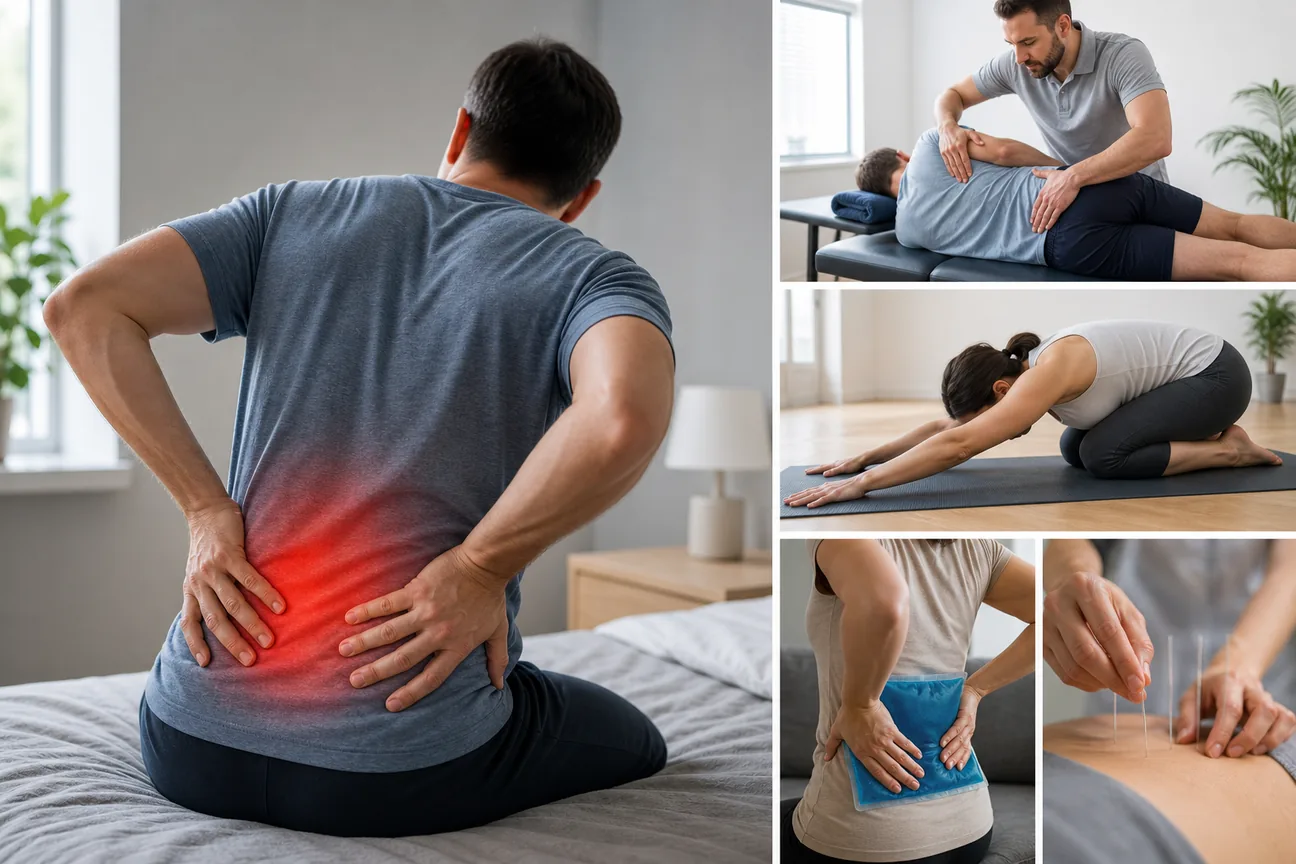
Lower back pain can come from more than one cause, so the right care depends on your symptoms and health history. Here are five non-surgical options, with a clear look at what each involves and where its limits lie.
Table of Contents
1. Exercise: gradual movement as a foundation
Exercise is planned movement that builds your ability to do everyday tasks. It can include walking, gentle strength work, mobility exercises or a tailored programme. For many people with ongoing, non-specific lower back pain, it’s a useful part of care. A Cochrane review’s background notes that earlier review findings suggested exercise was likely to help chronic low back pain, though the ideal type and dose can vary.
Start at a level you can manage, then build up in small steps. A short walk may suit one person; another may need a clinician to adapt movement around pain or other health needs. Stretching can be part of a plan, but it isn’t the only way to move. Our safe lower back exercises page covers ways to pace activity.
Exercise may be less suitable without guidance if movement brings on new or worsening symptoms. Pause and seek advice if pain changes sharply or you develop new weakness or numbness.
2. Cognitive functional therapy: movement rehabilitation with a broader view
Cognitive functional therapy (CFT) combines movement practice with a discussion of how pain affects daily life. It may suit people whose back pain has led them to avoid certain movements or activities. The clinician and patient work together to understand what feels difficult, then practise ways to move that fit the person’s goals.
This approach doesn’t assume that pain is imaginary or that one thought explains it. Instead, it considers how pain, movement habits, fear and daily demands can interact. Cognitive functional therapy may lead to sustained improvement in activity limits for some people, but individual responses vary. A clinician needs to assess whether the approach fits your symptoms and needs.
For example, someone who finds lifting a shopping bag worrying might practise the task in manageable stages, with guidance. That’s different from being told to push through pain. A plan should be adjusted if symptoms rise or new signs appear.
Ask what the sessions involve and how progress will be reviewed. Clear goals can help you decide if this style of rehabilitation feels right.
3. Spinal manipulation: a hands-on conservative option
Spinal manipulation is a hands-on technique that applies a controlled movement to a spinal joint. Some people consider it for short-term symptom relief, often alongside advice or exercise. It isn’t suitable for everyone, and an assessment should come before treatment.
Spinal manipulation may reduce pain slightly compared with sham treatment at one month, but the evidence is of very low certainty. It may make little to no difference compared with other conservative care. Mild, short-lived muscle or joint soreness can occur, so discuss possible risks and alternatives before deciding.
At Unleashed Health Chiropractic in Ascot Vale, the initial appointment includes a medical history and physical, neurological, orthopaedic and chiropractic examinations. Its services include chiropractic techniques and rehabilitation exercises; an assessment helps determine what may suit your presentation. You can also read our explanation of what chiropractic care for back pain involves .
4. Cognitive behavioural therapy for pain: tools for pain-related stress
Cognitive behavioural therapy (CBT) is a talking therapy that helps people notice patterns in thoughts and actions. For persistent lower back pain, a pain-focused approach may help people respond to pain-related worry or avoidant habits. It does not mean the pain is “all in your head.” Pain is real, and physical and emotional factors can affect how it shapes daily life.
CBT for pain may reduce pain and disability, with durable long-term effects, although the evidence level is low. It may suit people caught in a pain-fear-avoidance cycle who want tools that keep working after sessions end. CBT is not a replacement for a medical assessment, prescribed care or movement-based support.
It may be worth discussing with your GP if pain-related fear or distress is making work, sleep or usual activities harder. A qualified mental health practitioner can explain what sessions involve and whether the approach is suitable. The plan should fit your needs, not blame you for having pain.
5. Mindfulness-based stress reduction: a practice-based option
Mindfulness-based stress reduction (MBSR) is a structured programme that teaches attention and awareness practices. It may include meditation, body awareness and gentle movement. Some people choose it when stress and pain seem to rise together, or when they prefer a regular practice as part of broader care.
Evidence for MBSR and lower back pain is mixed. Research summaries suggest possible longer-term benefits for some people, while a review of a small number of trials found the evidence inconclusive for pain intensity and disability. So it’s better seen as one possible support, not a stand-alone fix or a guaranteed way to change pain.
If you try a practice, choose a format you can manage and stop if it worsens symptoms. Gentle movement within a class may need changes for your body. Ask a clinician or programme provider how they adapt activities, especially if you have another health condition or new symptoms.
Compare the five lower back pain treatment options
These approaches serve different needs. Exercise and movement rehabilitation focus on activity; hands-on care may be considered for short-term symptom relief; psychological approaches address pain-related thoughts and stress. The evidence differs, and response varies between people.
Option | May suit | What to keep in mind |
Exercise | People building daily movement and function | Start at a manageable level and progress gradually. |
Cognitive functional therapy | People whose pain affects movement choices | Goals and movement practice should be tailored. |
Spinal manipulation | People considering a hands-on option | Discuss uncertain benefits, risks and alternatives. |
CBT for pain | People affected by pain-related worry or avoidance | It can sit alongside, not replace, physical or medical care. |
MBSR | People interested in a structured mindfulness practice | Evidence for pain and disability remains mixed. |
Other care may also be relevant. A pharmacist or GP can advise whether a medicine is appropriate for you, based on your health and other medicines. Procedures or surgery are considered by medical teams for selected cases, such as when assessment finds a specific problem that needs that care. They aren’t routine steps for every episode of back pain.
Everyday choices can support comfort too. Break up long periods in one position, adjust your desk or work setup where you can, and keep activity within a level you can manage. For sitting ideas, see our tips for sitting with lower back pain .
When to seek medical help
Seek urgent medical care for new loss of bladder or bowel control, numbness around the genitals or inner thighs, or sudden or worsening leg weakness. These symptoms need prompt assessment. Get medical advice promptly if back pain follows a major injury, or comes with fever or feeling very unwell. If symptoms persist, worsen or concern you, contact your GP rather than relying on self-care alone.
Frequently asked questions
What causes lower back pain?
Lower back pain can relate to muscles, joints or discs, and sometimes no single cause can be identified. A clinician may ask when it began, what changes it and whether pain travels into a leg. Less commonly, pain can relate to a specific health problem. An assessment helps decide whether further medical review is needed.
Should I rest or keep moving with lower back pain?
Gentle movement may be appropriate for many people, but the right amount depends on your symptoms and health. Try activity at a level you can manage rather than forcing painful movements. If pain worsens or you develop new weakness, numbness or other concerning symptoms, stop and seek medical advice.
Can I take medicine for lower back pain?
Some medicines may be suitable for short-term pain relief, but they don’t suit everyone and can have risks. Ask a pharmacist or GP which type is appropriate for your health, other medicines and symptoms. Don’t stop a prescribed medicine or change its use without speaking with the clinician who advised it.
When might I need a procedure or surgery?
Procedures or surgery may be considered by a medical team when assessment identifies a specific reason and other care hasn’t met the person’s needs. They aren’t required for most lower back pain. A GP or relevant medical practitioner can explain the expected benefits, risks and alternatives for your situation.
Conclusion
For many people, a plan built around suitable movement is a sensible place to start, while other options depend on symptoms and assessment. If you’re in Ascot Vale or nearby, Unleashed Health Chiropractic can assess your presentation and discuss whether its care may suit you. You can arrange an assessment to talk through your goals and options.


Comments