


Neck Hump: Causes, Symptoms and Assessment
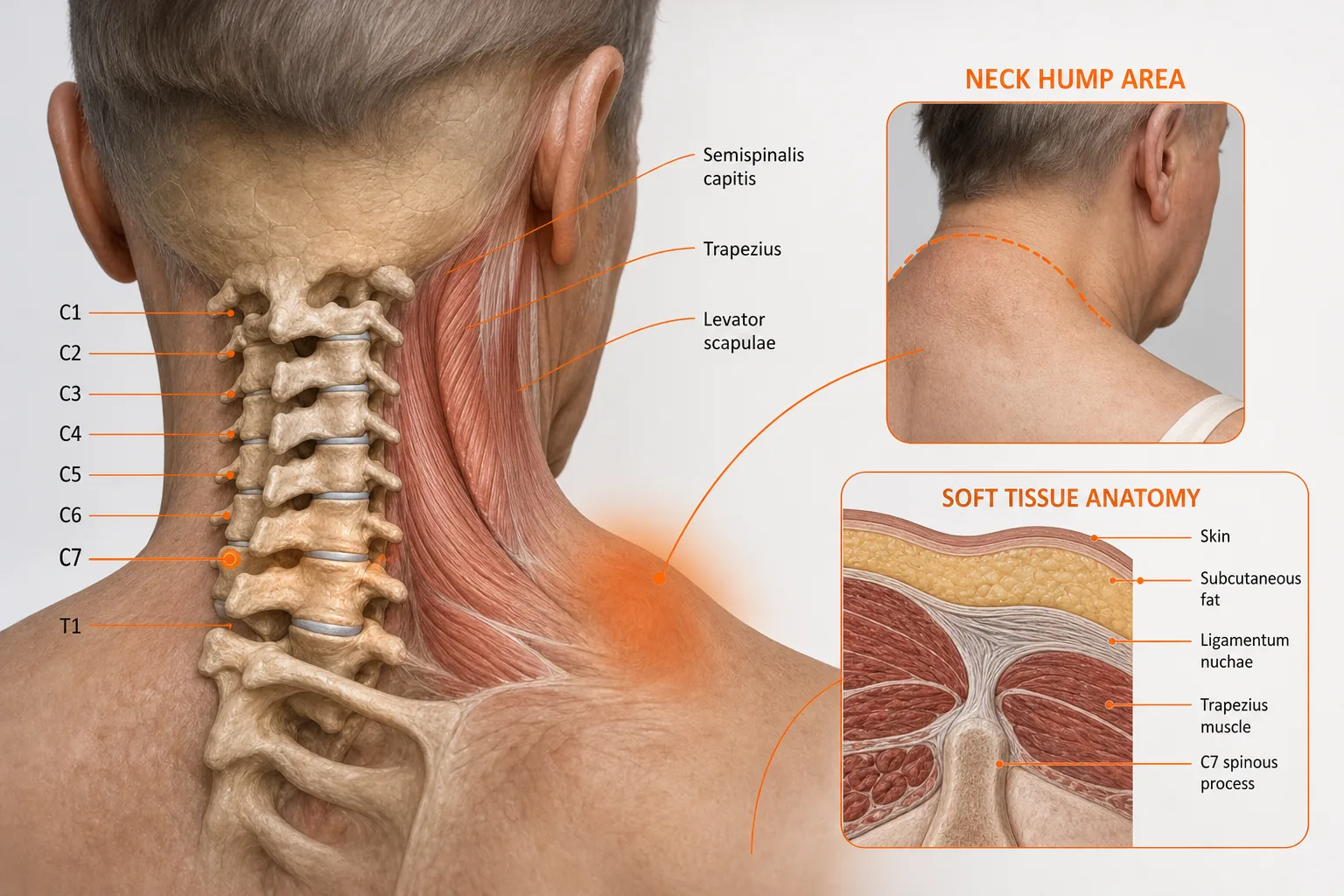
Notice a little bump at the base of your neck after a long day at the desk? That “neck hump” can be more than a cosmetic quirk, it often signals deeper postural or spinal changes.
We’ll break down what it is, why it appears, what else to look for and how clinicians assess it, so you know what to discuss at your next appointment.
Table of Contents
What is a neck hump?
A neck hump is a visible rounding or lump where the cervical spine meets the upper back. It can stem from a structural curve in the spine, a soft‑tissue fat pad, or a combination of both. The shape changes as the head shifts forward and the shoulders round, pulling the C7/T1 junction outward.
Understanding the anatomy helps you see why posture matters. The neck houses the cervical vertebrae, nerves, and muscles that keep the head balanced. When the head leans forward, the load on these structures increases, encouraging the hump to become more pronounced.
The cervical vertebrae support the head and allow flexible movement. When alignment changes over time, the visual change can appear as a hump.
Common causes of a neck hump
Most people develop a hump from everyday habits. Prolonged screen use, hunched sitting and a forward‑head posture all push the head forward. The muscles in the chest tighten while the upper‑back muscles weaken, creating a forward curve.
Medical factors also play a role. Osteoporosis can lead to tiny compression fractures in the upper spine, which change the curvature permanently. Certain medications, especially long‑term corticosteroids, may cause a fatty deposit called a “buffalo hump.” Hormonal conditions like Cushing’s syndrome produce a similar fat pad.
A dorsocervical fat pad often appears with obesity, steroid use or endocrine disorders. Recognising whether the hump is muscular, bony or fatty guides the next steps.
Key Takeaway:Poor posture drives the most common hump, but bone loss or medication side‑effects can create a structural or fatty version.
Symptoms that may occur alongside a neck hump
A hump rarely sits alone. Tight upper shoulders, a feeling of stiffness in the neck and occasional tension‑type headaches are typical companions.
Some people feel numbness or tingling down the arms as nerves become compressed. Others notice shallow breathing because the rounded upper back limits rib cage movement. Chest tenderness at the front of the ribs can also appear when the muscles are over‑worked.
These signals point to muscle fatigue, nerve irritation or reduced thoracic mobility. If any symptom worsens or spreads, it’s time to bring a clinician into the conversation.

How a neck hump is assessed—and when to see a doctor
Assessment starts with a detailed history. The practitioner asks when the hump first appeared, whether it’s changing, and what activities make it more noticeable. They also check for pain, height loss, numbness or any recent medication changes.
During the physical exam, the clinician observes posture from the side, feels the spinous processes, and tests the range of motion in the neck and upper back. They may ask you to stand tall and then relax to see how much the curve changes, a quick way to tell if the hump is mostly postural.
If a structural issue is suspected, plain X‑rays (covered by Medicare when clinically indicated) can reveal vertebral compression fractures or hyperkyphosis. In some cases, further imaging such as MRI helps evaluate soft‑tissue involvement.
When to see a doctor? If the hump grows rapidly, becomes painful, or is accompanied by numbness, weakness, severe headaches, balance problems or unexplained weight loss, seek medical advice promptly. Red‑flag signs such as sudden loss of height or new neurological symptoms warrant urgent evaluation.
Care options and everyday habits to discuss
Chiropractic care can address muscle imbalances and joint restrictions that contribute to a postural hump. At Unleashed Health Chiropractic in Ascot Vale we start with a comprehensive assessment that includes a medical history, neurological and orthopaedic checks, and a postural scan. If needed, we may order spinal X‑rays (Medicare‑covered) to see the exact curvature.
Treatment often combines gentle adjustments with targeted exercises. Light, nervous‑system‑focused techniques such as the Koren Specific Technique or Talsky Tonal Chiropractic are used to improve mobility without high‑force cracking.
Massage therapy can release tight chest and upper‑back muscles, while specific stretches, chin tucks, wall angels and doorway chest stretches, help re‑train the shoulders to sit back.
Beyond clinic visits, daily habits make a big difference. Raising your screen so the top sits at eye level, taking movement breaks every 30 minutes, and using a supportive pillow that keeps the neck in neutral alignment at night all reduce forward‑head strain.
Consider discussing these points with your clinician:
Is a structural component (e.g., compression fracture) present that needs bone‑health management?
Would a tailored exercise program, like the one in 8 Forward Head Posture Exercises for Your Routine , be appropriate?
Should we incorporate Posture Correction Exercises: A Simple Guide into your daily routine?
Are there specific ergonomic changes at work or home that could prevent the hump from worsening?
When you feel persistent discomfort, limited movement or any of the red‑flag symptoms mentioned earlier, an appointment with a qualified chiropractor can clarify the cause and map out a safe plan.
Frequently asked questions
What causes a neck hump to appear?
A neck hump usually forms from prolonged forward‑head posture, tight chest muscles and weakened upper‑back muscles. Bone loss or certain medications can also create a fatty pad that looks similar.
Is a neck hump dangerous?
On its own it’s often a cosmetic concern, but it can signal underlying muscle imbalance, reduced breathing capacity or, in rare cases, spinal compression fractures that need medical attention.
Can exercises remove a neck hump?
Targeted stretches and strengthening can improve posture‑related humps and may lessen the visual prominence. Results vary; a consistent routine over weeks to months is usually needed.
When should I see a doctor about my neck hump?
Seek a doctor if the hump is painful, grows quickly, or is accompanied by numbness, tingling, weakness, severe headaches or sudden loss of height.
Does chiropractic care help with a neck hump?
Chiropractic assessment can identify muscular, joint or structural contributors. Gentle adjustments, combined with exercise advice, may help improve alignment and reduce discomfort.
What daily habits support a healthier neck?
Raise screens to eye level, take a short walk or stretch every 30 minutes, use a pillow that keeps the neck neutral while sleeping, and practice chin tucks several times a day.
Conclusion
If a neck hump is affecting your comfort or daily life, a thorough assessment at Unleashed Health Chiropractic can pinpoint the cause and guide a personalised plan. Book an initial appointment to discuss your symptoms, get a postural scan and start a safe, evidence‑based approach to improve your neck and upper‑back health.
Pro Tip:Keep a simple log of when you notice the hump or any related symptoms, it helps the clinician spot patterns and decide on imaging.


Comments