


Treatment for Neck Pain and Headaches: 5 Options
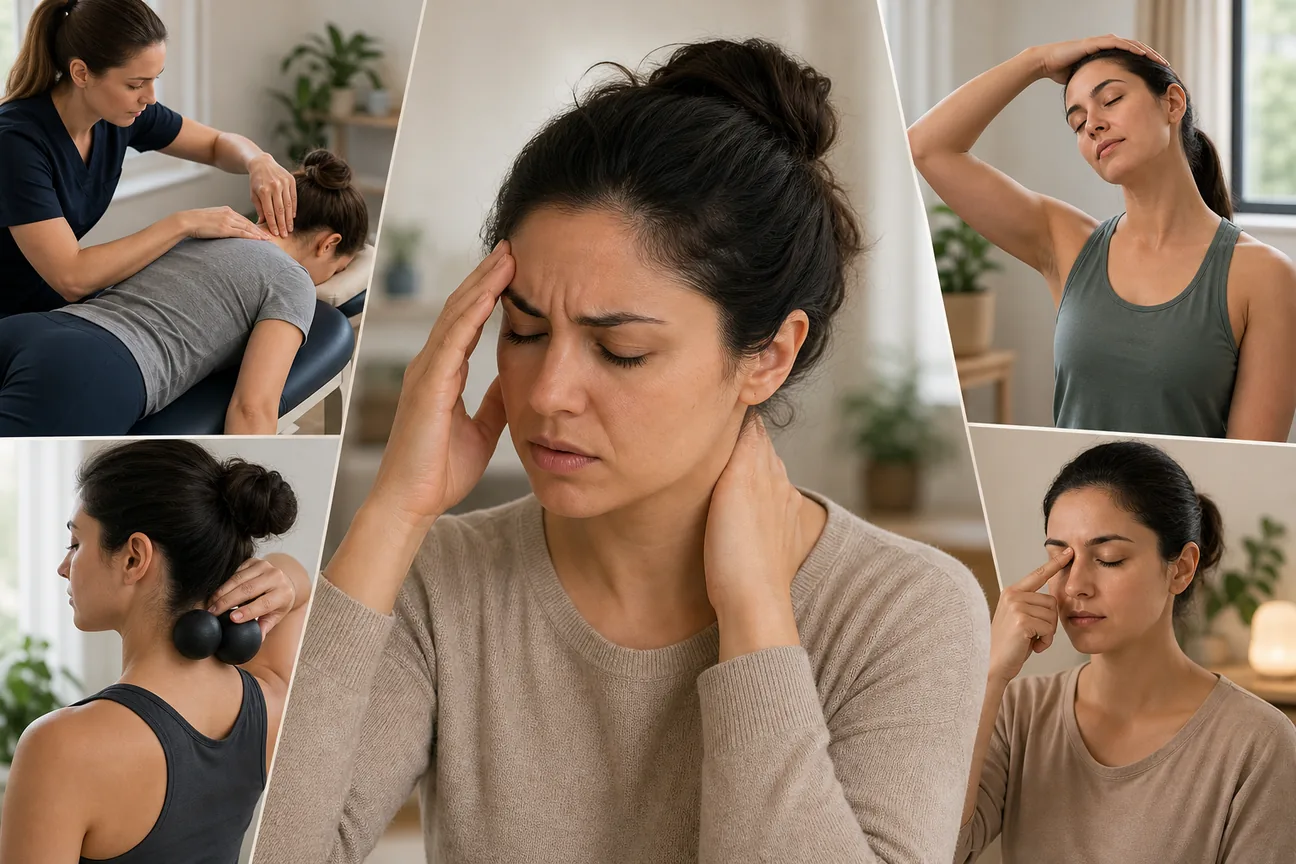
A stiff neck and a headache can arrive together, making desk work, sleep, or a drive feel harder. Treatment for neck pain and headaches can include gentle movement, hands-on care, and simple self-care, depending on the cause and your symptoms.
Here are five options to discuss or try carefully, plus signs that mean it’s time to seek medical advice.
Table of Contents
1. Gentle Neck Exercises and Progressive Strengthening
Gentle neck movement and guided strengthening can support comfortable movement. This may suit mild stiffness after sitting or screen use, as long as there hasn’t been an injury and movement doesn’t make the pain worse.
Neck pain can come with headaches and may make it harder to turn your head. Some headaches are linked to problems in the neck, but a headache can also have other causes. A health professional can assess your symptoms rather than assume the neck is the source.
For mild symptoms, start with small, slow movements within a comfortable range. You might turn your head gently from side to side or draw your chin back slightly while keeping your gaze level. Don’t force a stretch or push through pain. Stop if a movement causes pain or brings on new symptoms.
Healthdirect advises people with neck pain to stay gently active unless the pain followed an injury or accident. A doctor or physiotherapist can suggest exercises that fit your situation. Our guide to neck pain exercises and safety also explains why exercise choices should be adjusted to your symptoms.
Strength work is usually best built up gradually. If you’re unsure where to start, ask a health professional to check your movement and help you choose a starting point.
Healthdirect’s neck pain guidance recommends gentle movement and notes that exercises may be provided by a doctor or physiotherapist.
2. Chiropractic Manual Therapy
Chiropractic manual therapy is hands-on care provided by a chiropractor. It may be worth discussing when neck pain or movement limits are affecting daily tasks, after a proper assessment has considered your symptoms and health history.
Care can involve different manual approaches, such as spinal adjustments, soft-tissue techniques, or joint mobilisation. The right approach depends on the person and the assessment. A chiropractor should explain what they suggest and discuss any questions or concerns before care begins.
At Unleashed Health Chiropractic in Ascot Vale, an initial appointment includes a medical history, physical, neurological, orthopaedic, chiropractic, and postural examinations. Spinal X-rays may be covered by Medicare if they’re clinically indicated. The clinic also lists Diversified and Thompson techniques, dry needling, and rehabilitation exercises among its services.
We take the time to understand how your symptoms affect work, sleep, and movement. We can discuss whether chiropractic care is suitable for you, but we can’t assume that every headache comes from the neck or that one technique will suit everyone.
Our overview of shoulder and neck pain options gives more context on how different forms of care may fit into a discussion with a health professional.
3. Postural Adjustments and Screen-Time Management
Small changes to your usual work and screen habits may reduce strain on the neck. This option can suit people who spend long periods looking down at a phone or leaning towards a computer screen.
When you look down for a long time, or sit with your chin poking forward and shoulders slouched, your neck muscles and joints may be under extra strain. Poor posture is one possible contributor to neck pain, not a diagnosis on its own. Neck joints, discs, muscles, and other structures can all be involved.
Try bringing your screen closer to eye level so you don’t need to bend your neck to read. Change position from time to time and take movement breaks during long stretches of sitting. Aim for a comfortable posture rather than holding one rigid pose all day.
Sleeping position can matter too. Sleeping on your stomach with your head turned may strain the neck. A pillow that keeps your head and neck in a comfortable, natural position may help with neck-pain prevention. Your needs can differ with your usual sleep position.
If your neck is sore during a workday, notice which tasks make it worse and whether changing position helps. That information can be useful when you speak with a clinician. We can also discuss how daily habits fit into an assessment at Unleashed Health Chiropractic.
4. Heat or Ice Packs
A warm or cool pack is a simple self-care option for neck stiffness or pain. You can try one when symptoms are mild and there are no warning signs that need medical attention.
Healthdirect lists heat or ice packs as options for neck stiffness and pain. People can respond differently, so choose the temperature that feels comfortable. Keep a layer of cloth between the pack and your skin, and remove it if the skin feels uncomfortable.
A pack may ease discomfort for a while, but it doesn’t identify what caused the neck pain or headache. It also won’t be suitable for every person or every situation. If your pain started after an accident, seek medical advice rather than relying on home care alone.
Headaches have several possible causes. A tension-type headache often feels dull or tight, while migraine can involve throbbing pain and other symptoms. Neck pain alongside a headache doesn’t confirm which type you have.
Get urgent medical help for a sudden, severe headache, or a headache with vomiting, confusion, neck stiffness, or changes in vision. If headaches happen often or stop you doing usual activities, arrange an appointment with your doctor. A headache diary can help you describe when they happen and what else you notice.
5. Over-the-Counter Pain Relief Medicines
Over-the-counter medicines may be an option for some people with neck pain or headaches. A pharmacist or doctor can help you check what’s suitable, especially if you have other health conditions, take other medicines, or are choosing a product for a child.
Medicine type | What to discuss | Useful caution |
Paracetamol | Ask a pharmacist or doctor whether it suits your symptoms and health needs. | Follow the product directions and professional advice. |
Anti-inflammatory medicine | Ask whether an oral medicine or a topical cream or gel is suitable for you. | Check first if you have health conditions or take other medicines. |
This table is a prompt for a conversation, not a personal medicine plan. The right choice can depend on your medical history and other medicines. Don’t take more than the directions advise, and ask a pharmacist or doctor if you’re unsure.
Using pain medicines often for headaches can contribute to medication-overuse headache . If you find you need pain relief frequently, speak with a doctor or pharmacist about safe use and other options. Don’t stop prescribed medicine without advice from the clinician who prescribed it.
If symptoms persist or keep returning, medicine may be only one part of the discussion. Our summary of options for ongoing neck pain can help you prepare questions for a health professional.
When to Seek Medical Advice for Neck Pain and Headaches
Seek urgent medical care if neck pain follows a serious accident, is sudden and severe, or occurs with chest pain, shortness of breath, or sweating. For a sudden, severe headache or one with vomiting, confusion, stiff neck, or vision changes, go to an emergency department or contact emergency services.
Arrange a medical review if pain is getting worse, lasts a long time, affects daily activities, or comes with new numbness or weakness. Headaches can have different causes, so a doctor can assess the symptoms and decide whether further investigation is needed. Discuss ongoing or concerning headaches with a healthcare professional.
Frequently Asked Questions
Can neck pain cause a headache?
Neck pain can occur with a headache, and some headaches may be linked to structures in the neck. But headaches have many possible causes, so neck pain alone can’t identify the type. If headaches are new, frequent, severe, or changing, speak with a doctor for an assessment rather than trying to diagnose the cause yourself.
What can I do at home for neck pain and a headache?
For mild symptoms that didn’t follow an injury, you can try gentle neck movement, a comfortable heat or ice pack, and regular changes of position. Stop if a movement worsens your pain. Seek advice if symptoms persist or affect daily life, and get urgent help for sudden severe symptoms or other warning signs.
Should I try neck exercises if I have a headache?
Gentle movement may be suitable for some people, but it depends on how symptoms began and how you feel. Don’t start exercises if the pain followed an accident, and don’t push through pain. A doctor or physiotherapist can suggest movements that fit your needs. Stop and seek advice if you develop new symptoms.
Can a chiropractor help with neck pain and headaches?
A chiropractor can assess neck symptoms and discuss whether chiropractic care is suitable. Headaches have different causes, so an assessment shouldn’t assume they come from the neck. At Unleashed Health Chiropractic in Ascot Vale, an initial appointment includes a medical history and physical examinations. Your clinician can discuss possible care and refer you for medical review when needed.
Conclusion
Start with gentle self-care only when symptoms are mild and no warning signs are present. If pain persists, keeps returning, or affects your day, speak with your GP or another qualified health professional. If you’re in Ascot Vale or nearby, Unleashed Health Chiropractic can assess your symptoms and discuss whether its care may suit you.


Comments