


Best Ways to Relieve Middle Back Pain

Middle back pain can feel like a tight knot beneath your shoulder blades. The good news is that gentle movement and the right care can often help, without complex equipment. Here are 10 options to try, plus clear signs that you should get assessed by a health professional.
Table of Contents
1. Unleashed Health Chiropractic: Individual assessment and care
Unleashed Health Chiropractic provides natural, non-surgical care for people in Ascot Vale and nearby Melbourne suburbs. We’re the best fit when pain keeps returning, limits your movement, or comes with neck pain, headaches, a sports injury, or a need for rehabilitation.
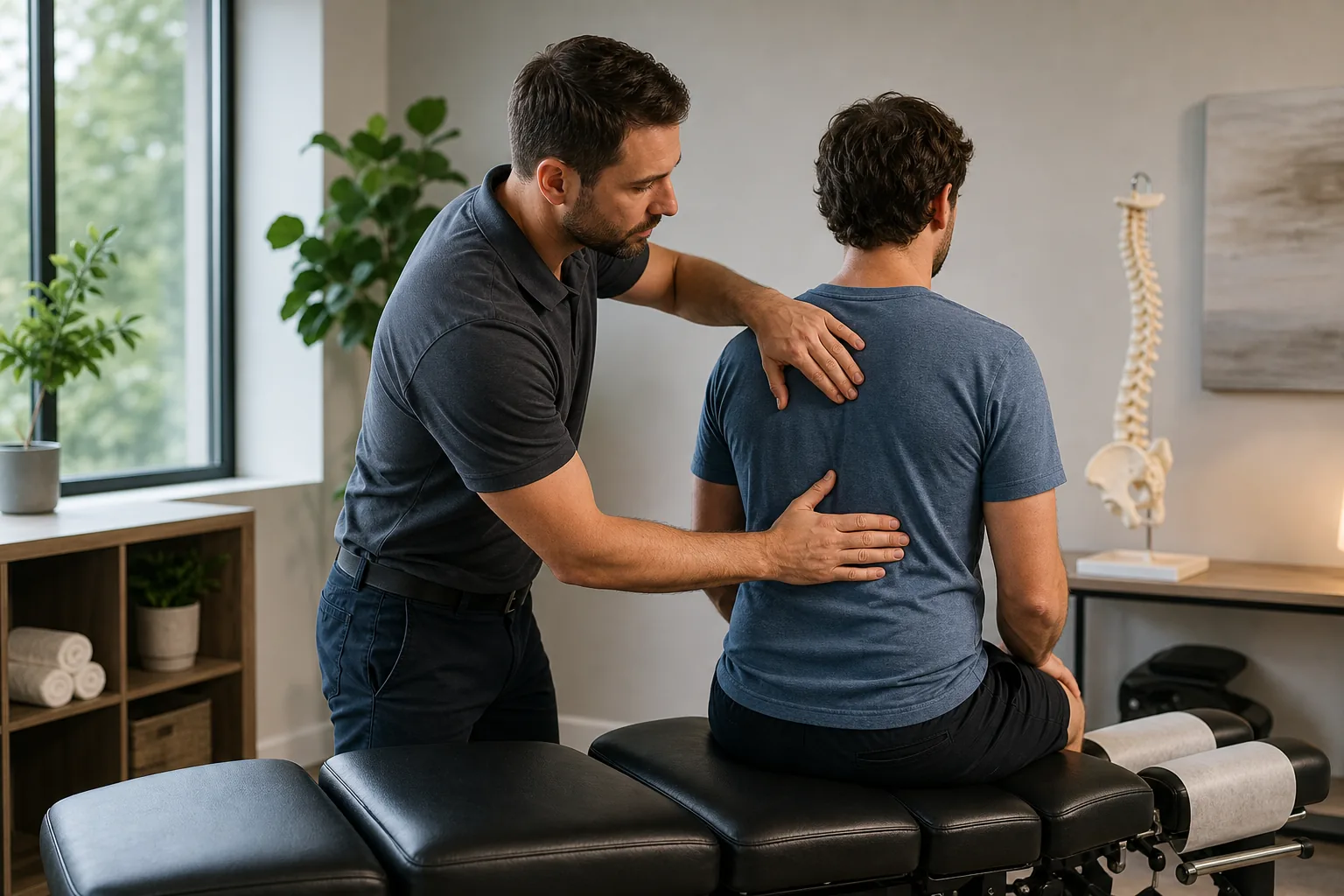
We take the time to ask how the pain began and how it affects work, sleep, driving, and exercise. We then assess movement before discussing care. That may include chiropractic treatment, advice about activity, and a plan that matches your needs. A chiropractic adjustment is a controlled hands-on technique used to improve movement in selected joints.
We don’t assume that every ache has the same cause. Poor sitting habits may irritate muscles. A strain, stiff rib joint, or spinal issue may need a different approach. Seek urgent medical help for severe pain after trauma, chest pain, trouble breathing, fever, unexplained weight loss, new weakness, or loss of bladder or bowel control.
2. Education and Information: Understand likely triggers
Providing patients with knowledge about their condition, activity advice, and self-management strategies can help you learn how to relieve middle back pain. Common triggers include long periods of slouching, a sudden lift, repeated reaching, muscle strain, and reduced movement.
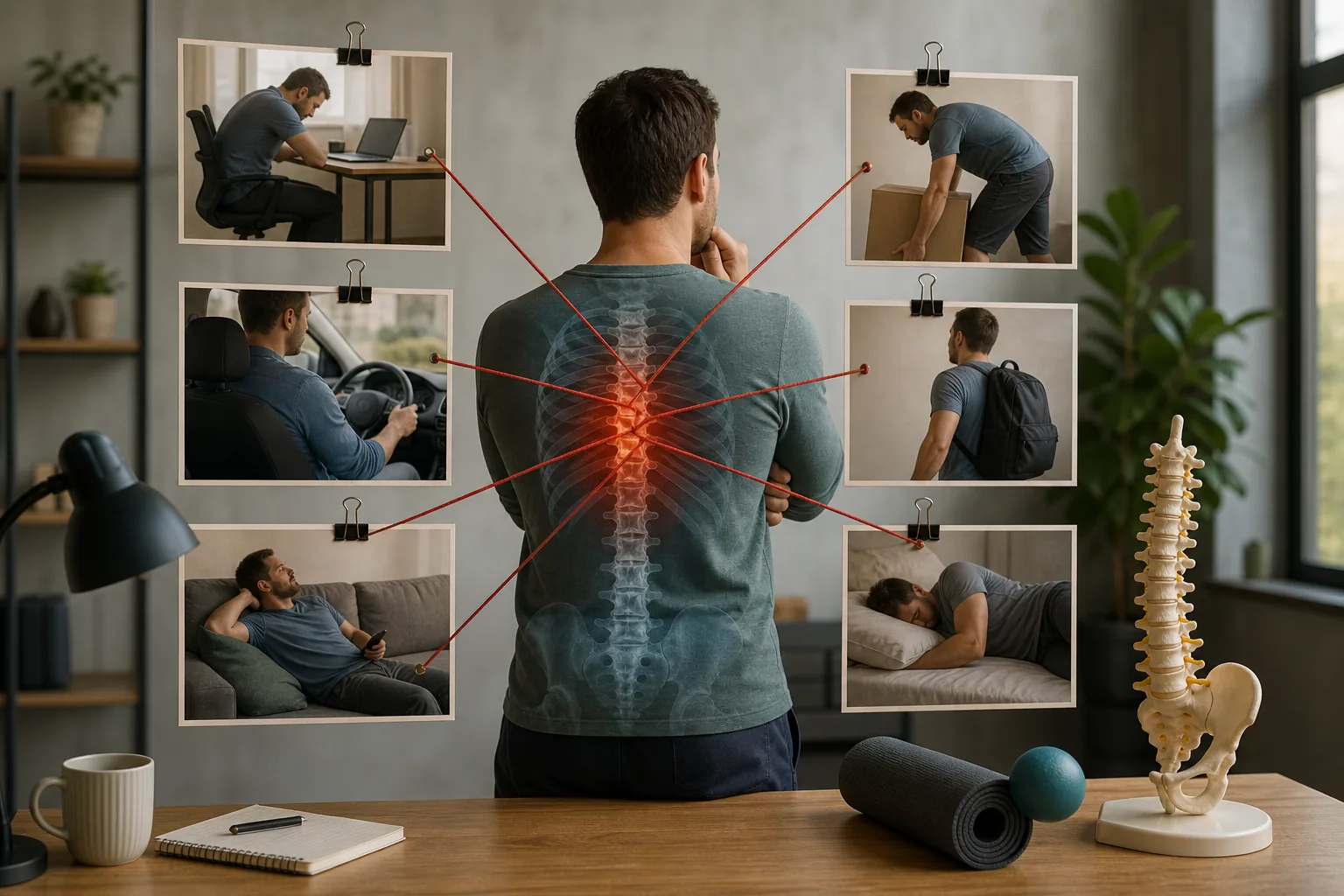
The thoracic spine is the middle part of your back. It connects with the ribs, so stiffness there can affect how your upper body turns and how your chest expands. Pain may feel central, one-sided, or close to the shoulder blade.
Patient education, activity advice, and self-management can help with non-specific thoracic pain. You can read the research on self-management for back pain for more detail. Its limits matter too. It does not give one set routine that suits everyone.
Keep a short note of what changes the pain. Record the task, posture, movement, and time of day. This gives you useful information instead of leaving you to guess.
3. Therapeutic Exercise: Build thoracic mobility and strength
Therapeutic exercise uses planned movements to improve thoracic mobility, strength, and function. It suits people whose middle back feels weak or stiff after desk work, driving, sport, or a period of rest.

Start with a movement that feels easy. A therapist may choose thoracic rotations, a gentle row with a resistance band, or a bird-dog exercise. The goal is steady control. It isn’t to force your spine into a large range.
For example, sit tall with your feet supported. Place your hands across your chest and turn slowly to one side. Stop before pain becomes sharp. Return to the centre, then repeat on the other side. Keep your hips still so the movement comes from the upper and middle back.
Strength work should build over time. A one-off stretch may ease tightness, but regular exercise helps you keep the change. The right dose depends on your symptoms, fitness, age, and any existing condition.
4. Education and Information: Condition knowledge, activity advice and self-management
Education and information can provide patients with knowledge about their condition, activity advice, and self-management strategies. Understanding the condition can support clearer conversations about suitable activity advice and practical self-management.
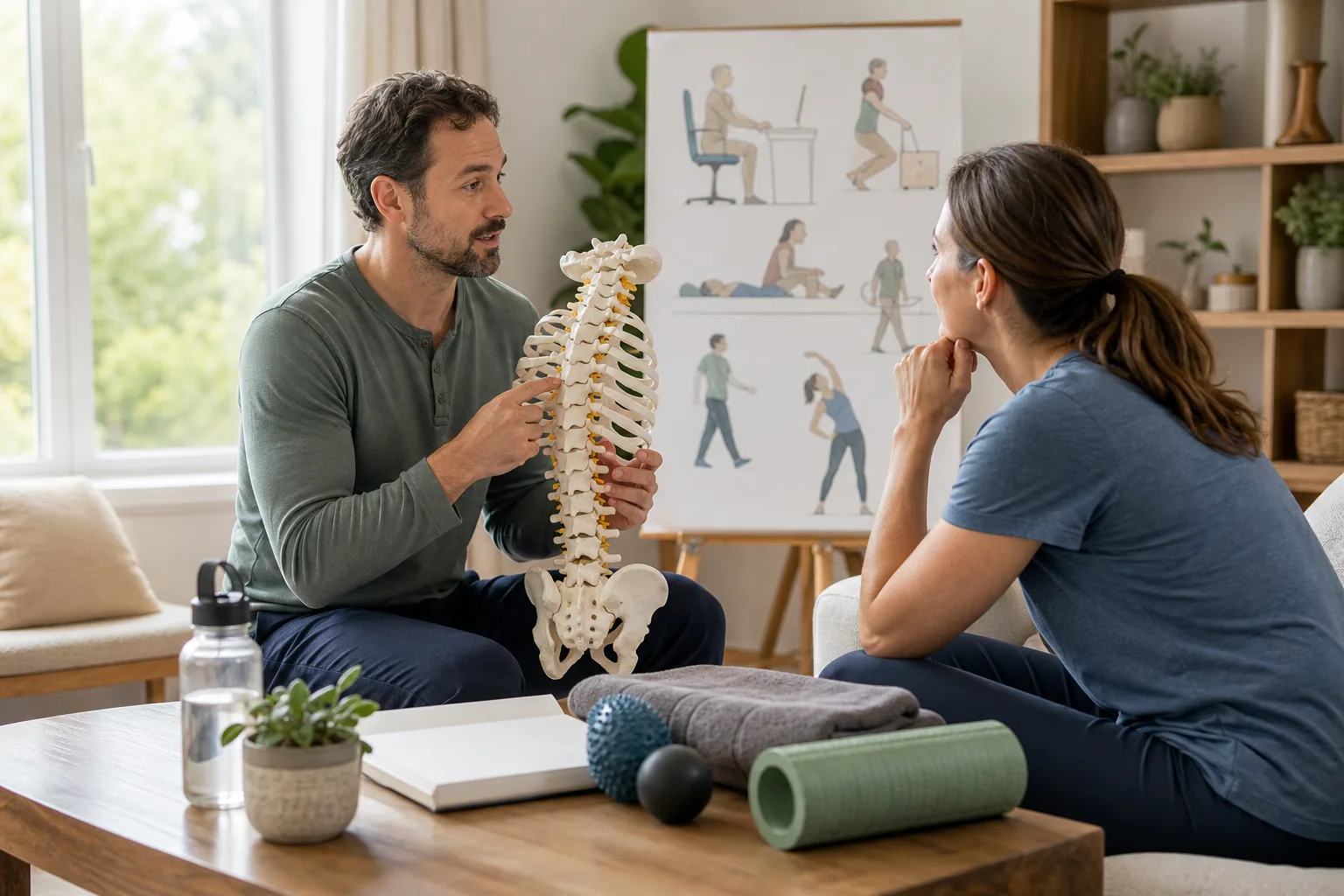
Activity advice forms part of providing patients with information about their condition. Self-management strategies can help patients take an informed approach to their condition while considering how activity fits into their individual needs.
Education can also support patients in understanding the role of activity advice and self-management strategies. Information about the condition, together with clear advice about activity, can help patients make sense of their options and take part in their care.
For related information, see our guide to gentle stretches for upper back pain .
5. Soft Tissue Manual Therapy: Address tight muscles around the ribs
Soft tissue manual therapy uses hands-on work around the thoracic muscles. It may suit you when the muscles beside the spine or near the shoulder blades feel tight after a strain or long period of stillness.

This type of care can include massage, trigger point release, or soft tissue mobilisation. The pressure should match your comfort. A tender spot does not need hard force to be useful.
The muscles between the shoulder blades help control the shoulder blades. Muscles between the ribs also assist with chest movement. Tightness in these areas can make turning or taking a deep breath feel restricted, although pain with breathing needs careful assessment.
Research on non-specific thoracic pain includes soft tissue manual therapy within a wider care plan. The available research supports combining hands-on care with education and exercise, while also showing that exact treatment doses are not clearly set.
6. Manual Therapy: Improve movement when stiffness persists
Manual therapy uses mobilisation or spinal manipulation directed at selected areas of the thoracic spine. It may suit people who have ongoing stiffness and find that basic movement alone has not helped enough.

Mobilisation uses repeated or sustained pressure to encourage movement. Manipulation is a quicker, controlled technique. A qualified practitioner should decide whether either option is suitable after an assessment.
We tailor care to your symptoms rather than treating every sore spot in the same way. We also consider your medical history, recent injuries, bone health, medication, and comfort with hands-on care.
Manual therapy is usually more useful when it supports a broader plan. You may leave with one or two simple movements to repeat at home. That helps you carry the change into daily life instead of relying on treatment alone.
7. Education and information: Understand your condition
Education and information can provide knowledge about your condition, activity advice, and self-management strategies.

Understanding your condition can help you consider appropriate activity advice. Information should be clear and relevant to your needs.
Self-management strategies can support your understanding of what to do for your condition. These strategies may include information about activity and ways to manage your symptoms.
Education, activity advice, and self-management strategies can be discussed as part of your care plan. Unleashed Health Chiropractic can provide information within a chiropractic scope of practice.
8. Education and Information: Activity advice and self-management strategies
Education and information provide patients with knowledge about their condition, along with activity advice and self-management strategies. This information can help patients understand their condition and consider suitable activity advice.

Self-management strategies form part of the information provided about the condition. Activity advice can be discussed alongside knowledge about the condition, with the aim of supporting informed self-management.
Patients can receive information about their condition, activity advice, and self-management strategies. Our instructions for foam roller exercises for back stiffness provide further information about self-management strategies.
9. Education and Information: Knowledge, activity advice and self-management
Education and information can provide knowledge about your condition, activity advice, and self-management strategies. These approaches can help you understand your symptoms and make informed choices about managing middle back pain.

Activity advice can support appropriate movement while you manage your condition. Self-management strategies can help you apply this information in your everyday routine.
Our advice on exercises to improve posture can provide further activity advice and help you build a practical self-management approach.
10. Education and Information: Knowledge, activity advice and self-management
Providing patients with knowledge about their condition, activity advice, and self-management strategies can support an informed approach to middle back pain.
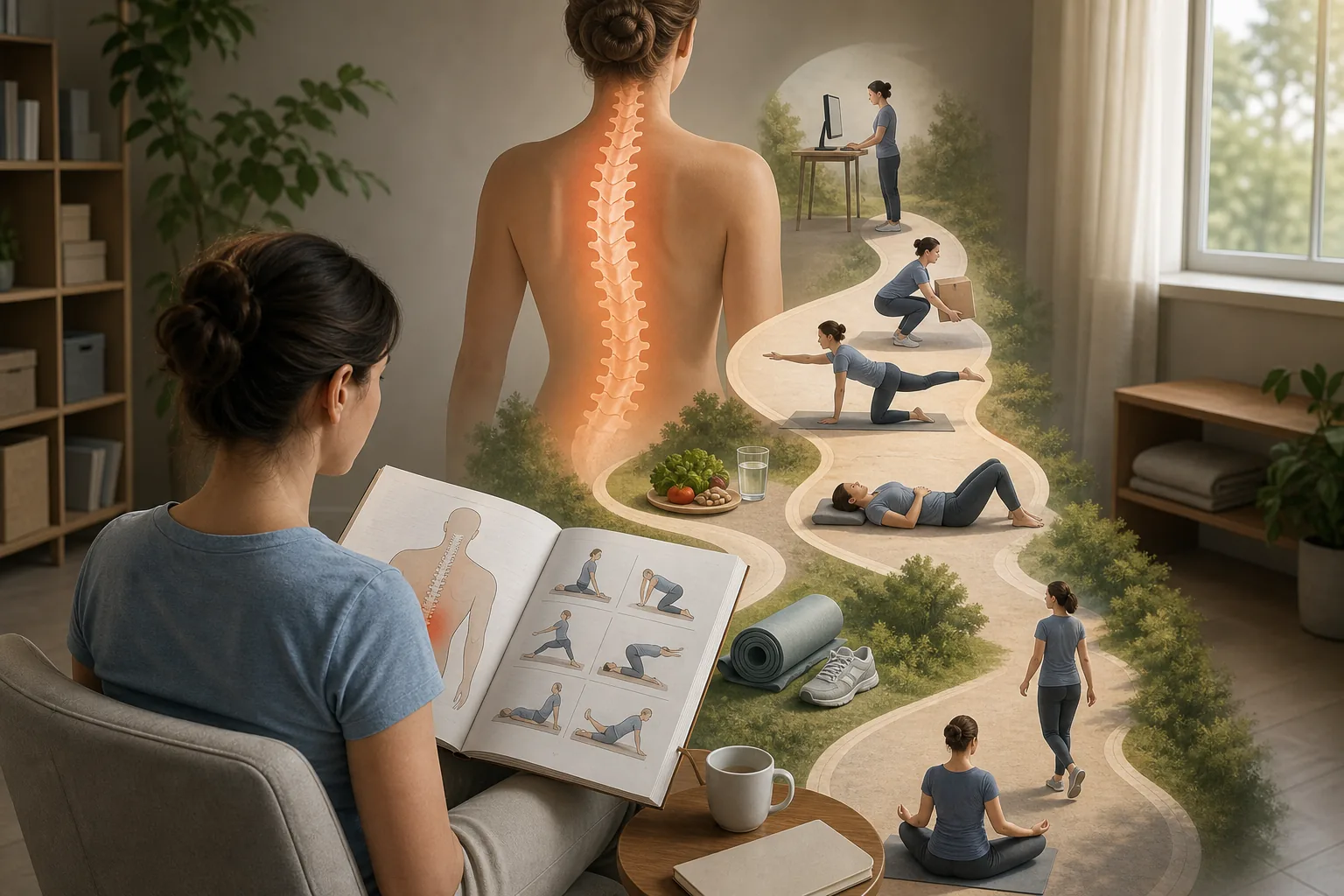
Breathing can improve how a stretch feels. Breathe in gently through your nose, then breathe out as you move into a comfortable rotation. Keep the breath easy. Do not hold it to force a deeper stretch.
People over 50 may need a slower start, especially after a fall, a long break from exercise, or a known bone condition. New pain that is severe, persistent, or linked with a fall deserves an assessment before you begin a new routine.
Food and body weight can affect general health, but avoid blaming yourself for pain. Focus on habits you can keep.
Compare the 10 Middle Back Pain Relief Options
The best choice depends on what your pain is doing today. Use this quick view to choose a sensible first option, then change course if symptoms do not settle.
Option | Best suited to | Main caution |
Unleashed Health Chiropractic | Persistent or recurring pain needing assessment | Needs an individual suitability check |
Education and information | Knowledge, activity advice, and self-management strategies | Does not replace assessment for warning signs |
Therapeutic exercise | Stiffness, weakness, or reduced function | Progress slowly |
Mobility exercises | Short-term stiffness after sitting | Stop if pain becomes sharp |
Soft tissue manual therapy | Tight muscles near the ribs or shoulder blades | Avoid excessive pressure |
Manual therapy | Persistent joint stiffness | Requires qualified assessment |
At-home comfort measures | Short-term comfort | Protect skin and sensation |
Home muscle work | Simple home muscle work | Never press directly on the spine |
Position changes | Pain linked with desk work or driving | Keep changing position |
Lifestyle habits | Long-term activity and recovery | Build habits gradually |
FAQ
How to relieve middle back pain quickly?
To relieve middle back pain quickly, try a comfortable position change, a slow walk, gentle thoracic rotation, or brief heat. Avoid forcing a stretch because quick relief should not come at the cost of more irritation. If pain is severe, follows an injury, or comes with chest symptoms, seek medical help rather than relying on home care.
What causes middle back pain?
Middle back pain can come from poor posture, muscle strain, stiff spinal or rib joints, or a broader spinal issue. Long periods of sitting often make symptoms worse. Pain can also be referred from another area. A health professional can assess the pattern, especially if symptoms persist or affect sleep and normal activity.
Are stretches good for middle back pain?
Gentle movement exercises may help middle back pain when stiffness is the main issue. Move within a comfortable range and breathe normally. Stop if you develop sharp pain, spreading symptoms, numbness, or weakness.
How can education and information help with middle back pain?
Education and information can provide knowledge about the condition, activity advice, and self-management strategies for middle back pain.
When should I see a chiropractor for mid back pain?
You should see a chiropractor when mid back pain keeps returning, limits movement, or does not improve with sensible self-care. Unleashed Health Chiropractic can assess how your symptoms affect daily life and discuss suitable non-surgical care. Seek urgent medical attention for chest pain, breathing trouble, major trauma, fever, or new neurological symptoms.
Conclusion
Start with gentle movement and regular position changes if your pain is mild and linked with sitting. If it keeps returning or affects your life, book an assessment with Unleashed Health Chiropractic in Ascot Vale so we can tailor a safe, full plan. We look forward to helping you move with more confidence.


Comments